The High-Pressure Headache in Material Science
Imagine this: you’ve spent days preparing a complex precursor solution for a new semiconductor material. You seal it in your hydrothermal reactor, set the oven, and wait. But when you finally open the vessel, the results are inconsistent, the product is contaminated with trace metals, or worse—the inner liner has collapsed and fused with the steel walls.
In the world of hydrothermal synthesis, these "invisible" failures are more common than researchers care to admit. While the process of heating a solution to generate pressure seems straightforward, the equipment often fails to deliver the precision required for today’s high-stakes research in new energy and chemical engineering.
The Common Struggle: Why "Off-the-Shelf" Often Fails
Most researchers view a hydrothermal reactor as a simple pressurized container. When a reaction fails or a liner deforms, the typical reaction is to tweak the temperature profile or reduce the fill volume. However, these are often "Band-Aid" solutions that don't address the underlying hardware mismatch.
Using generic or poorly fitted reactors leads to more than just ruined experiments. It results in significant business and research costs:
- Sample Contamination: Poor quality liners can leach impurities into high-purity chemical syntheses.
- Equipment Downtime: A deformed liner can become stuck, potentially ruining the expensive stainless steel outer shell.
- Safety Risks: At pressures reaching 30 MPa (over 4,300 psi), any structural weakness in the outer shell or a seal failure can lead to catastrophic hazardous releases.
The Science of the "Dual-Component" Strategy
To solve these issues, we must look at the underlying physics of the reactor. A standard laboratory hydrothermal reactor is not a single unit, but a sophisticated two-part system designed to manage a fundamental conflict: strength versus chemistry.
1. The Outer Shell: The Mechanical Fortress
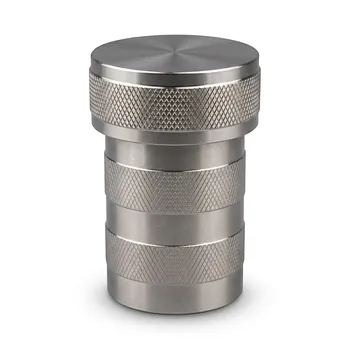
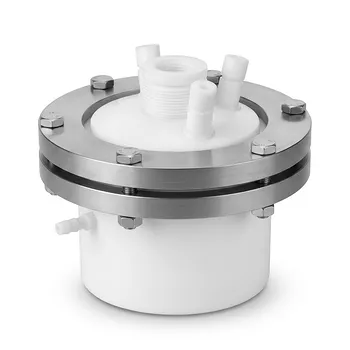
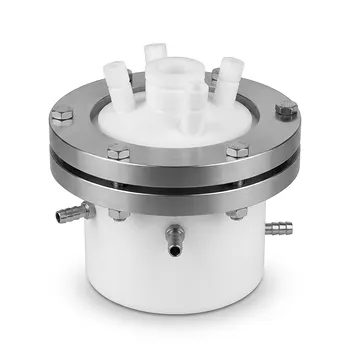
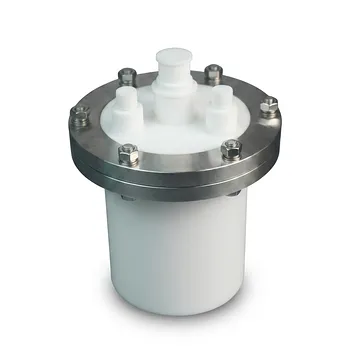
The reaction inside the vessel is "autogenous"—the pressure is generated by the thermal expansion of the liquid. At temperatures between 100°C and 300°C, this pressure can easily exceed 10 MPa. No polymer can withstand this force on its own. This is why the outer shell, or jacket, is crafted from high-strength stainless steel (typically Grade 304 or 316). Its sole job is to provide the mechanical integrity required to contain these immense forces without deforming.
2. The Inner Lining: The Chemical Sanctuary
Stainless steel, while strong, is chemically vulnerable. It reacts with acids and bases, and can introduce metal ions into your synthesis. The inner lining (or insert) is the actual reaction chamber. Usually made of PTFE (Polytetrafluoroethylene) or PPL, it acts as a chemically inert barrier.
The Root Cause of Failure: Most failures occur because of the gap between these two components. If the liner is not precision-machined to fit the steel cavity perfectly, the high pressure causes the polymer to "flow" or creep into any available space. This leads to the liner thinning out, losing its seal, or becoming permanently wedged in the shell.
The Solution: Precision Engineering for Extreme Conditions
True reliability in hydrothermal synthesis doesn't come from just having "a shell and a liner"—it comes from the precision of their marriage.
At KINTEK, we don't treat these as separate parts; we treat them as a calibrated system. By utilizing advanced CNC fabrication, we ensure that our PTFE and PFA liners fit their stainless steel jackets with microscopic tolerances. This "perfect fit" ensures that the pressure is distributed evenly against the steel walls, preventing the polymer from deforming even at the upper limits of its temperature and pressure ratings.
Our products are designed to solve the root causes of lab failures:
- Zero-Contamination Purity: We use high-purity PFA and PTFE specifically for trace analysis and sensitive chemical research.
- Mechanical Harmony: Our custom CNC machining eliminates the "slop" that leads to collapsed liners and failed seals.
- Safety-First Design: Our stainless steel jackets are rated for rigorous industrial standards, providing a reliable safety margin for high-pressure operations.
Beyond the Fix: Unlocking New Research Horizons
When you stop worrying about whether your reactor will survive the night, you gain the freedom to push the boundaries of what’s possible. Solving the hardware bottleneck opens up a new world of potential:
- Extreme Synthesis: Confidently explore higher temperature ranges for crystalline growth that was previously too "risky."
- High-Throughput Reliability: Achieve identical results across dozens of batches, a necessity for commercializing new battery materials or catalysts.
- Accelerated Timelines: Eliminate the "do-over" weeks caused by contaminated samples or equipment failure.
By understanding the synergy between the steel fortress and the inert sanctuary, you aren't just buying a lab tool—you are securing the integrity of your research.
Whether you are scaling up a semiconductor process or synthesizing the next generation of battery electrodes, your equipment should be a catalyst for discovery, not a point of failure. At KINTEK, we specialize in translating complex material requirements into high-precision reality. Contact our team today to discuss your custom CNC requirements or to find the perfect reactor configuration for your next breakthrough. Contact Our Experts
Related Products
- High Temperature Corrosion Resistant Hydrothermal Synthesis Reactor with TFM Inner Liner and Straight Cylinder Design
- PTFE Lined High Pressure Digestion Vessel 50ml High Temperature Hydrothermal Synthesis Tank
- PTFE Distillation Condensation Apparatus High Temperature Hydrofluoric Acid Resistant Fluorination Reaction Flask
- PTFE Flat Bottom Flask Continuous Reaction System Hydrofluoric Acid Resistant with Dropping Funnel
- High Pressure Custom TFM Reactor Stainless Steel Outer Vessel PTFE Inner Cup for Corrosive Synthesis
Related Articles
- Why Your Hydrothermal Synthesis Produces "Dust" Instead of Crystals: Mastering the Invisible Engine
- Why Your Hydrothermal Crystal Growth is Inconsistent—And How to Achieve Tailored Morphologies Every Time
- Why Your Advanced Materials Are Failing in the Lab—And How Hydrothermal Synthesis Resets the Standard
- Why Your Hydrothermal Synthesis Results Are Inconsistent—And How the "Dual-Shell" Design Fixes It
- Why Your Hydrothermal Synthesis Results Are Inconsistent—and How to Master the Pressure