The "Black Box" Frustration: When Perfect Recipes Yield Messy Results
You’ve followed the protocol to the letter. You’ve calculated the precursor concentrations, adjusted the pH with NaOH, and set the temperature exactly as the literature suggests. Yet, when you open your hydrothermal reactor after a 24-hour run, the results are disheartening. Instead of the uniform nanorods or high-purity nanosheets you expected, you find a clumpy, polydisperse sediment or, worse, an amorphous mess that refuses to crystallize.
In the world of advanced materials—whether you are developing the next generation of LiFePO4 battery cathodes or high-purity quartz for semiconductors—this inconsistency is more than a nuisance. It represents weeks of wasted laboratory time, expensive precursor loss, and a significant delay in moving from a benchtop prototype to a scalable industrial process.
The Common Struggle: The Trial-and-Error Trap
When crystal morphology fails to meet specs, most researchers instinctively turn to the "chemistry knobs." They increase the reaction time, spike the mineralizer concentration, or fluctuate the temperature. While these variables are important, they often fail to solve the underlying problem because they treat the hydrothermal reactor as a simple heated container rather than a dynamic physical environment.
The consequences of this "trial-and-error" approach are costly. In battery research, inconsistent particle size directly leads to poor ion diffusion and erratic capacity retention. In chemical sensing, a lack of morphological uniformity means your sensors will never achieve a reliable detection limit. If you cannot control the environment inside the vessel, you cannot control the product.
The Root of the Problem: It’s Physics, Not Just Chemistry
To understand why your crystals aren't "behaving," we must look at what happens inside the sealed vessel. A hydrothermal reactor isn't just a pot; it is a closed-system environment that exploits the unique properties of water above 100°C and 1 atm.
The secret to tailored morphology lies in two often-overlooked factors:
- Convective Precision: In a high-quality reactor, a precise temperature gradient is maintained. Nutrient material dissolves in the hotter zone and is transported by density-driven convection currents to the cooler zone. If the internal geometry of your vessel is inconsistent, these currents become chaotic, leading to uneven supersaturation and "random" crystal growth.
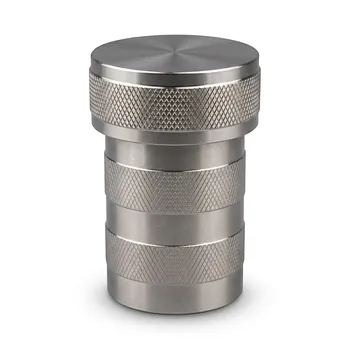
- The "Liner" Contamination Gap: At high temperatures and pressures, water becomes a powerful solvent. If your reactor liner—the barrier between your chemistry and the stainless steel shell—is made of low-grade or recycled PTFE, it can leach trace metals or organic impurities. These impurities "poison" the crystal lattice, arresting growth in some directions and causing the very irregularities you are trying to avoid.
Most "common" solutions fail because they focus on the precursors while ignoring the fact that the reaction environment itself is unstable or contaminated.
The Solution: Engineering the Ideal Growth Environment
Achieving specific morphologies like nanowires or hollow spheres requires a reactor that functions as a precision-engineered tool, not just a hardware component. This is where the quality of the internal liner and the vessel's thermal stability become the deciding factors.
At KINTEK, we design our hydrothermal synthesis liners and reactors with the understanding that inertness is the foundation of morphology control.
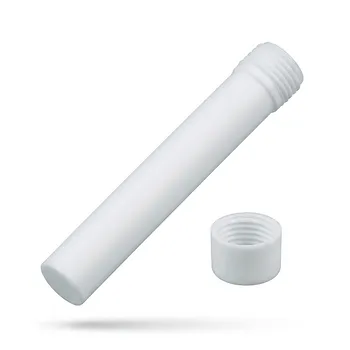
- Ultra-High Purity Materials: By using premium PTFE and PFA, we ensure that your reaction remains a "closed loop." Our liners act as an absolute chemical barrier, preventing the oxidation or stress-corrosion of the outer stainless steel shell from migrating into your sample.
- CNC-Machined Precision: Unlike molded liners that may have internal stresses or uneven wall thicknesses, our liners are custom CNC-fabricated. This ensures a perfect fit within the autoclave, which is critical for maintaining the stable pressure and thermal gradients necessary for epitaxial deposition and uniform crystal growth.
- Thermal Resilience: Whether you are using mineralizers like KOH or high-pressure aqueous solutions, our components are designed to handle the solvating power of "super-heated" water without deforming, ensuring your reaction parameters remain constant from hour 1 to hour 100.
Beyond the Fix: Unlocking New Material Frontiers
When you stabilize the hydrothermal environment, you move from "hoping for the best" to "designing by intent."
By eliminating the variables of contamination and thermal instability, you can finally master the production of crystalline phases that are impossible to create via traditional melt-growth methods. You can produce cathode powders with optimized surface areas for faster charging, synthesize synthetic gemstones with zero optical defects, or create nanostructured catalysts with precisely tuned active sites.
Solving the hydrothermal challenge doesn't just fix a failed experiment; it provides a reliable pathway to scale your research into high-volume industrial production for the semiconductor and green energy sectors.
At KINTEK, we understand that your research depends on the absolute integrity of your laboratory environment. Whether you are struggling with inconsistent trace analysis results or need a custom-engineered CNC solution for a specialized electrochemical cell, our team is ready to help you bridge the gap between complex chemistry and reliable hardware. Contact Our Experts today to discuss how our high-precision PFA and PTFE solutions can bring stability and scale to your next project.
Related Products
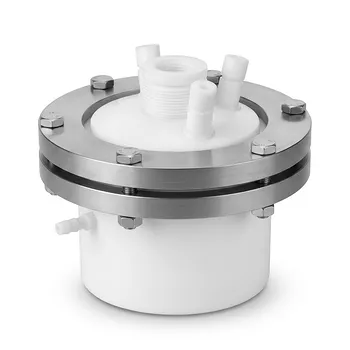
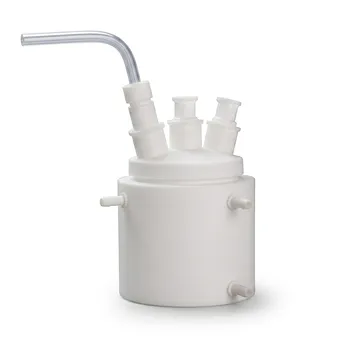
- High Temperature Corrosion Resistant Hydrothermal Synthesis Reactor with TFM Inner Liner and Straight Cylinder Design
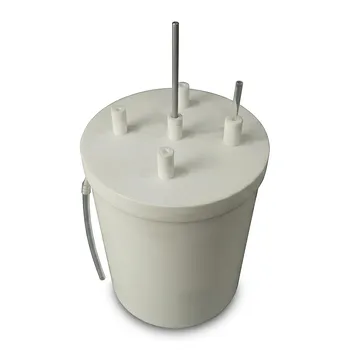
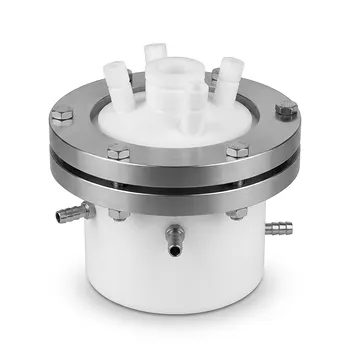
- Custom TFM Reaction Vessel with Stainless Steel Jacket and PTFE Inner Cup for High Corrosion Resistance
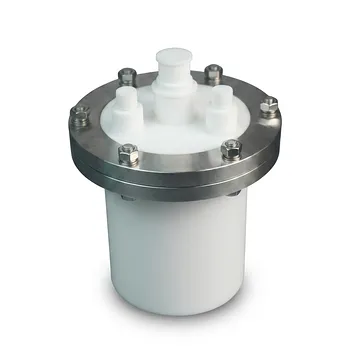
- PTFE Lined High Pressure Digestion Vessel 50ml High Temperature Hydrothermal Synthesis Tank
- High Pressure Custom TFM Reactor Stainless Steel Outer Vessel PTFE Inner Cup for Corrosive Synthesis
- High Purity TFM Microwave Digestion Vessels PTFE Acid Evaporation Liners Domestic GT-400 Equivalent Laboratory Reaction Containers
Related Articles
- Why Your Hydrothermal Synthesis Produces "Dust" Instead of Crystals: Mastering the Invisible Engine
- Why the "Inner-Outer" Synergy is the Secret to Flawless Hydrothermal Synthesis
- Why Your Advanced Materials Are Failing in the Lab—And How Hydrothermal Synthesis Resets the Standard
- Why Your Hydrothermal Synthesis Results Are Inconsistent—And How the "Dual-Shell" Design Fixes It
- Why Your Hydrothermal Synthesis Results Are Inconsistent—and How to Master the Pressure