The Invisible Thief of Process Efficiency
Imagine your laboratory or production line is running at peak performance. Your thermal gradients are perfect, and your yields are optimized. But slowly, almost imperceptibly, things begin to drift. The chiller works harder, the energy bills climb, and the condensation rate drops.
This isn't a mechanical failure; it is "efficiency drift"—the gradual buildup of scale, biofilms, and particulates on the inner walls of your condenser. It is a problem that plagues the semiconductor, new energy, and chemical research sectors alike, turning high-precision processes into maintenance nightmares.
The Cost of the "Standard" Struggle
When faced with declining heat transfer, most operators fall into a reactive cycle. We see labs and plants attempting to fight the problem with two traditional, yet flawed, methods:
- Aggressive Chemical Descaling: Using concentrated acids to eat away at mineral deposits. While effective in the short term, this often leads to tube-wall thinning, pitting, and eventual leaks.
- Mechanical Scrubbing: Manual cleaning that requires hours of downtime, labor costs, and the risk of damaging delicate components.
In the fast-paced world of battery testing or semiconductor fabrication, these "solutions" are actually liabilities. They lead to project delays, increased lifecycle costs, and—perhaps most dangerously—the risk of product contamination from the very metals the tubes are made of.
The Physics of Adhesion: Why Everything Sticks to Metal
To solve the fouling problem, we have to look at the interface between the fluid and the tube wall. Conventional metallic tubes, even those that are highly polished, possess a microscopic surface architecture of "peaks and valleys." These provide the perfect anchoring points for mineral scale and organic biofilms to take hold. Once the first layer adheres, a "snowball effect" begins, insulating the tube and killing heat transfer.
Furthermore, metals are chemically reactive. In the presence of concentrated sulfuric, hydrochloric, or nitric acids, the surface of the metal undergoes a chemical change, creating a "corrosion crust" that is exceptionally difficult to remove without destroying the tube itself.
Engineering the Solution: The PTFE Advantage
True solution doesn't come from cleaning harder; it comes from changing the physics of the surface. This is where PTFE (Polytetrafluoroethylene) changes the game.
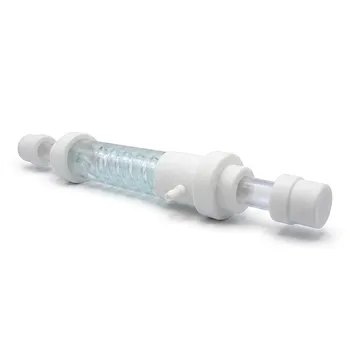
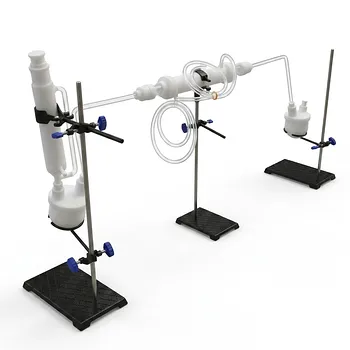
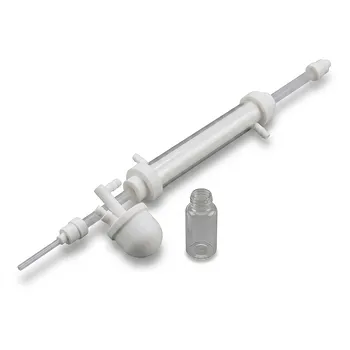
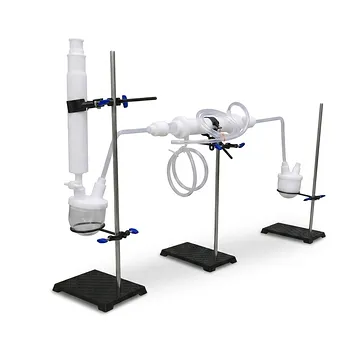
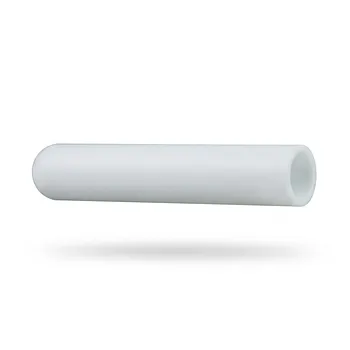
At KINTEK, we specialize in high-precision PTFE and PFA laboratory products precisely because they tackle the root cause of fouling. PTFE condenser tubes offer three specific technical advantages that standard alloys cannot match:
- Extreme Low Friction: With a coefficient of friction between 0.05 and 0.10, PTFE is one of the "slipperiest" solids in existence. Particulates and biofilms simply cannot find a foothold to begin the fouling process.
- True Hydrophobicity: Because the surface is hydrophobic, aqueous solutions roll off the surface rather than "wetting" it. This keeps the heat transfer surface clean and maintains design coefficients over the long term.
- Universal Chemical Inertness: Unlike metals, PTFE is resistant to nearly all corrosive media—from halogenated compounds to the most aggressive acids. There is no wall thinning, no pitting, and no chemical bonding between the process fluid and the tube wall.
By using high-purity PTFE, we ensure that maintenance is simplified to a basic flushing process, eliminating the need for aggressive descaling chemicals forever.
From Maintenance Cycles to Decades of Reliability
When you eliminate the fundamental causes of fouling and corrosion, your operational horizon shifts. You are no longer looking at "when is the next shutdown?" but rather "how far can we push this technology?"
By switching to PTFE condenser systems, our clients achieve a service life that frequently exceeds 10 to 20 years. In high-purity trace analysis or semiconductor research, this means more than just saving money—it means absolute confidence that your results aren't being skewed by metallic leaching or fluctuating thermal performance. You gain the freedom to run longer experiments, explore more volatile chemistries, and scale up production without the constant overhead of maintenance downtime.
Building a reliable fluid transfer or thermal management system shouldn't feel like a constant battle against physics. Whether you are designing a specialized prototype or scaling up a high-volume industrial order, our team at KINTEK is ready to help you engineer a "set-and-forget" solution tailored to your specific chemical environment. Let’s discuss how our precision-machined PTFE and PFA components can solve your most persistent process challenges. Contact Our Experts.
Related Products
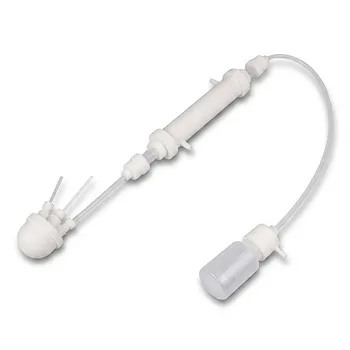
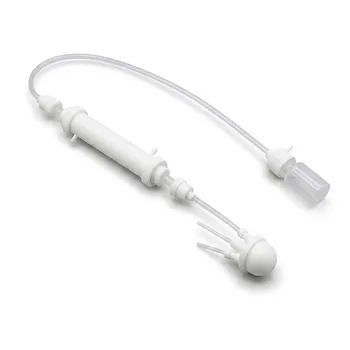
- Custom PTFE Condenser Tube 100ml Serpentine and Straight Fluoropolymer Laboratory Heat Exchanger with Flask Adapters
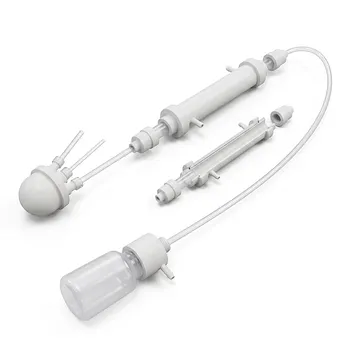
- Custom PTFE Condenser Tube Hydrofluoric Acid Resistant Reflux Device Constant Pressure Separatory Funnel
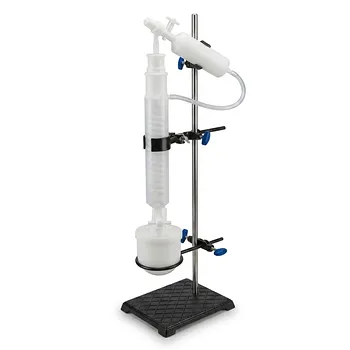
- Custom PTFE Condenser Tube Reflux Reaction Condensation Purification Device Semiconductor Chemical Lab Equipment
- Custom PTFE Condensation Device Reflux Condenser Tube Fluoropolymer Heat Exchanger Chemical Resistant Laboratory Apparatus
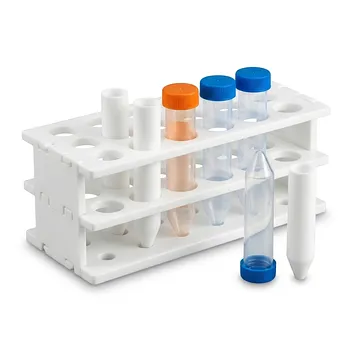
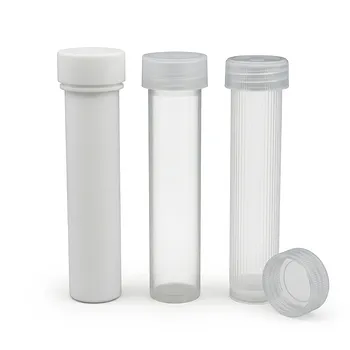
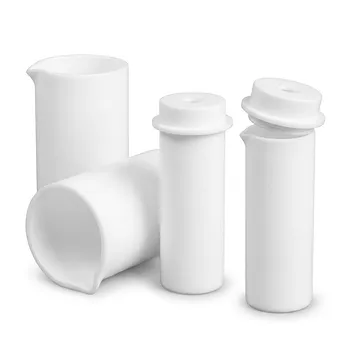
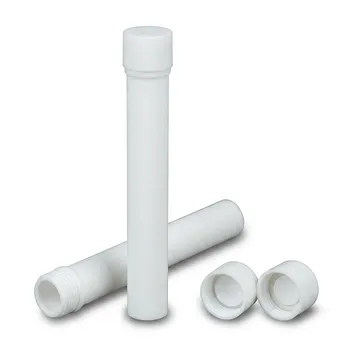
- High Purity PTFE Digestion Tubes and Custom Centrifuge Tubes 100ml for Trace Analysis and Chemical Digestion
Related Articles
- Beyond the Melting Point: Why Your Condenser Tubes Fail Under Thermal Stress—and How PTFE Solves It
- Why Trace Contamination Still Haunts Your Yields—And the Overlooked Role of Condenser Surface Integrity
- The Hidden Risks of Medical Fluid Transfer: Why Standard Tubing Fails and How to Solve the Purity Puzzle
- Why Your PTFE Tubing Shouldn't Be "Melted": Understanding the Power of Paste Extrusion
- Why Your High-Purity Fluid Systems Keep Failing: The Hidden Culprit in Your Connectors