The Invisible Failure: Why "It Hasn't Melted Yet" Is a Dangerous Metric
Imagine you are running a critical hydrothermal synthesis or a high-temperature solvent evaporation. You’ve checked the data sheets: Polytetrafluoroethylene (PTFE) has a melting point of 327°C (620°F). Your oven is set comfortably below that, at 290°C. Yet, when the cycle ends, your custom-machined vessel is slightly warped, the seal has failed, and your high-purity sample is contaminated.
This is a scenario we see frequently in chemical research and semiconductor labs. There is a persistent misconception that as long as a plastic component hasn't turned into a liquid puddle, it is "operating normally." In the world of high-precision PTFE, the gap between "functional" and "catastrophic failure" is much narrower—and more complex—than a single temperature number suggests.
The Common Struggle: Chasing Efficiency at the Edge of Failure
When a PTFE component fails prematurely, the initial reaction is often to blame the material grade or to "over-engineer" the part by making it thicker. Researchers and engineers often find themselves in a cycle of:
- Replacing warped components every few weeks, leading to unexpected downtime and mounting costs.
- Dealing with inconsistent trace analysis results because the PTFE began to micro-decompose, leaching trace impurities into the sample.
- Suffering from "creep" or cold flow, where the component loses its shape under pressure, even at temperatures well below the melting point.
The business consequences are real: project delays, ruined expensive reagents, and the constant overhead of replacing precision-machined parts like microwave digestion vessels or battery testing fixtures.
The Root of the Problem: Understanding the "Sintering" Reality
To solve these failures, we must look at the unique molecular behavior of PTFE. Unlike standard thermoplastics that melt and flow like water when they reach their limit, PTFE is a "high melt viscosity" polymer.
Here is what is actually happening inside your labware:
- The Continuous Service Limit vs. The Melting Point: While PTFE melts at 327°C, its continuous service temperature is only 260°C (500°F). Above this threshold, the material's mechanical strength drops off a cliff. It doesn't melt away; it becomes soft, like gel.
- Dimensional Instability: PTFE has a high coefficient of thermal expansion. As it nears 260°C, it expands significantly. If your component was CNC-machined to tight tolerances, those tolerances vanish as the material "relaxes" or warps.
- Chemical Decomposition: Decomposition doesn't wait for the melting point. It begins slowly at 260°C and accelerates rapidly above 400°C. In trace analysis, even the slightest outgassing or breakdown can ruin a month of research.
- The Cryogenic Paradox: On the flip side, many users assume PTFE becomes brittle like glass in extreme cold. However, PTFE remains flexible and tough down to -200°C (and even as low as 5K near liquid helium temperatures). Failure in the cold usually comes from a lack of "give" in the fittings, not the material itself.
The Solution: Precision Engineering for Thermal Reality
Truly solving these thermal issues requires more than just buying "PTFE." It requires components designed with the material’s physics in mind.
At KINTEK, we don’t just manufacture labware; we engineer solutions that respect the thermal boundaries of high-performance polymers. Our approach targets the root cause of thermal failure through:
- Precision CNC Fabrication: We machine our PTFE and PFA products to account for thermal expansion. By understanding the intended operating temperature—whether it’s a cryogenic battery test or a high-heat electrochemical cell—we ensure the part maintains its seal and integrity where others fail.
- High-Purity Material Sourcing: To prevent leaching during the slow decomposition phase, we use high-purity grades specifically designed for semiconductor and trace analysis applications.
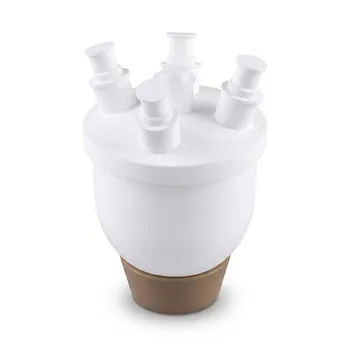
- Application-Specific Design: Whether it’s a hydrothermal synthesis liner or a microwave digestion vessel, our products are designed to stay within the "Safe Zone" of -200°C to +260°C, providing a buffer for short-term excursions up to 300°C without permanent deformation.
Opening New Doors in Research and Production
When you stop worrying about whether your labware will survive the night in the oven, you can focus on the science that matters.
Reliable thermal performance means you can conduct longer-duration stability tests, explore more aggressive chemical reactions in hydrothermal synthesis, and achieve higher yields in semiconductor manufacturing. By moving from "reactive replacement" to "engineered reliability," you reduce the total cost of ownership and accelerate your path to market.
Whether you are pushing the boundaries of new energy in battery testing or performing sub-ppb trace analysis, your equipment should be the foundation of your success, not a variable in your data.
If you’re facing inconsistent results or premature component failure in your high-temperature or cryogenic applications, our team is ready to help. We specialize in custom CNC solutions tailored to the most demanding thermal environments in the industry. Contact Our Experts today to discuss your specific project requirements.
Related Products
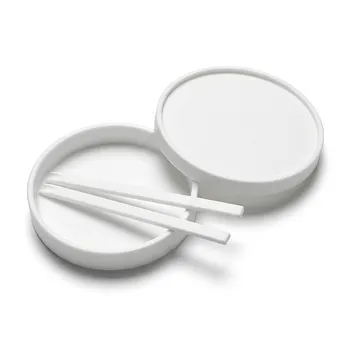
- Custom Polytetrafluoroethylene PTFE Petri Dishes 60mm Corrosion Resistant Low Background Labware
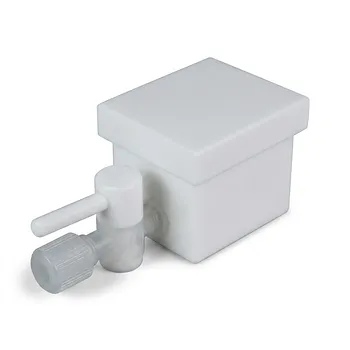
- Custom PTFE Laboratory Apparatus Corrosion Resistant Low Background Reaction Cells Precision CNC Fabrication
- Custom PTFE Petri Dishes Corrosion Resistant High Purity Low Background Labware
- Custom PTFE Petri Dish 120mm Diameter Corrosion Resistant Low Background High Purity Labware
- Custom PTFE Petri Dish 30mm Corrosion Resistant Low Background Non Leaching Laboratory Ware
Related Articles
- Why Your PTFE Labware Fails at High Temps—And It's Not the Bottle's Fault
- Beyond 'Non-Stick': The Physics and Psychology of Purity in PTFE Labware
- Why Traditional Plastic Molding Fails with PTFE—And the Secret to Precision Labware Fabrication
- How Teflon Sheets Ensure Safety and Efficiency in Food Processing