The Invisible Saboteur in Your Laboratory
You are weeks into a critical battery cycling test or a complex trace analysis. Everything seems perfect—until it isn't. Suddenly, the baseline drifts, the electrolyte discolors, or your high-precision fixture shows signs of "sweating" and degradation.
In high-stakes research environments, especially within the semiconductor and new energy sectors, these inconsistencies are more than just a nuisance; they are a sign that your hardware is surrendering to your chemistry. We often treat laboratory containers and fixtures as passive bystanders, but when they interact with aggressive solvents or electrolytes, they become active participants that can sabotage your data.
The Cost of "Good Enough" Materials
When faced with material failure, the common reaction is to replace components more frequently or to try "upgrading" to slightly thicker plastics. Many researchers find themselves caught in a cycle of:
- Frequent recalibrations to account for leaching ions.
- Premature hardware replacement due to material swelling or cracking.
- Cloudy data where it’s impossible to tell if a reaction failure was due to the experiment itself or contamination from the vessel.
The business consequences are stark: project timelines slip, expensive reagents are wasted, and the reliability of your R&D output is called into question. These failures occur because many materials that appear "resistant" on a spec sheet lack the fundamental atomic structure to withstand the brutal environment of modern chemical engineering.
The Secret of the Fluorine Armor
To understand why some materials fail while others endure, we have to look at the atomic level. Polytetrafluoroethylene (PTFE) isn't just "non-stick"; it is a marvel of molecular engineering.
At its core, PTFE consists of a long, linear chain of carbon atoms. However, this backbone is not exposed. It is entirely shielded by a dense "sheath" of fluorine atoms. This creates a two-layer defense mechanism:
- The Strongest Shield in Organic Chemistry: The bond between carbon and fluorine (C-F) is incredibly strong, possessing a bond energy of approximately 485 kJ/mol. It is one of the most difficult bonds to break in the known world.
- The Helical "Body Armor": The fluorine atoms don't just sit there; they twist the carbon chain into a tight helical conformation. This means the carbon backbone is physically buried under an electron-dense "armor" of fluorine.
While common polymers may have "exposed joints" where aggressive acids or organic solvents can attack the carbon chain, PTFE is effectively a sealed vault. This is why it doesn't swell in organic carbonate solvents and refuses to leach ions into your sulfuric acid—the chemical agents simply cannot find a way to "touch" the core of the molecule.
Precision Engineering: Turning Science into Performance
Understanding the science of PTFE is one thing; applying it to a high-precision laboratory environment is another. At KINTEK, we don't just provide plastic; we provide engineered chemical fortresses.
Because we understand the molecular rigidity and inertness of PTFE and PFA, we use advanced custom CNC fabrication to ensure that this "atomic armor" remains uncompromised during manufacturing. Whether it is a complex battery testing fixture or a high-purity trace analysis vessel, our products are designed to leverage PTFE's inherent properties:
- Zero Leaching: For trace analysis where even parts-per-billion matter.
- Total Electrolyte Compatibility: Our components withstand aggressive lithium-ion and solid-state battery electrolytes without swelling or degrading.
- Thermal and Chemical Stability: From hydrothermal synthesis liners to microwave digestion vessels, our PTFE labware maintains its structural integrity where others melt or corrode.
By selecting high-purity materials and applying precision machining, we ensure that the material's molecular strengths translate directly into your lab’s data reliability.
Beyond the Fix: New Frontiers in Research
When you eliminate the "noise" caused by material degradation, a world of new possibilities opens up. Solving the problem of chemical inertness isn't just about saving money on replacement parts—it’s about what you can achieve when your hardware is no longer a variable.
With reliable, inert PTFE components, you can:
- Run ultra-long-term stability tests for next-generation batteries without fear of fixture failure.
- Achieve unprecedented accuracy in trace metal analysis for semiconductor-grade chemicals.
- Accelerate your time-to-market by removing the need for repeated "failed-material" troubleshooting.
At KINTEK, we specialize in helping researchers bridge the gap between complex chemical requirements and high-performance hardware. Whether you need a specialized prototype for a new energy project or high-volume industrial components, our team is ready to help you solve your toughest material challenges.
Contact Our Experts today to discuss how our custom PTFE and PFA solutions can provide the stability and precision your research demands.
Related Products
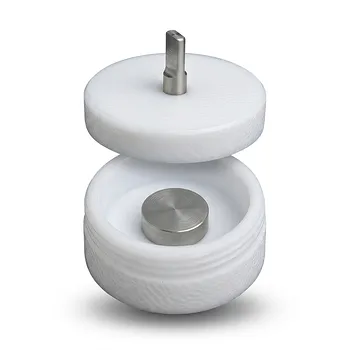
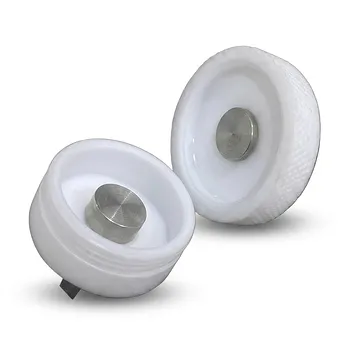
- Acid Resistant PTFE Button Cell Battery Test Fixture Customizable Machining High Purity Electrochemical Testing Clamp
- Corrosion Resistant PTFE Coin Cell Battery Testing Clamps and Acid Proof Custom Fluoropolymer Battery Fixtures
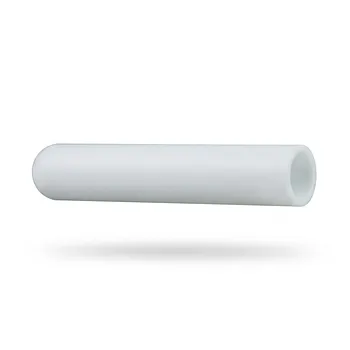
- Custom PTFE Test Tubes Corrosion Resistant Low Background Fluoropolymer Labware 50ml 30ml
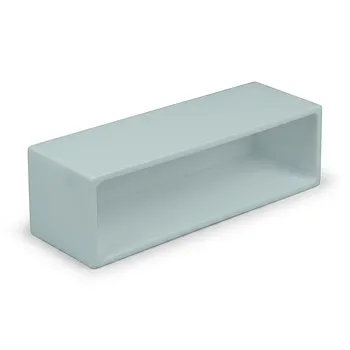
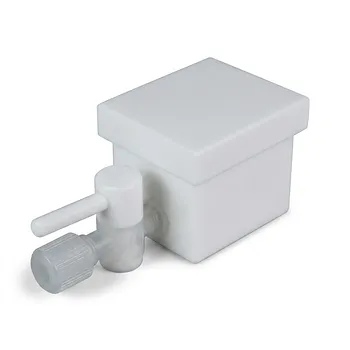
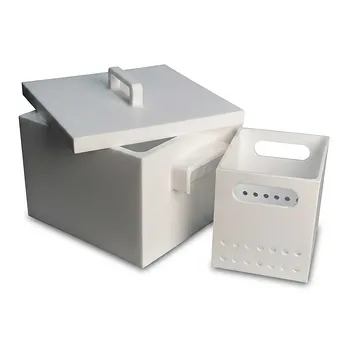
- Custom PTFE Reaction Box Opaque White Square Electrochemical Cell Tank
- Custom PTFE Laboratory Apparatus Corrosion Resistant Low Background Reaction Cells Precision CNC Fabrication
Related Articles
- The Invisible Creep: Why Your PTFE Battery Clamps Fail and How to Achieve Perfect Contact
- Why Electrode Polarities Flip—And How to Ensure Your Battery Tests Never Fail
- Why Inconsistent Battery Test Results Start at the Clamp—And How to Fix It
- Why Your Electrolysis Results Are Drifting: The Hidden Impact of Cell Environment on Non-Spontaneous Reactions
- Is Your Electrode Housing Corrupting Your Data? Why PTFE Jackets Are Crucial for Precise Electrochemistry