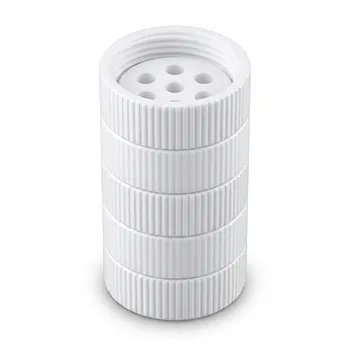
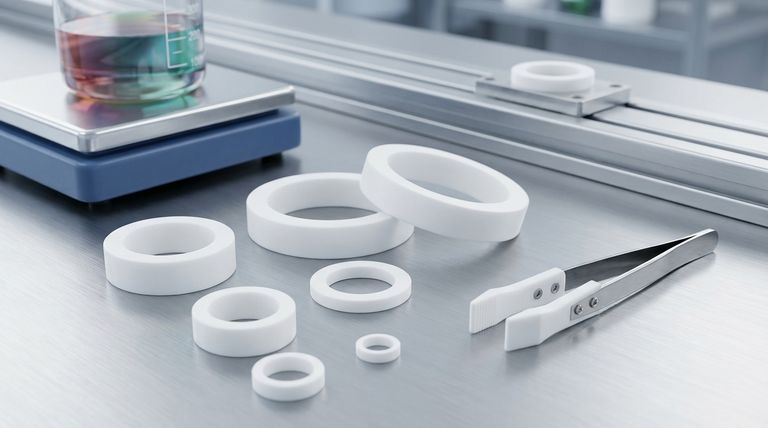
At their core, PTFE spacer rings are defined by a unique combination of properties that make them exceptionally versatile for demanding industrial applications. Their primary characteristics include unparalleled chemical resistance, an extremely low coefficient of friction, a wide operating temperature range, and excellent electrical insulation.
The true value of PTFE lies not in a single property, but in how its chemical inertness, thermal stability, and low-friction nature work together to ensure reliability and longevity in environments where most other materials would quickly fail.
The Core Chemical and Thermal Properties
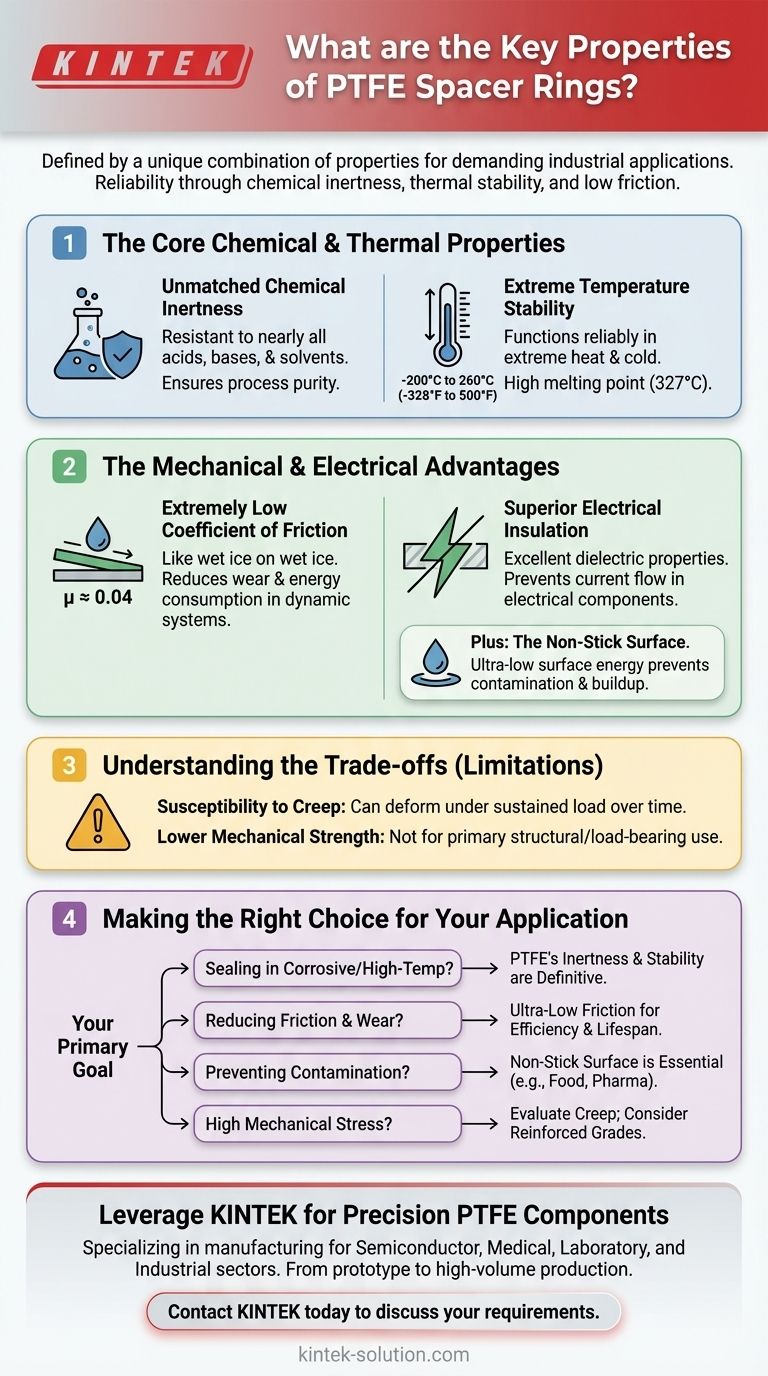
The foundational strengths of PTFE (polytetrafluoroethylene) are its near-total immunity to chemical attack and its ability to perform across extreme temperatures.
Unmatched Chemical Inertness
PTFE is resistant to nearly all industrial chemicals, including the most aggressive acids, bases, and organic solvents.
This exceptional stability makes it an ideal material for seals and spacers in equipment like reaction kettles and chemical storage tanks, preventing degradation and ensuring process purity.
Extreme Temperature Stability
PTFE functions reliably across a vast temperature spectrum, typically from -200°C to 260°C (-328°F to 500°F).
While its functional limit is around 260°C, it has a very high melting point of 327°C. This allows it to maintain its integrity in applications where other polymers would become brittle or melt.
The Mechanical and Electrical Advantages
Beyond its chemical and thermal resilience, PTFE's physical properties provide distinct advantages in mechanical and electrical systems.
Extremely Low Coefficient of Friction
PTFE has one of the lowest friction coefficients of any solid material, often compared to the friction of wet ice on wet ice (approximately 0.04).
This characteristic is critical for reducing wear and energy consumption in dynamic applications, such as in transmission pipelines or moving machinery, by allowing components to slide past each other with minimal resistance.
Superior Electrical Insulation
PTFE possesses excellent dielectric properties, meaning it does not conduct electricity.
This makes it a superior choice for spacers and insulators in electrical components where preventing the flow of current is a primary requirement.
The Non-Stick Surface
Due to its ultra-low surface energy, almost no substances will adhere to PTFE.
This non-stick quality is vital for preventing contamination, reducing buildup, and ensuring the smooth, consistent operation of components.
Understanding the Trade-offs
While its properties are exceptional, it is crucial to understand the material's limitations to ensure proper application. PTFE is not a universal solution for every engineering challenge.
Susceptibility to Creep
Under sustained compressive loads, PTFE can be susceptible to "creep" or "cold flow," meaning it can slowly deform over time. This must be considered in high-pressure static sealing applications where dimensional stability is critical.
Lower Mechanical Strength
Compared to high-performance engineering plastics like PEEK or metals, PTFE is a relatively soft material with lower tensile strength and rigidity. It is not intended for use as a primary structural or load-bearing component.
Making the Right Choice for Your Application
Selecting the right material requires matching its properties to your primary operational goal.
- If your primary focus is sealing in highly corrosive or high-temperature environments: PTFE's chemical inertness and thermal stability make it the definitive choice.
- If your primary focus is reducing friction and wear in dynamic systems: The ultra-low friction coefficient offers unmatched performance for improving efficiency and component lifespan.
- If your primary focus is preventing contamination or material buildup: PTFE's non-stick surface is essential for applications in the food, pharmaceutical, and semiconductor industries.
- If your application involves high mechanical stress or static loads: You must carefully evaluate the potential for creep and consider reinforced PTFE grades or alternative materials.
Ultimately, understanding these key properties empowers you to leverage PTFE spacer rings for creating more reliable, efficient, and long-lasting systems.
Summary Table:
| Key Property | Description | Key Benefit |
|---|---|---|
| Chemical Inertness | Resistant to nearly all acids, bases, and solvents. | Ensures reliability and purity in corrosive environments. |
| Temperature Stability | Operates from -200°C to 260°C (-328°F to 500°F). | Maintains performance in extreme heat and cold. |
| Low Friction | Extremely low coefficient of friction (~0.04). | Reduces wear and energy consumption in dynamic systems. |
| Electrical Insulation | Excellent dielectric properties. | Ideal for insulating components in electrical applications. |
| Non-Stick Surface | Ultra-low surface energy prevents adhesion. | Prevents contamination and material buildup. |
Leverage the unique properties of PTFE for your critical applications.
Do you need high-performance PTFE spacer rings, seals, liners, or custom labware that can withstand corrosive chemicals, extreme temperatures, and reduce friction? KINTEK specializes in the precision manufacturing of PTFE components for the semiconductor, medical, laboratory, and industrial sectors.
We partner with you from prototype to high-volume production to ensure your components deliver unmatched reliability and longevity.
Contact KINTEB today to discuss your specific requirements and get a quote for your project.
Visual Guide
Related Products
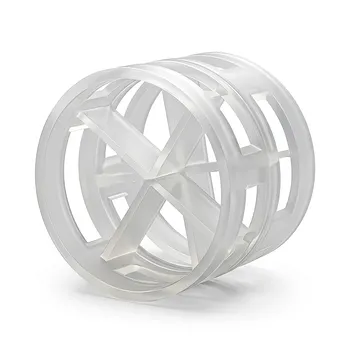
- High Purity PFA PTFE Raschig Rings for Chemical Distillation Tower Packing in Acidic and Alkaline Environments
- Custom PTFE Insulating Gaskets and Corrosion Resistant Fluoropolymer Seals for Industrial Electrical Applications
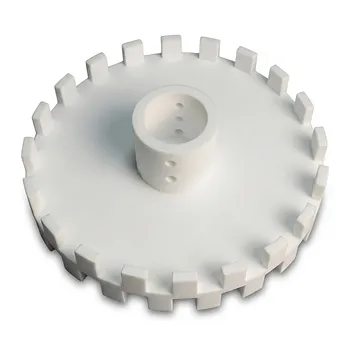
- Corrosion Resistant PTFE Stirring Disk Chemical Dispersion Plate 350mm Diameter Fluoropolymer Mixer Accessory
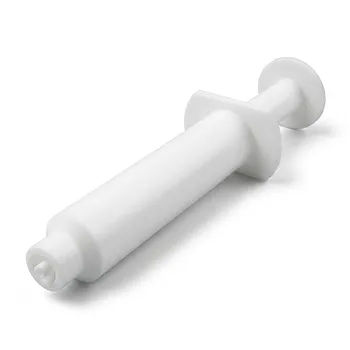
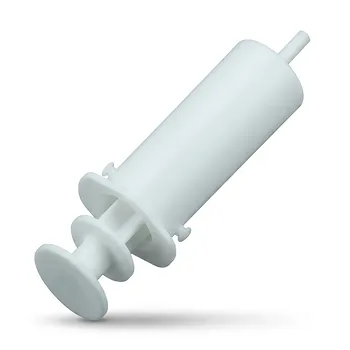
- Virgin PTFE Precision Syringe for Chemical Dispensing and Syringe Pump Integration with FEP Tubing Compatibility
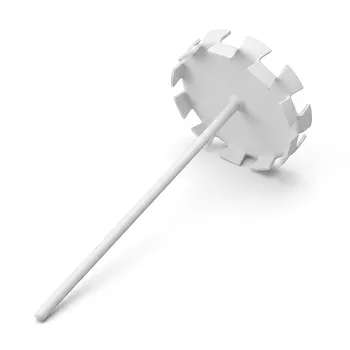
- High Purity Corrosion Resistant PTFE Dispersion Disk and Inert Stirring Paddle for Food Pharmaceutical and Cosmetic Mixing
People Also Ask
- What properties make PTFE seal rings suitable for food, beverage, and pharma? Ensure Purity & Regulatory Compliance
- What are the key properties of PTFE that make it suitable for sealing rings? Unmatched Chemical & Thermal Resistance
- How does temperature affect the performance and design of PTFE seal rings? Optimize for -200°C to +260°C environments.
- How do PTFE seal rings perform in the high-pressure and corrosive environments of the oil and gas sector? - Guide
- How do fillers such as glass fiber, carbon, bronze, and graphite enhance the performance of PTFE seal rings? Key Benefits