While best known for its non-stick surface, the true value of Teflon (PTFE) in sensitive industries lies in its softness. This property is not about being weak, but about being flexible and conformable. This allows Teflon to create exceptionally tight, hygienic seals in processing equipment and enables the smooth, low-friction movement required for modern medical devices like catheters and syringes.
The core benefit of Teflon's "softness" is its unique combination of flexibility and an extremely low coefficient of friction. This allows it to function simultaneously as a perfect sealant, a non-stick surface, and a self-lubricating material, making it indispensable for applications where hygiene and smooth operation are paramount.
The Dual Advantage: Sealing and Smooth Movement
Teflon's physical properties solve two major engineering challenges in the medical and food sectors: preventing contamination and ensuring reliable mechanical motion. Its softness is the foundational characteristic that enables both.
Creating Hygienic, Leak-Proof Seals
Teflon's ability to deform slightly under pressure allows it to conform perfectly to the surfaces of pipes, valves, and pumps.
This creates an impenetrable, leak-proof seal that is critical for maintaining sterile environments in medical applications and preventing cross-contamination in food processing.
Because Teflon is also chemically inert, the seal does not react with or degrade from contact with bodily fluids, cleaning agents, or various food products.
Ensuring Flexibility in Dynamic Applications
In devices like catheters or flexible tubing, rigidity is a liability. Teflon’s softness provides the necessary elasticity and flexibility for these dynamic applications.
This ensures the device can navigate complex pathways, such as blood vessels, without causing damage, while maintaining its structural integrity.
The Role of Low Friction
Softness works in tandem with Teflon's most famous trait: its extremely low friction.
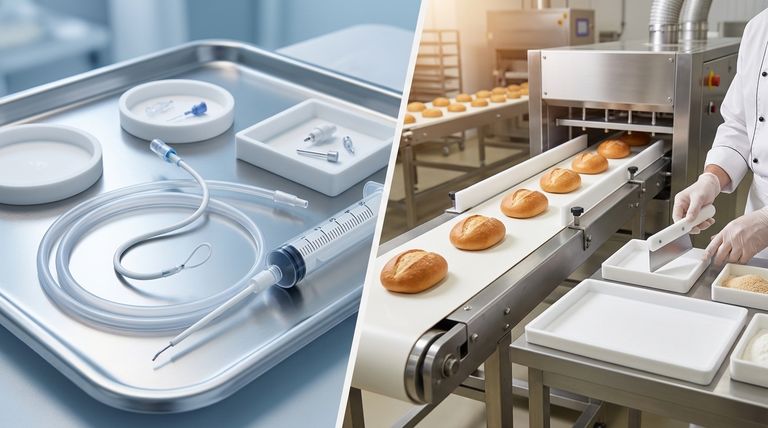
In medical devices like syringes, this combination ensures a smooth, consistent plunger motion without sticking. In industrial machinery, it allows sliding bearings and other plastic components to move effortlessly, reducing wear and energy consumption.
How Softness Enhances Non-Stick Performance
The renowned non-stick capability of Teflon is directly linked to its material nature. It prevents adhesion at a molecular level, a benefit that drives significant efficiency in food production.
Preventing Material Buildup
In food processing, equipment must remain clean to ensure product quality and safety.
Teflon coatings on components like cheese augers, potato chip knives, and dough cutters prevent residue from building up. This ensures uniform cuts, consistent product quality, and dramatically reduces the need for cleaning.
Improving Operational Efficiency
By preventing food from sticking to surfaces, Teflon liners on baking sheets, conveyor belts, and molds make cleanup faster and simpler.
This directly translates to reduced downtime and enhanced plant efficiency. Production lines can run continuously for longer periods, minimizing the costly process of stopping, disassembling, and cleaning equipment.
Understanding the Trade-offs
No material is perfect. Acknowledging the limitations of Teflon is crucial for its proper application. Its softness, while a benefit, also introduces specific constraints.
Limited Structural Strength
Teflon is not a structurally rigid material. It is unsuitable for high-load, structural components as it can deform under sustained pressure, a phenomenon known as "creep."
Susceptibility to Abrasion
Softer materials are inherently more susceptible to scratches and physical wear. In environments with abrasive particles, a Teflon coating can be damaged, compromising its non-stick and sealing properties.
Temperature Ceiling
While Teflon has excellent high-temperature resistance for a polymer (up to 327°C), it has a firm limit. Exceeding this temperature will cause the material to degrade and release fumes, a critical safety consideration in any application.
Making the Right Choice for Your Goal
To leverage Teflon effectively, you must align its unique properties with your primary operational objective.
- If your primary focus is hygiene and contamination control: Use Teflon for its ability to form tight, non-reactive, and easily cleanable seals in gaskets, valves, and fluid handling systems.
- If your primary focus is smooth, low-friction movement: Apply it in medical devices or sliding mechanical components where effortless, reliable motion is critical to performance.
- If your primary focus is production efficiency and uptime: Utilize Teflon coatings on processing equipment like blades, molds, and conveyors to prevent material buildup and minimize cleaning cycles.
Understanding that Teflon's softness is the key to its sealing, flexibility, and non-stick capabilities allows you to deploy it strategically for safer and more efficient operations.
Summary Table:
| Benefit | Application in Medical Industry | Application in Food Industry |
|---|---|---|
| Hygienic Sealing | Seals in valves & pumps for sterile environments | Prevents cross-contamination in processing equipment |
| Flexibility & Low Friction | Enables smooth motion in catheters and syringes | Reduces wear in sliding bearings and moving parts |
| Non-Stick Performance | Prevents adhesion in medical device components | Prevents residue buildup on blades, molds, and conveyors |
Leverage Teflon's unique properties for your application. KINTEK specializes in the precision manufacturing of custom PTFE components like seals, liners, and labware. Whether you are in the semiconductor, medical, laboratory, or industrial sector, we can help you enhance hygiene, improve efficiency, and ensure reliable performance. Contact our experts today to discuss your project needs from prototype to high-volume production.
Visual Guide
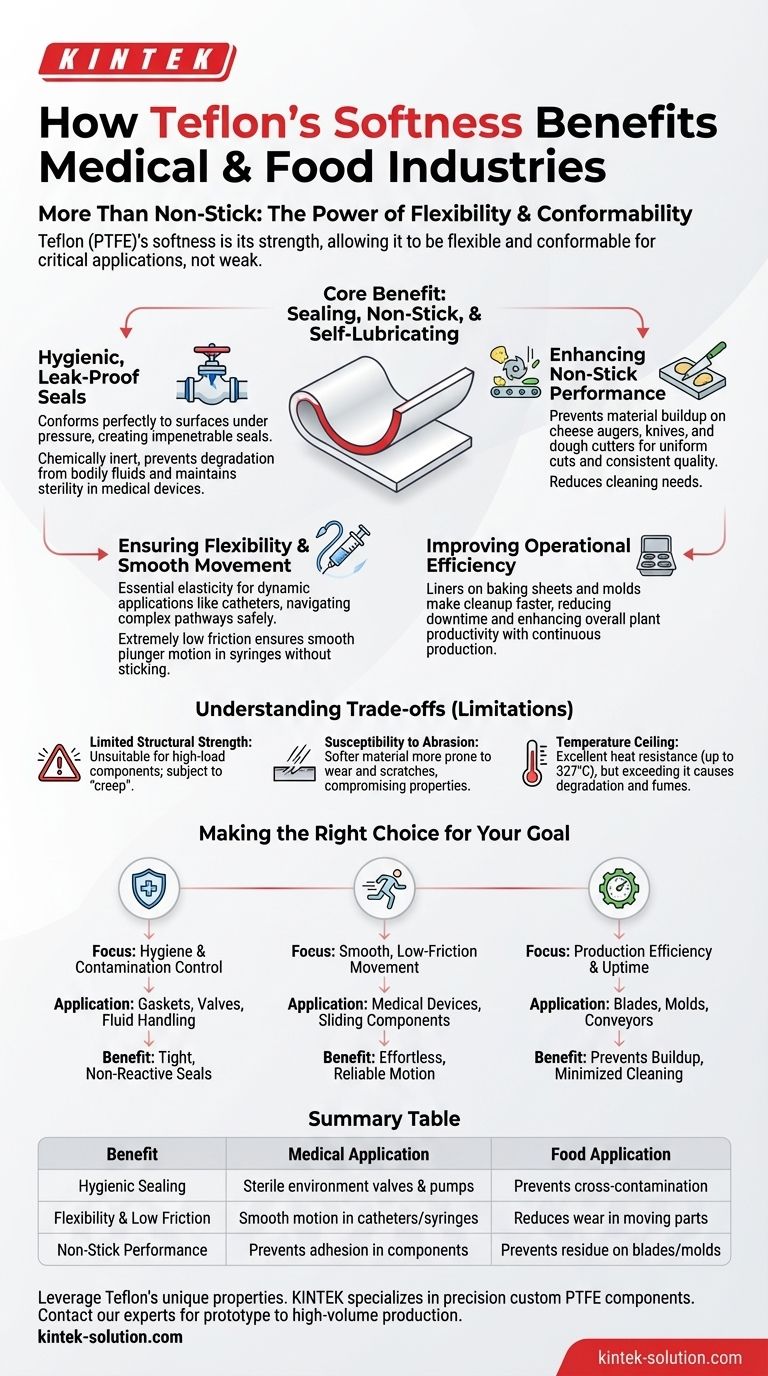
Related Products
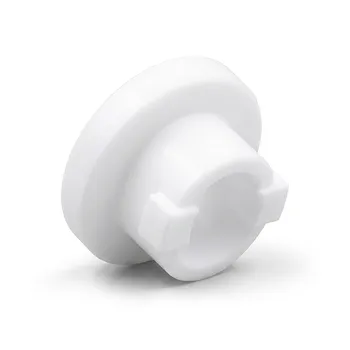
- Custom PTFE Insulating Gaskets and Corrosion Resistant Fluoropolymer Seals for Industrial Electrical Applications
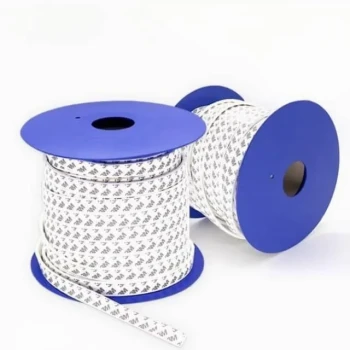
- Custom PTFE Sealing Tapes for Industrial and High Tech Applications
- Custom PTFE Insulating Gaskets Corrosion Resistant Teflon Seals Tailored Engineering Plastic Components
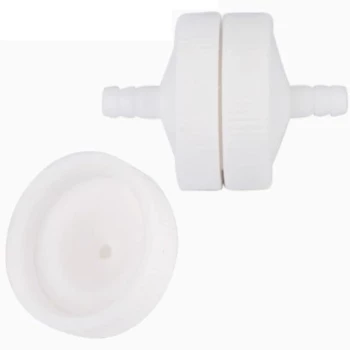
- Customizable PTFE Seals Filter Holders for Versatile Applications
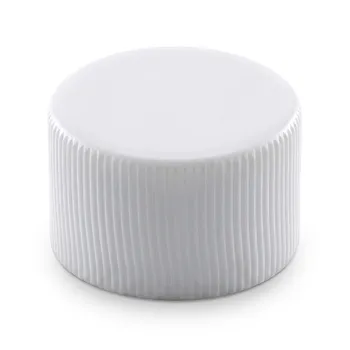
- Custom PTFE Sealing Caps and Corrosion Resistant Low Background Teflon Adapters
People Also Ask
- What are the three primary types of PTFE available for gaskets and seals? Choose the Right Material for Your Application
- Why is PTFE an ideal material choice for sealing gaskets, valves, and fluid transfer tubing exposed to extremely aggressive chemicals? Discover Its Superior Chemical Resistance and Reliability
- How is PTFE utilized in seals and gaskets? Leverage Its Chemical & Temperature Resistance
- What are the key properties of PTFE that make it suitable for seals and gaskets? Unlock Superior Sealing Performance
- How are custom PTFE parts used in the automotive sector? Enhance Vehicle Performance & Durability