All Questions
What Are The Main Differences Between Nbr And Ptfe Seats In Butterfly Valves? Select The Right Seal For Your System
Learn the key differences between NBR and PTFE valve seats, including chemical resistance, temperature tolerance, and cost, to choose the right one for your application.
Why Are Ptfe Seats Preferred In Electric Actuated Butterfly Valves? Enhance Valve Performance And Actuator Lifespan
Learn why PTFE seats are ideal for electric actuated butterfly valves, offering superior chemical resistance, low friction, and high-temperature stability.
What Makes Ptfe Seats Suitable For Demanding Environments In Butterfly Valves? Unlock Chemical & Thermal Resilience
Explore how PTFE seats in butterfly valves provide superior chemical inertness, thermal stability, and low friction for harsh applications.
Why Is Ptfe Considered A Preferred Material For High-Temperature Applications In Butterfly Valves? Superior Thermal & Chemical Stability
Discover why PTFE is the top choice for high-temp butterfly valves, offering thermal stability up to 260°C, chemical inertness, and reliable sealing.
How Do Nbr And Ptfe Seat Materials Impact Valve Performance? Choose The Right Butterfly Valve For Your System
Learn the key differences between NBR and PTFE valve seats and wafer vs. lug body styles to optimize performance, safety, and cost for your application.
What Are The Cost Implications Of Choosing Ptfe Over Nbr For Butterfly Valve Seats? A Guide To True Cost Of Ownership
Compare PTFE vs. NBR valve seat costs: initial price vs. long-term value. Learn which material saves money based on chemical resistance, temperature, and reliability.
How Does Temperature Tolerance Differ Between Nbr And Ptfe Seat Materials? A Guide To Extreme Conditions
PTFE seals withstand extreme temperatures from -200°C to 260°C, far exceeding NBR's moderate range. Learn which material is right for your application.
Why Is Ptfe Often Used In Electric Actuated Butterfly Valves? Achieve Reliable, Automated Flow Control
Discover why PTFE's low friction, chemical inertness, and temperature stability make it ideal for electric actuated butterfly valve seats in demanding industries.
What Factors Should Be Considered When Choosing Between Nbr And Ptfe Seat Materials For Butterfly Valves?
Learn the key differences between NBR and PTFE butterfly valve seats to make the right choice for your application's chemical, temperature, and pressure needs.
How Does The Chemical Resistance Of Nbr Compare To Ptfe In Butterfly Valve Seats? Select The Right Material For Your Media.
NBR vs. PTFE valve seats: Learn why PTFE offers superior chemical resistance for corrosive media, while NBR is cost-effective for general-purpose use.
In What Types Of Environments Are Ptfe Seat Butterfly Valves Most Suitable? Ideal For Corrosive, High-Purity Applications
PTFE seat butterfly valves excel in corrosive chemical, pharmaceutical, and food & beverage environments requiring high purity and reliable sealing.
How Does Ptfe Contribute To The Sealing Performance Of Ball Valves? Achieve Leak-Free, Durable Sealing
Learn how PTFE's chemical inertness, low friction, and flexibility create superior seals in ball valves for corrosive, high-pressure, and high-cycle applications.
What Role Do Ptfe Lined Ball Valves Play In Natural Gas Transmission? Ensuring Safety And Reliability
Discover how PTFE lined ball valves provide critical leak prevention, corrosion resistance, and flow control for safe, reliable natural gas transmission.
What Are The Key Differences Between Nbr And Ptfe Seat Materials In Butterfly Valves? Choose The Right Material For Your System
Compare NBR vs. PTFE valve seats for chemical resistance, temperature range, and cost to select the best material for your application.
Why Are Ptfe Lined Ball Valves Suitable For The Food And Pharmaceutical Industries? Ensuring Purity And Compliance
Discover why PTFE-lined ball valves are ideal for food & pharma: FDA-compliant, chemically inert, and easy to sanitize for sterile processing.
In Which Industries Are Ptfe Lined Ball Valves Commonly Used? Master Corrosive & High-Purity Fluid Control
Discover why PTFE lined ball valves are essential in chemical, pharmaceutical, food & beverage, and water treatment industries for handling corrosive fluids.
What Are The Advantages Of Using A Ptfe Lined Ball Valve? Achieve Superior Corrosion Resistance & Leak-Proof Sealing
Discover the key benefits of PTFE lined ball valves: total media isolation for corrosion resistance, bubble-tight sealing, and low-friction operation for challenging fluids.
How Does A Ptfe Lined Ball Valve Work? A Guide To Corrosion-Free Flow Control
Learn how PTFE-lined ball valves work, using a PTFE barrier to isolate metal parts from corrosive or high-purity fluids for reliable, contamination-free operation.
What Is A Ptfe Lined Ball Valve? A Corrosion-Resistant Solution For Harsh Chemicals
Learn how PTFE lined ball valves use a Teflon® barrier to safely control aggressive acids, solvents, and other corrosive media in industrial applications.
What Additional Benefits Do Ptfe Rotary Shaft Seals Offer? Achieve Superior Reliability In Extreme Conditions
Discover the advanced benefits of PTFE seals: extreme temperature and chemical resistance, high-speed capability, low friction, and extended lifespan for demanding applications.
What Are The Different Grades Of Ptfe Used In Rotary Shaft Seals? Choose The Right Filler For Peak Performance
Explore virgin, glass, carbon, and MoS2-filled PTFE grades for rotary shaft seals. Learn how fillers enhance wear resistance, thermal conductivity, and durability.
Which Regulatory Standards Do Ptfe Rotary Shaft Seals Comply With? Ensure Compliance For Your Application
Learn about key PTFE seal standards like FDA 21 CFR 177.1550, NSF/ANSI 61, and 3-A Sanitary Standards for food, water, and medical applications.
What Are The Thermal Stability Benefits Of Ptfe Rotary Shaft Seals? Operate From -459°F To 500°F
Explore PTFE rotary shaft seals' thermal stability, offering a wide -459°F to 500°F operating range for extreme industrial applications.
How Do Ptfe Rotary Shaft Seals Perform In High-Speed Applications? Master High-Speed Sealing With Low Friction
Discover how PTFE seals handle shaft speeds up to 35 m/s with low friction and superior heat management, outperforming elastomeric seals in demanding applications.
What Makes Ptfe Rotary Shaft Seals Suitable For Low Friction Or Dry Running Applications? Unlock High-Speed, Dry-Running Performance
Discover why PTFE rotary shaft seals excel in low friction and dry running applications with their self-lubricating properties and low coefficient of friction.
Why Are Ptfe Rotary Shaft Seals Preferred In Aggressive Media? Superior Chemical Resistance & Reliability
Discover why PTFE seals excel in harsh chemical, high-temperature, and high-pressure environments due to their exceptional inertness and durability.
What Are The Key Industries That Rely On Ptfe Rotary Shaft Seals? Critical Sealing For Extreme Environments
Discover why oil & gas, aerospace, chemical, and medical industries depend on PTFE rotary shaft seals for extreme chemical, temperature, and speed demands.
Why Are Ptfe Flat Washers Ideal For Industrial Machinery? Achieve Durable, Maintenance-Free Sealing
PTFE washers offer extreme chemical resistance, low friction, and a wide temperature range for reliable performance in harsh industrial environments.
What Are The Main Characteristics Of Ptfe Flat Washers? Essential Properties For Demanding Seals
Explore the key properties of PTFE flat washers: extreme chemical resistance, wide temperature range, low friction, and superior electrical insulation.
What Are The Limitations Of Pom As A Ball Valve Seat Material? Key Risks & Safer Alternatives
Understand POM's critical limits: temperature range and oxygen incompatibility. Learn when to use PEEK or PTFE for safe, reliable valve performance.
Which Ball Valve Seat Material Is Best For High-Temperature Applications? Peek Offers Superior Thermal Stability
Discover why PEEK is the top choice for high-temperature ball valve seats, offering reliable performance up to 260°C and superior mechanical strength.
What Is The Difference Between A Ball Valve Seat And An O-Ring? Master Valve Sealing For Reliable Performance
Learn the key differences between ball valve seats (dynamic seals) and O-rings (static seals) to improve valve selection, maintenance, and troubleshooting.
What Are The Advantages Of Reinforced Ptfe (Rptfe) And Tfm? Solve Ptfe's Cold Flow Problem
Discover the key differences between RPTFE and TFM, including enhanced wear resistance, superior sealing, and resilience for demanding applications.
How Do Peek And Pom Compare In Terms Of Pressure Resistance? A Guide For High-Performance Applications
PEEK vs POM pressure resistance: Both handle 450-500 bar. Learn the key differences in temperature, chemical resistance, and cost for your project.
What Are The Pressure Limitations For Ptfe Ball Valve Seats? Understanding The Critical Role Of Valve Size
PTFE ball valve seat pressure limits depend on valve size. Learn the maximum ratings for small and large bore valves and when to choose alternatives.
What Are The Temperature Ranges For Ptfe, Peek, And Pom Ball Valve Seats? A Guide To Material Selection
Compare PTFE, PEEK, and POM ball valve seat temperature ranges, pressure ratings, and chemical compatibility for optimal performance.
What Is Fluid Compatibility In Ball Valve Seats? Ensure Reliable Sealing And Prevent Failure
Learn why fluid compatibility is critical for ball valve seat materials. Avoid swelling, hardening, and failure by selecting the right polymer for your system.
What Are The Three Main Factors To Consider When Selecting Ball Valve Seat Materials? Ensure System Reliability
Learn the 3 critical factors—chemical compatibility, temperature, and pressure—for choosing the right ball valve seat material to prevent failure.
What Is The Importance Of Selecting The Right Ball Valve Seat Materials? Ensure A Leak-Proof Seal
Learn how to select the right ball valve seat material based on chemical compatibility, temperature, and pressure to prevent failure and ensure safety.
What Are Some Household Applications Of Teflon In Furniture? Protect Floors & Upholstery With Ease
Discover how Teflon's low-friction & stain-resistant properties are used in furniture sliders and fabric coatings to protect your home.
Why Is Teflon Used In Hoses? Ensuring Unmatched Reliability In Extreme Conditions
Discover why Teflon (PTFE) hoses are the top choice for extreme chemical, temperature, and pressure applications in industries like aerospace and chemical processing.
Why Are Ptfe Rotary Seals Becoming A Preferred Choice For Engineers And Oems? Solve Critical Performance Failures
Discover why PTFE rotary seals outperform elastomers in extreme conditions: high speeds, aggressive chemicals, and wide temperature ranges.
Why Is Teflon Suitable For Bridge Bearing Pads? Unlock Smooth, Durable Movement For Your Structure
Discover how Teflon's low friction, high strength, and chemical durability make it ideal for bridge bearing pads, ensuring long-term structural integrity.
What Factors Should Engineers Consider When Selecting A Ptfe Rotary Seal? Ensure Long-Term Reliability For Your System
Learn the key factors for selecting PTFE rotary seals, including operating conditions, hardware compatibility, and design trade-offs for optimal performance.
How Is Teflon Used In The Semiconductor Industry? Essential For High-Purity Manufacturing
Discover how Teflon's chemical inertness and purity make it critical for semiconductor fluid handling, preventing contamination in chip fabrication.
What Industries Benefit From Using Ptfe Rotary Seals? Solve Extreme Environment Challenges
Discover how PTFE rotary seals provide reliable performance in aerospace, oil & gas, food/pharma, and heavy industry under extreme conditions.
How Do Ptfe Rotary Seals Compare To Rubber Seals? A Guide To Superior Performance In Extreme Conditions
Discover why PTFE seals outperform rubber in high-speed, high-temperature, and chemically aggressive applications. Learn the key differences.
What Are The Key Advantages Of Ptfe Rotary Seals Over Traditional Rubber Seals? Superior Performance In Extreme Conditions
Discover why PTFE seals outperform rubber in demanding applications with superior chemical resistance, extreme temperature tolerance, and low friction.
What Is A Ptfe Rotary Seal And How Is It Designed? A Guide To High-Performance Sealing
Learn about PTFE rotary seal design, components, and applications for high-speed, high-pressure, and chemically aggressive environments.
What Types Of Applications Commonly Use Ptfe Rotary Seals? Solve Extreme Chemical, Temperature, And Speed Challenges
Learn where PTFE rotary seals are essential for demanding applications in aerospace, chemical processing, oil & gas, and more due to their chemical inertness and extreme temperature tolerance.
What Are The Key Characteristics Of Ptfe Rotary Seals? Superior Performance For Extreme Conditions
Discover the key characteristics of PTFE rotary seals: extreme temperature tolerance, chemical inertness, low friction, and high-pressure capability.
What Industries And Applications Commonly Use Piston Seals? From Heavy Construction To Medical Devices
Explore the critical role of piston seals in industries like construction, aerospace, manufacturing, and medical, and learn how to select the right seal for your application.
What Types Of Semi-Finished Parts Are Available? Choose The Right Stock Shape For Your Project
Learn about semi-finished parts like rods, tubes, sheets, and films. Discover how to select the right stock shape to reduce waste and machining time.
What Precautions Should Be Taken For Maximum Seal Life Expectancy? Follow The 75% Rule For Longevity
Learn how to maximize seal life expectancy by derating pressure and speed, understanding the critical PV factor, and avoiding premature failure.
What Are The Typical Applications For Low-Friction Piston Seals? Optimize For Smooth Motion & Efficiency
Discover the key applications for low-friction piston seals in precision hydraulics, high-speed pneumatics, and sensitive instrumentation for smooth, efficient operation.
What Industries Are Particularly Suited For Ptfe With Fillers? Enhance Performance In Demanding Applications
Discover how filled PTFE outperforms virgin PTFE in high-stress industries like chemical processing, automotive, and pharmaceuticals with superior wear and creep resistance.
What Are Some General Applications Of Ptfe With Fillers? Enhance Performance In Demanding Seals & Bearings
Discover how filled PTFE improves strength, wear resistance, and reduces creep for high-performance seals, gaskets, and bearings in industrial applications.
How Is Ptfe Processed Into Useful Shapes? Mastering The Unique Compression & Sintering Method
Discover how PTFE is uniquely processed from powder to durable parts via compression molding and sintering, unlike conventional plastics.
Why Is Ptfe Used In Electrical Applications? Unmatched Insulation For High-Performance Components
Discover PTFE's superior dielectric strength, low dielectric constant, and moisture resistance for reliable electrical insulation in demanding environments.
What Are The Advantages Of Using Ptfe Material For Machine Parts? Achieve Peak Performance In Demanding Environments
Discover the key benefits of PTFE for machine parts: extreme low friction, unmatched chemical resistance, and thermal stability from -200°C to +260°C.
What Key Properties Make Ptfe An Ideal Sealing Material For Extreme Temperatures? Unmatched Thermal Stability From -270°C To 260°C
Discover why PTFE seals excel in extreme temperatures, maintaining chemical inertness and low friction from cryogenic -270°C to high heat 260°C for reliable performance.
What Are Spring-Energized Ptfe Seals And Why Are They Used? Solve Demanding Sealing Challenges
Learn how spring-energized PTFE seals combine PTFE's chemical resistance with a spring's constant force for reliable performance in extreme conditions.
In Which Applications Are Ptfe Seals Commonly Used At High Temperatures? Solve Hpht Sealing Challenges
Discover why PTFE seals are the standard for high-temperature, high-pressure applications in oil & gas, aerospace, chemical processing, and industrial machinery.
What May Be Required To Help Ptfe Seals Dissipate Heat More Quickly? Use Conductive Fillers For High-Temp Reliability
Learn how adding conductive fillers like carbon or bronze to PTFE seals enhances heat dissipation, preventing failure in high-speed, high-temperature applications.
Which Industries Commonly Use Ptfe Cryogenic Seals? Essential For Aerospace, Oil & Gas, And Pharma
Discover why PTFE cryogenic seals are critical for extreme low-temperature applications in aerospace, LNG, and pharmaceutical industries.
Why Are Cold Temperatures Challenging For Seals And How Does Ptfe Overcome These Challenges? Master Cryogenic Sealing
Discover how PTFE seals solve brittleness and lubrication failure in extreme cold, ensuring reliable performance down to -450°F.
What Industrial Benefits Do Ptfe-Machined Parts Offer? Achieve Peak Performance In Demanding Applications
Discover how PTFE-machined parts provide low friction, chemical resistance, and durability for superior performance in aerospace, medical, and industrial applications.
What Are The Two Temperature Extremes Discussed For Ptfe Seals? Maximize Performance From Cryogenic To High-Heat
Learn about PTFE seals' thermal range from -260°C to +300°C for cryogenic and high-temperature applications in demanding industries.
What Is Ptfe And Why Is It Used In Sealing Applications? Unlock Superior Chemical & Temperature Resistance
Discover why PTFE (Teflon®) is the ideal sealing material for extreme chemical, temperature, and low-friction applications in demanding industries.
What Fabrication Services Are Available For Ptfe? Shearing, Stamping, Laser Cutting, Molding & Machining
Explore PTFE fabrication services like die cutting, laser cutting, compression molding, and CNC machining. Find the right process for your part's complexity and volume.
What Types Of Parts Can Be Fabricated Using Ptfe Machining? Seals, Bushings, Insulators & More
Discover the key PTFE machined parts like seals, bushings, and insulators, ideal for chemical, low-friction, and high-temperature applications.
How Does Surface Finish Impact Ptfe Sheet Performance? A Guide To Optimizing For Your Application
Learn how PTFE surface finish affects non-stick, sealing, and insulation performance. Choose the right finish for your semiconductor, medical, or industrial needs.
What Environmental Factors Should Be Considered When Choosing Ptfe Sheets? Ensure Long-Term Performance
Learn how chemical exposure, temperature extremes, and physical stress impact PTFE sheet selection for semiconductor, medical, and lab applications.
How Does Thickness Affect Ptfe Sheet Selection? A Guide To Balancing Strength And Flexibility
Learn how PTFE sheet thickness impacts strength, flexibility, and cost. Choose the right thickness for gaskets, liners, or machined parts.
What Are The Differences Between Virgin And Filled Ptfe Sheets? Purity Vs. Power For Your Application
Learn the key trade-offs between virgin and filled PTFE sheets: chemical purity vs. mechanical strength. Choose the right material for your needs.
What Design Considerations Are Important For Custom Ptfe Parts? Design For Performance & Reliability
Key PTFE design factors: thermal expansion, stress relaxation, realistic tolerances, and material grade selection for reliable performance in demanding environments.
What Industries Use Custom Ptfe Parts And For What Purposes? Solve Critical Challenges With High-Performance Materials
Explore how aerospace, medical, automotive, electronics, and chemical industries use custom PTFE parts for seals, insulators, and biocompatible implants.
How Does Cnc Machining Benefit Ptfe Part Production? Achieve Precision, Consistency & Complex Designs
Discover how CNC machining overcomes PTFE's challenges like thermal expansion & softness for precise, high-performance parts in medical, semiconductor & industrial uses.
What Are The Key Benefits Of Ptfe In Custom Fabrication? Unlock Performance In Extreme Conditions
Discover the key benefits of PTFE for custom parts: chemical inertness, low friction, high-temperature stability, and electrical insulation for demanding applications.
What Are The Advantages Of Compression Molding For Ptfe? Unlock Superior Performance For Large, Dense Components
Discover why compression molding is the standard for creating high-quality PTFE stock shapes, preserving its thermal stability, chemical inertness, and low friction.
What Is The Initial Shaping Process For Ptfe Before Machining? The Critical First Step For Precision Parts
Learn why compression molding is the essential first step to create stable, stress-relieved PTFE billets for accurate CNC machining of seals and components.
What Industries Benefit Most From Custom Ptfe Parts? Solve Extreme Environment Challenges
Discover how aerospace, medical, chemical, and electronics industries use custom PTFE parts for chemical inertness, extreme temperatures, and insulation.
How Does Expanded Ptfe Benefit The Oil And Gas Industries? Achieve Superior Sealing In Extreme Conditions
Learn how ePTFE seals prevent leaks in oil & gas with chemical inertness, high-temperature resistance, and adaptability for field repairs.
How Can Ptfe's Mechanical Properties Be Enhanced? Boost Strength & Wear Resistance With Fillers
Learn how reinforcing fillers like glass fiber, carbon, or bronze transform PTFE into a high-performance engineering material.
What Are The Applications Of Expanded Ptfe? Unlock Versatility For Demanding Seals & Filters
Discover the critical uses of expanded PTFE (ePTFE) in medical implants, industrial seals, high-purity filtration, and electronics insulation.
How Does Cnc Machining Benefit Ptfe Part Fabrication? Achieve Unmatched Precision And Complexity
Discover how CNC machining overcomes PTFE's softness and thermal expansion to create precise, complex, and repeatable parts for critical applications.
What Are Some Common Uses Of Ptfe In Industries? Solve Challenges With A Versatile High-Performance Polymer
Explore the key applications of PTFE (Teflon™) across chemical, aerospace, medical, and electronics industries, driven by its chemical inertness, low friction, and thermal stability.
Why Is Teflon Suitable For Medical Applications? Leverage Its Unique Properties For Safer Medical Devices
Discover why Teflon (PTFE) is ideal for medical use: superior biocompatibility, extreme lubricity, and unmatched resistance to sterilization.
What Role Does Teflon Play In Automotive Applications? Enhancing Durability & Performance In Harsh Environments
Explore how Teflon (PTFE) improves automotive reliability with superior chemical resistance, low friction, and high-temperature stability in seals, bearings, and fuel systems.
How Is Teflon Used In The Aerospace Industry? Essential For Seals, Coatings & Insulation
Discover Teflon's critical aerospace uses: high-temp seals, low-friction coatings & electrical insulation for engines, fuel systems & avionics.
What Are The Key Properties Of Teflon Plastic Sheets? Unlocking Performance In Extreme Environments
Explore the key properties of Teflon (PTFE) sheets: unmatched chemical resistance, low friction, and thermal stability up to 260°C (500°F).
How Are Ptfe Seals Applied In The Oil And Gas Industry? Ensure Reliability In Extreme Hpht Environments
Discover how PTFE seals provide critical chemical resistance and HPHT performance for drilling, subsea, and LNG applications in the oil and gas sector.
What Aerospace Applications Utilize Ptfe Seals? Ensure Reliability In Extreme Conditions
Learn how PTFE seals are critical for aerospace systems like actuators, turbines, and fuel systems, offering extreme temperature and chemical resistance.
How Are Ptfe Seals Used In Medical Device And Life Sciences Applications? Essential For Sterility & Precision
Discover why PTFE seals are critical in medical devices for biocompatibility, chemical inertness, and low friction in UHPLC, surgical tools, and more.
What Are Some Industrial Applications Of Ptfe Seals? Solve Your Toughest Sealing Challenges
Explore the key industrial applications of PTFE seals in aerospace, chemical processing, medical, and food industries, and learn why PTFE is chosen for extreme conditions.
What Are Some Common Components Made From Ptfe? Seals, Bearings & More For Demanding Applications
Explore common PTFE components like seals, gaskets, bearings, and valve parts. Learn how PTFE's chemical inertness and low friction solve critical engineering challenges.
What Are Some Common Ptfe Seal Types Used In Industrial Applications? Explore Solutions For Every Motion & Environment
Discover common PTFE seal types for reciprocating, rotary, and static applications. Learn how to select the right seal for extreme conditions.
What Are Some Common Variations And Grades Of Ptfe Used In Seals? Optimize Performance With The Right Material
Learn about PTFE seal grades, including virgin, filled, and chemically modified types, to enhance wear resistance, reduce friction, and prevent creep.
What Are The Benefits Of Using Ptfe Seals? Unmatched Chemical & Temperature Resistance
Discover the key benefits of PTFE seals: extreme chemical resistance, wide temperature range (-260°C to +260°C), low friction, and high-pressure performance.
What Are Some Common Types Of Ptfe Seals? Choose The Right Seal For Static Or Dynamic Applications
Learn about PTFE seal types (gaskets, lip seals, piston seals) and how to select the right one for chemical resistance, temperature, and pressure.
Related Products
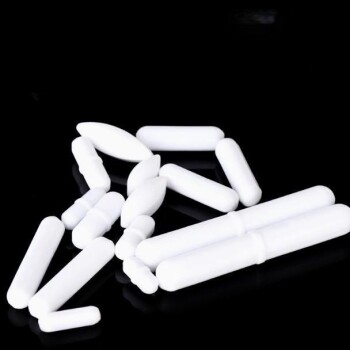
Custom PTFE Teflon Parts Manufacturer PTFE Magnetic Stirring Bar
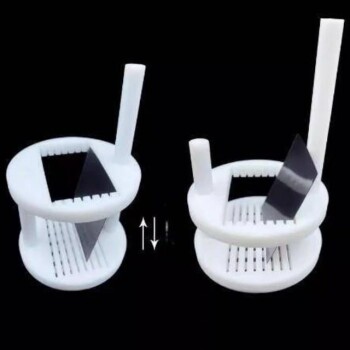
Custom PTFE Teflon Parts Manufacturer Adjustable Height Flower Basket
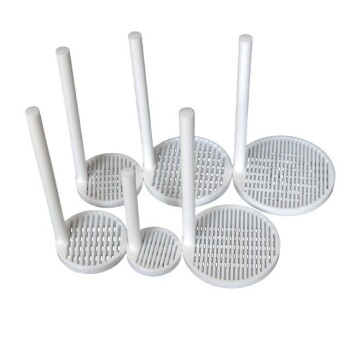
Custom PTFE Teflon Parts Manufacturer PTFE Cleaning Rack
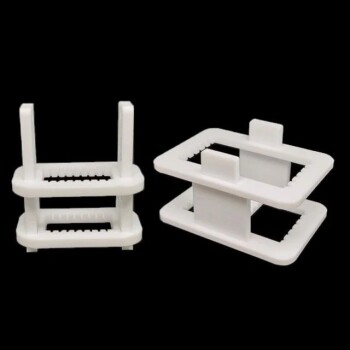
Custom PTFE Teflon Parts Manufacturer Conductive Glass Substrate Cleaning Rack
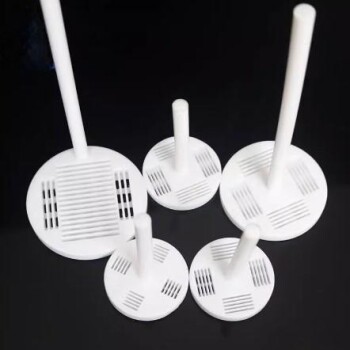
Custom Machined Molded PTFE Teflon Parts Manufacturer for Laboratory ITO FTO Conductive Glass Cleaning Flower Basket