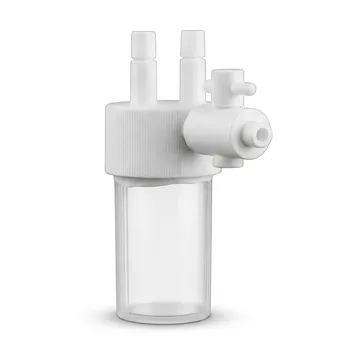
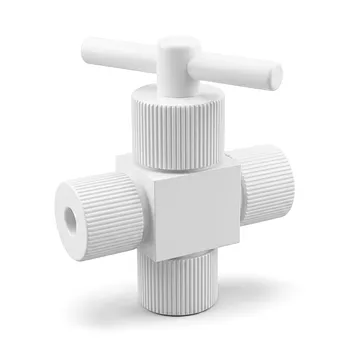
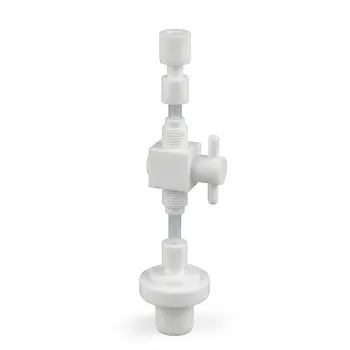
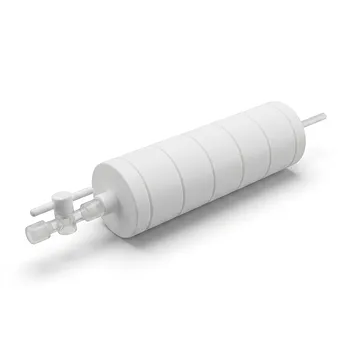
At its core, Polytetrafluoroethylene (PTFE) is a go-to sealing material across a vast range of demanding industrial sectors. Its applications span from aerospace and oil & gas to food processing and medical devices, where it is used in equipment like compressors, pumps, hydraulic systems, and cryogenic valves. The material's unique properties allow it to perform where many other polymers would fail.
The widespread industrial use of PTFE seals is not due to a single benefit, but its rare combination of three key properties: extreme chemical inertness, a vast operating temperature range, and very low friction. This makes it a uniquely versatile problem-solver for the most challenging sealing environments.

Why PTFE Seals Are So Widely Adopted
The selection of a sealing material is a critical engineering decision. PTFE is often chosen when an application involves one or more extreme conditions that push standard elastomers past their operational limits.
Unmatched Chemical Resistance
PTFE is virtually inert and resistant to almost all industrial chemicals, solvents, and corrosive substances. This property makes it indispensable in sectors that handle aggressive media.
Applications include seals for chemical processing pumps, valves in petrochemical plants, and fluid transfer systems that must handle a variety of substances without degrading.
Extreme Temperature Tolerance
PTFE seals maintain their integrity and performance across an exceptionally broad temperature spectrum. They are equally effective in deep cryogenic systems and high-heat environments.
This allows them to be used in liquefied natural gas (LNG) systems at very low temperatures, as well as in high-temperature, high-pressure (HPHT) downhole tools in the petroleum industry, aircraft engines, and industrial autoclaves.
Low Friction and High Wear Resistance
With one of the lowest coefficients of friction of any solid material, PTFE is ideal for dynamic sealing applications. It reduces energy consumption and prevents stick-slip issues in moving parts.
This is why PTFE seals are critical in oil-free air compressors (achieving service lives over 40,000 hours), high-speed rotary pumps, gearboxes, and robotic systems where smooth, reliable motion is essential.
Purity and Biocompatibility
Virgin PTFE is non-toxic, does not impart taste or odor, and can be manufactured to meet FDA and other regulatory standards. This makes it a required material in sensitive applications.
Its use is prevalent in food processing equipment, pharmaceutical mixers, and medical devices such as surgical tools and hematology analyzers, where contamination must be avoided.
A Snapshot of Key Applications by Equipment Type
While its properties explain why it's used, seeing its application in specific equipment highlights its versatility.
Rotary and Reciprocating Machinery
PTFE seals are a mainstay in equipment with moving shafts. This includes a wide range of compressors (rotary screw, rocking piston), vacuum pumps, blowers, and mixers that handle shaft deflection.
Fluid and Gas Handling Systems
In systems designed to move liquids or gases, reliable sealing is paramount. PTFE is used in hydraulic actuators, fluid transfer pumps, valves, and high-pressure mechanical seals.
Aerospace, Military, and Automotive
These industries demand performance under extreme conditions. PTFE seals are found in aircraft engines, hydraulic systems, and braking components. In automobiles, they are used in transmissions, air-conditioning systems, and ride-leveling components.
Common Pitfalls and Design Considerations
While highly capable, PTFE is not a universal solution. Understanding its limitations is key to successful implementation.
Susceptibility to Creep (Cold Flow)
PTFE can slowly deform over time when subjected to a constant load, a phenomenon known as creep or cold flow. This must be accounted for in the seal design, particularly in high-pressure static applications.
The Critical Role of Fillers
To counteract creep and improve mechanical properties, PTFE is often blended with fillers like glass fiber, carbon, graphite, or bronze. These compounds enhance wear resistance and dimensional stability but may alter the material's chemical resistance or color.
Higher Thermal Expansion
PTFE expands and contracts with temperature changes more than many other materials. Engineering designs must provide adequate clearance to accommodate this thermal expansion and avoid component failure.
Making the Right Choice for Your Goal
Your specific objective should guide your material specification.
- If your primary focus is extreme chemical compatibility: Virgin PTFE is the safest and most reliable choice for handling corrosive media.
- If your primary focus is performance in a high-wear dynamic system: A filled PTFE compound (e.g., carbon- or bronze-filled) will provide the necessary durability for compressors, pumps, and bearings.
- If your primary focus is purity for food or medical applications: Specify virgin PTFE that is certified to meet FDA, USP Class VI, or other relevant industry standards.
- If your primary focus is sealing in extreme temperatures: PTFE is one of the few materials that can reliably handle both cryogenic and high-heat conditions without failing.
Ultimately, understanding the fundamental properties of PTFE empowers you to deploy it effectively in the most demanding industrial applications.
Summary Table:
| Key Property | Primary Industrial Application |
|---|---|
| Chemical Resistance | Chemical processing pumps, petrochemical valves |
| Temperature Tolerance | LNG systems, HPHT downhole tools, aircraft engines |
| Low Friction & Wear Resistance | Oil-free compressors, high-speed pumps, robotics |
| Purity & Biocompatibility | Food processing, pharmaceutical mixers, medical devices |
Need a reliable sealing solution for your demanding application? KINTEK specializes in manufacturing high-performance PTFE components, including seals, liners, and labware, for the semiconductor, medical, laboratory, and industrial sectors. We prioritize precision and offer custom fabrication from prototypes to high-volume orders. Let us help you solve your toughest sealing challenges—contact our experts today to discuss your specific needs!
Visual Guide

Related Products
- Custom PTFE Insulating Gaskets and Corrosion Resistant Fluoropolymer Seals for Industrial Electrical Applications
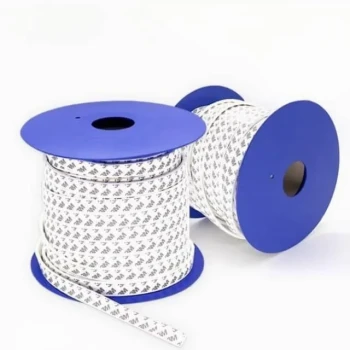
- Custom PTFE Sealing Tapes for Industrial and High Tech Applications
- Custom PTFE Insulating Gaskets Corrosion Resistant Teflon Seals Tailored Engineering Plastic Components
- Customizable PTFE Seals Filter Holders for Versatile Applications
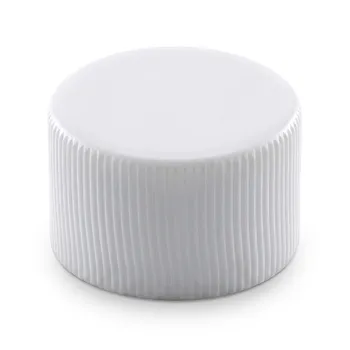
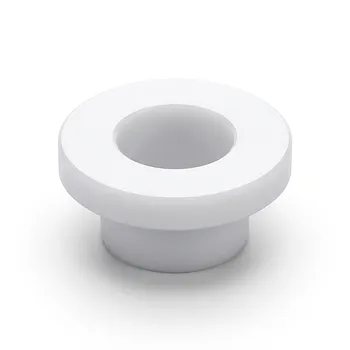
- Custom PTFE Sealing Caps and Corrosion Resistant Low Background Teflon Adapters
People Also Ask
- What are the three primary types of PTFE available for gaskets and seals? Choose the Right Material for Your Application
- Why is PTFE an ideal material choice for sealing gaskets, valves, and fluid transfer tubing exposed to extremely aggressive chemicals? Discover Its Superior Chemical Resistance and Reliability
- How is PTFE utilized in seals and gaskets? Leverage Its Chemical & Temperature Resistance
- What are the key properties of PTFE that make it suitable for seals and gaskets? Unlock Superior Sealing Performance
- How are custom PTFE parts used in the automotive sector? Enhance Vehicle Performance & Durability