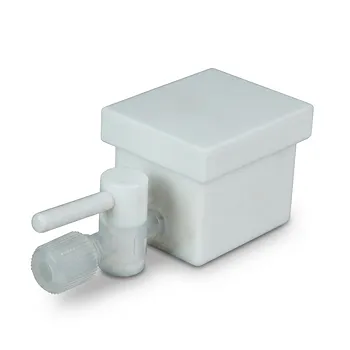
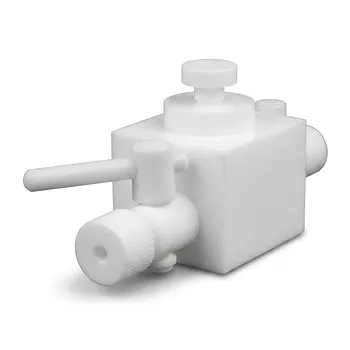
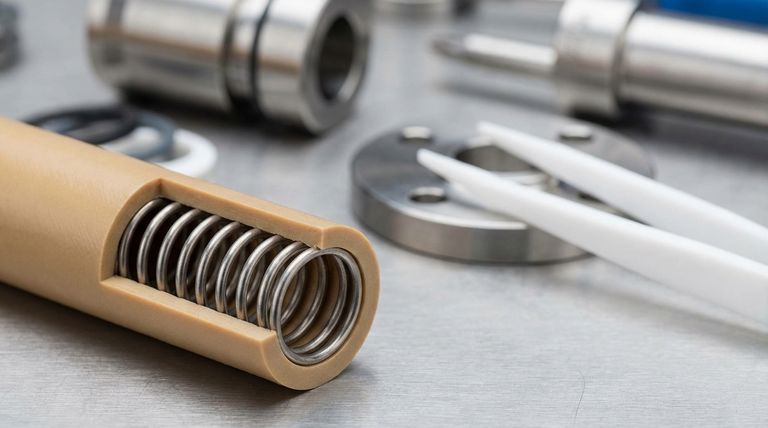
In essence, a spring-energized PTFE seal is a high-performance sealing device that combines a durable polymer jacket, typically made of Polytetrafluoroethylene (PTFE), with a corrosion-resistant metal spring. The spring provides a constant, live force that pushes the seal lips against the mating surfaces. This design creates a highly reliable seal that adapts to changing conditions where traditional elastomeric seals would fail.
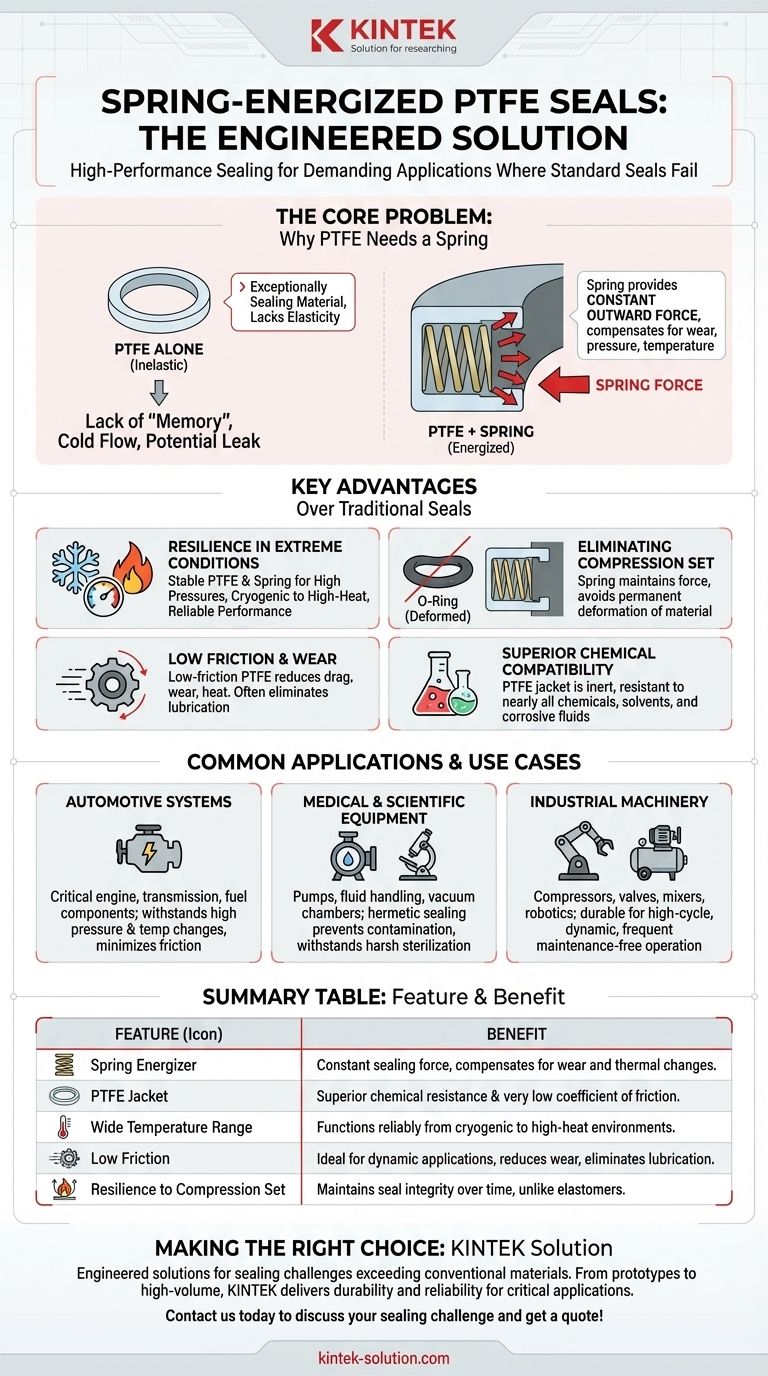
The central challenge with PTFE is that it's an exceptional sealing material that lacks elasticity—it doesn't "bounce back" on its own. The internal spring solves this fundamental weakness, providing the constant outward force needed to maintain a tight seal despite wear, pressure changes, or temperature fluctuations.
The Core Problem: Why PTFE Needs a Spring
To understand the value of this design, you must first understand the unique properties of its primary material, PTFE.
The Strengths of PTFE
PTFE is renowned for its exceptional characteristics. It offers a very low coefficient of friction, making it ideal for dynamic applications where minimizing drag and heat is critical.
It also has an extremely wide operating temperature range and is almost completely chemically inert, allowing it to function in cryogenic fluids or aggressive chemical environments.
The Weakness of PTFE: Inelasticity
The major limitation of PTFE is its lack of "memory" or elasticity. Unlike a rubber O-ring, it doesn't naturally return to its original shape after being compressed.
This can lead to a phenomenon known as "cold flow" or creep, where the material slowly deforms under load, potentially causing a leak over time.
The Spring's Role: Providing Constant Force
The internal metal spring is the solution to PTFE's inelasticity. It acts as an energizer, applying a continuous radial force to the PTFE jacket.
This constant outward pressure ensures the seal lips remain in firm contact with the sealing surfaces. It automatically compensates for seal wear, thermal expansion or contraction, and minor gland misalignment, ensuring a reliable seal throughout its service life.
Key Advantages Over Traditional Seals
The spring-energized design gives these seals a distinct performance edge over simpler solutions like standard PTFE or elastomeric O-rings in demanding situations.
Resilience in Extreme Conditions
The combination of a stable PTFE jacket and a metal spring allows these seals to perform reliably under high pressures and across a vast temperature spectrum, from cryogenic liquids to high-heat applications.
Eliminating Compression Set
Elastomeric (rubber) seals can permanently deform when held under compression for long periods, a failure known as compression set. Spring-energized seals avoid this issue entirely because the spring, not the material's elasticity, maintains the sealing force.
Low Friction and Wear
The inherently low friction of the PTFE jacket reduces wear and heat generation in dynamic applications like motors, pumps, and robotics. This often eliminates the need for lubrication and improves overall system efficiency.
Superior Chemical Compatibility
The PTFE jacket is resistant to nearly all chemicals, solvents, and corrosive fluids. This makes it a critical component in medical equipment that undergoes harsh sterilization processes or in fuel systems exposed to aggressive additives.
Common Applications and Use Cases
You will find spring-energized seals in environments where failure is not an option and performance is paramount.
Automotive Systems
They are used in critical engine components, transmissions, and fuel systems where they must withstand high pressures and rapid temperature changes while minimizing frictional losses.
Medical and Scientific Equipment
In pumps, fluid handling systems, and vacuum chambers, these seals provide hermetic sealing to prevent contamination. Their chemical resistance is essential for withstanding aggressive disinfectants and sterilization cycles.
Industrial Machinery
They are a mainstay in demanding industrial equipment such as compressors, valves, mixers, and robotics. Their durability and reliability are ideal for high-cycle, dynamic applications where frequent maintenance is impractical.
Making the Right Choice for Your Application
Choosing a spring-energized seal is about matching its specific capabilities to the demands of your environment.
- If your primary focus is extreme temperature or pressure: These seals provide reliable performance where elastomers would degrade or fail.
- If your primary focus is chemical compatibility: The inert PTFE jacket makes this seal the default choice for aggressive chemical or sterile environments.
- If your primary focus is low-friction dynamic sealing: This design offers superior efficiency and wear resistance in high-speed or unlubricated machinery.
- If your primary focus is a standard, static application: A simpler, less expensive elastomeric O-ring is likely sufficient for less demanding conditions.
Ultimately, a spring-energized PTFE seal is an engineered solution for sealing challenges that exceed the limits of conventional materials.
Summary Table:
| Feature | Benefit |
|---|---|
| Spring Energizer | Provides constant sealing force, compensates for wear and thermal changes. |
| PTFE Jacket | Offers superior chemical resistance and a very low coefficient of friction. |
| Wide Temperature Range | Functions reliably from cryogenic to high-heat environments. |
| Low Friction | Ideal for dynamic applications, reduces wear, and can eliminate lubrication. |
| Resilience to Compression Set | Maintains seal integrity over time, unlike elastomers that can permanently deform. |
Need a reliable seal for a demanding application?
Spring-energized PTFE seals from KINTEK are engineered for performance where standard seals fail. Whether you're designing for the semiconductor, medical, laboratory, or industrial sector, our expertise in precision PTFE component manufacturing ensures a perfect fit for your unique requirements.
We specialize in custom fabrication, from prototypes to high-volume orders, delivering the durability and reliability your critical applications demand.
Contact us today to discuss your specific sealing challenge and get a quote! #ContactForm
Visual Guide
Related Products
- High Performance PFA Coiled Spring Tubing and Custom PTFE Fabrication Services with Welded Fittings and Precision Bent Components
- Customizable High Temperature Resistant Anti Static PTFE Insulating Gaskets Flame Retardant Corrosion Proof Industrial Seals
- Customizable PTFE Seals Filter Holders for Versatile Applications
- Custom PTFE Insulating Gaskets and Corrosion Resistant Fluoropolymer Seals for Industrial Electrical Applications
- High Temperature Chemical Resistant 50ml PTFE Syringe Customized Teflon Injector with Threaded Seal for Trace Analysis
People Also Ask
- What are the technical advantages of high-precision PFA tubing in MXene production? Maximize Purity and Yield.
- What technical advantages do PFA tubing and fittings offer? Master Precision Fluid Transfer and Flow Chemistry
- What are the technical advantages of high-quality PFA tubing? Achieve Ultimate Purity and Precision in Fluid Handling
- What are the key benefits of PTFE in custom fabrication? Unlock Performance in Extreme Conditions
- What fabrication services are available for PTFE? Shearing, Stamping, Laser Cutting, Molding & Machining