All Questions
Which Type Of Ptfe Gasket Is Better For Uneven Surfaces Or Fragile Flanges? Seal With Confidence Using Eptfe
Discover why expanded PTFE (ePTFE) is the superior choice for sealing uneven surfaces and fragile flanges, offering low seating stress and high conformability.
Which Type Of Ptfe Gasket Is Better For High-Pressure And High-Temperature Applications? Discover The Best Solution For Demanding Seals
Learn why filled or structured PTFE gaskets outperform pure PTFE in high-pressure, high-temperature applications due to superior creep resistance.
How Do Standard Ptfe And Expanded Ptfe Gaskets Differ In Terms Of Flexibility And Compressibility? Select The Right Seal For Your Flange.
Learn the key differences between standard PTFE and expanded PTFE (ePTFE) gaskets: rigidity vs. soft compressibility for perfect vs. irregular flanges.
What Are The Best Applications For Expanded Ptfe (Eptfe) Gaskets? Solve Sealing Challenges With Low Force
Discover the ideal applications for ePTFE gaskets: sealing fragile flanges, damaged surfaces, and aggressive chemicals with superior conformability.
What Are The Best Applications For Standard Ptfe Gaskets? Ideal For Chemical & High-Temp Sealing
Discover the top uses for PTFE gaskets in chemical, food, pharma, and electrical industries. Learn about their chemical inertness, temperature stability, and limitations.
What Are The Key Properties Of Standard Ptfe Gaskets? Unlock Superior Chemical & Thermal Sealing
Explore the core properties of PTFE gaskets: unmatched chemical resistance, extreme temperature stability (-200°C to 260°C), and non-stick performance.
What Industries Are Ptfe Gasket Envelopes Suitable For? Find The Perfect Seal For Demanding Applications
Discover how PTFE gasket envelopes provide superior chemical resistance, purity, and temperature tolerance for chemical, pharmaceutical, and food processing industries.
What Are The Advantages Of Ptfe Envelope Pipe Gaskets? Superior Sealing For Harsh Chemical & Pure Processes
Discover the key benefits of PTFE envelope gaskets: unmatched chemical resistance, mechanical strength, and purity for demanding industrial applications.
What Industries Commonly Use Eptfe Gaskets? The Ultimate Sealing Solution For Harsh Conditions
Discover why ePTFE gaskets are essential for chemical processing, pharmaceuticals, food & beverage, and semiconductor industries requiring purity and reliability.
What Types Of Equipment Commonly Use Eptfe Gaskets? Solve Your Toughest Sealing Challenges
Discover the key equipment that relies on ePTFE gaskets for superior chemical resistance, conformability, and leak-free performance in demanding environments.
What Types Of Fluids Can Eptfe Gaskets Seal Effectively? Ensure Leak-Free Performance With Superior Chemical Resistance
Discover how ePTFE gaskets seal aggressive chemicals, acids, solvents, and high-purity fluids with unmatched inertness and reliability for critical applications.
How Does The Fiber Structure Of Eptfe Gaskets Provide Mechanical Compensation? Sealing Imperfect Flanges
Learn how ePTFE gaskets use a unique fiber network to conform to imperfections and lock into a durable, creep-resistant seal for demanding applications.
What Economic Advantages Do Eptfe Gaskets Offer? Lower Total Cost Of Ownership
Discover how ePTFE gaskets reduce inventory, minimize downtime, and lower labor costs for superior operational savings and reliability.
Why Are Eptfe Gaskets Considered Hygienic? Ensure Product Purity With A Reliable Seal
Learn why 100% virgin ePTFE gaskets are ideal for hygienic applications. They are chemically inert, non-toxic, and prevent contamination in sensitive processes.
What Makes Eptfe Gaskets Effective Against Gas Leakage? The Key To Superior Gas Sealing
Discover how ePTFE's unique fibrous structure and superior compressibility create a reliable, long-lasting seal against gas leakage in critical applications.
What Advantages Do Eptfe Gaskets Have Over Conventional Rubber And Plastic Seals? Superior Performance In Extreme Environments
Discover why ePTFE gaskets outperform rubber and plastic seals with unmatched chemical inertness, extreme temperature resistance, and longer service life.
How Do Eptfe Gaskets Form A Seal When Installed? By Flowing To Create A Perfect Seal
Discover how ePTFE gaskets seal by cold-flowing into surface imperfections, providing a dynamic, reliable barrier for demanding applications.
What Is Unique About Eptfe Gaskets' Sealing Performance Under Pressure? Self-Energizing Seals That Tighten Under Pressure
Discover how ePTFE gaskets use system pressure to enhance sealing force, offering superior performance for irregular surfaces and high-pressure applications.
How Do Eptfe Gaskets Perform On Irregular Sealing Surfaces? Solve Leaks On Damaged Or Warped Flanges
Learn how ePTFE gaskets use high compressibility and conformability to seal irregular surfaces, preventing leaks on damaged or warped flanges.
What Are The Compression And Rebound Characteristics Of Eptfe Gaskets? Master Sealing For Demanding Flanges
Learn how ePTFE gaskets achieve superior seals with 55-80% compressibility and 15-20% rebound, ideal for fragile flanges and harsh chemical service.
Why Are Eptfe Gaskets Suitable For Food And Pharmaceutical Industries? Ensure Product Purity And Compliance
Discover how ePTFE gaskets meet FDA/USDA standards, prevent contamination, and withstand harsh cleaning cycles in critical industries.
What Pressure Can Eptfe Gaskets Withstand? Understanding Their True Capabilities
Learn how ePTFE gaskets handle up to 3000 psi, with performance influenced by temperature, flange design, and chemical media for reliable sealing.
What Chemical Resistance Do Eptfe Gaskets Have? Superior Sealing For Aggressive Chemicals
ePTFE gaskets offer near-universal chemical resistance across pH 0-14. Learn their strengths and the few exceptions for your application.
What Temperature Range Can Eptfe Gaskets Operate Within? Seal From -200°C To 315°C
ePTFE gaskets operate from -200°C to 315°C. Learn how their unique structure provides superior sealing in extreme temperatures and harsh chemicals.
What Are The Practical Advantages Of Eptfe Gaskets In Installation? Simplify Sealing With On-Site Fabrication
Discover how ePTFE gaskets simplify installation with on-site fabrication, superior conformability, and reduced downtime for industrial sealing.
How Does The Structure Of Eptfe Gaskets Improve Upon Standard Ptfe? Solve Creep And Cold Flow For Superior Seals
Discover how the fibrous matrix of ePTFE gaskets solves standard PTFE's cold flow problem, providing a reliable, high-pressure seal with superior chemical resistance.
What Are The Key Properties Of Ptfe That Eptfe Gaskets Retain? Superior Chemical & Thermal Stability
ePTFE gaskets retain PTFE's chemical inertness, wide temperature range, and low-friction surface, while adding superior mechanical sealing performance.
What Is The Conclusion Regarding The Use Of Ptfe Gaskets? Maximize Seal Performance With The Right Ptfe Type
Learn when to use pure vs. filled PTFE gaskets for chemical resistance, temperature stability, and pressure handling to prevent seal failure.
Why Are Ptfe Gaskets Popular In Various Industries? Unmatched Chemical Resistance & Reliability
Discover why PTFE gaskets excel in chemical, pharmaceutical, and industrial applications with superior chemical inertness, temperature range, and purity.
What Are Common Mistakes To Avoid When Using Ptfe Gaskets? Prevent Costly Leaks And Downtime
Avoid PTFE gasket failure. Learn critical mistakes in selection, handling, and installation to ensure leak-free seals in demanding chemical and thermal applications.
What Factors Should Be Considered When Choosing A Ptfe Gasket? Ensure A Reliable, Leak-Free Seal
Learn the 4 key factors for selecting PTFE gaskets: chemical compatibility, temperature, pressure, and dimensions. Avoid leaks and downtime.
What Are The Different Types Of Ptfe Gaskets Available? Choose The Right Seal For Your Application
Compare Virgin, Filled, and Expanded PTFE gaskets to find the ideal seal for chemical resistance, strength, or flange conformity.
How Do Ptfe Gaskets Perform Under Extreme Temperatures? Unlock Reliable Sealing From -200°C To +260°C
Explore PTFE gasket performance from cryogenic -200°C to high-heat +260°C. Learn thermal limits, chemical resistance, and application guidelines for reliable sealing.
What Are The Advantages Of Ptfe Gaskets In Terms Of Chemical Resistance? Achieve Unmatched Sealing In Corrosive Environments
Discover why PTFE gaskets offer near-universal chemical inertness, resisting acids, alkalis, and solvents for superior sealing reliability.
What Is A Ptfe Gasket? The Ultimate Seal For Extreme Chemicals And Temperatures
Learn about PTFE gaskets: their unmatched chemical inertness, extreme temperature range, and critical limitations for industrial sealing applications.
Can Ptfe Envelope Gaskets Be Customized? Tailor The Perfect Seal For Your Application
Learn how to customize PTFE envelope gaskets for dimensions, core materials, and manufacturing style to meet specific chemical, thermal, and pressure demands.
What Are Some Specific Applications Of Ptfe Envelope Gaskets In Industrial Equipment? Enhance Sealing Performance And Chemical Resistance
Explore PTFE envelope gasket applications in chemical, pharmaceutical, and food industries for superior chemical resistance and mechanical sealing.
How Do Ptfe Envelope Gaskets Perform In Corrosive Environments? Achieve Superior Chemical Resistance
Discover how PTFE envelope gaskets provide unmatched chemical resistance and reliable sealing in harsh corrosive environments, from acids to solvents.
What Makes Ptfe Envelope Gaskets Suitable For High-Temperature Applications? Superior Heat & Chemical Resistance
PTFE envelope gaskets withstand high temps (up to 260°C/500°F) due to PTFE's high melting point, thermal stability, and minimal creep.
In Which Industries Are Ptfe Envelope Gaskets Commonly Used? A Guide To Chemical Resistance And Purity
Discover why PTFE envelope gaskets are essential for chemical processing, pharmaceuticals, food & beverage, and semiconductor manufacturing.
What Are The Key Features Of Ptfe Envelope Gaskets? Unmatched Chemical Resistance & Durability
Explore the key features of PTFE envelope gaskets: superior chemical inertness, wide temperature range, and non-contaminating sealing for demanding industries.
What Temperature Range Can Ptfe Envelope Gaskets Withstand? -200°C To +260°C For Extreme Conditions
PTFE envelope gaskets operate from -200°C to +260°C. Learn how core material selection impacts performance in high heat and cryogenic applications.
Why Are Ptfe Envelope Gaskets Suitable For Food Processing And Pharmaceutical Applications? Ensure Product Purity And Compliance
Discover why PTFE envelope gaskets are ideal for food & pharma: FDA-compliant, chemically inert, non-stick, and withstand sterilization.
What Are The Key Advantages Of Using Ptfe Envelope Gaskets? Superior Sealing For Aggressive Chemical & High-Pressure Applications
Discover the benefits of PTFE envelope gaskets: unmatched chemical resistance, high mechanical strength, and reliability in demanding industrial environments.
What Are The Available Size Options For Ptfe Envelope Gaskets? Find Your Perfect Fit From Dn15 To Dn2000
Explore PTFE envelope gasket sizes from DN15 to DN2000, with thicknesses from 1mm to 10mm, compliant with ASME, EN, and DIN standards.
What Chemical Resistance Properties Do Ptfe Envelope Gaskets Offer? Achieve Universal Sealing For Aggressive Chemicals
Learn how PTFE envelope gaskets provide universal chemical resistance across the full 0-14 pH range, handling acids, caustics, and solvents.
What Factors Determine The Choice Of Insert Material For Ptfe Envelope Gaskets? Select The Right Core For Pressure & Performance
Learn how to select the right PTFE gasket insert material based on your system's pressure requirements, balancing conformability, strength, and cost.
What Are The Primary Applications Of Ptfe Envelope Gaskets? The Ideal Seal For Aggressive Chemicals & Fragile Flanges
Learn how PTFE envelope gaskets provide unmatched chemical resistance and protect delicate surfaces in chemical, pharmaceutical, and food processing industries.
What Are Ptfe Envelope Gaskets And How Are They Constructed? A Guide To Composite Sealing Technology
Learn how PTFE envelope gaskets combine a chemical-resistant PTFE shell with a strong core insert for reliable sealing in demanding applications.
What Are The Limitations Of Ptfe Gaskets In High-Temperature Environments? Understanding Thermal Degradation And Creep
Learn the key limitations of PTFE gaskets at high temperatures, including thermal breakdown, creep, and cold flow, to ensure sealing reliability.
How Does The Low Coefficient Of Friction Of Ptfe Gaskets Benefit Their Performance? Extend Equipment Life & Efficiency
Discover how PTFE gaskets' low friction reduces wear, improves seal reliability, and boosts system efficiency for industrial applications.
What Types Of Chemical Media Are Ptfe Gaskets Resistant To? Achieve Leak-Free Sealing In Aggressive Environments
Discover why PTFE gaskets offer near-universal chemical resistance to acids, bases, and solvents, making them ideal for demanding industrial and laboratory applications.
What Precautions Should Be Taken When Using Ptfe Gaskets In High-Pressure Applications? Ensure A Reliable, Leak-Free Seal
Learn key precautions for using PTFE gaskets under high pressure, including material selection and flange design to prevent cold flow and seal failure.
Why Are Ptfe Gaskets Considered Excellent For Electrical Insulation? Unmatched Reliability In Harsh Environments
Discover why PTFE gaskets offer superior electrical insulation with high resistance, dielectric strength, and stability in extreme temperatures and chemicals.
How Does The Temperature Resistance Of Ptfe Gaskets Compare? Unmatched Thermal Stability From -200°C To +260°C
PTFE gaskets offer superior temperature resistance (-200°C to +260°C) and chemical inertness. Compare them to FKM, EPDM, Silicone, and FFKM.
What Temperature Range Can Ptfe Tri-Clamp Gaskets Withstand? -200°C To 260°C For Extreme Applications
PTFE Tri-Clamp gaskets operate reliably from -200°C to 260°C, offering unmatched chemical resistance and thermal stability for demanding industries.
What Are The Key Properties Of Ptfe For Sanitary Gaskets? Ensuring Purity & Safety In Food & Pharma
Discover why PTFE's chemical inertness, high-temperature tolerance, and non-stick surface make it ideal for sanitary gaskets in demanding food and drug manufacturing.
Are Ptfe Gaskets Compliant With Fda Standards? Ensure Safety In Food, Pharma & Medical Applications
Learn how specific grades of PTFE gaskets meet FDA standards for food, pharmaceutical, and medical use, and why material verification is critical.
How Should One Choose The Right Type Of Ptfe Gasket? A Guide To Optimal Seal Performance
Learn how to select the right PTFE gasket (Virgin, Filled, or ePTFE) based on chemical resistance, temperature, pressure, and flange condition for a reliable seal.
What Are The Advantages Of Using Ptfe Gaskets? Achieve Superior Chemical And Thermal Sealing
Discover the key benefits of PTFE gaskets, including extreme chemical resistance, wide temperature range, and non-stick properties for demanding applications.
In Which Industries Are Ptfe Tri Clamp Gaskets Commonly Used? Essential For Purity & Chemical Resistance
Discover the key industries using PTFE tri clamp gaskets for sterile, chemical-resistant fluid handling in pharma, biotech, food & beverage, and chemical processing.
What Types Of Ptfe Tri Clamp Gaskets Are Available? Choose The Right Seal For Your System
Compare Virgin, Filled, and Expanded PTFE tri-clamp gaskets. Find the ideal seal for purity, strength, or flexibility in your application.
What Are The Key Technical Features Of Ptfe Tri Clamp Gaskets? Unmatched Chemical & Thermal Resistance
Explore PTFE tri-clamp gasket features: extreme chemical inertness, -73°C to 260°C temperature range, FDA compliance, and non-stick surface for purity.
What Role Do Ptfe Tri-Clamp Gaskets Play In Industrial Applications? Ensuring Leak-Proof, Contamination-Free Systems
Learn how PTFE tri-clamp gaskets provide critical sealing, chemical resistance, and temperature stability for pharmaceutical, food & beverage, and chemical processes.
What Affects The Thickness Tolerance Of Ptfe Gasket Sheets? The Critical Role Of Manufacturing Process
Learn how skiving vs. molding processes determine PTFE gasket thickness tolerance for sealing applications in semiconductor, medical, and lab industries.
Are All Ptfe Gasket Sheets Suitable For Food Applications? The Critical Virgin Vs. Filled Ptfe Distinction
Learn why only 100% virgin PTFE is FDA-compliant for food contact, and how filled PTFE grades pose a contamination risk.
What Is Creep In Ptfe Gasket Sheets And How Can It Be Mitigated? Prevent Seal Failure And Leaks
Learn about PTFE gasket creep (cold flow) and how filled PTFE grades with glass or carbon can prevent seal failure and ensure long-term reliability.
What Are The Three Important Considerations When Using Ptfe Gasket Sheets? Ensure A Reliable, Long-Lasting Seal
Learn the 3 critical factors for using PTFE gaskets: managing creep, selecting the correct grade, and understanding thickness tolerances for a leak-free seal.
How Can Ptfe Gaskets Be Shaped? A Guide To Cutting Methods For A Perfect Seal
Learn the best methods for shaping PTFE gaskets, from waterjet and die cutting to manual techniques, for optimal sealing performance and cost-effectiveness.
What Are The Advantages Of Using Ptfe Gasket Sheets? Achieve Unmatched Chemical & Thermal Sealing
Discover the key benefits of PTFE gasket sheets: superior chemical resistance, extreme temperature stability, low friction, and high purity for demanding industries.
What Are Ptfe Gaskets Ideal For? Sealing Solutions For Extreme Chemical & High-Purity Environments
Discover the ideal applications for PTFE gaskets, including aggressive chemical processing, high-purity systems, and high-temperature services.
How Does The Fiber Structure Of Expanded Ptfe Gaskets Contribute To Their Performance? Unlock Superior Sealing With Engineered Eptfe
Discover how the unique porous fiber structure of expanded PTFE gaskets provides superior conformability, chemical resistance, and long-term sealing reliability.
What Cost Advantages Do Expanded Ptfe Gaskets Offer? Lower Your Total Cost Of Ownership
Discover how ePTFE gaskets reduce operational costs through simplified inventory, easier installation, and superior long-term reliability.
What Are The Cleanliness Benefits Of Expanded Ptfe Gaskets? Ensure Maximum Purity For Sensitive Applications
Learn how 100% pure expanded PTFE gaskets prevent contamination, protect product integrity, and are ideal for pharmaceutical, food, and lab industries.
How Do Expanded Ptfe Gaskets Compare To Rubber Or Plastic Seals In Terms Of Lifespan? Last Up To 7X Longer
ePTFE gaskets offer superior lifespan (10,000-50,000+ hours) vs. rubber/plastic seals due to unmatched chemical, thermal, and physical stability.
What Makes Expanded Ptfe Gaskets Easy To Handle And Install? Achieve A Perfect Seal On Any Flange
Discover why ePTFE gaskets are easy to install due to softness, compressibility, and on-site customization, ensuring reliable seals on imperfect surfaces.
How Do Expanded Ptfe Gaskets Handle Surface Irregularities? Achieve A Perfect Seal On Imperfect Flanges
Learn how ePTFE gaskets use softness and compressibility to fill cracks and voids, creating a reliable seal on damaged or warped surfaces.
What Are The Compression And Recovery Characteristics Of Expanded Ptfe Gaskets? Achieve Superior Sealing For Delicate Flanges
Learn how ePTFE gaskets use high compressibility (55-80%) and low recovery (15-20%) to create superior, long-lasting seals for fragile or uneven surfaces.
What Chemical Resistance Properties Do Expanded Ptfe Gaskets Have? Achieve Universal Sealing For Aggressive Chemicals
Discover how expanded PTFE gaskets resist nearly all chemicals across the 0-14 pH scale, offering superior sealing for aggressive and high-purity applications.
What Temperature Range Can Expanded Ptfe Gaskets Withstand? From Cryogenic -200°C To High-Temp 260°C
Learn the reliable temperature range for ePTFE gaskets: -200°C to 260°C, with insights on cryogenic flexibility and high-heat stability.
What Are Expanded Ptfe Gaskets And How Are They Made? A Guide To Superior Sealing Performance
Learn how expanded PTFE (ePTFE) gaskets are manufactured and why their unique fibrous structure provides superior sealing for imperfect surfaces.
In Which Industries Are Ptfe Mill-Type Envelope Gaskets Applied? Ensure Leak-Free Sealing In Demanding Environments
Discover the key industries and critical applications for PTFE mill-type envelope gaskets, from chemical processing to pharmaceuticals.
What Are The Benefits Of Ptfe Mill-Type Envelope Gaskets? Achieve Reliable Sealing In Harsh Chemical Environments
Discover the key benefits of PTFE envelope gaskets: extreme chemical inertness, high temperature resistance, and long-term sealing integrity for demanding applications.
What Are Ptfe Mill-Type Envelope Gaskets Used For? Seal Critical Flanges In Corrosive & High-Purity Systems
Learn how PTFE envelope gaskets provide leak-proof seals for chemical, pharmaceutical, and food processing by combining PTFE's chemical resistance with a strong core.
How Do Ptfe Coated Washers Enhance Sealing Applications? Ensure Leak-Free Performance In Demanding Environments
Discover how PTFE coated washers provide superior sealing with chemical inertness, low friction, and thermal stability for industrial and lab applications.
How Should The Right Ptfe Washer Thickness Be Selected? Balance Sealing, Creep, And Pressure
Select the optimal PTFE washer thickness for high-pressure sealing, vibration damping, or uneven surfaces. Avoid creep and ensure long-term reliability.
What Should Be Considered Regarding Surface Compatibility When Using Ptfe Washers? Ensuring A Reliable Seal In Demanding Applications
Learn why smooth mating surfaces are critical for PTFE washer performance and how to achieve a reliable seal in chemical, thermal, and industrial settings.
What Is The Cost Consideration For Ptfe Washers? Achieve Lower Total Cost Of Ownership
PTFE washers justify their higher initial cost with superior chemical resistance, extreme temperature tolerance, and reduced maintenance for long-term savings.
How Can The Susceptibility To Creep And Cold Flow In Ptfe Washers Be Addressed? Improve Stability With Filled Ptfe Or Metal Backing
Learn how to prevent PTFE washer deformation with reinforced fillers or metal-backed designs. Compare solutions for chemical purity, wear, and insulation.
What Are The Challenges And Solutions For Ptfe Washers Regarding Mechanical Strength? Overcome Creep With Reinforced Ptfe
Learn how to solve PTFE washer softness and creep with reinforced fillers. Choose the right PTFE grade for high-load or corrosive applications.
What Are The Primary Applications Of Extra-Thick Ptfe Washers (5Mm – 6Mm)? Critical For High-Pressure Sealing & Load-Bearing
Discover how 5mm-6mm thick PTFE washers provide structural support, high-pressure sealing, and insulation in heavy machinery, oil & gas, and electrical systems.
Where Are Thick Ptfe Washers (2Mm – 4Mm) Typically Used? For High-Pressure Sealing & Electrical Insulation
Discover the critical applications of thick PTFE washers (2-4mm) in oil & gas, power generation, and heavy machinery for sealing, insulation, and load-bearing.
What Applications Are Medium Ptfe Washers (0.7Mm – 1.5Mm) Suitable For? Solve Sealing, Insulation & Friction Problems
Discover the key uses of medium PTFE washers in chemical sealing, electrical insulation, and mechanical fastening for demanding industrial applications.
What Are The Typical Uses For Thin Ptfe Washers (0.2Mm – 0.5Mm)? Solve Sealing, Friction & Insulation Challenges
Discover how thin PTFE washers (0.2-0.5mm) provide chemical-resistant seals, low-friction surfaces, and electrical insulation in compact spaces.
What Are The Applications Of Ultra-Thin Ptfe Washers (0.03Mm – 0.1Mm)? Solve Microscopic Engineering Challenges
Explore the critical applications of ultra-thin PTFE washers for precision shimming, electrical insulation, and low-pressure sealing in compact designs.
What Are The Advantages Of Choosing Ptfe Washers? Unlock Superior Sealing In Extreme Conditions
Explore the key benefits of PTFE washers: unmatched chemical resistance, extreme temperature stability, low friction, and high purity for demanding industries.
What Are Ptfe Washers And What Are Their Key Properties? Specialized Seals For Extreme Conditions
Learn about PTFE washers' key properties: extreme chemical resistance, low friction, wide temperature tolerance, and suitability for demanding industries.
What Is Expanded Ptfe Joint Sealant Used For? Seal Imperfect Flanges In Extreme Conditions
Learn how ePTFE joint sealant creates custom, form-in-place gaskets for sealing rough, damaged, or warped flanges in harsh chemical and thermal environments.
What Are The Common Physical Properties Of Expanded Ptfe? Unlock Superior Sealing Performance
Explore the key physical properties of ePTFE, including high compressibility, thermal stability, and chemical resistance for demanding applications.
What Materials Can Expanded Ptfe Replace In Specific Applications? A Guide To Simplifying Your Sealing Inventory
Discover how Expanded PTFE (ePTFE) replaces neoprene, nitrile, EPDM, Viton & more in harsh chemical, high-temperature, and high-purity applications.
Related Products
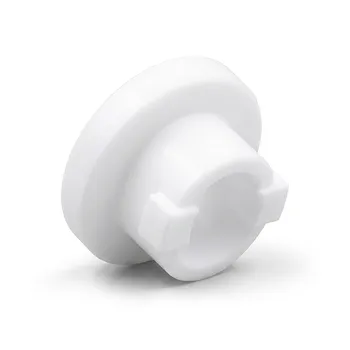
Custom PTFE Insulating Gaskets Corrosion Resistant Teflon Seals Tailored Engineering Plastic Components

Custom PTFE Insulating Gaskets and Corrosion Resistant Fluoropolymer Seals for Industrial Electrical Applications
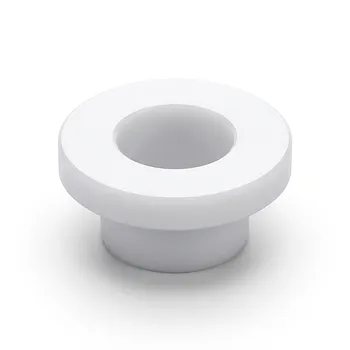
Customizable High Temperature Resistant Anti Static PTFE Insulating Gaskets Flame Retardant Corrosion Proof Industrial Seals

PTFE Deep Evaporating Dishes Customizable Laboratory and Industrial Solutions
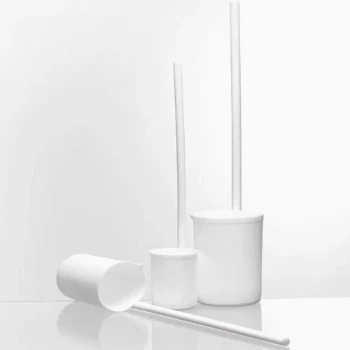
PTFE Chemical Solvent Sampling Spoon