All Questions
Why Is The Low Friction Coefficient Of Ptfe Teflon Washers Advantageous? Achieve Peak Efficiency And Durability
Discover how PTFE Teflon washers' low friction reduces wear, saves energy, and extends component life in demanding applications.
What Is The Temperature Range That Ptfe Teflon Washers Can Withstand? From -200°C To +260°C For Extreme Conditions
PTFE Teflon washers operate from -200°C to +260°C. Learn about their thermal stability, chemical resistance, and ideal applications.
How Does Chemical Resistance Benefit Ptfe Teflon Washers? Ensure Leak-Free Seals In Harsh Environments
Discover how PTFE Teflon washers' chemical inertness prevents degradation, ensures long-term sealing, and protects systems from contamination.
What Are The Key Properties Of Ptfe Teflon Washers? Unlock Superior Chemical & Temperature Resistance
Explore the key properties of PTFE washers: extreme chemical inertness, low friction, wide temperature range, and excellent electrical insulation.
What Are Ptfe Teflon Washers? The Ultimate Guide To High-Performance Sealing
Explore the key properties and applications of PTFE Teflon washers, known for their extreme chemical resistance and low friction.
What Special Considerations Are Needed When Machining Ptfe? Master High-Precision Fabrication
Learn essential PTFE machining techniques: sharp tooling, high feed rates, light clamping, and coolant use to manage thermal expansion and achieve accuracy.
What Factors Influence The Properties Of Compression Molded Ptfe Parts? Master The 4 Key Processing Parameters
Learn how preforming pressure, sintering temperature, dwell time, and cooling rate define the density, strength, and crystallinity of PTFE parts.
What Are The Key Steps In Ptfe Coating Application? A Guide To The Critical 4-Stage Process
Learn the 4 essential stages of PTFE coating: surface prep, primer, topcoat, and high-temperature cure for a durable, non-stick finish.
How Is Ptfe Skiving Performed? A Guide To Precision Ptfe Film Manufacturing
Learn how PTFE skiving creates uniform, continuous films for seals, gaskets, and insulation. Discover the process, benefits, and key applications.
What Is The Purpose Of Ptfe Etching? Unlock Bondable Surfaces For Your Components
Learn how PTFE etching chemically transforms the non-stick surface to enable strong, permanent bonds with adhesives and coatings for critical applications.
When Is Machining Preferred For Ptfe Part Fabrication? For High-Precision, Complex, Or Low-Volume Needs
Discover when CNC machining is the best method for PTFE parts, including prototyping, complex geometries, and achieving tight tolerances.
How Does Ptfe Paste Extrusion Work? A Guide To Manufacturing High-Strength Components
Learn how PTFE paste extrusion creates strong, durable tubing and wire insulation via fibrillation, a key process for demanding applications.
What Are The Basic Steps In Ptfe Compression Molding? A Guide To The Press-And-Bake Process
Learn the four key stages of PTFE compression molding: powder charging, cold compression, sintering, and controlled cooling for durable components.
What Are The Primary Applications Of Ptfe Fasteners And Custom Parts? Critical Solutions For Extreme Environments
Explore how PTFE fasteners and custom parts ensure reliability in medical, semiconductor, and chemical processing with superior chemical and temperature resistance.
How Can Ptfe Be Processed Into Parts? A Guide To Molding And Machining For High-Performance Components
Learn how PTFE's unique properties require a specialized two-stage process of compression molding and CNC machining to create precise, durable parts.
What Types Of Fasteners Can Be Made From Ptfe? A Guide To Chemical-Resistant, Low-Friction Components
Explore the types of PTFE fasteners like screws, nuts, and washers, and their advantages in chemical, medical, and electronic applications.
What Industries Rely Heavily On Teflon Machined Parts? Critical Applications In Aerospace, Medical & More
Discover why aerospace, medical, chemical, and electronics industries depend on Teflon (PTFE) parts for extreme environments, chemical resistance, and biocompatibility.
Why Are Teflon Machined Parts Indispensable In Modern Industries? Unmatched Performance For Demanding Applications
Discover why Teflon's unique properties—chemical inertness, thermal stability, and low friction—make it indispensable for critical components in aerospace, medical, and industrial sectors.
How Will New Ptfe Composites And Machining Techniques Impact The Industry? Unlock Advanced Performance
Explore how new PTFE composites and advanced CNC machining overcome material limitations, enabling durable, high-precision components for demanding industries.
What Future Trends Are Expected In Teflon Parts Machining? Ai, Automation, And Sustainability
Explore how AI, IoT, and advanced automation are shaping the future of Teflon (PTFE) machining for superior precision and efficiency.
How Do Modern Cnc Machines Contribute To Energy Efficiency In Teflon Machining? Achieve Precision And Sustainability
Discover how advanced CNC features like optimized tool paths, regenerative braking, and targeted cooling enhance energy efficiency in Teflon machining.
What Advancements Are Being Made In Recycling Teflon Scrap? From Micronization To Upcycling
Explore the latest PTFE recycling methods: mechanical micronization for powders and thermal pyrolysis for chemical upcycling, overcoming Teflon's inertness.
How Is Teflon Parts Machining Adapting To Sustainability Goals? Maximize Lifespan & Minimize Waste
Learn how precision Teflon machining achieves sustainability through durable, long-lasting parts and advanced techniques that drastically reduce material waste.
What Impact Has Globalization Had On The Teflon Machining Industry? Unlock Global Expertise & Competitive Pricing
Explore how globalization transformed Teflon machining, offering access to niche expertise, higher quality standards, and competitive global sourcing.
How Has Sourcing Teflon Parts From Global Suppliers Improved Supply Chain Efficiency?
Learn how global sourcing of Teflon parts reduces lead times, lowers costs, and enhances supply chain efficiency for high-performance PTFE components.
Which Industries Benefit From Teflon Machined Parts? Achieve Peak Performance In Demanding Applications
Discover how aerospace, medical, chemical, and electronics industries use Teflon (PTFE) parts for superior chemical resistance, low friction, and thermal stability.
How Do Manufacturers Produce Custom Teflon Components? Precision Cnc Machining For High-Performance Parts
Discover how custom Teflon components are made using precision CNC machining to achieve tight tolerances and complex geometries for demanding applications.
What Factors Have Contributed To The Expansion Of The Global Supply Chain For Teflon Machined Parts? Key Drivers And Industry Insights
Explore the key factors driving the global Teflon parts supply chain expansion, including high-tech industry demand, advanced CNC machining, and specialized PTFE suppliers.
How Does Teflon Contribute To Contamination Control In Sensitive Environments? A Guide To Purity & Performance
Discover how Teflon's chemical inertness, non-porous surface, and anti-adhesion properties prevent contamination in labs, semiconductors, and pharma.
What Considerations Are Important When Designing Teflon Machined Parts? Avoid Failure With Smart Ptfe Design
Learn key design principles for Teflon (PTFE) parts, including managing creep, thermal expansion, and realistic tolerances for reliable performance.
Why Is Teflon Preferred For Sealing Applications? Unmatched Chemical & Thermal Resistance
Discover why Teflon seals excel in harsh environments with superior chemical inertness, thermal stability, and low friction for reliable performance.
What Role Do Teflon Machined Parts Play In Chemical Processing Equipment? Ensure Purity & Prevent Corrosion
Discover how Teflon (PTFE) parts act as a non-reactive barrier in chemical equipment, preventing corrosion and ensuring product purity in demanding industries.
How Does Teflon's Performance In Extreme Temperatures Benefit Industrial Applications? Ensuring Reliable Performance From -200°C To +260°C
Learn how Teflon (PTFE) maintains low friction and chemical inertness across extreme temperatures for reliable seals, bearings, and liners in demanding industries.
What Are The Benefits Of Teflon's Self-Lubricating Properties In Mechanical Applications? Boost Efficiency And Cut Costs
Discover how Teflon's self-lubricating properties reduce friction, eliminate external lubricants, and extend component life in demanding applications.
How Does The Machining Process For Teflon Differ From Machining Metals? A Guide To Precision And Finesse
Learn the key differences between machining Teflon and metals, focusing on heat management, tool sharpness, and clamping techniques for optimal results.
What Makes Teflon Valuable For Electrical Applications? Leverage Its High-Performance Insulating Properties
Discover why Teflon (PTFE) is essential for electronics: high dielectric strength, thermal stability, and chemical inertness for demanding applications.
Why Is Teflon Particularly Suitable For Medical And Food Processing Applications? Unmatched Purity & Performance
Discover why Teflon's (PTFE) biocompatibility, FDA compliance, and non-stick properties make it ideal for medical devices and food-grade equipment.
What Challenges Are Associated With Machining Teflon And How Are They Addressed? Master Precision Ptfe Manufacturing
Learn how to overcome Teflon's softness, low thermal conductivity, and high expansion for precise PTFE parts with sharp tools, cooling, and technique.
What Machining Processes Are Used To Create Teflon Parts? Achieve Precision With Expert Ptfe Machining
Learn about CNC turning, milling, and drilling for Teflon parts. Discover how to manage thermal expansion and deformation for high-precision components.
What Types Of Components Are Typically Made From Teflon Machined Parts? Essential Parts For Extreme Conditions
Discover the key Teflon (PTFE) machined parts like seals, bearings, and insulators, chosen for chemical resistance, low friction, and high-temperature stability.
What Are The Advantages Of Machining Teflon? Unlock Superior Precision And Complex Designs
Discover why CNC machining Teflon is superior for high-precision, complex parts, avoiding thermal degradation and enabling cost-effective custom production.
What Industries Commonly Use Teflon Machined Parts And Why? Achieve Unmatched Performance In Demanding Environments
Discover why aerospace, medical, semiconductor, and chemical industries rely on Teflon (PTFE) parts for extreme chemical inertness, thermal stability, and low friction.
What Are The Main Limitations Of Teflon Machining? Navigating Softness, Creep, And Thermal Expansion
Discover the key challenges of machining Teflon (PTFE), including stress creep, thermal expansion, and poor surface finish, and learn how to design for success.
What Industries Use Ptfe Machined Parts And For What Applications? Critical Components For Demanding Environments
Discover how PTFE machined parts provide chemical resistance, low friction, and thermal stability in aerospace, medical, semiconductor, and food processing industries.
Why Is Cnc Machining Preferred For Teflon Parts Over Other Methods? Unlock Precision & Complex Designs
Discover why Teflon's unique thermal properties make CNC machining the only viable method for creating precise, complex, and reliable PTFE components.
What Tips Can Improve Teflon Machining Results? Master Sharp Tools, Heat Control, And Rigid Support
Learn essential Teflon (PTFE) machining tips: use sharp tools, manage heat, and provide rigid support to overcome softness and thermal expansion.
What Are The Key Considerations When Machining Teflon? Master Precision Machining For Soft Polymers
Learn the essential strategies for machining Teflon (PTFE), including tool selection, heat management, and workholding to overcome softness and thermal expansion.
What Machining Processes Are Suitable For Teflon/Ptfe? Master Precision Machining For Soft Materials
Learn the best CNC milling, turning, and drilling techniques for machining Teflon/PTFE, overcoming challenges like softness and thermal expansion.
What Are The Practical Benefits Of Using Ptfe Components? Boost Reliability & Cut Costs In Harsh Environments
Discover how PTFE components deliver chemical resistance, low friction & thermal stability to reduce maintenance, enhance safety & improve efficiency in industrial applications.
What Are The Primary Advantages Of Teflon Washers Compared To Metal Washers? Unlock Superior Performance In Harsh Environments
Discover the key benefits of Teflon washers: low friction, chemical resistance, and electrical insulation for demanding applications.
What Are The Two Main Types Of Specialty Ptfe Washers And Their Characteristics? Choose The Right Washer For Your Application
Compare virgin PTFE washers and PTFE sealing washers. Learn their key characteristics, applications, and how to select the right type for purity, sealing, or strength.
What Advantages Do Ptfe Washers Offer? Superior Chemical, Thermal, And Low-Friction Performance
Discover why PTFE washers excel with unmatched chemical resistance, a wide temperature range (-200°C to +260°C), and the lowest friction of any solid material.
What Are The Primary Functions Of Washers In Mechanical Assemblies? Ensure Joint Reliability & Prevent Damage
Discover the 3 key roles of washers: distributing load, acting as a spacer, and preventing loosening. Learn how to select the right washer for your assembly.
What Support And Warranty Options Are Available For Custom Teflon Parts? Secure Your Investment With Full Manufacturer Backing
Learn about the comprehensive support and warranty for custom Teflon parts, including expert installation guidance and full coverage against defects.
What Related Products Complement Custom Teflon Parts? Build A Complete & Robust System
Learn how to pair Teflon with metals, polycarbonate, and nylon for structural strength, impact resistance, and durability in demanding applications.
What Are The Advantages Of Using Custom Teflon Parts? Unlock Superior Performance In Demanding Applications
Discover how custom Teflon parts offer extreme chemical resistance, low friction, and thermal stability for superior performance in harsh environments.
What Are The Key Features Of Custom Teflon Parts? Unlock Chemical & Thermal Resistance
Discover the 4 key features of custom Teflon parts: chemical resistance, low friction, thermal stability, and electrical insulation for demanding applications.
How Do Teflon Parts Benefit The Electronics Industry? Achieve Superior Performance In Harsh Environments
Discover how Teflon (PTFE) parts provide critical electrical insulation, chemical resistance, and high-frequency performance for reliable electronics.
What Are The Primary Applications Of Teflon Parts In The Aerospace Industry? Essential For Seals, Bearings & Insulation
Explore the critical uses of Teflon (PTFE) parts in aerospace, including seals, low-friction bearings, and high-performance insulation for extreme environments.
What Guidelines Should Be Followed For The Installation And Maintenance Of Teflon Parts? Ensure Longevity & Performance
Learn key Teflon (PTFE) installation & maintenance guidelines to prevent creep, manage thermal expansion, and extend component life in demanding applications.
What Standards And Compliance Measures Are Followed In Manufacturing Teflon Parts? Ensuring Quality From Iso To Final Inspection
Learn how ISO and ASTM standards, combined with rigorous quality control, ensure the reliability of precision Teflon components for demanding applications.
What Industries Commonly Use Custom Teflon Parts? Critical Applications In Aerospace, Medical & More
Explore how aerospace, medical, chemical, and electronics industries use custom Teflon parts for extreme temperature, chemical resistance, and purity.
What Are The Key Properties Of Teflon (Ptfe) Used In Custom Parts? | Achieve Peak Performance
Explore the key properties of PTFE (Teflon) for custom parts: chemical resistance, temperature stability, low friction & electrical insulation.
What Are The Benefits Of Using Custom Teflon Parts For Clients? Reduce Costs & Boost Reliability
Discover how custom Teflon (PTFE) parts provide superior chemical resistance, low friction, and high-temperature stability to lower operational costs.
How Do Ptfe Components Compare To Metal Components? Choose The Right Material For Your Application
PTFE vs. Metal: a guide to material selection based on chemical resistance, strength, temperature, and friction. Make the right choice for your design.
What Are The Key Design Features Of Ptfe Bushings? Achieve Maintenance-Free, High-Performance Bearing Solutions
Explore PTFE bushing design features: self-lubrication, extreme temperature tolerance, chemical inertness, and high load capacity for demanding applications.
In Which Applications Are Ptfe Bushings Suitable? Ideal For Demanding Chemical, Thermal, And Friction Environments
Discover the key applications for PTFE bushings, including chemical processing, food production, and aerospace, where self-lubrication and chemical resistance are critical.
What Are The Advantages Of Ptfe Bushings? Achieve Maintenance-Free, High-Performance Operation
Discover the key benefits of PTFE bushings: self-lubrication, chemical resistance, and wide temperature range for demanding industries.
What Industries Commonly Use Ptfe Bellows And Diaphragms, And Why? Ensure Purity & Chemical Resistance
Explore why semiconductor, chemical, medical, and aerospace industries rely on PTFE bellows and diaphragms for purity, chemical inertness, and reliability.
What Are The Key Properties Of Ptfe That Benefit Bellows And Diaphragms? Achieve Unmatched Reliability In Harsh Environments
Discover how PTFE's chemical inertness, thermal stability, and low friction make it the ideal material for durable, high-performance bellows and diaphragms.
Why Is Ptfe The Preferred Material For Bellows And Diaphragms? Unmatched Chemical, Thermal, And Mechanical Stability
Discover why PTFE is the top choice for high-performance bellows and diaphragms, offering superior chemical inertness, extreme temperature resistance, and low friction.
What Are Ptfe Bellows And Diaphragms, And Why Are They Important In Critical Systems?
Discover how PTFE bellows and diaphragms provide unmatched chemical resistance, thermal stability, and reliability in demanding industrial applications.
What Finishing Operations Might Be Required After Machining Teflon Parts? Deburring, Polishing & More
Learn essential Teflon (PTFE) finishing steps like deburring, sanding, and polishing to ensure dimensional accuracy and performance.
What Considerations Are Important When Selecting Teflon For Cnc Machining? Master Its Unique Challenges
Key factors for CNC machining Teflon (PTFE): managing high thermal expansion, softness, burr formation, and stress creep with proper tooling and techniques.
Why Is Cryogenic Deburring Particularly Suitable For Teflon Parts? Achieve A Perfect, Damage-Free Finish
Learn how cryogenic deburring safely removes imperfections from Teflon parts using extreme cold, avoiding heat damage, warping, or chemical alteration.
What Is Cryogenic Deburring And How Does It Work For Teflon Parts? Achieve A Flawless Finish Without Damage
Learn how cryogenic deburring uses liquid nitrogen to safely remove burrs from sensitive Teflon parts without heat, abrasion, or chemical damage.
What Are Common Applications Of Machined Teflon Parts? Solve Friction, Chemical, And Electrical Challenges
Explore the key uses of machined Teflon (PTFE) parts in aerospace, medical, chemical, and food industries for sealing, insulation, and low-friction applications.
What Are Some Unique Challenges When Machining Teflon? Overcome Material Instability For Precision Parts
Learn the key challenges of machining Teflon (PTFE), including stress creep and thermal expansion, and discover strategies for achieving tight tolerances and a clean finish.
What Are The Main Steps Involved In Cnc Machining Teflon Parts? Mastering Ptfe's Unique Challenges
Learn the key steps for CNC machining Teflon (PTFE), from CAD design to final inspection, and how to overcome material challenges like thermal expansion and burrs.
How Does Ptfe's Thermal Expansion And Contraction Affect Its Machining And Application? Master Dimensional Stability
Learn how to manage PTFE's high thermal expansion for precise machining and reliable application performance in seals, bearings, and labware.
What Makes Ptfe An Excellent Choice For Gaskets, Rings, And Bearings? Unlock Unmatched Reliability With Kintek Ptfe
Discover why PTFE's low friction, chemical inertness, and thermal stability make it ideal for seals and bearings in demanding industrial applications.
What Are The Properties And Applications Of Glass-Filled Ptfe Bushes? Enhance Strength & Performance
Explore the enhanced strength, creep resistance, and applications of glass-filled PTFE bushes for demanding industrial environments.
What Tools Are Used In The Cnc Machining Of Ptfe? Achieve Clean, Precise Cuts
Discover the best cutting tools (HSS, carbide) and techniques for machining PTFE to prevent melting, ensure precision, and improve surface finish.
What Are The Advantages Of Bronze-Filled Ptfe Bushes? Boost Load Capacity & Wear Resistance
Discover how bronze-filled PTFE bushes offer superior strength, wear resistance, and thermal conductivity for demanding applications.
What Are The Benefits Of Carbon-Filled Ptfe Bushes? Boost Strength & Wear Resistance For Demanding Applications
Discover how carbon-filled PTFE bushes offer superior wear resistance, higher load capacity, and better thermal conductivity than virgin PTFE.
How Can Designers Balance Aesthetics And Functionality In Ptfe Machining? Master Material Properties For Superior Results
Learn key PTFE machining strategies to manage softness and thermal expansion, achieving both dimensional accuracy and a flawless aesthetic finish.
What Are Filled Ptfe Bushes And Why Are Fillers Added? Enhance Wear Resistance & Load Capacity
Learn how fillers like glass and bronze transform PTFE bushes into high-performance bearings for demanding industrial applications.
What Are Some Innovative Applications Of Cnc Machined Ptfe In Product Design? Unlock Extreme Performance In Medical, Aerospace & Electronics
Discover how CNC machined PTFE enables breakthroughs in medical implants, aerospace seals, and high-frequency electronics by combining precision with unique material properties.
What Types Of Surface Treatments Can Be Applied To Ptfe Bushes? Enhance Adhesion For Your Assemblies
Explore PTFE bush surface treatments: chemical etching, plasma, and flame treatment to overcome inertness and achieve strong bonds.
What Design Considerations Are Important When Working With Cnc Machined Ptfe Parts? Master Tolerances, Creep, And Thermal Expansion
Learn key design rules for CNC machined PTFE parts, including managing thermal expansion, stress relaxation, realistic tolerances, and material selection for reliability.
What Is The Purpose Of Sintering In The Ptfe Bush Manufacturing Process? | Achieve Superior Component Performance
Discover why sintering is essential for PTFE bush manufacturing, transforming powder into a durable, high-performance component with enhanced strength and wear resistance.
What Are The Key Aspects Of The Cnc Machining Process For Ptfe? Master Precision Machining For Soft Polymers
Learn the critical strategies for CNC machining PTFE, including tool selection, heat management, and fixturing to achieve dimensional accuracy and a superior finish.
How Are Molded Ptfe Bushes Typically Manufactured? A Guide To The Precision Molding Process
Learn the 4 key stages of manufacturing molded PTFE bushes via compression molding and sintering, from powder charging to controlled cooling.
What Are The Unique Properties Of Ptfe? A Guide To High-Performance Cnc Machining
Explore PTFE's unique properties like chemical inertness, low friction, and heat resistance that make it ideal for precision CNC machining.
Can Ptfe Bushes Be Customized For Specific Applications? Tailor Geometry, Material, And Surface For Peak Performance
Learn how to customize PTFE bushes with specific geometries, material fillers, and surface treatments for demanding applications in various industries.
What Is A Ptfe Flanged Bush And What Are Its Advantages? Achieve Superior Performance In Demanding Applications
Learn how PTFE flanged bushings combine self-lubrication, chemical resistance, and axial stability for pumps, valves, and linear motion systems.
What Is A Ptfe Cylindrical Bush And Where Is It Commonly Used? | High-Performance Bushing Guide
Learn about PTFE cylindrical bushes: low-friction, chemically inert sleeves for demanding applications in medical, automotive, and industrial machinery.
What Are The Common Shapes Of Ptfe Bushes? Cylindrical Vs. Flanged For Load Management
Learn the key differences between cylindrical and flanged PTFE bushes, including their functions, benefits, and how to choose the right shape for radial or axial loads.
What Are The Key Features And Benefits Of Ptfe Bushings? Achieve Maintenance-Free Operation In Demanding Environments
Discover how PTFE bushings offer self-lubrication, chemical resistance, and extreme temperature tolerance for reliable, maintenance-free performance.
What Is A Ptfe Bush And What Is Its Primary Use? A Guide To Self-Lubricating Bearings
Learn about PTFE bushes: self-lubricating bearings for low friction, chemical resistance, and extreme temperatures in demanding applications.
Related Products
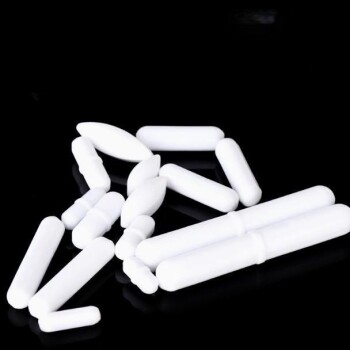
Custom PTFE Teflon Parts Manufacturer PTFE Magnetic Stirring Bar
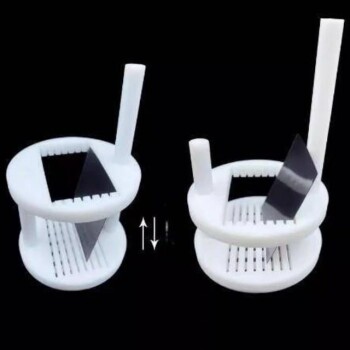
Custom PTFE Teflon Parts Manufacturer Adjustable Height Flower Basket
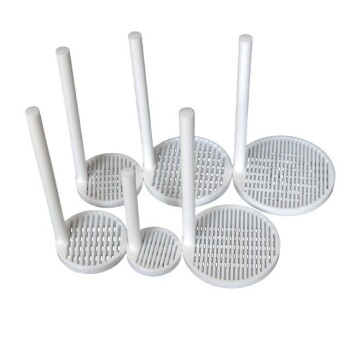
Custom PTFE Teflon Parts Manufacturer PTFE Cleaning Rack
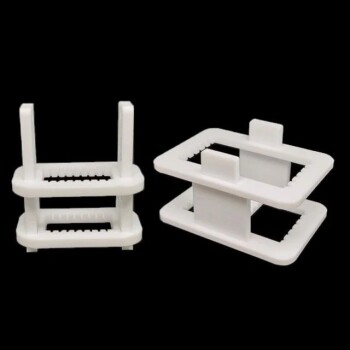
Custom PTFE Teflon Parts Manufacturer Conductive Glass Substrate Cleaning Rack
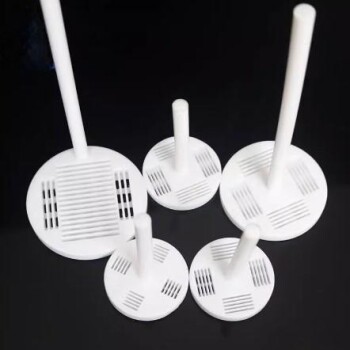
Custom Machined Molded PTFE Teflon Parts Manufacturer for Laboratory ITO FTO Conductive Glass Cleaning Flower Basket