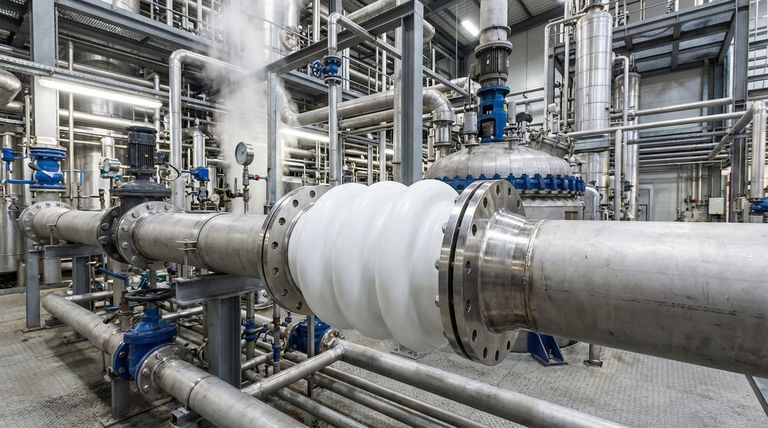
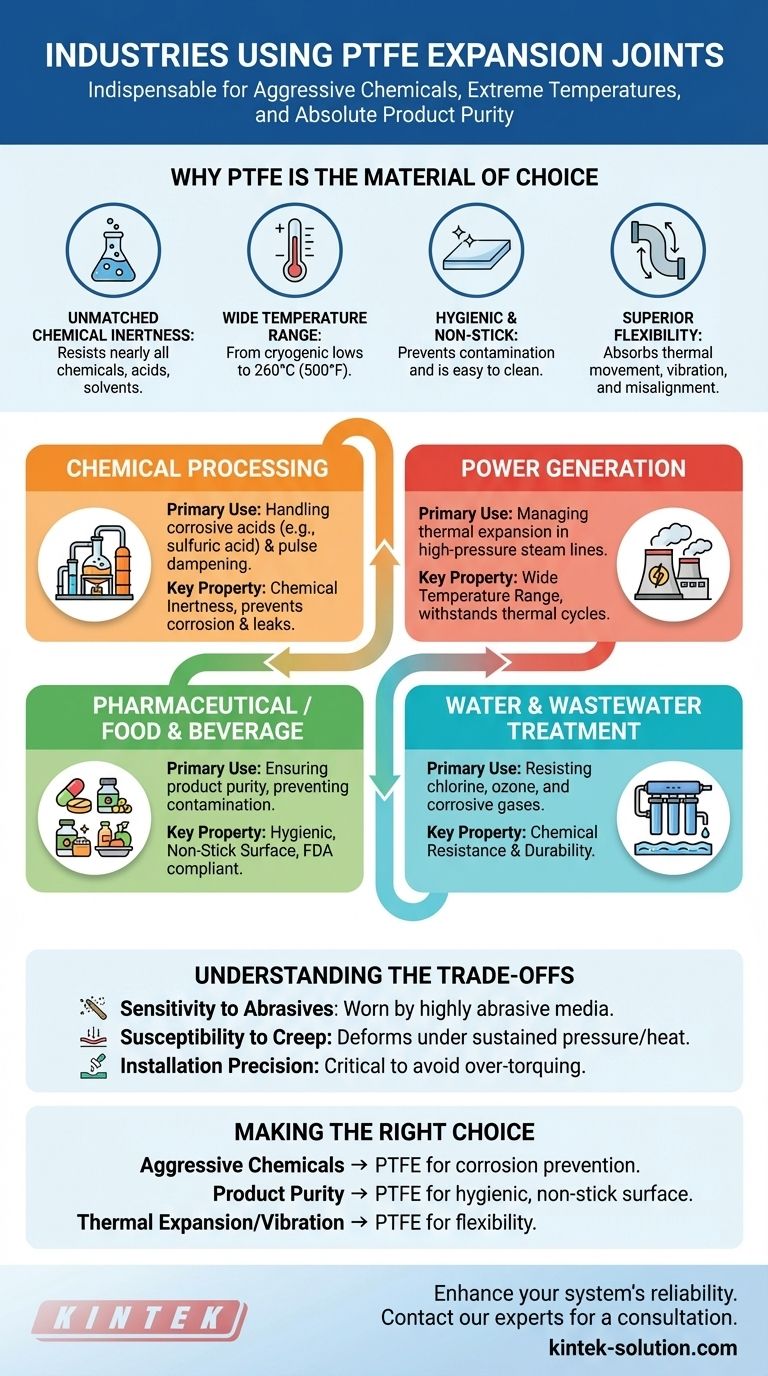
In short, PTFE expansion joints are indispensable in any industry that handles aggressive chemicals, operates at extreme temperatures, or requires absolute product purity. They are most commonly found in chemical processing, power generation, pharmaceutical manufacturing, and food and beverage production.
The widespread use of PTFE expansion joints is not accidental. It is a direct result of PTFE's unique molecular structure, which provides a combination of chemical inertness, temperature resistance, and flexibility that few other materials can match for protecting critical piping systems.
Why PTFE is the Material of Choice
The decision to use a PTFE expansion joint is driven by the need to protect expensive and sensitive piping systems from stress, vibration, and corrosion. PTFE (Polytetrafluoroethylene) possesses a unique set of properties that makes it ideal for these demanding environments.
Unmatched Chemical Inertness
PTFE is resistant to nearly all industrial chemicals, acids, and solvents. This chemical inertness is its most significant advantage.
This property makes it the default material for pipelines in chemical and petrochemical plants, where it prevents corrosion, leaks, and an eventual loss of containment.
Wide Operational Temperature Range
PTFE expansion joints can function effectively in a broad temperature spectrum, from cryogenic lows to high-heat applications up to 260°C (500°F).
This makes them critical components in power generation facilities for handling high-pressure steam and managing the thermal expansion and contraction of pipes.
Hygienic and Non-Stick Surface
The surface of PTFE is extremely smooth and non-porous, which prevents materials from sticking to it. This is known as a low coefficient of friction.
This characteristic is vital for the pharmaceutical and food and beverage industries, where preventing contamination and ensuring product purity is a non-negotiable regulatory requirement.
Superior Flexibility and Vibration Absorption
As the name implies, an expansion joint must be flexible. PTFE excels at absorbing thermal movement, pipe misalignment, and system vibration.
This protects rotating equipment like pumps and turbines from the stresses of the attached piping system and is valuable in complex networks found in pollution control and HVAC systems.
Key Industry Applications in Detail
While many industries use PTFE, four stand out as the primary adopters due to the severity of their operating conditions.
Chemical Processing
In chemical plants, PTFE expansion joints are used to handle highly corrosive substances like sulfuric acid, chlorine, and caustic soda. They are the frontline defense against leaks and joint failure.
They also function as pulse dampeners in lines with high-pressure fluctuations, protecting sensitive instruments and downstream equipment.
Pharmaceutical and Food & Beverage
In these industries, the primary goal is preventing contamination. PTFE's inert and non-stick nature ensures that the final product remains pure.
These joints are easy to clean (Clean-in-Place) and comply with stringent hygiene and safety standards, such as those from the FDA.
Power Generation
Power plants operate with extreme temperature and pressure differentials. PTFE expansion joints safely absorb the constant thermal expansion and contraction of steam and coolant lines.
Their ability to withstand these cycles reduces mechanical stress on the entire piping infrastructure, preventing premature failure.
Water and Wastewater Treatment
Water treatment facilities use a variety of chemicals like chlorine and ozone to purify water. PTFE easily withstands these chemicals over long periods.
In wastewater, these joints can handle the abrasive nature of certain slurries and the corrosive gases generated during treatment processes.
Understanding the Trade-offs
Despite its advantages, PTFE is not a universal solution. Understanding its limitations is key to proper application.
Sensitivity to Abrasives
While effective for some slurries, PTFE can be worn down by highly abrasive media. In such cases, an elastomer-lined joint might be a more durable choice.
Susceptibility to Creep
Under sustained pressure and high temperatures, PTFE can slowly deform over time, a phenomenon known as creep. This must be accounted for in the system's design to ensure a long service life.
Installation Precision
The performance of a PTFE expansion joint is highly dependent on correct installation. Over-torquing the flange bolts is a common error that can crush the PTFE and lead to a premature sealing failure.
Making the Right Choice for Your Goal
Selecting the correct expansion joint requires matching the material properties to your system's primary challenge.
- If your primary focus is handling aggressive chemicals: PTFE is the gold standard for preventing corrosion and ensuring the long-term integrity of your piping.
- If your primary focus is product purity and hygiene: PTFE's inert, non-stick surface is essential for meeting the strict regulatory demands of pharmaceutical and food-grade applications.
- If your primary focus is managing thermal expansion and vibration: PTFE expansion joints offer excellent flexibility and durability in high-temperature or dynamic systems like power plants and HVAC.
Ultimately, choosing a PTFE expansion joint is an investment in your system's reliability, safety, and operational longevity.
Summary Table:
| Industry | Primary Use Case | Key PTFE Property Utilized |
|---|---|---|
| Chemical Processing | Handling corrosive acids & solvents | Unmatched Chemical Inertness |
| Power Generation | Managing thermal expansion in steam lines | Wide Temperature Range (-200°C to 260°C) |
| Pharmaceutical / Food & Beverage | Ensuring product purity and preventing contamination | Hygienic, Non-Stick Surface |
| Water & Wastewater Treatment | Resisting chemicals like chlorine and ozone | Chemical Resistance & Durability |
Need a reliable PTFE expansion joint for your critical application?
At KINTEK, we specialize in manufacturing high-performance PTFE components, including custom expansion joints, for the semiconductor, medical, laboratory, and industrial sectors. Our precision production and custom fabrication services—from prototypes to high-volume orders—ensure you get a solution perfectly matched to your system's demands for chemical resistance, temperature stability, and hygiene.
Enhance your system's reliability and safety. Contact our experts today for a consultation!
Visual Guide
Related Products
- Customizable PTFE Rods for Advanced Industrial Applications
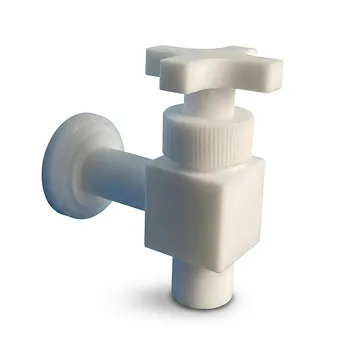
- High Corrosion Resistant PTFE Faucet Polytetrafluoroethylene Valve for Chemical Storage Drums and Fluid Transfer Systems Customizable Industrial Grade
- Custom Graphite Filled PTFE Rods for Advanced Industrial Applications
- Custom PTFE Sleeves and Hollow Rods for Advanced Applications
- Corrosion Resistant PTFE Polytetrafluoroethylene Valve and Customizable Laboratory Fluid Dispensing Faucet for Aggressive Chemical Handling in Industrial Storage Tanks and Plastic Drums
People Also Ask
- How do PTFE rods contribute to energy efficiency in industrial applications? Reduce Friction & Power Consumption
- What are PTFE rods and how are they manufactured? A Guide to Their Properties and Production
- What are the different types of PTFE rods available based on manufacturing technology? Choose the Right Type for Your Project
- How are Teflon rods utilized in the chemical processing industry? For Seals, Liners & Valves That Resist Corrosion
- Can PTFE rods be machined into complex shapes? Yes, with precision engineering for custom parts.