All Questions
What Are Some Common Applications Of Machined Teflon? Critical Components For Harsh Environments
Explore common uses for machined Teflon (PTFE) in seals, bearings, and insulators across semiconductor, medical, and industrial applications.
What Are Important Considerations When Drilling Ptfe? Achieve Clean, Accurate Holes In Soft Polymers
Learn the critical techniques for drilling PTFE, including tool selection, speed control, and clamping to prevent heat deformation and ensure precision.
What Should Be Considered When Milling Teflon? Master Machining For Precision Ptfe Parts
Learn key strategies for milling Teflon (PTFE), including tool selection, thermal management, and workholding to achieve precision and avoid common pitfalls.
What Are Important Tips For Turning Ptfe On A Lathe? Achieve A Clean, Precise Cut Every Time
Learn essential tips for turning PTFE on a lathe: tool selection, speed settings, and safety to prevent deformation and ensure a perfect finish.
What Are The Three Most Common Machining Processes For Teflon? Master Cnc Turning, Milling & Drilling
Learn the top 3 Teflon (PTFE) machining processes: CNC turning, milling, and drilling. Discover techniques to overcome softness, thermal expansion, and burrs for precision parts.
What Are The Advantages Of Machining Teflon? Unlock Superior Performance For Critical Components
Discover the key benefits of machining Teflon (PTFE), including chemical inertness, low friction, and thermal stability for demanding applications.
What Are The Three Main Considerations When Machining Teflon? Conquer Softness, Heat, And Slipperiness
Master Teflon (PTFE) machining by addressing its softness, high thermal expansion, and low friction. Learn key strategies for sharp tooling, cooling, and workholding.
What Are The Two Common Forms In Which Ptfe Is Available? Raw Resins Vs. Semi-Finished Shapes
Learn the difference between PTFE raw resins and semi-finished stock shapes to select the right form and formulation for your application.
How Does Ptfe Contribute To Environmental Benefits? Durability, Efficiency, And Contamination Prevention
Explore how PTFE's durability, chemical inertness, and low-friction properties reduce waste, prevent contamination, and lower energy consumption.
What Are The Key Properties Of Teflon (Ptfe) That Make It Suitable For Machining? Balancing Performance With Machining Challenges
Explore the properties of PTFE like low friction and chemical resistance, and the unique challenges they create for precision machining.
What Are The Main Advantages Of Using Ptfe In Manufacturing? Boost Efficiency & Durability
Discover PTFE's key benefits: extreme chemical resistance, low friction, and high heat tolerance for superior manufacturing performance.
What Are The Benefits Of Using Fillers In Ptfe? Enhance Wear, Strength, And Performance
Discover how fillers transform PTFE into a robust engineering material, improving wear resistance, creep resistance, and thermal properties for demanding applications.
What Are The Modified Versions Of Ptfe And Their Properties? Enhance Performance For Demanding Applications
Explore modified PTFE types like PFA, TFM, and filled composites. Compare properties, benefits, and trade-offs for semiconductor, medical, and industrial uses.
What Are The Limitations Of Ptfe? Understanding Creep, Abrasion, And Radiation Weaknesses
Explore the key limitations of PTFE, including poor creep resistance, low abrasion resistance, and vulnerability to radiation, for better material selection.
What Are Some Additional Physical Properties Of Ptfe? Beyond Non-Stick: Discover Ptfe's Elite Thermal & Chemical Resistance
Explore PTFE's key physical properties: high melting point (327°C), chemical inertness, low friction, and superior electrical insulation for demanding applications.
What Are Some Notable Properties Of Ptfe? Discover The Extreme Performance Of Teflon
Explore PTFE's key properties: extreme chemical inertness, wide temperature range (-200°C to +260°C), low friction, and superior electrical insulation.
What Is Ptfe And How Is It Produced? The Science Behind A High-Performance Polymer
Discover how PTFE is made through polymerization and why its unique structure creates superior chemical resistance, low friction, and heat stability.
What Makes Ptfe Versatile In Medical Applications? Unlock The Power Of Biocompatible Polymers
Explore how PTFE's biocompatibility, chemical resistance, and ePTFE's tissue integration make it essential for medical devices like catheters and grafts.
How Does Ptfe's Electrical Insulation Benefit Medical Devices? Ensuring Safety And Reliability In Critical Applications
Explore how PTFE's high dielectric strength, low dielectric constant, and chemical resistance ensure reliable performance in medical devices from implants to surgical tools.
What Role Does Ptfe's Temperature Resistance Play In Medical Applications? Ensuring Sterilization & Implant Safety
Learn how PTFE's high-temperature resistance enables safe autoclaving and reliable performance in medical devices, from surgical tools to implants.
Why Is Ptfe's Ease Of Sterilization Important For Medical Devices? Ensuring Patient Safety And Device Integrity
Learn why PTFE's compatibility with autoclaving and chemical sterilization is critical for preventing infections and maintaining medical device performance.
How Does Ptfe's Porous Structure Support Medical Applications? Unlocking Biocompatible Scaffolds And Filtration
Explore how porous PTFE's unique structure enables tissue integration and sterile filtration for medical devices, leveraging its chemical inertness and biocompatibility.
What Medical Benefits Does Ptfe's Low Friction And Non-Stick Surface Provide? Minimize Patient Trauma & Complications
Explore how PTFE's low friction and non-stick surface in medical devices reduces tissue trauma, prevents adhesion, and enhances patient safety and comfort.
How Does Ptfe's Chemical Resistance Contribute To Its Medical Applications? Ensuring Biocompatibility And Sterilization Safety
Explore how PTFE's chemical inertness ensures biocompatibility for implants and withstands harsh sterilization, making it vital for medical devices.
Why Is Ptfe's Biological Inertia Beneficial For Medical Use? Ensure Implant Safety And Longevity
Discover how PTFE's biological inertia prevents immune rejection, ensures long-term stability, and enables safe medical device performance.
What Are The Key Advantages Of Ptfe In Medical Applications? Unmatched Biocompatibility And Low Friction
Discover why PTFE is a top choice for medical devices, offering superior biocompatibility, chemical resistance, and the lowest friction for safe, reliable performance.
What Challenges Are Associated With Fabricating Ptfe Substrates? Mastering Precision With High-Frequency Materials
Explore the key challenges of PTFE fabrication, including thermal expansion, adhesion issues, and high costs, and learn how to overcome them for high-performance applications.
What Are The Advantages Of Ptfe Laminates In Rf Applications? Achieve Superior Signal Integrity And Reliability
Discover the key benefits of PTFE laminates for RF circuits: low dielectric loss, stable impedance, and high thermal/chemical resistance.
What Are The Key Differences Between Ptfe And Non-Ptfe Rf Pcb Laminates? Choose The Right Material For Your High-Frequency Design
Explore the critical differences between PTFE and non-PTFE RF PCB laminates, including dielectric constant, signal loss, thermal stability, and cost considerations.
Why Is Low Coefficient Of Friction Particularly Important In Modern Bridge Design? It Prevents Destructive Stress From Thermal Expansion
Learn why a low coefficient of friction in PTFE bridge bearings is essential for managing thermal expansion and ensuring structural safety in modern bridges.
What Are The Additional Benefits Of Ptfe In Bridge Bearing Design? Enhance Durability & Lower Maintenance Costs
Discover PTFE's superior benefits for bridge bearings: extreme temperature tolerance, chemical inertness, and minimal maintenance for long-term structural integrity.
How Does Ptfe Perform When Bearing Surfaces Become Contaminated? Maintain Reliable Performance In Unclean Environments
Discover why PTFE bearings excel in contaminated environments, offering stable low friction, self-lubrication, and chemical resistance without relying on external lubricants.
What Are The Two Common Application Methods For Ptfe In Slide Bearings? A Guide To Linear And Rotational Movement
Learn the two main PTFE slide bearing types: flat plates for linear movement and curved surfaces for rotation. Choose the right method for your structural needs.
Why Are Ptfe Slide Bearings Advantageous For Highway Bridges? Key Benefits For Durable, Low-Maintenance Structures
Discover why PTFE slide bearings are essential for highway bridges, offering low friction, high load capacity, and minimal maintenance for long-term structural integrity.
What Are The Limitations Of Ptfe When Used As A Mechanical Component? Overcoming Softness & Instability
Explore PTFE's mechanical limitations like softness and thermal expansion, and learn how filled grades enhance strength for demanding applications.
What Is Ptfe And Why Is It Popular For Plastic Bearings? Unlock Maintenance-Free, High-Performance Design
Explore why PTFE's self-lubricating properties, chemical resistance, and wide temperature range make it ideal for plastic bearings in demanding applications.
What Tests Are Conducted On Ptfe Sliding Rubber Bearings? Ensure Your Structure's Safety And Movement
Learn about the critical PTFE-specific tests—friction coefficient, loading, and wear resistance—essential for validating structural bearing performance.
What Are The Two Production Methods For Ptfe Sliding Bearing Pads? A Guide To Manufacturing Choices
Learn the two main PTFE bearing pad production methods: two-step bonding vs. integrated vulcanization. Compare cost, complexity, and bond integrity.
How Does The Price Of Ptfe Sliding Pads Compare To Regular Rubber Bearings? A Guide To High-Performance Vs. Standard Components
PTFE sliding pads cost more than rubber bearings due to their advanced sliding system. Learn when the investment is essential for your project's performance.
What Are The Advantages Of Ptfe Sliding Rubber Bearings? Achieve Low-Friction, Maintenance-Free Structural Movement
Discover the key benefits of PTFE sliding rubber bearings: low friction, high load capacity, and maintenance-free operation for bridges and heavy structures.
How Does The Ptfe Sliding Pad Function Smoothly? An Inside Look At Low-Friction Engineering
Learn how PTFE sliding pads use low-friction PTFE, polished steel, and lubrication to enable smooth movement under heavy structural loads.
What Are The Main Components Of A Ptfe Sliding Pad? A Simple Two-Part System For Low-Friction Movement
Learn the core components of a PTFE sliding pad: the PTFE plate, stainless steel surface, and backing plates. Understand their function for low-friction, high-load applications.
What Is A Ptfe Sliding Rubber Bearing Pad And Its Primary Use? Essential For Bridge & Building Movement
Learn how PTFE sliding rubber bearing pads support heavy vertical loads while allowing controlled horizontal movement in bridges and large buildings.
What Are The Basic Shapes Of Molded Ptfe Materials Available? A Guide To Stock Forms & Machining
Learn about standard PTFE stock shapes like rods, tubes, and plates, and why they are essential for machining custom components.
What Types Of Ptfe Components Are Used In The Gas And Oil Industry? Enhance Reliability In Extreme Conditions
Explore high-performance PTFE seals, gaskets, and expansion joints for oil and gas. Engineered for extreme pressure, temperature, and chemical resistance.
What Types Of Industries And Applications Utilize Ptfe Parts? Discover The Versatility Of Ptfe
Learn how PTFE parts are used in chemical processing, aerospace, medical, electronics, and food production for superior performance and reliability.
What Size Range Do Ptfe Balls Come In? A Guide From 3Mm To 100Mm
Discover the standard PTFE ball size range (3mm-100mm), key specs like tolerance & TIR, and how to select the right one for your application.
What Industries Commonly Use Ptfe Balls? Essential For Chemical, Pharma, And Food Processing
Discover why PTFE balls are vital in chemical, pharmaceutical, and food industries due to their chemical inertness, low friction, and high purity.
What Advantage Does The Low Coefficient Of Friction Of Ptfe Balls Provide? Boost Durability And Efficiency
Discover how PTFE's low friction coefficient minimizes wear, ensures smooth operation, and improves energy efficiency in mechanical systems.
How Are Ptfe Balls Used In The Pharmaceutical Industry? Ensuring Product Purity And Safety
Explore the critical role of PTFE balls, seals, and components in pharmaceutical manufacturing for contamination-free processing and FDA compliance.
What Temperature Range Can Ptfe Balls Withstand? Unlock Extreme Thermal Stability From -200°C To 260°C
Learn the precise temperature limits for PTFE balls, including continuous use, peak tolerance, and cryogenic performance for demanding applications.
What Makes Ptfe Balls Ideal For Chemical Applications? Unmatched Inertness For Demanding Environments
Discover why PTFE balls excel in chemical applications with superior chemical inertness, low friction, and high thermal stability up to 260°C (500°F).
Why Are Ptfe Balls Suitable For Filtering Applications? Ensuring Reliable Fluid Control In Demanding Systems
Discover how PTFE balls prevent valve clogging & corrosion in filtering systems with their chemical inertness, non-stick surface, and low friction.
What Are The Common Applications Of Ptfe Balls? Leverage Unmatched Chemical Resistance & Low Friction
Explore the key uses of PTFE balls in chemical pumps, valves, bearings, and labs, driven by their inertness and self-lubrication.
What Are Ptfe Balls Made Of And What Are Their Key Properties? Unlock Superior Chemical & Thermal Performance
Explore the composition of PTFE balls, from virgin to filled grades, and their key properties like chemical inertness, low friction, and thermal stability.
What Are Some Potential Drawbacks Of Using Teflon Sheets? Heat Transfer, Slippage & Safety Risks
Learn the key limitations of Teflon sheets, including heat interference, misalignment risks, and high-temperature fume hazards for safer, better results.
What Are The Potential Issues Of Not Using A Teflon Sheet With A Heat Press? Protect Your Equipment & Projects
Learn the risks of heat pressing without a Teflon sheet, including platen contamination, fabric scorching, and cross-contamination.
What Is The Purpose Of Using Teflon Sheets With A Heat Press Machine? Protect Your Press & Improve Print Quality
Learn how Teflon sheets shield your heat press from residue, prevent garment scorching, and ensure professional, consistent transfers for sublimation and HTV.
How Should Ptfe-Lined Bearings Be Maintained? The Essential Guide To Maintenance-Free Operation
Learn the critical rules for PTFE-lined bearing care: avoid lubricants, prevent contamination, and protect the self-lubricating film for long life.
What Happens When Lubricants Interfere With Ptfe Liner Function? Avoid Accelerated Wear And System Failure
Learn why adding lubricants to PTFE liners sabotages their self-lubricating design, leading to increased friction and premature failure.
Why Should Traditional Lubricants Not Be Used With Ptfe-Lined Bearings? Avoid Premature Failure And High Friction
Learn why using oil or grease on PTFE-lined bearings blocks their self-lubricating mechanism, causing rapid wear and higher friction.
What Types Of Contaminants Should Be Avoided With Ptfe-Lined Bearings? Protect Your Investment And Maximize Performance
Learn which contaminants to avoid with PTFE-lined bearings, including strong acids, alkalis, and external lubricants, to ensure longevity and reliability.
What Happens When Clearance Develops In A Ptfe-Lined Bearing? A Guide To Catastrophic Failure
Learn why clearance in a PTFE-lined bearing destroys its self-lubricating system, leading to rapid, irreversible failure from abrasive wear and contamination.
Why Are Ptfe-Lined Bearings Suitable For Suspension Parts? Achieve Maintenance-Free, High-Performance Suspension
Discover why PTFE-lined bearings offer superior low friction, self-lubrication, and contamination resistance for durable, high-performance suspension systems.
What Material Is A Ptfe Liner Made Of? A Two-Part Composite For High-Performance Lubrication
PTFE liners are a composite of a PTFE lubricating layer and a fabric backing. Learn how this structure provides low friction and high strength.
What Is The Purpose Of A Ptfe Liner In Rod End Bearings? Achieve Maintenance-Free, Low-Friction Performance
Discover how PTFE liners eliminate metal-on-metal contact in rod end bearings, providing self-lubrication and reducing friction for cleaner, maintenance-free operation.
How Is A Ptfe Bearing Pad Installed On Prefabricated Beams? A Guide To Secure, Low-Friction Installation
Learn the two primary methods for installing PTFE bearing pads on beams, including critical steps for leveling, lubrication, and protection to ensure long-term performance.
How Is A Ptfe Bearing Pad Installed On Cast-In-Place Beams? Master The Critical Pre-Pour Integration
Learn the correct method to install PTFE bearing pads on cast-in-place beams by embedding anchor bars into the concrete pour for a permanent, robust connection.
How Are Ptfe Bridge Bearing Pads Installed On Supporting Pads? A Guide To Direct Bonding Vs. Embedded Plates
Learn the two primary methods for installing PTFE bridge bearing pads: direct bonding with epoxy mortar or using a recessed, embedded steel plate for stability.
What Are The Main Technical Parameters For Calculating Ptfe Rubber Bearing Pads? Ensure Structural Integrity & Movement
Learn the 3 key parameters for PTFE bearing pad design: vertical load, shape factor, and rotational capacity for safe, durable structures.
What Are The Components Of An Assembly Ptfe Sliding Bearing Pad? A Guide To The Engineered System
Learn about the key components of a PTFE sliding bearing pad, including steel plates, the PTFE pad, and guide plates, for safe load transfer and movement.
What Are The Shapes And Dimensions Of Ptfe Sliding Bearing Pads? Rectangular & Circular Load Solutions
Learn the standard shapes (rectangular, circular) and dimensions (100mm-800mm) of PTFE sliding bearing pads for structural engineering.
What Is A Ptfe Sliding Bearing Pad And Where Is It Used? Essential For Structures & Heavy Equipment
Learn how PTFE sliding bearing pads support heavy loads and allow frictionless movement in bridges, buildings, and industrial machinery.
What Happens If Standard Ptfe Is Used For Both Upper And Lower Members Of A Slide Bearing? Avoid Premature Failure With The Right Design
Using PTFE on PTFE causes indentation and rapid wear. Learn why pairing PTFE with polished stainless steel is the industry standard for longevity.
How Should Slide Bearings Be Designed When Using White Ptfe Or Teflon? Master The Two-Part System For Low Friction
Learn the correct PTFE slide bearing design: PTFE on the lower member, polished stainless steel on top. Avoid contamination and ensure longevity.
What Are The Basic Materials Used In Slide Bearings? Explore Ptfe, Composites & Multi-Layer Designs
Discover the core materials for slide bearings: PTFE, glass-reinforced composites, and multi-layer structures. Learn their properties for low friction, strength, and durability.
What Are Some Everyday Uses Of Teflon Sheets? From Cookware To Cars, Discover Its Hidden Role
Explore the everyday uses of Teflon sheets beyond non-stick pans, including automotive seals, medical devices, and industrial liners, driven by its unique properties.
What Advantages Do Teflon Sheets Have Over Metal Sheets? Discover Unmatched Chemical & Non-Stick Properties
Explore the key advantages of Teflon (PTFE) sheets vs. metal, including superior chemical resistance, low friction, and excellent insulation.
How Does The Low Friction Property Of Teflon Sheets Benefit Machinery? Boost Efficiency & Cut Costs
Discover how Teflon (PTFE) sheets reduce wear, lower energy use, and slash maintenance in machinery for greater reliability and uptime.
What Makes Teflon Sheets Resistant To Chemicals? The Power Of A Molecular Fortress
Discover how Teflon's (PTFE) strong carbon-fluorine bonds create a chemically inert shield, making it resistant to acids, bases, and solvents.
Why Is It Important To Consider Ptfe Lining Standards When Selecting A Supplier? Avoid Costly Failures
Learn how a supplier's PTFE lining standards impact component reliability, lifespan, and total cost of ownership for your critical applications.
How Does The Heat Resistance Of Teflon Sheets Benefit Industrial Applications? Unlock Performance Under Thermal Stress
Discover how Teflon's 500°F heat resistance maintains chemical inertness, non-stick surfaces, and dimensional stability for industrial reliability.
What Risks Are Associated With Improper Bonding Of Ptfe Liners? Prevent Catastrophic Bearing Failure
Learn how improper PTFE liner bonding leads to separation, accelerated wear, and catastrophic failure in critical applications.
Why Is The Non-Stick Property Of Teflon Sheets Advantageous? Boost Efficiency & Reduce Waste
Discover how Teflon's non-stick surface enables easy release, simplifies cleaning, prevents buildup, and enhances process flow in industrial applications.
What Should Be Considered When Choosing A Manufacturer For Ptfe-Lined Bearings? Ensure Long-Term Reliability And Performance
Learn key factors for selecting a PTFE-lined bearing manufacturer, focusing on bonding expertise, custom engineering, and material validation.
What Are The Key Properties That Make Teflon Sheets Stand Out? Unmatched Performance In Extreme Conditions
Discover the 5 key properties of Teflon (PTFE): non-stick, chemical inertness, high heat resistance, low friction, and electrical insulation.
What Is An Important Characteristic Of A High-Quality Ptfe Liner? It's All About Compressive Strength
Learn why a minimum compressive strength of 40,000 psi is the key indicator of a durable, high-performance PTFE liner for demanding applications.
What Are The Advantages Of Using A Ptfe Liner In Bearings? Achieve Self-Lubricating, Maintenance-Free Performance
Discover how PTFE-lined bearings eliminate external lubrication, reduce friction, prevent contamination, and extend lifespan for maintenance-free operation.
How Does A Ptfe Liner Function In A Spherical Bearing Or Rod End? Achieve Maintenance-Free, Self-Lubricating Performance
Learn how PTFE liners eliminate friction and external lubrication in bearings, providing clean, reliable performance in demanding environments.
What Is The Purpose Of A Ptfe Liner In Spherical Bearings And Rod Ends? Achieve Zero-Maintenance, High-Precision Motion
Learn how a PTFE liner creates a self-lubricating, low-friction surface in bearings, eliminating maintenance and resisting contamination.
What Types Of Ptfe Parts Can Be Manufactured With Quality Control? Precision Bearings, Valves, And More
Learn how quality control ensures reliable PTFE parts like bearings, tubing, and valves for demanding applications in semiconductor, medical, and industrial sectors.
What Industries Commonly Use Ptfe Components? Critical Solutions For Extreme Environments
Discover why PTFE components are vital in semiconductor, medical, chemical, aerospace, and automotive industries for chemical inertness, high temperatures, and low friction.
What Are Important Tips For Machining Ptfe Teflon? Master Sharp Tools, Cooling, And Finesse
Essential PTFE machining tips: Use sharp tools, manage heat with coolant, control speeds/feeds, and minimize clamping to prevent deformation.
What Are The Benefits Of Cnc Machining For Ptfe Parts? Achieve Precision And Performance
Discover how CNC machining unlocks PTFE's full potential for precision, chemical resistance, and complex geometries in demanding applications.
What Are The Main Advantages Of Using Ptfe For Custom Parts? Solve Complex Engineering Challenges
Discover the key benefits of PTFE for custom parts: low friction, chemical inertness, high heat resistance, and excellent electrical insulation.
What Is Cnc Machining Of Ptfe Teflon? Precision Parts For Demanding Applications
Learn how CNC machining creates high-precision PTFE Teflon parts with complex geometries for semiconductor, medical, and industrial applications.
What Are The Benefits Of Integrating Ptfe Into Piping Support Systems? Reduce Friction, Corrosion & Maintenance
Learn how PTFE pipe supports reduce friction, prevent galvanic corrosion, and absorb vibration to lower costs and extend system lifespan.
What Are Ptfe Slide Plates And How Are They Used? Achieve Controlled Movement In Critical Infrastructure
Discover how PTFE slide plates enable safe, low-friction movement for bridges, pipelines, and industrial equipment, preventing structural stress.
What Are Some Alternatives To Teflon For Machining? Optimize Your Material Selection For Specialized Applications
Explore PFA, ECTFE, and PCTFE as alternatives to Teflon (PTFE) for machining. Compare chemical resistance, water absorption, and non-stick properties.
What Are Some Tips For Cnc Machining Teflon? Master Ptfe Machining For Superior Results
Learn expert tips for CNC machining Teflon (PTFE), including tool selection, coolant use, and deburring strategies to overcome material challenges.
Related Products
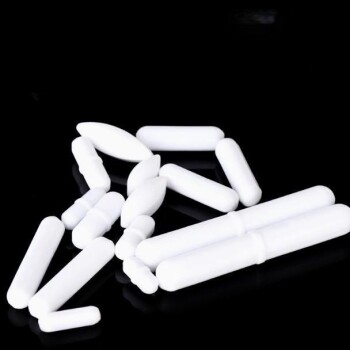
Custom PTFE Teflon Parts Manufacturer PTFE Magnetic Stirring Bar
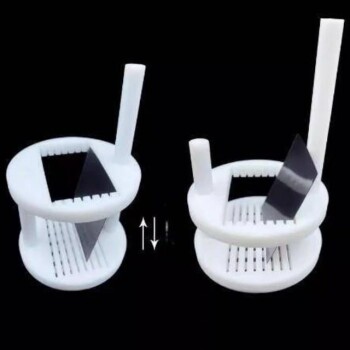
Custom PTFE Teflon Parts Manufacturer Adjustable Height Flower Basket
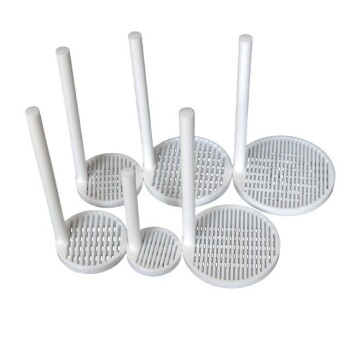
Custom PTFE Teflon Parts Manufacturer PTFE Cleaning Rack
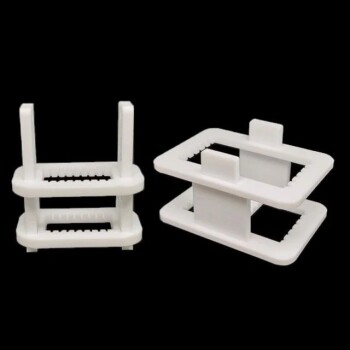
Custom PTFE Teflon Parts Manufacturer Conductive Glass Substrate Cleaning Rack
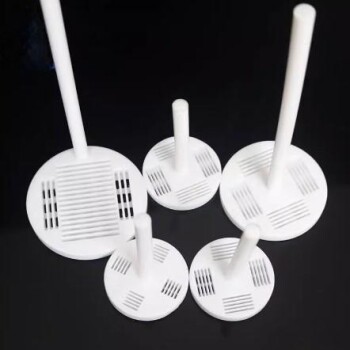
Custom Machined Molded PTFE Teflon Parts Manufacturer for Laboratory ITO FTO Conductive Glass Cleaning Flower Basket