All Questions
What Are The Properties Of Glass-Filled Ptfe? Enhanced Strength & Wear Resistance For Demanding Applications
Explore the key properties of glass-filled PTFE: superior mechanical strength, wear resistance, and thermal stability, plus critical design considerations.
What Are The Advantages Of Carbon And Mos2-Filled Ptfe? Enhance Strength, Wear, And Performance
Discover how carbon and MoS2 fillers transform PTFE into a high-performance composite with superior strength, wear resistance, and thermal conductivity.
What Are The Benefits Of Carbon And Graphite-Filled Ptfe? Achieve Superior Strength & Lubricity
Discover how carbon & graphite-filled PTFE enhances wear resistance, heat dissipation, and load capacity for demanding industrial seals and bearings.
What Is The Difference Between Carbon And Graphite As Fillers In Ptfe? Optimize Strength Vs. Lubricity
Learn the key differences between carbon and graphite fillers in PTFE composites for seals and bearings. Choose the right filler for strength or lubricity.
What Are The Properties Of Carbon-Filled Ptfe? Enhance Strength, Wear, And Conductivity
Learn how carbon-filled PTFE offers superior wear resistance, improved strength, and static dissipation while retaining PTFE's low friction and chemical inertness.
What Are The Advantages Of Mos2-Filled Ptfe? Enhance Wear Resistance & Lubricity
Discover how MoS2-filled PTFE increases wear resistance, hardness, and self-lubrication while maintaining low friction for demanding applications.
What Are The Key Considerations For Successful Ptfe Machining? Master Precision For Soft Materials
Learn essential PTFE machining strategies: sharp tools, controlled speeds, minimal clamping, and temperature management for accurate, high-quality parts.
What Chemical Processing Applications Involve Ptfe-Machined Parts? Essential Components For Corrosive & High-Purity Systems
Explore key PTFE-machined parts in chemical processing: pumps, valves, seals, and more. Learn how PTFE's inertness ensures purity and durability.
What Automotive Components Are Made Using Ptfe Machining? Enhance Performance In Extreme Conditions
Learn how machined PTFE parts like seals, bearings, and gaskets provide critical chemical resistance and low friction for automotive systems.
What Are The Aerospace Applications Of Precision-Machined Ptfe Parts? Achieve Peak Performance In Harsh Environments
Explore how precision-machined PTFE parts enhance aerospace systems with low friction, extreme temperature stability, and chemical resistance for seals, bearings, and liners.
What Tooling Strategies Are Effective For Machining Ptfe? Achieve Precision And A Clean Finish
Learn the best tooling strategies for machining PTFE, including sharp carbide tools, optimal speeds and feeds, and techniques to prevent deformation.
What Post-Machining Processes Can Improve Ptfe Surface Finishes? Achieve A Flawless Finish For Your Components
Learn about mechanical polishing, bead blasting, and buffing techniques to refine PTFE surfaces after machining. Enhance quality and appearance for critical applications.
What Are The Optimal Machining Parameters For Ptfe? Achieve Precision And Avoid Deformation
Learn the optimal PTFE machining parameters for speed, feed, tooling, and coolant to prevent heat buildup and stress creep for precise parts.
What Cooling And Lubrication Techniques Are Recommended For Ptfe Machining? Master Heat Control For Precision Parts
Learn the best cooling and lubrication methods for machining PTFE, including pressurized air, spray mists, and flood coolants, to ensure dimensional accuracy and a superior finish.
How Does Ptfe's Low Thermal Conductivity Impact Machining? Master Heat Management For Precision Parts
Learn how PTFE's low thermal conductivity causes heat buildup and dimensional instability during machining, and discover strategies for success.
Why Is Dimensional Stability A Concern When Machining Ptfe? Ensure Accurate, Stable Ptfe Components
Learn how to overcome PTFE's high thermal expansion and creep to machine dimensionally stable parts for semiconductor, medical, and lab applications.
How Does Ptfe's Soft Nature Affect Surface Finish Quality During Machining? Mastering The Slice, Not Tear, Process
Learn how PTFE's softness leads to tearing and burrs during machining, and discover the key strategies for achieving a superior surface finish.
What Are The Common Challenges In Ptfe Machining Related To Tool Wear? How To Extend Tool Life And Cut Costs
Discover why PTFE accelerates tool wear and learn key strategies like using carbide tools and optimizing speeds/feeds to improve machining precision and reduce costs.
What Are The Best Practices For Drilling And Tapping Ptfe? Achieve Clean, Precise Machining
Learn expert techniques for machining PTFE, including using sharp tools, high speeds, low feeds, and form taps to prevent deformation and ensure strong threads.
How Does Cnc Turning Work For Ptfe, And What Precautions Are Necessary? Achieve Precision Machining
Learn the CNC turning process for PTFE, including essential precautions for heat management, tool selection, and operator safety to ensure part accuracy.
What Challenges Are Associated With Cnc Milling Of Ptfe? Overcome Softness And Thermal Expansion
Learn how to solve key PTFE machining challenges like burring and dimensional instability with expert tips on tools, speeds, and workholding.
What Are The Main Machining Techniques Used For Ptfe? Achieve Precision With Cnc Turning, Milling & More
Discover the key PTFE machining techniques: CNC turning, milling, drilling & tapping. Learn how to manage heat & deformation for high-quality parts.
What Are The Advantages Of Using Ptfe Bushings In Rotary Motion Applications? Achieve Zero-Maintenance, High-Performance Rotation
Discover why PTFE bushings excel in rotary applications with self-lubrication, low friction, and extreme chemical/temperature resistance for longer life and reduced maintenance.
What Were The Benefits Of Ptfe Wear Plates In The Die-Casting Industry Case Study? Reduce Downtime & Boost Production
Discover how PTFE wear plates reduce wear, enhance lubricity, and improve cycle times in die-casting. Learn from a real industry case study.
What Were The Results Of The Ptfe Wear Plates Trial In The Die-Casting Industry? Boost Efficiency With Superior Wear Resistance
PTFE wear plates in die-casting trials showed minimal wear under 2.5T loads, eliminated lubrication needs, and improved cycle times by reducing downtime.
What Are The Machining Concerns For Ptfe Wear Plates? Overcome Thermal Expansion & Tool Wear
Learn key strategies for machining PTFE wear plates: manage thermal expansion, avoid material deformation, and reduce rapid tool wear for precision results.
What Is The Load Bearing Capacity Of Ptfe Wear Plates? Strength Meets Low Friction For Heavy Loads
PTFE wear plates support 130-140 kg/cm². Learn how this strength, combined with decreasing friction under load, benefits industrial applications.
What Is The Correct Method For Installing Ptfe Wear Plates? Achieve Long-Lasting, Low-Friction Performance
Learn the definitive bolting method for PTFE wear plate installation, including stepped holes and metal bushes to prevent damage and ensure smooth operation.
What Are The Common Issues Hindering The Adoption Of Ptfe Wear Plates? Overcome These 4 Key Barriers
Discover the real challenges and misconceptions around PTFE wear plates, from installation to machining, and learn how to solve them effectively.
What Is The Compressive Strength Of Bronze-Filled Ptfe? A Guide To High-Strength Ptfe For Mechanical Parts
Bronze-filled PTFE has a compressive strength of ~10.5 MPa. Learn the trade-offs in strength, wear, and chemical resistance for your application.
How Should One Choose Between Virgin And Glass-Filled Teflon Balls? A Guide To Material Selection
Learn the key differences between virgin and glass-filled PTFE balls to select the right material for your application's chemical, mechanical, and thermal needs.
What Are The Properties Of Stainless Steel-Filled Ptfe Balls? A Guide To Enhanced Strength & Performance
Explore stainless steel-filled PTFE ball properties: high strength, wear resistance, thermal conductivity, and key trade-offs vs. pure PTFE.
What Are The Properties Of Bronze-Filled (40%) Ptfe Balls? A Guide To Enhanced Strength & Wear
Explore the key properties of 40% bronze-filled PTFE balls, including enhanced strength, wear resistance, and thermal conductivity for demanding applications.
What Are The Properties Of 10% Carbon-Filled Teflon Balls? Enhanced Strength & Wear Resistance
Discover the key properties of 10% carbon-filled PTFE balls, including high compressive strength, thermal stability, and wear resistance for demanding applications.
What Are The Typical Properties Of 15% Glass-Filled Teflon Balls? Enhanced Durability For Demanding Applications
Discover the key properties of 15% glass-filled PTFE balls, including enhanced wear resistance, compressive strength, and dimensional stability.
What Are The Typical Properties Of 25% Glass-Filled Teflon Balls? Enhance Durability & Stability
Learn the key properties of 25% glass-filled PTFE balls, including enhanced wear resistance, thermal stability from -200°C to 260°C, and chemical inertness.
What Are The Advantages Of Glass-Filled Teflon Balls? Enhanced Strength & Wear Resistance For Demanding Applications
Discover the key benefits of glass-filled Teflon balls vs. virgin PTFE, including superior wear resistance, compressive strength, and dimensional stability.
What Are The Common Applications Of Virgin Teflon Balls? Ideal For Chemical Resistance & Purity
Explore the key uses of virgin PTFE balls in valves, bearings, and medical devices where chemical inertness, low friction, and purity are critical.
What Are The Key Properties Of Virgin Teflon Balls? Leverage Superior Chemical & Thermal Resistance
Discover the key properties of virgin Teflon (PTFE) balls: exceptional chemical inertness, thermal stability, low friction, and electrical insulation.
What Are The Main Differences Between Virgin Teflon Balls And Glass-Filled Teflon Balls? Choose The Right Ptfe For Your Application
Compare virgin vs. glass-filled PTFE balls: purity & lubricity vs. strength & wear resistance. Make the right material choice for your design.
What Is The General Consensus On The Effectiveness Of Plastic Fork Bushes Compared To Bronze Or Steel Sleeve Bushes?
Compare plastic vs. metal fork bushings for suspension performance. Learn the trade-offs in friction, durability, and ride feel to make the right choice.
What Precautions Should Be Taken When Machining Ptfe? Master The Process For Precise Components
Learn essential PTFE machining precautions: sharp tools, heat management, and dust control to achieve tight tolerances and ensure operator safety.
What Modern Alternative To Solid Ptfe Bushes Was Mentioned, And What Are Its Advantages? Discover Glacier Bush For High-Load Applications
Learn about Glacier bush, a modern PTFE composite alternative offering superior strength and durability for high-load applications over solid PTFE.
What Are The Potential Drawbacks Of Using Ptfe For Fork Bushes? Avoid Costly Stanchion Damage
Learn the key risks of PTFE fork bushes, including embedded contaminants causing abrasive wear, deformation under load, and material creep.
What Material Was Considered As An Alternative To Turcite For Making Fork Bushes, And Why? Uncover The Ptfe Vs. Acetal Trade-Off
Explore why Virgin PTFE is the superior performance alternative to Turcite for fork bushes, comparing friction, strength, and cost for optimal selection.
Why Is Specialized Equipment Needed For Ptfe Impeller Manufacturing? Precision Machining For Critical Performance
PTFE impellers require 5-axis machining from solid blocks due to material properties and complex geometry. Learn why specialized equipment is essential.
What Are The Challenges In Manufacturing Ptfe Impellers? Overcoming The Complexities Of Machining
Discover why PTFE impellers are machined, not molded. Learn about the challenges of 5-axis CNC machining, high costs, and material science expertise required.
How Do Ptfe Impellers Compare To Traditional Impeller Materials? Maximize Efficiency In Corrosive Applications
Explore the benefits of PTFE impellers, including superior chemical resistance, low friction, and long service life for demanding industrial processes.
What Are The Main Industrial Applications Of Ptfe Impellers? Handling Corrosive & High-Purity Processes
Explore the key uses of PTFE impellers in chemical, pharmaceutical, food & beverage, and water treatment industries for superior corrosion resistance and purity.
How Does Ptfe's Low Friction Coefficient Benefit Impeller Performance? Boost Efficiency & Lifespan
Learn how PTFE's low friction reduces energy waste and wear in impellers, leading to greater efficiency, longevity, and purity in critical applications.
What Temperature Range Can Ptfe Impellers Withstand? Operate From -200°C To 260°C
Learn the exact temperature range of PTFE impellers: -200°C to 260°C for continuous use, with superior thermal stability for harsh environments.
How Do The Non-Stick Properties Of Ptfe Benefit Impeller Applications? Prevent Clogging & Boost Efficiency
Learn how PTFE's non-stick properties prevent material build-up on impellers, ensuring consistent flow, reduced maintenance, and higher uptime.
Why Is Chemical Resistance Important For Impeller Materials? Ensure Pump Reliability And Purity
Learn why chemical resistance is critical for impeller materials to prevent corrosion, contamination, and pump failure in demanding applications.
What Are The Key Properties Of Ptfe That Make It Suitable For Impellers? Achieve Pure, Contamination-Free Mixing
Discover how PTFE's chemical inertness, non-stick surface, thermal stability, and low friction make it ideal for impellers in harsh environments.
What Industries Benefit The Most From Ptfe Expansion Bellows? Maximize Safety And Purity In Harsh Environments
Discover how PTFE expansion bellows provide critical chemical inertness, purity, and thermal stability for chemical, pharmaceutical, semiconductor, and food processing industries.
What Are The Long-Term Cost Benefits Of Using Ptfe Expansion Bellows? Invest In Durability To Slash Downtime & Maintenance Costs
Discover how PTFE expansion bellows reduce total cost of ownership through superior chemical resistance, non-stick properties, and extended lifespan in harsh environments.
How Do Ptfe Expansion Bellows Comply With Industry Standards? Ensuring Safety And Performance
Learn how PTFE expansion bellows meet FDA, ASTM, USP, RoHS, and REACH standards for safety, purity, and reliability in critical applications.
What Are The Signs That Ptfe Expansion Bellows Need Replacement? Avoid Costly System Failures
Learn the key signs of PTFE bellow failure—cracks, leaks, stiffness, and noise—to prevent unplanned downtime and system damage.
What Maintenance Practices Extend The Lifespan Of Ptfe Expansion Bellows? A Guide To Maximizing Uptime
Learn quarterly inspection, cleaning, and protection strategies to extend PTFE bellow lifespan from 5 to 10 years in demanding applications.
What Are The Installation Best Practices For Ptfe Expansion Bellows? Ensure Long-Term Reliability And Prevent Failure
Learn the critical steps for installing PTFE bellows, including proper alignment, torque specs, and clearance, to prevent premature failure and ensure system integrity.
What Makes Ptfe Expansion Bellows Suitable For Aerospace Applications? Unmatched Reliability In Extreme Environments
Discover why PTFE bellows excel in aerospace with extreme thermal stability, chemical inertness, and low outgassing for critical systems.
How Do Ptfe Expansion Bellows Contribute To Cost Savings In Power Plants? Slash Maintenance And Downtime Costs
Learn how PTFE bellows cut power plant costs by reducing maintenance up to 15%, preventing downtime, and protecting equipment with unmatched durability.
Why Are Ptfe Expansion Bellows Preferred In The Food And Beverage Industry? Ensure Purity And Safety
Learn why FDA-compliant PTFE bellows are the top choice for food & beverage processing, offering non-stick surfaces, chemical resistance, and superior hygiene.
What Is The Temperature Range For Ptfe Expansion Bellows? From -200°C To 260°C For Extreme Applications
Learn the continuous operating temperature range for PTFE bellows: -200°C to 260°C. Ideal for cryogenic to high-heat industrial systems.
Why Is Teflon Suitable For Bridge Bearing Pads? Unlock Smooth, Durable Movement For Your Structure
Discover how Teflon's low friction, high strength, and chemical durability make it ideal for bridge bearing pads, ensuring long-term structural integrity.
What Types Of Semi-Finished Parts Are Available? Choose The Right Stock Shape For Your Project
Learn about semi-finished parts like rods, tubes, sheets, and films. Discover how to select the right stock shape to reduce waste and machining time.
How Is Ptfe Processed Into Useful Shapes? Mastering The Unique Compression & Sintering Method
Discover how PTFE is uniquely processed from powder to durable parts via compression molding and sintering, unlike conventional plastics.
What Are The Advantages Of Using Ptfe Material For Machine Parts? Achieve Peak Performance In Demanding Environments
Discover the key benefits of PTFE for machine parts: extreme low friction, unmatched chemical resistance, and thermal stability from -200°C to +260°C.
What Industrial Benefits Do Ptfe-Machined Parts Offer? Achieve Peak Performance In Demanding Applications
Discover how PTFE-machined parts provide low friction, chemical resistance, and durability for superior performance in aerospace, medical, and industrial applications.
What Fabrication Services Are Available For Ptfe? Shearing, Stamping, Laser Cutting, Molding & Machining
Explore PTFE fabrication services like die cutting, laser cutting, compression molding, and CNC machining. Find the right process for your part's complexity and volume.
What Types Of Parts Can Be Fabricated Using Ptfe Machining? Seals, Bushings, Insulators & More
Discover the key PTFE machined parts like seals, bushings, and insulators, ideal for chemical, low-friction, and high-temperature applications.
What Design Considerations Are Important For Custom Ptfe Parts? Design For Performance & Reliability
Key PTFE design factors: thermal expansion, stress relaxation, realistic tolerances, and material grade selection for reliable performance in demanding environments.
What Industries Use Custom Ptfe Parts And For What Purposes? Solve Critical Challenges With High-Performance Materials
Explore how aerospace, medical, automotive, electronics, and chemical industries use custom PTFE parts for seals, insulators, and biocompatible implants.
How Does Cnc Machining Benefit Ptfe Part Production? Achieve Precision, Consistency & Complex Designs
Discover how CNC machining overcomes PTFE's challenges like thermal expansion & softness for precise, high-performance parts in medical, semiconductor & industrial uses.
What Are The Key Benefits Of Ptfe In Custom Fabrication? Unlock Performance In Extreme Conditions
Discover the key benefits of PTFE for custom parts: chemical inertness, low friction, high-temperature stability, and electrical insulation for demanding applications.
What Are The Advantages Of Compression Molding For Ptfe? Unlock Superior Performance For Large, Dense Components
Discover why compression molding is the standard for creating high-quality PTFE stock shapes, preserving its thermal stability, chemical inertness, and low friction.
What Is The Initial Shaping Process For Ptfe Before Machining? The Critical First Step For Precision Parts
Learn why compression molding is the essential first step to create stable, stress-relieved PTFE billets for accurate CNC machining of seals and components.
What Industries Benefit Most From Custom Ptfe Parts? Solve Extreme Environment Challenges
Discover how aerospace, medical, chemical, and electronics industries use custom PTFE parts for chemical inertness, extreme temperatures, and insulation.
How Does Cnc Machining Benefit Ptfe Part Fabrication? Achieve Unmatched Precision And Complexity
Discover how CNC machining overcomes PTFE's softness and thermal expansion to create precise, complex, and repeatable parts for critical applications.
What Are The Key Properties Of Teflon Plastic Sheets? Unlocking Performance In Extreme Environments
Explore the key properties of Teflon (PTFE) sheets: unmatched chemical resistance, low friction, and thermal stability up to 260°C (500°F).
What Are Some Common Components Made From Ptfe? Seals, Bearings & More For Demanding Applications
Explore common PTFE components like seals, gaskets, bearings, and valve parts. Learn how PTFE's chemical inertness and low friction solve critical engineering challenges.
What Secondary Manufacturing Processes Might Ptfe Parts Require? Achieve Precise Specifications With Expert Machining
Learn about CNC machining, laser cutting, and die cutting for PTFE parts. Optimize your design for performance and cost with KINTEK's expertise.
Why Is Ptfe Considered The Best Material For Heavy-Duty Cable Liners? Achieve Superior Reliability & Efficiency
Discover why PTFE outperforms metal for cable liners with low friction, high abrasion resistance, and chemical inertness for longer system life.
What Thermal And Chemical Properties Make Ptfe Liner Suitable For Challenging Environments? Unmatched Heat & Chemical Resistance
Explore PTFE Liner's extreme thermal stability (up to 260°C) and universal chemical inertness for demanding applications in harsh environments.
How Does Ptfe Liner Perform Under Heavy Loads? Superior Durability For Demanding Applications
Discover how PTFE liners maintain 90% efficiency after 1M cycles under heavy loads, with high temperature tolerance and chemical resistance.
What Are The Advantages Of Ptfe Liner In Terms Of Weight And Noise Reduction? Achieve Quieter, Lighter Systems
Discover how PTFE liners reduce weight and noise via low friction and lightweight properties, enhancing efficiency in demanding applications.
How Does Ptfe Liner Help In Eliminating Stick-Slip In Cable Applications? Achieve Smooth, Reliable Motion
Discover how PTFE liners eliminate stick-slip in cables with ultra-low friction, ensuring smooth motion, precision control, and extended lifespan.
How Does Ptfe Perform In Wet Or Oil-Containing Environments? Unmatched Hydrophobic & Oleophobic Reliability
Discover why PTFE excels in wet/oily environments. Its hydrophobic & oleophobic nature ensures no fluid absorption, chemical inertness, and high-temperature stability.
What Is The Coefficient Of Friction For Ptfe? Mastering Low-Friction Material Selection
Learn the typical PTFE friction coefficient range (0.05-0.1), key influencing factors, and trade-offs for engineering applications.
What Makes Ptfe Suitable For Food Processing Equipment? Ensuring Safety, Efficiency, And Durability
Discover how PTFE's non-stick, inert, and temperature-resistant properties enhance food safety, reduce downtime, and extend equipment lifespan in processing.
Why Is Ptfe Used In Electrical Components? Unmatched Insulation For Extreme Environments
Discover why PTFE is the top choice for electrical insulation, offering superior dielectric strength, high-temperature stability, and chemical resistance.
What Are The Material Properties Of Ptfe Relevant To Cnc Machining? Mastering Softness & Heat For Precision
Learn the key PTFE properties for CNC machining: low strength, low friction, and high thermal expansion. Discover strategies to prevent deformation and ensure accuracy.
What Are Some Common Applications Of Ptfe In Cnc Machining? Achieve Superior Performance In Demanding Industries
Explore key PTFE CNC applications: low-friction bearings, chemical seals, electrical insulators, and medical components for superior performance.
What Are The Key Benefits Of Using Ptfe In Cnc Machining? Achieve Unmatched Performance In Harsh Environments
Discover how PTFE's low friction, chemical resistance, and electrical insulation make it ideal for CNC machined seals, bearings, and insulators.
What Is Ptfe And Why Is It Desirable For Cnc Machining? Unlock Superior Performance For Demanding Applications
Discover why PTFE (Teflon) is ideal for CNC machining: exceptional chemical resistance, low friction, and high-temperature stability for critical components.
What Regulatory Compliance Do Teflon Coatings Meet For Food Contact? Ensure Safety & Efficiency In Food Processing
Learn how FDA-compliant Teflon coatings for direct food contact enhance production efficiency, product quality, and sanitation in food processing.
What Are Some Specific Applications Of Teflon Coatings In The Food Industry? Solve Sticking, Buildup, And Efficiency Problems
Discover how Teflon (PTFE) coatings prevent sticking, reduce residue buildup, and speed up cleaning in food processing for molds, blades, and conveyors.
How Does Teflon Coating Improve Efficiency In Food Production? Reduce Downtime And Boost Yields
Discover how Teflon coating's non-stick, heat-resistant surface cuts cleaning time, reduces waste, and protects equipment in food processing.
What Are The Advantages Of Using Teflon Coatings Over Liquid Lubricants In Food Processing? Boost Safety & Efficiency
Discover why Teflon coatings offer superior food safety, FDA compliance, and operational efficiency over liquid lubricants in food processing.
Why Is Teflon Coating Popular In The Food Processing Industry? Boost Efficiency & Product Quality
Discover how Teflon (PTFE) coatings enhance food safety, reduce waste, and maximize uptime in industrial food processing operations.
Related Products
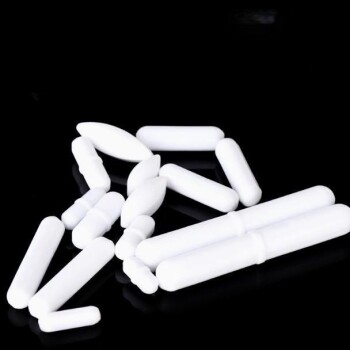
Custom PTFE Teflon Parts Manufacturer PTFE Magnetic Stirring Bar
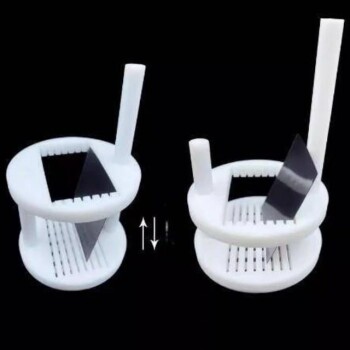
Custom PTFE Teflon Parts Manufacturer Adjustable Height Flower Basket
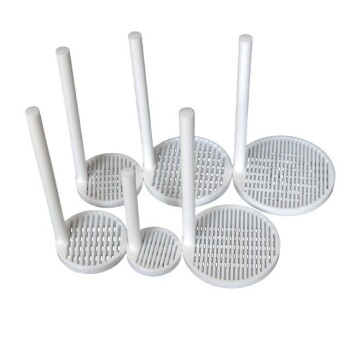
Custom PTFE Teflon Parts Manufacturer PTFE Cleaning Rack
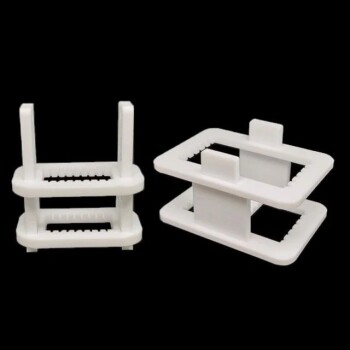
Custom PTFE Teflon Parts Manufacturer Conductive Glass Substrate Cleaning Rack
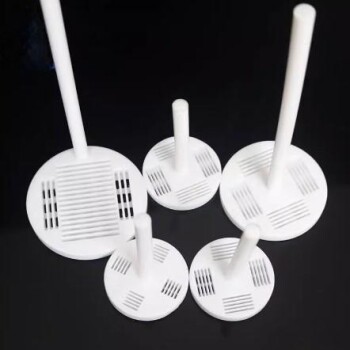
Custom Machined Molded PTFE Teflon Parts Manufacturer for Laboratory ITO FTO Conductive Glass Cleaning Flower Basket