All Questions
What Are Common Applications Of Machined Teflon/Ptfe Parts? Solve Extreme Engineering Challenges
Discover how machined PTFE parts provide chemical inertness, low friction, and thermal stability for aerospace, medical, and industrial applications.
What Are The Advantages Of Cnc Machining For Teflon/Ptfe? Achieve High Precision And Consistency
Discover why CNC machining is essential for Teflon/PTFE parts, offering precision, repeatability, and waste reduction for demanding industries.
What Finishing Techniques Are Effective For Machined Teflon Parts? Achieve Functional Performance And Dimensional Stability
Learn the best deburring, polishing & chemical etching techniques for Teflon (PTFE) parts to ensure dimensional accuracy and long-term stability.
How Should Designs Account For Teflon's High Creep Rate? Master Ptfe Design For Long-Term Reliability
Learn key strategies to manage Teflon's creep and cold flow in your designs, ensuring component functionality and durability over time.
What Techniques Help Minimize Material Smearing During Teflon Machining? Achieve Clean, Precise Ptfe Parts
Learn how to prevent Teflon smearing with sharp tools, proper speeds, coolants, and freezing techniques for superior surface finishes and tight tolerances.
Why Is Material Support Important When Machining Teflon And How Is It Achieved? Master Precision Machining For Ptfe
Learn why proper material support is critical for machining Teflon (PTFE) and discover key techniques to prevent deformation and ensure accuracy.
How Should Heat Buildup Be Controlled When Machining Teflon? A Guide To Preventing Warping & Toxic Fumes
Learn key strategies to control heat when machining Teflon (PTFE), including tool sharpness, cooling methods, and speed adjustments to ensure precision and safety.
What Are Key Considerations For Tool Selection When Machining Teflon? Maximize Precision And Prevent Deformation
Learn the essential tool selection criteria for machining Teflon (PTFE), including sharpness, geometry, and friction reduction for superior results.
What Are The Different Machining Processes Suitable For Teflon/Ptfe? Master Precision For Soft Materials
Explore CNC milling, turning, drilling, and specialized methods for machining PTFE. Learn how to manage heat, deformation, and achieve high precision.
What Makes Teflon/Ptfe Unique In Cnc Machining? Master The Challenges For Superior Parts
Discover why PTFE's softness, low friction, and poor heat conductivity require specialized CNC strategies for precision seals, liners, and labware.
Why Is Ptfe Packing Considered A Reliable And Cost-Effective Option? Maximize Uptime & Lower Costs
Discover how PTFE packing's chemical inertness, thermal stability, and low friction deliver superior sealing reliability and a lower total cost of ownership.
What Types Of Ptfe Packing Are Available For Different Needs? Find The Right Seal For Your Application
Explore the types of PTFE packing: pure, lubricated, reinforced, and ePTFE. Learn how to choose based on chemical resistance, pressure, temperature, and speed.
What Are The Benefits Of Ptfe Packing In Various Industries? Enhance Sealing Performance & Reliability
Explore the key benefits of PTFE packing: superior chemical resistance, low friction, and reliability for demanding industrial applications.
What Is The Importance Of Balancing Cost And Performance When Selecting Ptfe Packing? Maximize Uptime & Minimize Total Cost
Learn why selecting PTFE packing based on total cost of ownership, not just price, prevents downtime and saves money long-term.
How Does Ease Of Installation Affect The Choice Of Ptfe Packing? Prioritize Reliability Over Convenience
Learn why PTFE packing selection must prioritize chemical, thermal, and pressure resistance over ease of installation for long-term reliability.
Why Is Compatibility With Equipment Crucial When Selecting Ptfe Packing? Avoid Costly Failures & Downtime
Learn why PTFE packing compatibility is key to preventing seal failure, unplanned downtime, and safety risks in demanding industrial applications.
What Environmental Factors Should Be Assessed When Selecting Ptfe Packing? A Guide To Long-Term Reliability
Learn how to assess moisture, UV light, abrasives, and other environmental factors when selecting PTFE packing for optimal performance and lifespan.
What Are The Overall Benefits Of Using Ptfe Expansion Bellows? Prevent Pipe Failure And Reduce Downtime
Discover how PTFE expansion bellows absorb stress, resist chemicals, and enhance safety to prevent pipe failure and reduce maintenance costs in industrial systems.
Why Are Ptfe Expansion Bellows Considered A Cost-Effective Long-Term Investment? Reduce Total Cost Of Ownership
Discover how PTFE expansion bellows' superior durability and low maintenance reduce long-term costs vs. rubber or metal alternatives.
What Are The Weight And Installation Advantages Of Ptfe Expansion Bellows Over Metal Bellows? Achieve Easier, Faster Installation.
PTFE expansion bellows offer significant weight and installation benefits over metal, including lower labor costs and faster project completion.
How Does The Flexibility Of Ptfe Expansion Bellows Compare To Metal Bellows? A Guide To Superior Movement Absorption
Compare PTFE vs. metal bellows for flexibility, chemical resistance, and pressure tolerance. Learn which is best for your piping system's needs.
What Advantages Do Ptfe Expansion Bellows Have Over Metal Bellows In Corrosive Environments? Superior Chemical Resistance For Longer Lifespan
Discover why PTFE bellows outperform metal in corrosive settings. Key benefits include unmatched chemical inertness, flexibility, and lower maintenance costs.
How Does The Durability Of Ptfe Expansion Bellows Compare To Rubber Alternatives? Maximize Lifespan In Harsh Environments
PTFE bellows last 5-10+ years vs. rubber's 2 years. Compare chemical, temperature resistance & total cost of ownership for your application.
What Are The Temperature Tolerance Differences Between Ptfe And Rubber Expansion Bellows? Choose The Right Material For Your System
PTFE bellows handle -200°C to 260°C, while rubber is limited to 150°C. Learn which material is best for your temperature and chemical needs.
How Do Ptfe Expansion Bellows Compare To Rubber Bellows In Terms Of Chemical Resistance? Ptfe Offers Near-Universal Chemical Resistance
PTFE bellows provide superior chemical resistance to acids, solvents, and alkalis, while rubber degrades. Learn which is right for your system.
What Benefits Do Ptfe Expansion Bellows Offer In Water Treatment Facilities? Enhance System Reliability & Reduce Costs
Discover how PTFE expansion bellows provide superior chemical resistance, durability, and long-term cost savings in water treatment operations.
How Do Ptfe Expansion Bellows Enhance Reliability In Pharmaceutical Manufacturing? Ensure Purity And Uptime
Discover how PTFE bellows prevent contamination, resist sterilization, and reduce downtime in pharmaceutical manufacturing for superior reliability.
Can You Provide An Example Of Ptfe Expansion Bellows Improving Safety In Chemical Plants? Real-World Case Study & Benefits
Learn how PTFE expansion bellows reduce hazardous leaks by 90% in chemical plants, enhancing worker safety and cutting operational costs.
What Are The Installation Advantages Of Ptfe Expansion Bellows? Reduce Labor, Time, And Equipment Needs
Discover how PTFE bellows' lightweight design simplifies installation, lowers labor costs, and requires no specialized tools for industrial systems.
How Do Ptfe Expansion Bellows Contribute To Reduced Maintenance Costs? Achieve 40% Lower Costs With Superior Durability
Discover how PTFE expansion bellows reduce maintenance costs by 40% through unmatched chemical inertness, thermal stability, and vibration damping.
Why Are Ptfe Expansion Bellows Advantageous In Hygienic Industries? Ensure Product Purity And System Integrity
Discover how PTFE expansion bellows' non-stick, chemically inert properties prevent contamination and simplify cleaning in food and pharmaceutical applications.
How Does The Flexibility Of Ptfe Expansion Bellows Benefit Industrial Piping Systems? Absorb Stress, Prevent Failure
Learn how PTFE bellows use flexibility to absorb thermal expansion, vibration, and misalignment in pipes, ensuring system safety and longevity.
What Makes Ptfe Expansion Bellows Durable And Long-Lasting? Unmatched Chemical & Thermal Resistance
PTFE expansion bellows offer superior durability through chemical inertness, thermal stability, and mechanical flexibility, ensuring long-term reliability.
How Do Ptfe Expansion Bellows Perform Under Extreme Temperature Conditions? Ensure System Integrity From -200°C To 260°C
Discover how PTFE expansion bellows maintain flexibility and chemical resistance in extreme temperatures from -200°C to 260°C for industrial applications.
What Are The Key Benefits Of Ptfe Expansion Bellows In Terms Of Chemical Resistance? Achieve Unmatched System Integrity
Discover why PTFE expansion bellows offer near-universal chemical resistance to acids, bases, and solvents, ensuring system safety and purity.
Which Industries Commonly Use Ptfe Expansion Bellows And Why? Essential For Corrosion And Contamination Control
Discover why chemical, pharmaceutical, food & beverage, and semiconductor industries rely on PTFE bellows for purity and chemical resistance.
How Do Ptfe Expansion Bellows Address Pipe Misalignment? Protect Your Piping System From Stress And Failure
Learn how PTFE expansion bellows absorb axial, lateral, and angular movement to solve pipe misalignment, prevent leaks, and extend system life in harsh conditions.
What Role Do Ptfe Expansion Bellows Play In Vibration Absorption? Isolate Equipment To Prevent System Damage
Learn how PTFE expansion bellows absorb vibration, isolate equipment, and protect piping systems from stress and fatigue in demanding industrial applications.
How Do Ptfe Expansion Bellows Handle Thermal Expansion In Piping Systems? Prevent Stress And Failure
Learn how PTFE expansion bellows absorb thermal movement, prevent stress, and protect piping systems from cracks and leaks in demanding environments.
What Are The Primary Functions Of Ptfe Expansion Bellows? Absorb Movement, Dampen Vibration, And Protect Pipes
Discover how PTFE expansion bellows absorb thermal movement, dampen vibrations, and correct misalignment to prevent pipe system failures.
Where Are Ptfe Spherical Balls Typically Used? Essential For Corrosive & Low-Friction Applications
Explore the key applications of PTFE spherical balls in chemical handling, valves, and light-load bearings, driven by unmatched chemical resistance and lubricity.
What Advantages Do Ptfe Spherical Balls Provide? Unmatched Chemical Resistance & Low Friction
Discover the key advantages of PTFE spherical balls: extreme chemical inertness, low friction, and high-temperature stability for demanding applications.
What Are The Characteristics Of Ptfe Spherical Balls? Key Properties For Demanding Applications
Explore the key characteristics of PTFE balls: extreme chemical inertness, low friction, high heat resistance, and superior electrical insulation.
Where Are Ptfe Guide Strips Commonly Used? Essential For Hydraulic Cylinders And High-Performance Machinery
Learn where PTFE guide strips are used in hydraulic cylinders, presses, and machinery for low-friction, wear-resistant guidance in harsh environments.
What Are The Benefits Of Ptfe Guide Strips? Achieve Smooth, Long-Lasting Motion Control
Discover how PTFE guide strips eliminate stick-slip, prevent metal-to-metal wear, and enhance system efficiency and longevity in demanding applications.
What Is The Purpose Of Ptfe Guide Strips? Achieve Smooth, Reliable Motion In Your Systems
Discover how PTFE guide strips prevent wear, absorb side loads, and ensure precise alignment in hydraulic, pneumatic, and industrial applications.
Which Industries Utilize Ptfe Machined Bellows? Solve Critical Challenges In Demanding Environments
Explore how PTFE machined bellows provide chemical inertness, temperature tolerance, and purity for industries like semiconductor, pharmaceutical, and chemical processing.
What Are The Advantages Of Ptfe Machined Bellows? Achieve Superior Chemical Resistance & Purity
Explore the key benefits of PTFE bellows: universal chemical resistance, high purity, and durability for demanding industrial applications.
What Is The Function Of Ptfe Machined Bellows? A Guide To Protecting Critical Systems
Learn how PTFE machined bellows absorb stress, compensate for movement, and provide chemical resistance in demanding industrial applications.
In Which Industries Are Ptfe Diaphragms Commonly Used? For Superior Chemical Resistance And Purity
Discover the key industries that rely on PTFE diaphragms for handling aggressive chemicals, ensuring product purity, and achieving long-term reliability.
What Are The Advantages Of Ptfe Diaphragms? Achieve Unmatched Chemical & Thermal Resistance
Discover the key benefits of PTFE diaphragms: superior chemical inertness, extreme thermal stability, and long flex life for demanding applications.
What Are The Key Features Of Ptfe Diaphragms? Maximize Performance In Demanding Applications
Explore PTFE diaphragm features: chemical inertness, high-temperature resistance, low friction, and durability for pumps and valves in harsh environments.
Why Is Teflon Gland Packing Considered A Future-Proof Solution For Industrial Sealing Systems? Unmatched Chemical & Thermal Resilience
Discover why PTFE gland packing is a future-proof seal, offering superior chemical inertness, thermal stability, and low friction for demanding industrial applications.
What Are The Benefits Of Smart Monitoring Integration In Teflon Gland Packing? Achieve Predictive Maintenance & Zero Downtime
Discover how smart monitoring integration with Teflon gland packing enables predictive maintenance, extends lifespan, and prevents costly equipment downtime.
How Have Recent Innovations Improved Teflon Gland Packing Technology? From Passive Seals To Smart Systems
Discover how advanced PTFE formulations, low-friction coatings, and smart sensors are transforming Teflon gland packing into a high-performance, intelligent component.
What Quality Certification Standards Are Important For Teflon Gland Packing? Ensure Long-Term Reliability
Learn why ISO 9001 and API 622 are critical for Teflon gland packing quality, ensuring consistent performance and reduced maintenance costs.
Why Is It Important To Consider The Whole Lifecycle Cost When Evaluating Teflon Gland Packing? Uncover The True Cost Of Ownership
Learn why Teflon gland packing's higher initial cost is offset by lower maintenance, longer lifespan, and reduced downtime for superior long-term savings.
How Does The Lifecycle Cost Of Teflon Gland Packing Compare To Traditional Materials? Achieve Lower Total Cost Of Ownership
Discover why Teflon (PTFE) gland packing offers significant long-term savings over traditional materials by reducing downtime and maintenance costs.
What Key Factors Contribute To Long-Term Savings When Using Teflon Gland Packing? Reduce Downtime And Maintenance Costs
Discover how Teflon gland packing's durability and low friction reduce replacement frequency, labor costs, and operational downtime for long-term savings.
What Are The Advantages Of Teflon Gland Packing? Achieve Superior Durability And Performance
Discover how Teflon (PTFE) gland packing offers exceptional chemical resistance, low friction, and long service life to reduce maintenance and downtime.
What Is The Cost-Benefit Analysis Of Using Teflon Gland Packing? Maximize Roi With Low-Cost Seals
Analyze Teflon gland packing's true cost. Learn how its superior durability and chemical resistance reduce downtime and maintenance costs for long-term savings.
What Are The Environmental And Safety Considerations For Teflon Gland Packing? Ensure Safe Handling And Responsible Disposal
Learn the key safety protocols for handling PTFE gland packing and responsible disposal practices to mitigate environmental impact and ensure worker safety.
How Do Teflon Bearings Perform In Demanding Applications? Superior Performance In Harsh Environments
Explore the advantages of Teflon bearings over traditional materials for self-lubrication, chemical resistance, and maintenance-free operation in demanding applications.
What Long-Term Benefits Do Teflon Bearings Provide? Slash Maintenance Costs & Boost Reliability
Discover how Teflon (PTFE) bearings reduce total cost of ownership with self-lubrication, chemical resistance, and extreme temperature durability.
Can Teflon Bearings Be Customized For Specific Applications? Tailor Ptfe Bearings For Your Unique Needs
Learn how Teflon™ (PTFE) bearings can be customized in material, geometry, and design for extreme environments and unique applications.
How Does The Quality Of Teflon Bearings Compare To Traditional Bearings? Superior Performance In Harsh Environments
Discover when Teflon (PTFE) bearings outperform traditional bearings with self-lubrication, chemical resistance, and extreme temperature tolerance.
What Are The Key Advantages Of Choosing Teflon Bearings For Applications? Solve Extreme Environment Challenges
Discover the benefits of Teflon bearings: self-lubrication, extreme temperature resistance, and chemical inertness for demanding applications.
What Are The Installation And Maintenance Guidelines For Teflon Bearings? Maximize Lifespan And Performance
Learn the essential steps for installing and maintaining Teflon (PTFE) bearings, focusing on cleanliness, alignment, and avoiding lubrication.
What Are Some Specialized Teflon Bearing Products? A Guide To Material Systems And Forms
Explore specialized PTFE bearing products: strips, lined bearings, bushings, and material grades for chemical resistance, low friction, and high loads.
What Are The Applications Of Teflon Bearings In Extreme Environments? Ensure Reliability From -400°F To +550°F
Discover how Teflon (PTFE) bearings provide self-lubrication, chemical inertness, and thermal stability in aerospace, chemical, and heavy machinery applications.
How Are Teflon Bearings Manufactured? A Guide To Machining, Molding, And Coating
Learn the core manufacturing methods for Teflon (PTFE) bearings: machining from stock, molding resins, and applying PTFE coatings to metal substrates.
What Factors Should Be Considered When Selecting Teflon Bearings? Match Your Application's Demands For Reliability
Learn key factors for choosing Teflon bearings: load capacity, speed, temperature range, and chemical environment for optimal performance.
What Are The Advantages Of Teflon Bearings? Low-Friction, Maintenance-Free Performance For Demanding Environments
Discover the key benefits of Teflon (PTFE) bearings: self-lubrication, chemical resistance, and long life in harsh or clean environments.
What Are The Different Types Of Teflon Bearings Available? Find The Right Ptfe Bearing For Your Application
Explore the types of Teflon bearings, from virgin PTFE to glass-filled and graphite-filled, and learn how to select the right one for load, speed, and chemical resistance.
What Are The Performance Characteristics Of Teflon Bearings? Superior Self-Lubricating Performance For Demanding Environments
Discover the key characteristics of Teflon bearings: extreme low friction, wide temperature range (-400°F to +550°F), and unmatched chemical resistance.
What Are The Different Types Of Teflon Materials Used In Bearings? Choose The Right Ptfe For Your Application
Compare virgin, glass-filled, and graphite-filled PTFE bearings. Learn how fillers and composite structures enhance wear resistance, load capacity, and thermal performance.
In Which Industries Are Teflon Bearings Commonly Used? Solve Critical Bearing Challenges Across Industries
Discover the key industries that rely on Teflon bearings for their chemical resistance, self-lubrication, and temperature stability.
What Is Ptfe And Why Is It Used In Teflon Bearings? Achieve Maintenance-Free Performance In Harsh Environments
Discover how PTFE's low friction, chemical inertness, and high-temperature stability make Teflon bearings ideal for demanding applications.
What Are The Key Properties Of Teflon Bearings? Engineered For Extreme Environments
Explore the key properties of Teflon (PTFE) bearings: extreme low friction, chemical inertness, wide temperature range, and self-lubrication.
How Does The Low Friction Coefficient Of Ptfe Coatings Affect Tightening Torque? Achieve Accurate Clamping Force Safely
Learn how PTFE coatings reduce required tightening torque to prevent over-tightening and ensure joint integrity in semiconductor, medical, and industrial applications.
What Are The Limitations Of Ptfe Coated Fasteners Regarding Abrasion Resistance? The Trade-Off For Superior Chemical Protection
Explore the key weakness of PTFE-coated fasteners: low abrasion resistance. Learn why this trade-off exists and how to choose the right coating for your application.
Why Are Ptfe Coated Fasteners Suitable For High-Temperature Environments? Superior Performance From -260°C To 300°C
Discover why PTFE-coated fasteners excel in high-heat, offering thermal stability, chemical resistance, and permanent lubrication to prevent seizing and corrosion.
What Specific Advantages Do Ptfe Coated Bolts And Screws Offer? Achieve Reliable, Seizure-Free Assemblies
Discover how PTFE coated fasteners reduce friction, prevent galling, and offer superior corrosion resistance for reliable threaded assemblies.
How Do Ptfe Coated Fasteners Perform In Marine And Offshore Environments? Superior Corrosion Protection For Critical Assets
Discover how PTFE coated fasteners combat saltwater corrosion, prevent galvanic corrosion, and ensure reliable performance in harsh marine environments.
Why Are Ptfe Coated Fasteners Used In Electronics And Telecommunications? Ensure Reliability And Signal Integrity
Learn why PTFE-coated fasteners are critical for electronics, providing electrical insulation, corrosion resistance, and low friction for reliable assembly.
What Advantages Do Ptfe Coated Fasteners Offer In Chemical Processing Plants? Enhance Safety And Reliability
Discover how PTFE coated fasteners provide superior corrosion resistance, prevent leaks, and reduce maintenance costs in harsh chemical environments.
How Are Ptfe Coated Fasteners Beneficial In The Automotive Sector? Enhance Reliability And Simplify Maintenance
Discover how PTFE coated fasteners provide superior corrosion resistance, prevent seizing, and withstand extreme temperatures in automotive applications.
In Which Industries Are Ptfe Coated Fasteners Commonly Used? Essential For Corrosive & High-Performance Applications
Discover why marine, chemical, medical, automotive, and electronics industries rely on PTFE coated fasteners for corrosion resistance, chemical inertness, and low friction.
Why Is The Curing Process Important In Ptfe Coating Manufacturing? It's The Key To Performance
Learn why PTFE coating curing is critical for creating durable, low-friction surfaces. Proper temperature and time are essential for performance.
What Methods Are Used To Apply Ptfe Coatings To Fasteners? Dip Vs. Spray Coating Explained
Learn the key methods for applying PTFE coatings to fasteners: dip coating vs. spray coating. Discover the 3-stage process for superior corrosion resistance and low friction.
How Is Surface Preparation Performed For Ptfe Coating Application? Achieve Unbreakable Adhesion For Your Components
Learn the critical steps for PTFE coating surface prep: degreasing, abrasive blasting, or chemical etching to create a durable mechanical bond.
What Are The Key Steps In The Manufacturing Process Of Ptfe Coated Fasteners? Build A Durable, Corrosion-Resistant Shield
Learn the 3 critical steps—surface prep, coating application, and curing—to create high-performance PTFE coated fasteners for harsh environments.
What Role Does Temperature Stability Play In Ptfe Coated Fasteners? Ensuring Reliability In Extreme Environments
Learn why temperature stability is critical for PTFE coated fasteners, enabling reliable performance in high heat, deep cold, and thermal cycling.
Why Is Chemical Inertness Important For Ptfe Coated Fasteners? Ensure Long-Term Reliability In Harsh Environments
Learn how PTFE coating's chemical inertness prevents corrosion, ensures fastener integrity, and extends service life in aggressive industrial settings.
What Benefits Does The Low Friction Coefficient Of Ptfe Provide For Fasteners? Enhance Assembly & Prevent Seizing
Learn how PTFE-coated fasteners prevent galling, reduce wear, and ensure effortless assembly/disassembly in demanding applications.
How Does Ptfe Coating Enhance Corrosion Resistance In Fasteners? Achieve Unmatched Protection In Harsh Environments
Learn how PTFE coating creates a chemically inert, impermeable barrier on fasteners to prevent rust and degradation from chemicals, moisture, and salt.
What Are The Key Characteristics Of Ptfe Coated Fasteners? Enhance Durability In Harsh Environments
Learn how PTFE coated fasteners provide superior corrosion resistance, low friction, and chemical inertness for demanding industrial applications.
What Are The Advantages Of Polyimide-Filled Ptfe? Achieve Superior Low Friction & Non-Abrasive Performance
Discover how polyimide-filled PTFE offers the lowest friction and non-abrasive properties, ideal for protecting soft mating surfaces in dry-running applications.
What Are The Benefits Of Glass And Mos2-Filled Ptfe? Achieve Superior Performance In Demanding Applications
Discover how glass and MoS2-filled PTFE composites offer superior wear resistance, reduced friction, and reliable performance in vacuum or inert gas environments.
What Type Of Glass Is Used In Glass-Filled Ptfe? The Definitive Answer For Superior Performance
Discover why E-glass is the exclusive reinforcement for PTFE, enhancing mechanical stability and wear resistance while preserving electrical insulation.
Related Products
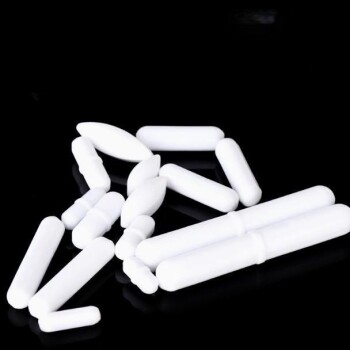
Custom PTFE Teflon Parts Manufacturer PTFE Magnetic Stirring Bar
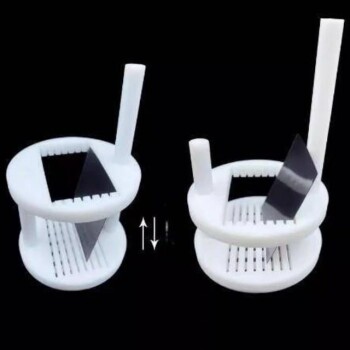
Custom PTFE Teflon Parts Manufacturer Adjustable Height Flower Basket
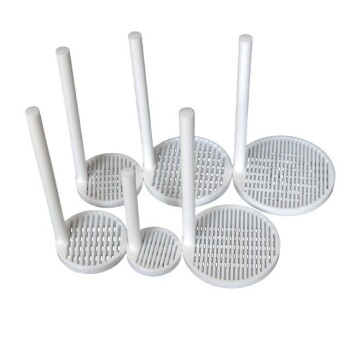
Custom PTFE Teflon Parts Manufacturer PTFE Cleaning Rack
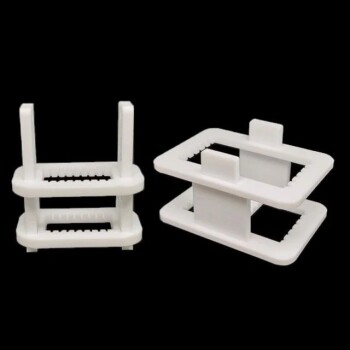
Custom PTFE Teflon Parts Manufacturer Conductive Glass Substrate Cleaning Rack
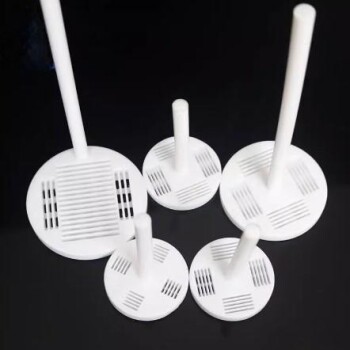
Custom Machined Molded PTFE Teflon Parts Manufacturer for Laboratory ITO FTO Conductive Glass Cleaning Flower Basket