All Questions
Why Is A High-Pressure Hydrothermal Autoclave Critical For Mn-Doped Zno? Master High-Purity Crystalline Powder Synthesis
Discover how hydrothermal autoclaves enable uniform manganese doping in ZnO through superheated liquid environments and dissolution-recrystallization.
Significance Of Ptfe-Lined Autoclaves For Carbon Dot Synthesis From Black Liquor: Ensuring Purity & Vessel Safety
Learn why PTFE-lined autoclaves are vital for hydrothermal conversion of black liquor. Prevent corrosion and leaching for high-purity carbon dots.
What Are The Primary Advantages Of Using A Microwave-Assisted Hydrothermal Reactor? Optimize Kmnvoh Cathode Synthesis.
Learn how microwave-assisted hydrothermal reactors improve KMnVOH synthesis through volumetric heating, rapid kinetics, and uniform particle growth.
Why Is A High-Pressure Reactor Necessary For The Esterification Reaction Between Oleic Acid And Methanol At 150°C? Guide
Learn why a high-pressure reactor is vital for esterification at 150°C to keep methanol liquid, maximize contact, and accelerate biodiesel production.
Why Is A Ptfe-Lined Autoclave Required For Hpmo@Bi/Ce-Btc Synthesis? Ensuring Pressure Stability And Catalyst Purity
Learn why PTFE-lined autoclaves are vital for HPMo@Bi/Ce-BTC MOF synthesis, providing pressure control, corrosion resistance, and high-purity results.
What Is The Function Of A Ptfe-Lined High-Pressure Autoclave In Nha Synthesis? Achieve High-Purity Nanostructures
Discover how PTFE-lined autoclaves enable subcritical conditions for nHA synthesis, ensuring high purity and precise nanorod morphology.
What Is The Function Of A High-Pressure Hydrothermal Autoclave In The Synthesis Of Bi2Wo6/Biocl Nanocomposites? Key Role
Explore how high-pressure autoclaves facilitate Bi2WO6/BiOCl synthesis through autogenous pressure and controlled dissolution-recrystallization.
Why Is A Hydrothermal Autoclave With A Ptfe Liner Required For Rgo-Zno Synthesis? Ensure Purity & Protect Equipment
Learn why PTFE liners are essential for rGO-ZnO synthesis to prevent corrosion, eliminate metal contamination, and ensure high-purity nanopowders.
What Role Does A Stainless Steel Hydrothermal Autoclave Play In Graphite-Rgo Synthesis? Enhance Hybrid Purity & Bonding
Learn how hydrothermal autoclaves use pressure and heat to synthesize Graphite-rGO hybrids, ensuring high material purity and structural integrity.
Function Of A Teflon-Lined Autoclave In Srtio3 Synthesis? Master High-Purity Hydrothermal Crystalline Growth
Discover how Teflon-lined autoclaves enable high-purity SrTiO3 synthesis by providing pressure resistance and preventing chemical contamination.
What Role Does A High-Pressure Hydrothermal Autoclave Play In Nife2O4/Zno Synthesis? Optimize Hybrid Materials.
Learn how high-pressure hydrothermal autoclaves enable precise NiFe2O4/ZnO synthesis, creating tight heterojunctions for superior photocatalysis.
Role Of Rotating Blades In Membrane Hydrothermal Reactors? Enhance Homogeneity And Ensure Defect-Free Growth.
Learn how rotating blades in hydrothermal reactors ensure solution homogeneity and uniform growth for high-quality molecular sieve membranes.
Why Is A Ptfe-Lined Hydrothermal Autoclave Required For Sns2@Mos2@C Synthesis? Key To High-Purity Nanostructures
Discover why PTFE-lined autoclaves are essential for SnS2@MoS2@C synthesis, ensuring high purity, phase control, and safe subcritical reactions.
Why Is A Teflon-Lined Solvothermal Reactor Utilized For Zro2/Uio-66-Nh2? Achieve High-Purity In-Situ Composite Synthesis
Learn why PTFE-lined reactors are essential for ZrO2/UiO-66-NH2 synthesis, offering chemical resistance, 220°C stability, and pure sample recovery.
What Is The Primary Function Of A High-Pressure Reactor In The Solvothermal Synthesis Of Uio-66-Nh2? Key To Mof Purity.
Learn how high-pressure reactors create autogenous pressure and high temps for UiO-66-NH2 synthesis, ensuring high crystallinity and uniform pores.
What Is The Function Of A Ptfe-Lined Hydrothermal Synthesis Autoclave In The Synthesis Of Mordenite? Key Roles Explained
Learn how PTFE-lined autoclaves enable high-purity Mordenite synthesis by providing corrosion resistance and controlled hydrothermal environments.
Why Are Ptfe/Pfa-Lined Autoclaves Critical For Vo2 Hydrothermal Synthesis? Ensure Purity & Morphology
Learn why PTFE/PFA-lined autoclaves are essential for VO2 synthesis, enabling precise crystal growth while preventing metal ion contamination.
How Do Stirring Or Rotating Hydrothermal Synthesis Reactors Benefit The Crystallization Phase Of Zeolites? Boost Purity
Learn how stirring and rotation in hydrothermal reactors improve zeolite crystallization by ensuring chemical homogeneity and faster dissolution.
Why Is A Ptfe-Lined Stainless Steel Autoclave Required For The Synthesis Of Cha Zeolite? Resist Corrosion And Pressure
Learn how PTFE-lined autoclaves withstand alkaline corrosion and high pressure during CHA zeolite synthesis while preventing metal contamination.
What Is The Purpose Of Using Large-Scale Hydrothermal Synthesis Reactors? Scaling 3D-Printed Batch Processing
Discover how large-scale hydrothermal synthesis and Teflon racks optimize batch processing for 3D-printed reactors, ensuring uniformity and scale.
What Role Does A High-Pressure Hydrothermal Synthesis Reactor Play In Ion Exchange? Optimize Ru_Xti_Yo_Z Catalyst Synthesis
Learn how hydrothermal reactors enable deep ion exchange in Ru_xTi_yO_z catalysts by boosting diffusion and maintaining structural integrity.
What Is The Function Of A Ptfe-Lined Autoclave In The Hydrothermal Synthesis Of Mgal-Layered Double Hydroxides (Ldh)?
Learn how PTFE-lined autoclaves enable pure MgAl-LDH synthesis by providing a chemically inert, high-pressure environment for superior crystal growth.
What Is The Function Of A Ptfe-Lined Hydrothermal Synthesis Autoclave In Mof Prep? Enhance Purity And Crystal Growth.
Learn how PTFE-lined autoclaves create subcritical environments to enhance solubility and prevent contamination in Metal-Organic Framework synthesis.
Why Is A Ptfe-Lined Autoclave Necessary For Nickel Sulfide Synthesis? Ensure High Purity & Optimal Crystal Growth
Discover why PTFE-lined autoclaves are essential for Nickel Sulfide synthesis, ensuring chemical inertness, high purity, and uniform crystal growth.
Why Is A Ptfe-Lined Autoclave Necessary For Rgo/Fe3O4/Ag Synthesis? Ensure High-Purity & Stable Nanocomposite Growth
Learn how PTFE-lined autoclaves enable pure rGO/Fe3O4/Ag synthesis by providing chemical inertness and the pressure needed for one-step reduction.
Why Is A Ptfe-Lined High-Pressure Autoclave Required For The Synthesis Of Nickel Ferrite Nanoparticles? - Key Guide
Understand the role of PTFE-lined autoclaves in Nickel Ferrite synthesis: ensuring purity, resisting corrosion, and enabling hydrothermal growth.
What Role Does A High-Pressure Hydrothermal Reactor Play In Cqd/Cds Synthesis? Optimize One-Pot Nanocomposite Growth
Learn how high-pressure hydrothermal reactors facilitate CQD and CdS synthesis through carbonization and in-situ crystallization in one-pot setups.
What Is The Function Of A High-Pressure Autoclave In The Synthesis Of Zno Nanowires? Control Growth And Morphology
Learn how high-pressure autoclaves enable ZnO nanowire synthesis through controlled crystallization, solubility, and morphology engineering.
How Does A High-Pressure Hydrothermal Synthesis Reactor Facilitate Gr/Ac/Mno2 Synthesis? Optimize 3D Nanomaterials
Learn how hydrothermal reactors enable in-situ MnO2 nanoneedle growth on graphene for high-performance 3D composite electrode materials.
What Are The Efficiency Advantages Of Microwave-Assisted Hydrothermal Systems? Achieve Rapid & Uniform Np Synthesis
Discover how microwave-assisted hydrothermal systems use volumetric heating to accelerate copper nanoparticle synthesis and improve product uniformity.
Why Is A Stable Reaction Vessel Essential For Cuo Nanoflower Growth? Ensure Purity And Structural Integrity.
Understand the importance of chemical stability in CuO nanoflower synthesis to prevent leaching and ensure precise morphological evolution.
Why Are High-Performance Pressure-Resistant Reaction Vessels Required For Oxygen-Assisted Hydrothermal Conversion At 150 °C?
Learn why high-performance vessels with PTFE liners are vital for 150°C hydrothermal conversion involving 6 MPa oxygen pressure and acidic conditions.
Why Is A Ptfe-Lined Hydrothermal Autoclave Required For He-Nvpf Synthesis? Ensure Purity & Precise Stoichiometry
Discover why PTFE-lined autoclaves are vital for HE-NVPF synthesis, ensuring chemical inertness and precise stoichiometric control for high-purity results.
What Conditions Does A Ptfe-Lined Autoclave Provide For Nrgo Synthesis? Optimize Your Hydrothermal Process
Learn how PTFE-lined autoclaves provide the high-pressure hydrothermal environment needed for NRGO synthesis while ensuring chemical purity.
What Role Does A High-Pressure Hydrothermal Autoclave Play In The Synthesis Of Lifepo4? Enhance Material Purity & Growth
Learn how high-pressure hydrothermal autoclaves enable LiFePO4 synthesis by creating superheated environments for high-purity battery material growth.
What Is The Primary Function Of High-Pressure Autoclaves In The Hydrothermal Synthesis Of Zinc Oxide (Zno) Single Crystals?
Learn how high-pressure autoclaves enable ZnO synthesis by maintaining liquid phases, increasing solubility, and controlling crystal morphology.
Why Is A Ptfe-Lined Stainless Steel Autoclave Necessary For Ws2 Synthesis? Achieve Pure Nanostructures Safely
Discover how PTFE-lined autoclaves enable WS2 synthesis by balancing chemical resistance with the high-pressure safety of stainless steel.
What Role Do Hydrothermal Autoclaves And Ptfe/Pfa Liners Play In Cqd Production? Secure High-Purity Biomass Synthesis.
Learn how hydrothermal autoclaves and PTFE/PFA liners enable high-pressure carbonization for biomass-derived CQDs while ensuring material purity.
Why Is A High-Pressure Hydrothermal Synthesis Autoclave With A Ptfe Liner Necessary For Sno2? Ensure Purity & Control
Learn why PTFE-lined autoclaves are vital for SnO2 nanostructure synthesis, ensuring chemical purity and precise morphology through pressure control.
What Role Does An Autoclave Play In Titanate Perovskite Synthesis? Master High-Pressure Material Crystallization
Explore how high-pressure vessels drive titanate perovskite synthesis through hydrothermal crystallization and the benefits of PTFE-lined vessels.
What Technical Requirements Does A Ptfe-Lined Autoclave Fulfill For Bi2Wo6 Synthesis? Ensure Purity & Precise Growth
Learn how PTFE-lined autoclaves provide the pressure and chemical inertness needed for high-purity Bi2WO6 synthesis and precise crystal growth.
What Is The Function Of A High-Pressure Autoclave In Mesoporous Silica Synthesis? Optimize Your Material Pore Structure
Discover how high-pressure autoclaves drive self-assembly and control pore geometry for high-performance mesoporous silica synthesis.
Why Is A Hydrothermal Synthesis Autoclave Essential For Synthesizing Tio2-Based Hybrid Nanocomposites? Expert Insights
Discover how hydrothermal synthesis autoclaves enable high-pressure TiO2 nanocomposite growth with superior crystallinity and contamination control.
Why Is The Sealing Reliability Of A Hydrothermal Synthesis Reactor Critical For 24-Hour Cycles? Ensure Nano-Precision
Learn why reactor sealing is vital for thermodynamic stability and uniform nanoparticle growth during 24-hour hydrothermal synthesis cycles.
Function Of Hydrothermal Reactors & Ptfe Liners In Iron Oxide Nanoparticle Synthesis? Achieve High Purity And Control
Discover how hydrothermal reactors and PTFE liners work together to ensure high purity and crystallinity in iron oxide nanoparticle preparation.
Why Do Hydrothermal Catalysts Exhibit Higher Co2 Conversion? Achieve 51.5% Efficiency With High-Pressure Synthesis
Learn why hydrothermal synthesis produces superior catalysts for CO2 conversion, achieving 51.5% efficiency via high-pressure kinetic control.
Why Is A Ptfe-Lined Stainless Steel Hydrothermal Autoclave Required For Rare Earth Nanostructures? Ensure High Purity.
Learn why PTFE-lined autoclaves are essential for rare earth nanostructure synthesis, providing high-pressure stability and preventing contamination.
What Role Does A Ptfe-Lined Autoclave Play In Chiral Cu2O Synthesis? Ensure Purity And Precise Chiral Transfer
Discover how PTFE-lined autoclaves ensure chemical purity and thermodynamic stability for high-performance chiral Cu2O catalyst synthesis.
Why Is A Ptfe-Lined Hydrothermal Autoclave Necessary For The Preparation Of G-C3N4–Bi2O3? Essential For Pure Synthesis
Discover how PTFE-lined autoclaves ensure high-purity g-C3N4–Bi2O3 photocatalysts by resisting corrosion and preventing metal ion contamination.
What Role Do Hydrothermal Autoclaves And Fluoroplastic Liners Play In The One-Step Synthesis Of Carbon Dots (Cds)? Essential Synthesis Hardware
Learn how hydrothermal autoclaves and fluoroplastic liners enable high-purity Carbon Dot synthesis through controlled carbonization and inertness.
What Role Does A Ptfe-Lined Hydrothermal Synthesis Reactor Play In The Preparation Of Hierarchical Zeolites? Key Insights
Learn how PTFE-lined reactors ensure chemical purity and structural integrity during hierarchical zeolite synthesis via high-pressure crystallization.
Why Is A High-Pressure Autoclave Required For The Hydrothermal Synthesis Of Faujasite Zeolite? Essential Phase Control
Learn why high-pressure autoclaves are vital for Faujasite Zeolite synthesis, from maintaining liquid solvents to ensuring chemical purity.
Why Are The Reaction Vessel And Steam Environment Critical For Alpha-Feooh Conversion? Achieve Superior Phase Purity.
Learn how reaction vessels and steam environments drive the transformation of amorphous iron hydroxide to alpha-FeOOH for peak phase purity.
What Is The Role Of A Teflon-Lined Autoclave In Ferrite Synthesis? Achieve High-Purity Microsphere Morphology
Explore how Teflon-lined autoclaves ensure chemical purity and facilitate uniform flower-like morphologies in cobalt-doped zinc ferrite synthesis.
What Are The Technical Advantages Of Using A Microwave-Assisted Hydrothermal Synthesis System For Hydroxyapatite?
Discover how microwave-assisted hydrothermal synthesis optimizes hydroxyapatite production through volumetric heating and rapid reaction kinetics.
What Role Does A Teflon-Lined Autoclave Play In The Hydrothermal Synthesis Of Haq-Cof? Ensure High-Purity Synthesis
Discover how Teflon-lined autoclaves enable 240°C HAQ-COF synthesis by ensuring chemical purity and preventing metal contamination in pure water.
What Is The Function Of A Ptfe-Lined Stainless Steel Hydrothermal Autoclave? Master Transition Metal Sulfide Synthesis
Explore how PTFE-lined autoclaves enable high-pressure synthesis and crystal growth for high-purity binary transition metal sulfides.
Why Is A Tumbling Or Rotating State Necessary For Reaction Vessels During The Hydrothermal Synthesis Of Mfi Zeolites?
Discover why mechanical agitation is vital for MFI zeolite synthesis to ensure chemical homogeneity, uniform heat transfer, and high crystallinity.
What Is The Function Of Pressure Vessels In Silicalite-1 Crystallization? Optimize Your Hydrothermal Zeolite Synthesis.
Learn how high-temperature pressure vessels facilitate Silicalite-1 synthesis through autogenous pressure, thermal stability, and silica condensation.
Why Are Hydrothermal And Solvothermal Techniques Used For Nanoparticles? Achieve Precise Crystal Phase Control
Learn how hydrothermal and solvothermal synthesis methods use high-pressure environments to control nanoparticle crystal phases and purity.
What Role Does A Ptfe-Lined Autoclave Play In Cqd Synthesis? Achieve High-Purity Carbon Quantum Dots
Discover how PTFE-lined stainless steel autoclaves enable high-purity Carbon Quantum Dot synthesis through high pressure and chemical inertness.
What Role Do High-Pressure Reactors And Liners Play In Tio2 Synthesis? Control Purity And Morphology
Learn how high-pressure reactors and PTFE liners enable precise TiO2 nanomaterial synthesis by controlling pressure and preventing contamination.
How Does The Sealing Performance Of A Hydrothermal Autoclave Affect The Formation Of Zinc Oxide Nanostructures? Maximize Purity
Discover how autoclave sealing impacts ZnO nanostructure formation. Learn to control pressure for high purity, morphology, and crystallization.
Why Is A Stainless Steel Autoclave With A Ptfe Liner Required For Zno Synthesis? Ensure High Purity & Pressure Safety
Discover why PTFE-lined stainless steel autoclaves are essential for ZnO synthesis to ensure chemical resistance, purity, and safe pressure control.
Role Of Hydrothermal Reactors & Liners In Mooxsy Prep? Achieve High-Purity, Low-Crystallinity Oxysulfides.
Learn how high-pressure reactors and PTFE liners enable low-crystallinity MoOxSy synthesis through subcritical conditions and contamination control.
What Specific Conditions Does A High-Pressure Hydrothermal Reactor Provide? Master Ni(Oh)X Deposition For Pec.
Learn how high-pressure reactors create uniform Ni(OH)x nanosheets on hematite to improve catalytic activity and minimize charge recombination.
Why Must The Hydrothermal Autoclave Be Allowed To Cool Naturally? Ensure Purity And Stability For Alpha-[Fe2O3-Feooh]
Learn why natural cooling in hydrothermal autoclaves is vital for alpha-[Fe2O3-FeOOH] to prevent thermal shock and ensure phase purity.
Why Is The Loading Volume Of A Hydrothermal Autoclave Restricted To 70%? Ensure Safety And Precise Nanorod Growth
Understand the safety and kinetic reasons behind the 70% fill limit in hydrothermal autoclaves for successful alpha-[Fe2O3-FeOOH] synthesis.
What Is The Function Of A Ptfe-Lined Autoclave In The Hydrothermal Synthesis Of Alpha-[Fe2O3-Feooh] Nanocomposites?
Learn how PTFE-lined autoclaves provide chemical inertness and pressure control for synthesizing high-purity iron-based nanocomposites.
What Is The Function Of A High-Pressure Autoclave In The Hydrothermal Synthesis Of Hydroxyapatite? Ensure High Purity!
Learn how high-pressure autoclaves transform mussel shells into high-purity hydroxyapatite via precise thermal and barometric regulation.
What Critical Conditions Does A Hydrothermal Reactor Provide For Cofe-Ldh Growth? Enhance Crystal Quality & Purity.
Explore how high-pressure hydrothermal reactors drive CoFe-LDH growth through autogenous pressure, thermal energy, and chemical-resistant PTFE liners.
Why Is A Ptfe-Lined Reactor Essential For (Nh4)2V10O25·8H2O? Key To High-Purity Vanadium Oxide Synthesis
Learn why PTFE-lined hydrothermal reactors are critical for (NH4)2V10O25·8H2O synthesis, preventing contamination and ensuring structural integrity.
Why Is A Teflon-Lined (Ptfe) Reactor Vessel Required For The Hydrothermal Synthesis Of V2O5 And Sno2 Nanomaterials?
Discover why PTFE liners are crucial for the hydrothermal synthesis of V2O5 and SnO2, ensuring chemical resistance and high purity for nanomaterials.
What Role Do High-Pressure Reactors And Liners Play In Photocatalyst Synthesis? Gain Ultimate Purity And Control.
Discover how hydrothermal reactors and fluoroplastic liners enable precise morphology and high purity in metal oxide photocatalyst synthesis.
How Do Laboratory Hydrothermal Autoclaves Influence The Crystal Growth Of G-C3N4? Optimize Your Synthesis Process.
Learn how hydrothermal autoclaves enhance g-C3N4 synthesis by controlling temperature and pressure for superior crystallinity and particle size.
What Is The Function Of Ptfe Lined High-Pressure Vessels In G-C3N4 Synthesis? Achieve High-Purity Material Growth
Explore how PTFE liners facilitate microwave transparency and chemical inertness for high-purity g-C3N4 synthesis in high-pressure vessels.
Why Must The Hydrothermal Synthesis Of Zeolites Be Performed In Ptfe Lined Reaction Vessels? Ensure Purity And Safety
Discover why PTFE liners are essential for hydrothermal zeolite synthesis, preventing corrosion and ensuring high-purity, metal-free crystal formation.
What Conditions Does A Hydrothermal Reactor Provide For Mesoporous Tio2? Master Precise Anatase Synthesis.
Discover how hydrothermal reactors facilitate mesoporous TiO2 growth via high-pressure crystallization, controlled hydrolysis, and PTFE-lined safety.
Why Is A Ptfe-Lined Autoclave Necessary For Carbon Dots? Achieve High-Purity Synthesis And Consistent Quantum Yields
Learn how PTFE-lined autoclaves ensure high-purity Nitrogen-doped Carbon Dots by preventing contamination and maintaining structural integrity.
What Is The Role Of A Ptfe-Lined Stainless Steel Autoclave In The Hydrothermal Synthesis Of Cd–Mn–O Nanocomposites? Guide
Learn how PTFE-lined autoclaves enable Cd–Mn–O nanocomposite synthesis through high-pressure containment and chemical purity for controlled growth.
What Is The Core Mechanism Of Reaction Kettles For Nax Zeolite Synthesis? Expert Insights
Learn how sealed reaction kettles generate autogenous pressure and drive recrystallization for high-crystallinity NaX zeolite synthesis.
What Role Does A Ptfe-Lined Autoclave Play In Bi2Sio5 Synthesis? Ensure High Purity & Precise Nanostructures
Discover how PTFE-lined autoclaves enable Bi2SiO5 synthesis by providing high-pressure environments and protecting purity from metal contamination.
Why Is A High-Pressure Hydrothermal Synthesis Autoclave Essential For Mos2? Master Nano-Morphology & Phase Control
Learn why hydrothermal autoclaves are vital for MoS2 synthesis, covering subcritical conditions, phase transitions, and the role of PTFE liners.
How Does A High-Pressure Hydrothermal Autoclave Facilitate The Synthesis Of Wo3 Nanoparticles? Expert Synthesis Guide.
Learn how high-pressure autoclaves and PTFE liners enable the synthesis of high-purity WO3 nanoparticles through controlled hydrothermal processes.
Why Is A Ptfe-Lined Autoclave Essential For V2O5-Cnt Synthesis? Ensure Purity & High-Pressure Performance
Discover why PTFE-lined autoclaves are vital for V2O5-CNT synthesis, offering chemical inertness and pressure safety for high-purity energy materials.
Why Are High-Pressure Hydrothermal Synthesis Reactors Preferred For Nano-Scale Lithium Manganese Phosphate? Precision Nano-Engineering
Discover why high-pressure hydrothermal reactors are ideal for LiMnPO4 synthesis, enabling precise morphology control and enhanced battery performance.
What Role Does The Stainless Steel Outer Vessel Play In The Hydrothermal Modification Of Poss-Pani Nanofibers? Explained
Learn how the stainless steel vessel enables high-pressure hydrothermal modification of POSS-PANI nanofibers for superior structural ordering.
What Is The Function Of A High-Pressure Hydrothermal Synthesis Reactor In The Preparation Of Porous Poss-Pani Composites?
Learn how high-pressure reactors drive molecular reorganization in POSS-PANI composites to create stable, high-purity mesoporous structures.
Purpose Of Cds/Zno Secondary Hydrothermal Deposition? Optimize Solar Conversion & Charge Separation
Discover how secondary hydrothermal deposition creates a CdS/ZnO heterojunction to enhance visible light absorption and boost photocurrent density.
What Are The Primary Functions Of A Hydrothermal Reactor And Ptfe Liner In Zno Synthesis? Achieve Precision And Purity
Learn how hydrothermal reactors and PTFE liners control ZnO nanostructure growth, prevent corrosion, and ensure high crystalline purity for research.
What Conditions Do High-Pressure Reactors Provide For Cuco2S4@Co-V-O-F Synthesis? Achieve Subcritical Precision.
Learn how high-pressure reactors enable subcritical hydrothermal environments for precise CuCo2S4@Co-V-O-F nanocatalyst synthesis and growth.
What Role Does A High-Pressure Autoclave Play In The Hydrothermal Synthesis Of Cellulose-Graphene Hybrid Materials? (Key)
Learn the vital role of high-pressure autoclaves in cellulose-graphene synthesis, from GO reduction to structural bonding and temperature limits.
What Is The Function Of A Ptfe-Lined Autoclave In Mos2 Synthesis? Key Roles In High-Purity Nanoparticle Production
Learn how PTFE-lined autoclaves enable high-pressure synthesis of MoS2 nanoparticles, ensuring chemical purity, phase control, and structural integrity.
Why Is A Hydrothermal Synthesis Reactor With A Ptfe Liner Required For Biomass Cqds? Ensure Purity & Fluorescence
Discover why PTFE-lined reactors are essential for biomass carbon quantum dots to prevent metal quenching and ensure high chemical purity.
What Role Does A High-Pressure Hydrothermal Reactor Play In Zirconia (Zro2) Synthesis? Optimize Crystallinity & Shape.
Learn how high-pressure hydrothermal reactors enable high-crystallinity Zirconia nanoparticle synthesis through controlled nucleation and hydrolysis.
Why Is A High-Pressure Hydrothermal Synthesis Reactor Required For Mos2? Achieve High Purity & Precise Nanostructures
Learn why high-pressure hydrothermal reactors are essential for MoS2 synthesis, enabling phase control, high crystallinity, and uniform 2D structures.
Why Is A Ptfe-Lined Hydrothermal Synthesis Autoclave Essential For High-Purity Nanoparticle Crystallization?
Discover why PTFE liners are essential for high-purity nanoparticle synthesis, preventing metal contamination and resisting corrosive reagents.
Advantages Of 160°C Hydrothermal Treatment Vs. Calcination For Tio2: Preserving Nanostructure & Surface Functionality
Discover why 160°C hydrothermal treatment is superior to calcination for TiO2, preserving pore structures and enabling pure anatase phase transition.
What Is The Function Of A High-Pressure Hydrothermal Synthesis Reactor With A Liner? Optimize Composite Synthesis
Learn how hydrothermal reactors and PTFE liners facilitate crystal growth and oxygen vacancies for manganese and cobalt composite catalysts.
Why Is A Ptfe-Lined Stainless Steel Autoclave Used For Hematite Nanorod Synthesis? Ensure High Purity & Safety
Learn why PTFE-lined autoclaves are essential for hematite nanorod synthesis, providing chemical passivity and high-pressure structural resilience.
Related Products

High Temperature Corrosion Resistant Hydrothermal Synthesis Reactor with TFM Inner Liner and Straight Cylinder Design
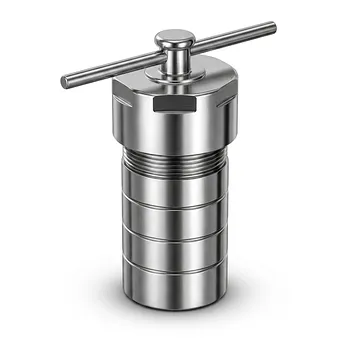
Laboratory Hydrothermal Synthesis Autoclave Reactor PTFE PPL Lined High Temperature High Pressure Explosion Proof Reaction Vessel
