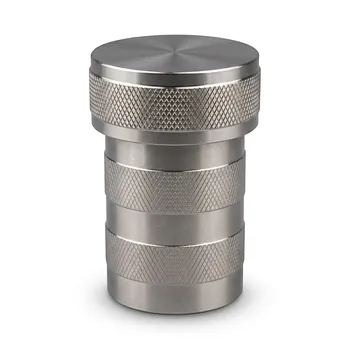
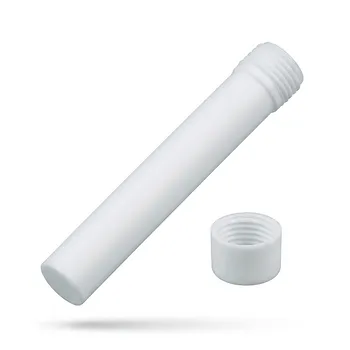
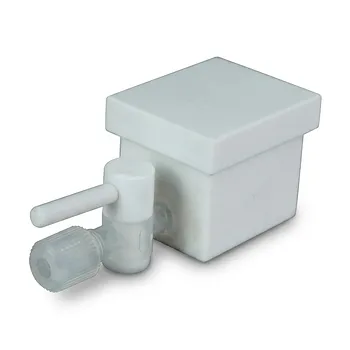
PTFE-lined hydrothermal synthesis autoclaves are the critical isolation barrier between highly reactive chemical precursors and the structural metal of the reactor. By providing an almost entirely inert environment, they prevent metal ion leaching and resist aggressive acids or bases, ensuring that the resulting nanocrystals possess the exact chemical purity and morphology required for advanced applications.
Core Takeaway: A PTFE liner transforms a high-pressure vessel from a potential contaminant source into a "blind" chemical environment. It is essential because it prevents the synthesis from being compromised by metallic impurities while protecting the autoclave's structural integrity from corrosive reagents.
Preventing Metallic Contamination and Ion Leaching
The Risks of Metal-Precursor Interaction
In high-temperature hydrothermal environments, aqueous solutions become significantly more aggressive. Without a liner, precursor liquids directly contact the stainless steel walls of the autoclave, causing the leaching of iron, nickel, or chromium ions into your sample.
PTFE as a Chemical Barrier
Polytetrafluoroethylene (PTFE) is chosen for its exceptional chemical inertness. It acts as a physical shield that ensures the crystallization process is driven solely by the intended reagents, which is vital for maintaining the electronic and optical properties of nanoparticles like doped cerium oxide or nickel ferrite.
Maintaining Experimental Accuracy
Even trace amounts of metallic impurities can act as unintended dopants, altering the crystal lattice of the synthesized material. The liner ensures experimental accuracy by providing a clean environment where the heterogeneous nucleation occurs exactly as designed.
Resilience Against Corrosive Precursors
Handling Extreme pH Levels
Many hydrothermal syntheses require highly concentrated sodium hydroxide (NaOH) or hydrochloric acid (HCl) to control pH and growth. PTFE is one of the few materials that can withstand these strong alkaline and acidic environments without degrading or reacting.
Protecting the Structural Vessel
The outer shell of a hydrothermal autoclave is typically high-strength stainless steel designed to hold pressure, not to resist corrosion. The PTFE liner prevents these corrosive solvents from reaching the metal, avoiding pitting and structural failure of the pressure vessel.
High-Temperature Stability
High-quality PTFE liners maintain their integrity at temperatures typically ranging from 150°C to 250°C. This thermal stability allows for the long-duration reactions necessary to produce high-crystallinity nanostructures like spinel-structured ferrites or BiOCl microspheres.
Control Over Nucleation and Morphology
Anti-Adhesion and Surface Growth
PTFE possesses a very low surface energy, which provides anti-adhesion properties. This prevents synthesized nanoparticles from sticking to the vessel walls, ensuring higher yields and easier recovery of the product after the reaction is complete.
Protecting Sensitive Surface Molecules
During the synthesis of complex nanoparticles, sensitive molecules—such as phytochemicals or specific ligands—are often grafted onto the crystal surface. The inert PTFE environment prevents these delicate molecules from degrading or reacting prematurely with the container walls.
Facilitating Uniform Morphology
A stable, clean environment is necessary for controlling the aspect ratio and alignment of nanostructures, such as vertically aligned TiO2 nanowires. By eliminating background interference from the vessel material, the PTFE liner allows for the precise kinetic control required for uniform nanorod and microsphere growth.
Understanding the Trade-offs and Limitations
Thermal Limits and Deformation
While PTFE is chemically robust, it has a "softening" point. If the temperature exceeds its rated limit (usually 220°C–250°C), the liner can undergo plastic deformation or "creep," which may make it difficult to remove from the stainless steel sleeve or cause it to lose its seal.
Pressure Sensitivity
The liner itself does not hold pressure; it relies on the stainless steel shell for structural support. If there is a mismatch in the fit between the liner and the shell, the liner may crack under high-pressure conditions, leading to "blow-by" where the reactants leak and attack the metal.
Porosity and Memory Effects
At a microscopic level, PTFE can be slightly porous. If not cleaned rigorously between experiments, trace amounts of previous precursors can be "remembered" by the liner, potentially leading to cross-contamination in sensitive high-purity syntheses.
Making the Right Choice for Your Goal
How to Apply This to Your Project
- If your primary focus is high-purity electronic materials: Always use a fresh or ultra-cleaned PTFE liner to ensure zero metallic ion leaching from the autoclave walls.
- If your primary focus is synthesis using strong acids (HCl): Ensure the liner has a thick, well-sealing lid to prevent acidic vapors from corroding the stainless steel threads of the outer vessel.
- If your primary focus is synthesis above 230°C: Consider transitioning to a PFA (Perfluoroalkoxy) liner or a specialized high-temperature grade of PTFE, as standard liners may deform and fail.
- If your primary focus is morphology control (nanorods/nanowires): Use the anti-adhesion properties of PTFE to prevent wall-growth and promote heterogeneous nucleation on your intended substrates.
By isolating the reaction chemistry from the structural hardware, the PTFE liner remains the gold standard for achieving high-purity, reproducible nanoparticle crystallization.
Summary Table:
| Feature | Benefit for Synthesis | Impact on Nanoparticles |
|---|---|---|
| Chemical Inertness | Prevents metal ion leaching from vessel walls | Ensures high chemical purity and exact doping |
| Corrosion Resistance | Withstands strong acids (HCl) and bases (NaOH) | Protects structural integrity of the autoclave |
| Low Surface Energy | Anti-adhesion properties (non-stick) | Promotes uniform morphology and higher yields |
| Thermal Stability | Reliable performance up to 220°C–250°C | Facilitates long-duration crystal growth |
Elevate Your Research with High-Performance Fluoropolymers
Achieve uncompromising purity in your nanoparticle synthesis with KINTEK’s premium PTFE and PFA laboratory solutions. We specialize exclusively in high-performance fluoropolymers, providing everything from everyday basic labware—including beakers, crucibles, reagent bottles, and digestion tubes—to advanced hydrothermal synthesis liners and microwave digestion vessels.
Whether you require high-purity trace analysis instruments, fluid transfer components (tubing, fittings, valves), or bespoke reaction apparatus like custom electrochemical cells, KINTEK delivers. Backed by end-to-end custom CNC fabrication, we can supply both high-volume standard consumables and complex, non-standard machined parts tailored to your specific research needs.
Ensure zero contamination and maximum chemical resilience in your lab today.
Contact KINTEK for a Custom Quote
References
- Sanjeev Thakur, Sanjeev Kumar. EGCG/ECG-controlled mesoporous and ultrafine TiO₂ nanoparticles for UV-driven pollutant mineralization and radical scavenging. DOI: 10.1038/s41598-025-24674-5
This article is also based on technical information from Kintek Knowledge Base .
Related Products
- PTFE Lined High Pressure Digestion Vessel 50ml High Temperature Hydrothermal Synthesis Tank
- High Temperature Corrosion Resistant Hydrothermal Synthesis Reactor with TFM Inner Liner and Straight Cylinder Design
- Custom TFM Reaction Vessel with Stainless Steel Jacket and PTFE Inner Cup for High Corrosion Resistance
- High Pressure Custom TFM Reactor Stainless Steel Outer Vessel PTFE Inner Cup for Corrosive Synthesis
- PTFE Acid Steam Cleaning System HF Resistant Trace Analysis Beaker Digestion Tank Customizable
People Also Ask
- What are the benefits of using a PTFE-lined vessel for carbon-sulfur cathode treatment? Maximize Purity & Performance
- Why are PTFE-lined pressure digestion vessels required for the preparation of Ag/CeO2 catalysts? Purity & Performance
- What safety features are typically incorporated into high-pressure PTFE digestion vessel designs? Ensure Lab Safety
- What is the function of PTFE lined high-pressure vessels in g-C3N4 synthesis? Achieve High-Purity Material Growth
- Role of High-Pressure Digestion Tanks in Perovskite Synthesis: Achieve Superior Stability and Latent Heat