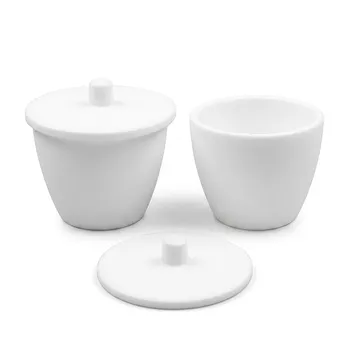
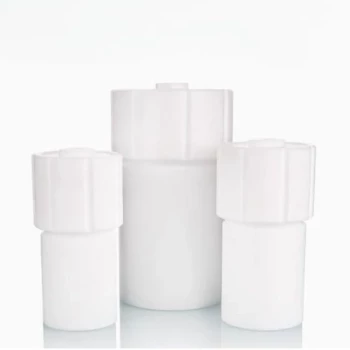
High-pressure PTFE digestion vessels utilize a multi-layered safety strategy that combines mechanical pressure relief, structural reinforcement, and real-time monitoring to manage extreme internal forces. These designs prioritize the controlled release of excess pressure through components like rupture discs while maintaining structural integrity via external jackets and spring-loaded closures. By integrating these features, manufacturers ensure that potential over-pressurization results in a predictable venting event rather than a catastrophic vessel failure.
The central safety philosophy of high-pressure PTFE vessels is to transform a potential explosion hazard into a controlled, predictable release of pressure. This is achieved through a combination of mechanical venting hardware, external reinforcement jackets, and material-specific engineering that accounts for thermal expansion.
Mechanical Pressure Relief Systems
Rupture Discs and Frangible Assemblies
The most critical safety feature is the rupture disc or frangible blow-off assembly, which acts as a mechanical "fuse." These calibrated components are designed to fail at a specific pressure threshold, allowing internal gases to vent safely before the vessel walls reach their breaking point.
Predictable Venting Pathways
Modern vessels are engineered so that when a relief device triggers, the resulting exhaust is directed along a predictable path. This prevents the uncontrolled projection of acidic mists or vessel fragments into the laboratory environment.
Structural Reinforcement and Integrity
High-Strength External Jackets
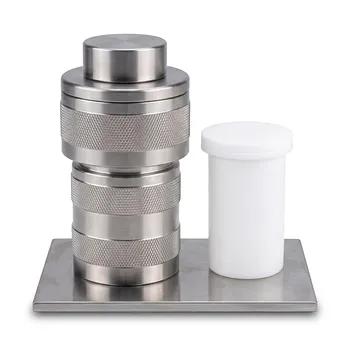
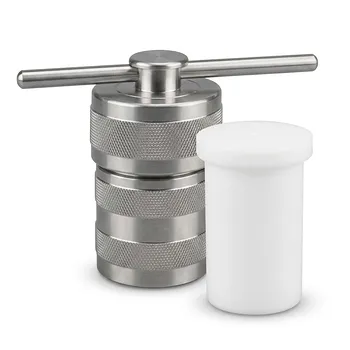
Because PTFE (Polytetrafluoroethylene) is a relatively soft fluoropolymer, it lacks the tensile strength to contain high pressures on its own. To compensate, the PTFE liner is encased in an external metal or high-strength polymer jacket that provides the necessary mechanical reinforcement to withstand internal stress.
Precision-Threaded Sealing
High-purity liners feature precision-threaded sealing structures designed to maintain a gas-tight environment even as pressure increases. This reliable sealing is essential for preventing the leakage of hazardous acid mists and ensuring the total recovery of target elements during digestion.
Thermal Expansion and Material Management
Spring-Loaded Closure Mechanisms
PTFE and its metal support structures have different rates of thermal expansion, which can lead to leaks or structural stress as temperatures rise. Spring-loaded closures are incorporated to compensate for this differential expansion, maintaining a constant seal pressure throughout the heating and cooling cycles.
Chemical Inertness and Purity
The inherent chemical inertness of PTFE prevents secondary chemical reactions between the vessel and the reagents, such as nitric acid or sodium hydroxide. By remaining non-reactive, the vessel avoids structural degradation and ensures that no metallic contamination interferes with sensitive trace analysis.
Real-Time Monitoring and Control
Optical Pressure and Temperature Sensors
Advanced systems, particularly in microwave-assisted digestion, interface with Optical Pressure Control (OPC) and Optical Temperature Control (OTC) sensors. These provide real-time feedback to the controller, allowing the system to automatically reduce power or shut down before a runaway exothermic reaction occurs.
Active Cooling Systems
Following the digestion cycle, active cooling systems are often employed to reduce internal pressure quickly and safely. This allows laboratory personnel to handle the vessels shortly after the process is complete, minimizing the risk of thermal burns or pressure-related accidents during opening.
Understanding the Trade-offs and Limitations
Thermal Degradation Limits
While PTFE is highly resistant to chemicals, it has a strict thermal ceiling; machining or operating temperatures must remain below 260°C. Exceeding this limit can cause the material to decompose, releasing toxic fumes that require specialized dust control and ventilation systems.
Mechanical Wear and Over-Torquing
The soft nature of fluoropolymers means that threads and sealing surfaces are susceptible to physical damage over time. Over-torquing a vessel during closure can deform the PTFE, leading to a compromised seal that may fail prematurely under pressure.
How to Apply This to Your Project
Recommendations for Safe Vessel Selection
- If your primary focus is extreme pressure applications: Select vessels featuring stainless steel external jackets and calibrated rupture discs to ensure maximum structural reinforcement.
- If your primary focus is trace metal analysis: Prioritize high-purity PTFE or PFA liners with precision-threaded seals to prevent reagent contamination and ensure high recovery rates.
- If your primary focus is high-throughput microwave digestion: Invest in systems equipped with integrated OPC and OTC sensors for automated, real-time safety monitoring of exothermic reactions.
By understanding the synergy between mechanical relief, material science, and electronic monitoring, lab professionals can safely harness the power of high-pressure digestion for even the most complex sample matrices.
Summary Table:
| Safety Feature | Mechanism | Primary Benefit |
|---|---|---|
| Rupture Discs | Mechanical pressure relief "fuse" | Prevents catastrophic vessel failure via controlled venting. |
| External Jackets | Metal or high-strength polymer casing | Provides structural reinforcement to the soft PTFE liner. |
| Spring-Loaded Closures | Thermal expansion compensation | Maintains a gas-tight seal throughout heating and cooling. |
| OPC/OTC Sensors | Real-time optical monitoring | Allows automated power reduction before exothermic runaways. |
| Chemical Inertness | High-purity PTFE/PFA materials | Prevents structural degradation and trace metal contamination. |
Secure Your Sample Prep with KINTEK Performance Fluoropolymers
At KINTEK, we understand that safety and purity are non-negotiable in high-pressure digestion. We manufacture virtually all imaginable laboratory supplies crafted from high-performance PTFE and PFA.
Whether you need:
- Everyday Labware: Beakers, crucibles, reagent bottles, and centrifuge tubes.
- Fluid Transfer: High-purity tubing, fittings, valves, and manifold components.
- Reaction Apparatus: Microwave digestion vessels, hydrothermal synthesis liners, and custom electrochemical cells.
- General Consumables: Precision-engineered O-rings, gaskets, stirring bars, and seal tapes.
Backed by end-to-end custom CNC fabrication, we deliver everything from high-volume standard orders to complex, non-standard machined parts tailored to your specific research needs. Contact us today to upgrade your lab equipment and leverage our exclusive focus on high-performance fluoropolymer engineering.
Related Products
- PTFE Lined High Pressure Digestion Vessel 50ml High Temperature Hydrothermal Synthesis Tank
- 5ml High Pressure PTFE Digestion Vessel for Geological Mineral Analysis Corrosion Resistant Polytetrafluoroethylene TFM Digestion Inner Liner
- High Pressure PTFE Digestion Vessel Inner Cup Holder Custom Corrosion Resistant Low Background Teflon
- PTFE Digestion Tubes Teflon Material Chemical Resistant Laboratory Vessels for Trace Metal Analysis
- Custom 100ml PTFE Digestion Tube for Heavy Metal Trace Analysis and High Temperature Acid Digestion
People Also Ask
- What are the benefits of using a PTFE-lined vessel for carbon-sulfur cathode treatment? Maximize Purity & Performance
- Why are PTFE-lined pressure digestion vessels required for the preparation of Ag/CeO2 catalysts? Purity & Performance
- What is the function of PTFE lined high-pressure vessels in g-C3N4 synthesis? Achieve High-Purity Material Growth
- Role of High-Pressure Digestion Tanks in Perovskite Synthesis: Achieve Superior Stability and Latent Heat
- Why must the hydrothermal synthesis of zeolites be performed in PTFE lined reaction vessels? Ensure Purity and Safety