The glass substrate acts as a foundational scaffolding for the in-situ growth of SnO2/nanocellulose films. During the hydrothermal synthesis process, the substrate is immersed in the reaction solution to provide a surface where SnO2 nanoparticles can deposit directly. This results in a robust, tightly bonded nanocomposite film that is ready for precise optical and photoelectric testing.
Core Takeaway: The glass substrate transforms the hydrothermal reaction from a bulk powder synthesis into a controlled thin-film fabrication process, enabling the creation of a stable, measurable material layer directly on a transparent carrier.
The Mechanics of In-Situ Growth
Direct Deposition in High-Pressure Environments
The hydrothermal autoclave creates an environment of extreme temperature and pressure that facilitates chemical reactions not possible at ambient conditions. By placing a glass substrate inside this vessel, the SnO2 nanoparticles are encouraged to nucleate and grow directly onto the glass surface.
Achieving Superior Film Adhesion
In-situ growth ensures that the SnO2/nanocellulose composite forms a strong mechanical and chemical bond with the substrate. This tight integration is critical because it prevents the film from delaminating during subsequent handling or experimental procedures.
Maintaining Structural Integrity
The glass substrate provides a rigid physical support for the nanocellulose framework. Without this carrier, the resulting material might form as a loose precipitate or an irregular powder rather than a uniform, cohesive film.
Streamlining Material Characterization
Facilitating Optical Transmittance Testing
Since glass is naturally transparent, it serves as an ideal medium for measuring how much light passes through the SnO2/nanocellulose film. These measurements are essential for determining the transparency and clarity of the newly synthesized nanocomposite.
Enabling Photoelectric Analysis
The substrate allows the film to be easily integrated into testing equipment designed for photoelectric characterization. Having the film pre-attached to a standardized carrier ensures that measurements of electrical conductivity and light response are accurate and repeatable.
Simplifying Sample Handling
A substrate-backed film is significantly easier to transport and position within sensitive laboratory instruments. This reduces the risk of damaging the delicate nanostructures during the transition from the synthesis vessel to the testing phase.
Understanding the Trade-offs and Limitations
Substrate Compatibility and Cleaning
The success of the deposition depends heavily on the cleanliness and surface energy of the glass substrate. If the glass is not meticulously pre-treated, the SnO2 nanoparticles may deposit unevenly, leading to "islands" rather than a continuous film.
Thermal Stress Concerns
Glass and the SnO2/nanocellulose composite may have different coefficients of thermal expansion. During the cooling phase after hydrothermal synthesis, rapid temperature changes can cause micro-cracks if the bonding is too rigid or the cooling is too fast.
Growth Uniformity Challenges
In a hydrothermal vessel, the orientation of the glass substrate can affect film thickness. Substrates placed horizontally may accumulate larger particles due to gravity, while vertically oriented substrates might favor more uniform, fine-grained nanoparticle growth.
Applying This Method to Your Synthesis Goals
To achieve the best results with your SnO2/nanocellulose film production, consider your primary experimental objective when preparing your substrate.
- If your primary focus is optical clarity: Ensure the glass substrate is ultra-sonically cleaned in multiple solvents to promote a thin, uniform deposition that minimizes light scattering.
- If your primary focus is mechanical durability: Focus on the "in-situ" bonding phase by optimizing the hydrothermal dwell time, ensuring the SnO2 nanoparticles have sufficient time to anchor to the substrate surface.
- If your primary focus is photoelectric performance: Position the substrate vertically within the autoclave to prevent large, non-conductive aggregates from settling on the film surface.
By strategically utilizing the glass substrate as more than just a container, you transform the hydrothermal vessel into a precision fabrication tool for advanced nanocomposites.
Summary Table:
| Feature | Role in Hydrothermal Synthesis | Impact on SnO2/Nanocellulose Film |
|---|---|---|
| In-Situ Scaffolding | Provides a nucleation surface | Enables thin-film formation instead of bulk powder. |
| Mechanical Bonding | Facilitates direct nanoparticle growth | Ensures superior film adhesion and structural integrity. |
| Optical Clarity | Acts as a transparent carrier | Allows for precise transmittance and photoelectric testing. |
| Physical Support | Rigid framework for nanostructures | Prevents delamination and simplifies sample handling. |
Elevate Your Nanomaterial Synthesis with KINTEK
Precision in hydrothermal synthesis starts with the right equipment. KINTEK specializes in high-performance fluoropolymer laboratory supplies, offering everything from hydrothermal synthesis liners and microwave digestion vessels to custom-machined PTFE and PFA components.
Whether you are producing SnO2/nanocellulose films or conducting advanced electrochemical research, our end-to-end custom CNC fabrication ensures you receive bespoke laboratory setups tailored to your exact needs. From basic labware (beakers, tubes, and filters) to advanced reaction apparatus and battery testing fixtures, we maintain an exclusive focus on high-durability materials that withstand extreme research environments.
Ready to optimize your lab's performance? Contact us today to discuss your custom requirements and discover how KINTEK’s expertise in high-performance fluoropolymers can streamline your material characterization and synthesis goals!
References
- Y. C. Goswami, T.T. Moe. Hydrothermal synthesis of SnO2/cellulose nanocomposites: optical, Structural, and morphological characterization. DOI: 10.1038/s41598-025-87948-y
This article is also based on technical information from Kintek Knowledge Base .
Related Products
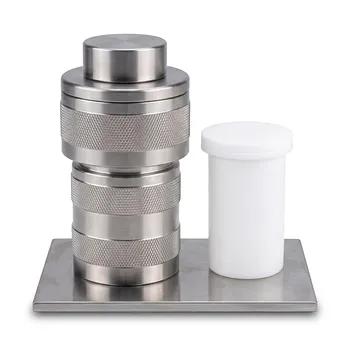
- PTFE Lined High Pressure Digestion Vessel 50ml High Temperature Hydrothermal Synthesis Tank
- High Temperature Corrosion Resistant Hydrothermal Synthesis Reactor with TFM Inner Liner and Straight Cylinder Design
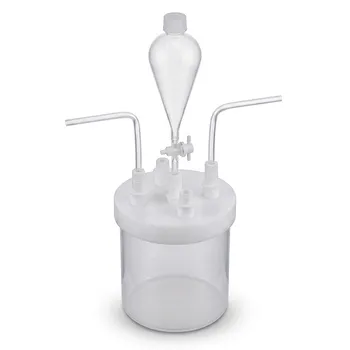
- High Purity PFA Reaction Vessel for Biopharmaceutical Synthesis and Corrosive Chemical Fluid Handling with Customizable Tube Fittings
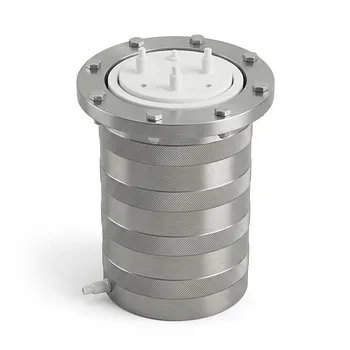
- High Pressure Custom TFM Reactor Stainless Steel Outer Vessel PTFE Inner Cup for Corrosive Synthesis
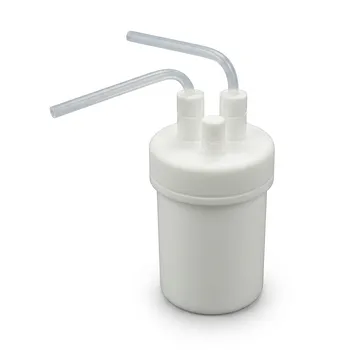
- Custom PTFE Continuous Reaction Bottles Virgin Fluoropolymer High Purity Low Background Synthesis Vessels
People Also Ask
- What are the benefits of using a PTFE-lined vessel for carbon-sulfur cathode treatment? Maximize Purity & Performance
- Why are PTFE-lined pressure digestion vessels required for the preparation of Ag/CeO2 catalysts? Purity & Performance
- What is the function of high-pressure PTFE digestion vessels in mineral analysis? Optimize Sample Mineralization
- What safety features are typically incorporated into high-pressure PTFE digestion vessel designs? Ensure Lab Safety
- What is the function of PTFE lined high-pressure vessels in g-C3N4 synthesis? Achieve High-Purity Material Growth