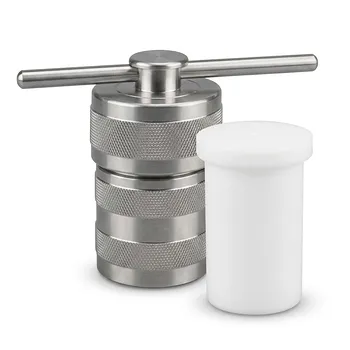
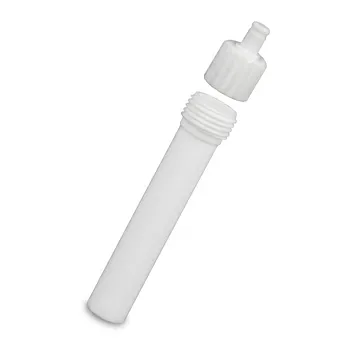
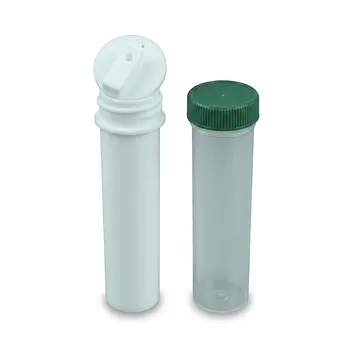
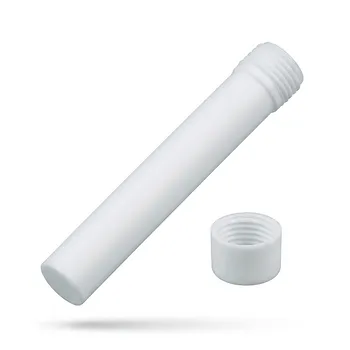
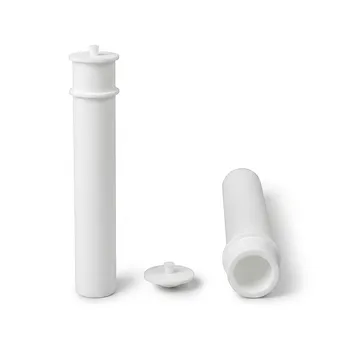
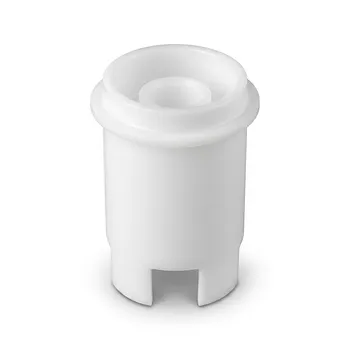
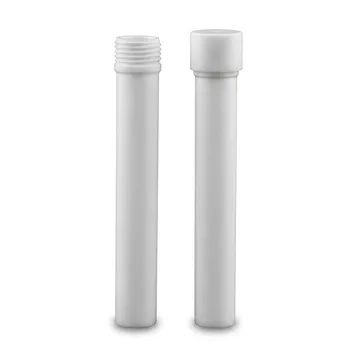
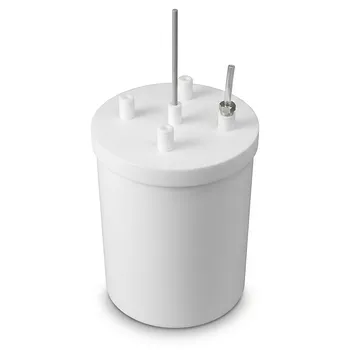
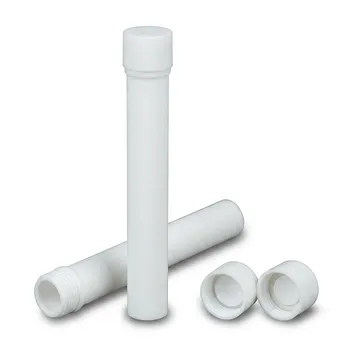
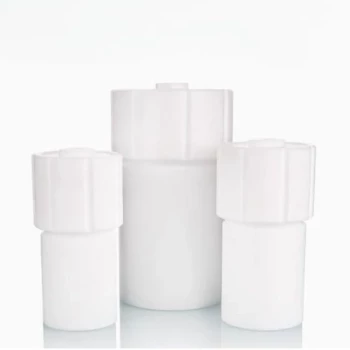
PTFE-lined pressure digestion vessels are indispensable for $Ag/CeO_2$ synthesis because they provide a chemically inert, high-pressure environment required to transform metal salts into crystalline catalysts without introducing contaminants. At the standard reaction temperature of 180 °C, the Polytetrafluoroethylene (PTFE) liner protects the structural integrity of the vessel while ensuring the purity of the catalyst lattice.
Core Takeaway: PTFE liners serve as a critical barrier that prevents corrosive reaction media from leaching metal impurities from the vessel's steel shell, thereby allowing for the precise formation of the crystalline structures and oxygen vacancies necessary for $Ag/CeO_2$ catalytic activity.
Protecting the Reaction Environment
Chemical Inertness and Corrosion Resistance
During solvothermal synthesis, the reagents and solvents used to dissolve silver and cerium salts can be highly corrosive. PTFE is chosen for its exceptional chemical inertness, which prevents these corrosive media from attacking the stainless steel outer shell of the digestion vessel.
Prevention of Metal Ion Contamination
If the reaction solution were to contact the metal shell, it could introduce unwanted metal ion impurities into the system. In catalyst preparation, even trace amounts of foreign metals can block active sites or alter the true proportions of dopants, compromising the catalyst's effectiveness.
Ensuring Precise Lattice Defects
The purity provided by the PTFE liner is vital for the precise generation of defect sites, such as oxygen vacancies, within the $CeO_2$ lattice. These vacancies are often the primary drivers of catalytic performance in silver-ceria systems, and their formation depends on a controlled chemical environment.
Facilitating Structural Transformation
Maintaining Subcritical Environments
Solvothermal reactions at 180 °C generate significant internal pressure as solvents are heated beyond their boiling points. The sealed PTFE liner structure effectively maintains this high-pressure environment, which is necessary to promote the transformation of salts into crystalline structures.
Oriented Growth of Nanostructures
The closed, high-pressure space facilitates the dissolution and mixing of components at a molecular level. This environment allows for the oriented growth of components, leading to uniform structures and high-performance silver-ceria active centers.
Complete Sample Dissolution
For catalysts that require subsequent analysis or acid washing, PTFE vessels can withstand concentrated acids like aqua regia or sulfuric acid. This ensures that the catalyst can be treated or dissolved completely without the vessel itself contributing to the trace element background levels.
Understanding the Trade-offs
Temperature Limitations
While PTFE is highly resistant, it has a functional upper temperature limit, typically around 220 °C to 250 °C. Exceeding these temperatures can lead to the mechanical deformation of the liner, known as "creeping," which may compromise the seal.
Pressure Sensitivity
The PTFE liner is not pressure-bearing on its own; it relies entirely on the stainless steel outer jacket for mechanical strength. If the outer vessel is damaged or improperly tightened, the liner can rupture under the internal pressure generated during the 180 °C synthesis.
Potential for Memory Effects
Because PTFE is slightly porous at a microscopic level, it can sometimes retain trace amounts of previous samples if not cleaned rigorously. This cross-contamination risk requires specialized cleaning protocols, such as "blank" acid digestions, between different catalyst batches.
How to Apply This to Your Project
Recommendations for Catalyst Synthesis
To ensure the best results when preparing $Ag/CeO_2$ or similar supported metal catalysts, consider the following guidelines:
- If your primary focus is maximum purity: Always use high-purity PTFE or PFA liners to ensure the trace element background remains low enough to avoid interfering with oxygen vacancy measurements.
- If your primary focus is structural uniformity: Ensure the vessel is correctly sealed to maintain the high-pressure subcritical environment required for the oriented growth of the $CeO_2$ support.
- If your primary focus is laboratory safety: Regularly inspect PTFE liners for thinning or discoloration, and never exceed the manufacturer's maximum temperature rating to avoid liner failure.
By strictly controlling the reaction environment through PTFE-lined vessels, you ensure that the resulting $Ag/CeO_2$ catalyst possesses the exact chemical and structural properties intended for your application.
Summary Table:
| Feature | Role in Ag/CeO2 Catalyst Synthesis | Impact on Final Product |
|---|---|---|
| Chemical Inertness | Resists corrosive metal salts & solvents | Ensures precise oxygen vacancies |
| Pressure Stability | Maintains subcritical environments at 180°C | Promotes oriented crystal growth |
| Metal Ion Barrier | Prevents leaching from the steel vessel shell | Protects active catalytic sites |
| Thermal Resistance | Safely operates up to 220°C-250°C | Facilitates solvothermal transformation |
| High-Purity Surface | Minimizes trace element background | Enables accurate catalyst analysis |
Elevate Your Catalyst Synthesis with High-Performance Fluoropolymers
Precision in catalyst preparation starts with the purity of your reaction environment. KINTEK specializes exclusively in high-performance fluoropolymer materials, providing the chemical inertness and reliability required for sensitive Ag/CeO2 synthesis.
From everyday essentials like beakers, measuring cylinders, and reagent bottles to specialized microwave digestion vessels, hydrothermal synthesis liners, and custom reaction apparatus, we manufacture virtually every laboratory supply imaginable in PTFE and PFA. Backed by end-to-end custom CNC fabrication, KINTEK is equipped to deliver everything from high-volume orders to complex, non-standard machined parts tailored to your specific research needs.
Ensure your catalysts achieve their full potential—Contact KINTEK today for reliable, contamination-free laboratory solutions.
References
- Ajit Kumar Dhanka, Debabrata Mishra. Oxygen vacancies induced low overpotentials of Ag/CeO<sub>2</sub> for electrocatalytic evolution of oxygen and hydrogen. DOI: 10.1039/d5ma00321k
This article is also based on technical information from Kintek Knowledge Base .
Related Products
- PTFE Lined High Pressure Digestion Vessel 50ml High Temperature Hydrothermal Synthesis Tank
- 5ml High Pressure PTFE Digestion Vessel for Geological Mineral Analysis Corrosion Resistant Polytetrafluoroethylene TFM Digestion Inner Liner
- High Purity PTFE Microwave Digestion Vessel Replacement Liner for Acid Sample Preparation and Trace Analysis
- PTFE Digestion Tubes Teflon Material Chemical Resistant Laboratory Vessels for Trace Metal Analysis
- High Purity TFM Microwave Digestion Vessels PTFE Acid Evaporation Liners Domestic GT-400 Equivalent Laboratory Reaction Containers
People Also Ask
- What are the benefits of using a PTFE-lined vessel for carbon-sulfur cathode treatment? Maximize Purity & Performance
- What safety features are typically incorporated into high-pressure PTFE digestion vessel designs? Ensure Lab Safety
- What is the function of PTFE lined high-pressure vessels in g-C3N4 synthesis? Achieve High-Purity Material Growth
- Role of High-Pressure Digestion Tanks in Perovskite Synthesis: Achieve Superior Stability and Latent Heat
- Why must the hydrothermal synthesis of zeolites be performed in PTFE lined reaction vessels? Ensure Purity and Safety