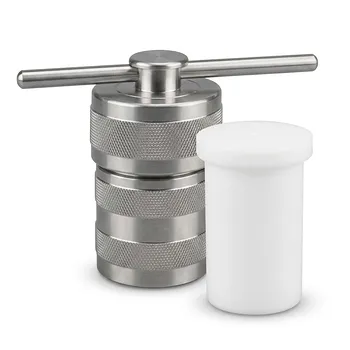
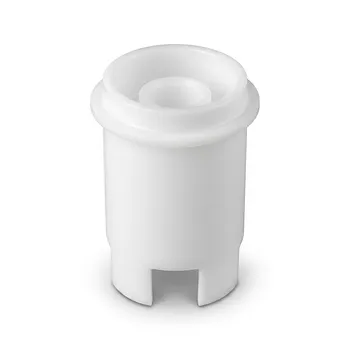
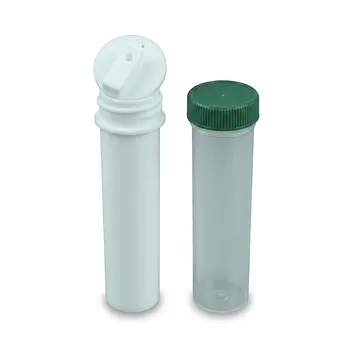
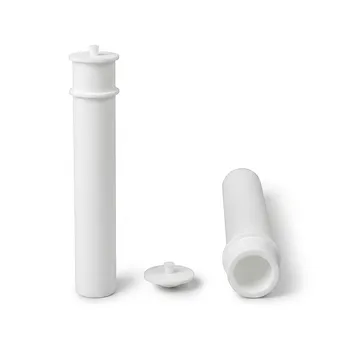
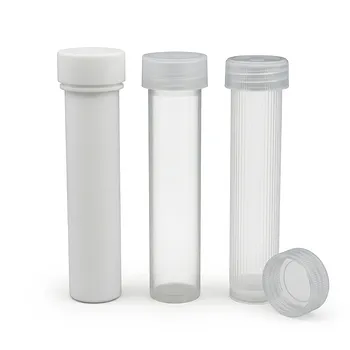
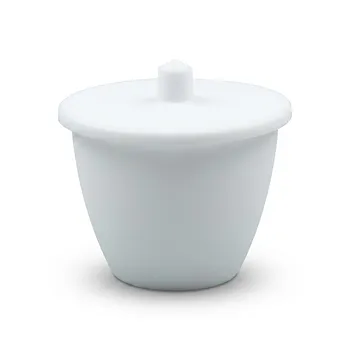
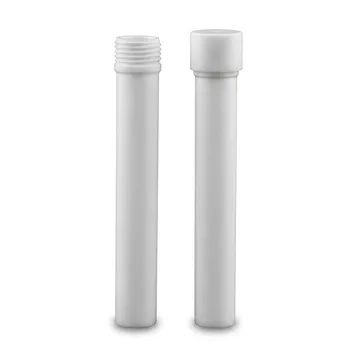
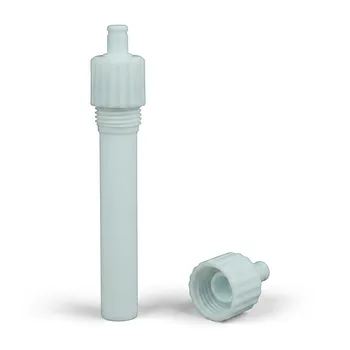
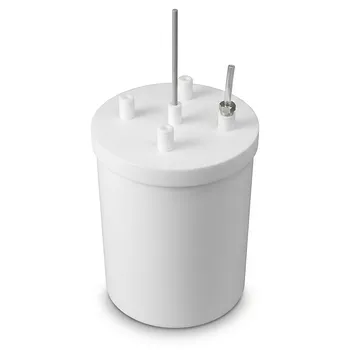
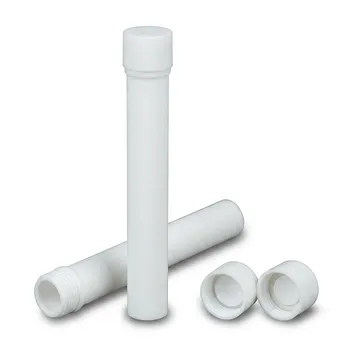
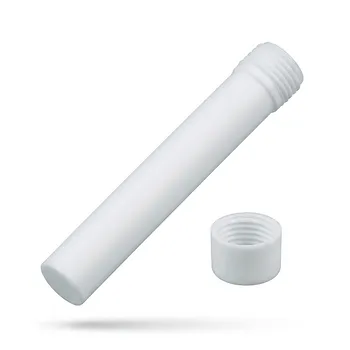
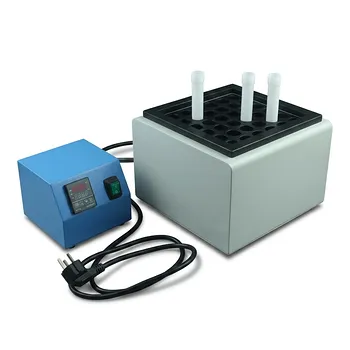
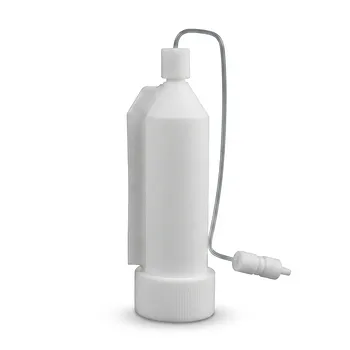
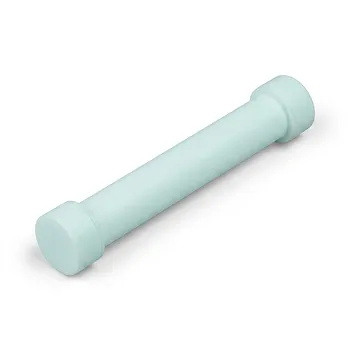
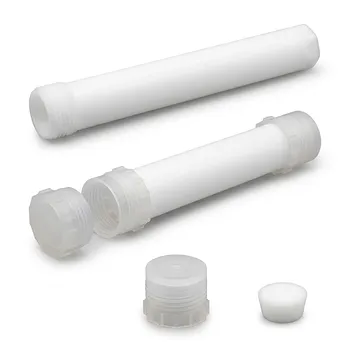
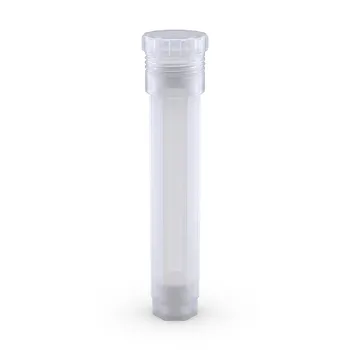
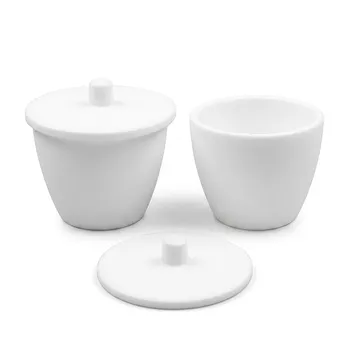
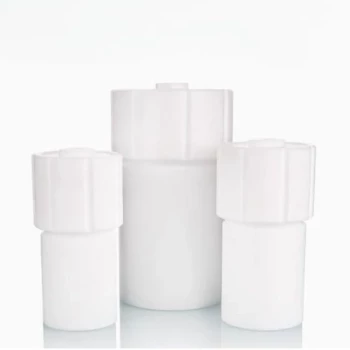
High-pressure PTFE digestion vessels are specialized reaction containers designed to facilitate the complete chemical breakdown (mineralization) of complex organic samples. In microwave digestion systems, these vessels safely contain strong oxidizing acids at temperatures and pressures far exceeding their atmospheric boiling points. This process converts solid organic matter into a clear, liquid ionic state required for precise instrumental analysis.
The core function of high-pressure PTFE vessels is to provide a chemically inert, high-strength environment that allows strong acids to decompose organic matrices rapidly and completely. This ensures total sample recovery and prevents contamination, which is vital for high-precision trace element quantification.
The Role of PTFE in Organic Matrix Decomposition
Chemical Inertness and Acid Resistance
High-pressure PTFE (polytetrafluoroethylene) is utilized primarily for its exceptional chemical stability. It can withstand prolonged exposure to concentrated oxidizing agents like ultrapure nitric acid, perchloric acid, and even aqua regia without degrading.
This inertness ensures that the vessel itself does not react with the digestion reagents. Consequently, the organic sample is the only material undergoing chemical transformation during the process.
Complete Mineralization of Complex Matrices
Complex organic samples, such as fats, proteins, and plant tissues, require aggressive conditions to break down. The vessels allow these reactions to occur in a closed system, ensuring that the organic matrix is fully decomposed into a clear, homogenous liquid.
By converting the sample into an ionic state, the vessel prepares the material for sensitive detection methods. This is essential for instruments like ICP-OES or ICP-MS to function without interference from undissolved solids.
Ensuring Analytical Integrity and Precision
Preventing Sample Contamination
Fluoropolymers like PTFE have an extremely low risk of heavy metal leaching. This ensures that the digestion solution remains pure and free from background impurities that could skew results.
The non-stick properties of the material also minimize sample loss during transfer. This contributes significantly to the reproducibility and accuracy of high-precision trace element analysis.
Maximizing Recovery of Volatile Elements
The high-pressure environment created within these sealed vessels raises the boiling point of the acid reagents. This allows for faster digestion while preventing the loss of volatile trace elements like mercury or arsenic.
By keeping the system closed, the vessel ensures that every milligram of the target element remains within the solution. This is a critical advantage over open-vessel digestion methods where volatiles often escape.
Mechanical Performance in Extreme Conditions
Managing High Internal Pressures
High-pressure vessels are engineered with the mechanical strength to withstand the intense physical impacts of gas expansion during heating. Organic samples often release significant CO2 during decomposition, which increases internal pressure.
PTFE maintains its structural integrity under these harsh conditions, preventing vessel failure. This safety feature is paramount for laboratory environments using high-energy microwave digestion.
Accelerating Reaction Kinetics
The combination of high temperature and pressure significantly accelerates the reaction rate. What would take hours in an open beaker can often be completed in minutes within a high-pressure PTFE vessel.
This efficiency is crucial for high-throughput laboratories dealing with large volumes of biological or environmental samples. The result is a faster, more reliable path from raw sample to analytical data.
Understanding the Trade-offs
Temperature and Pressure Limitations
While PTFE is highly resistant, it has a functional upper temperature limit, typically around 250°C to 260°C. Exceeding these limits can lead to material deformation (cold flow) or structural weakening.
Users must monitor internal conditions carefully to avoid exceeding the rated pressure of the vessel. Over-pressurization can lead to venting or, in extreme cases, vessel rupture.
Memory Effects and Material Aging
PTFE is slightly porous at a microscopic level, which can lead to "memory effects" where trace amounts of a previous sample are retained. This requires rigorous cleaning protocols, often involving acid steam cleaning, to ensure cross-contamination does not occur.
Over time, repeated exposure to high-pressure cycles can lead to material fatigue. Vessels must be inspected regularly for signs of pitting, discoloration, or deformation to ensure ongoing safety and performance.
Applying This to Your Project
Making the Right Choice for Your Goal
- If your primary focus is ultra-trace element analysis: Prioritize high-purity PTFE or TFM (a modified PTFE) vessels to minimize the risk of background contamination and leaching.
- If your primary focus is high-throughput organic digestion: Ensure your vessels are rated for higher pressures (at least 40-100 bar) to handle the rapid gas evolution typical of fat and protein decomposition.
- If your primary focus is volatile element recovery: Always utilize a completely sealed, high-pressure vessel system to ensure elements like mercury are not lost to the atmosphere.
- If your primary focus is long-term cost efficiency: Implement a strict cleaning and inspection regimen to extend the lifespan of the vessels and prevent expensive "memory effect" errors.
By leveraging the unique chemical and physical properties of PTFE, you can ensure that even the most challenging organic samples are prepared with the highest degree of analytical rigor.
Summary Table:
| Feature | Function in Organic Mineral Analysis |
|---|---|
| Chemical Inertness | Withstands aggressive oxidizing acids like ultrapure HNO3 without leaching contamination. |
| High-Pressure Rating | Manages internal CO2 gas evolution from organic decomposition at elevated temperatures. |
| Closed-System Design | Prevents the escape of volatile trace elements such as Mercury (Hg) and Arsenic (As). |
| Non-Stick Surface | Minimizes sample loss during transfer and prevents "memory effects" from previous samples. |
Optimize Your Sample Prep with KINTEK
From everyday basic labware like beakers, crucibles, and digestion tubes to advanced microwave digestion vessels and custom reaction apparatus, KINTEK manufactures virtually all imaginable laboratory supplies crafted from high-performance PTFE and PFA.
Whether you require high-purity trace analysis instruments or complex fluid transfer components like tubing, valves, and fittings, our end-to-end custom CNC fabrication is equipped to deliver everything from bespoke laboratory setups to high-volume orders. Backed by an absolute focus on fluoropolymer excellence, we ensure your most challenging organic samples are prepared with the highest degree of analytical rigor.
Ready to enhance your lab’s efficiency and precision? Contact our experts today to discuss your custom project!
References
- S. Sowmya, R Meenakumari. ESTIMATION OF NUTRITIVE VALUE OF “NANNARI KANJI” AND EVALUATION OF ITS ANTI-BACTERIAL ACTIVITY AGAINST STAPHYLOCOCCUS AUREUS, A RESPIRATORY PATHOGEN BY IN VITRO METHOD. DOI: 10.22159/ajpcr.2024v17i11.52128
This article is also based on technical information from Kintek Knowledge Base .
Related Products
- PTFE Lined High Pressure Digestion Vessel 50ml High Temperature Hydrothermal Synthesis Tank
- 5ml High Pressure PTFE Digestion Vessel for Geological Mineral Analysis Corrosion Resistant Polytetrafluoroethylene TFM Digestion Inner Liner
- High Pressure PTFE Digestion Vessel Inner Cup Holder Custom Corrosion Resistant Low Background Teflon
- PTFE Digestion Tubes Teflon Material Chemical Resistant Laboratory Vessels for Trace Metal Analysis
- Custom 100ml PTFE Digestion Tube for Heavy Metal Trace Analysis and High Temperature Acid Digestion
People Also Ask
- What are the benefits of using a PTFE-lined vessel for carbon-sulfur cathode treatment? Maximize Purity & Performance
- Why are PTFE-lined pressure digestion vessels required for the preparation of Ag/CeO2 catalysts? Purity & Performance
- What safety features are typically incorporated into high-pressure PTFE digestion vessel designs? Ensure Lab Safety
- What is the function of PTFE lined high-pressure vessels in g-C3N4 synthesis? Achieve High-Purity Material Growth
- Role of High-Pressure Digestion Tanks in Perovskite Synthesis: Achieve Superior Stability and Latent Heat