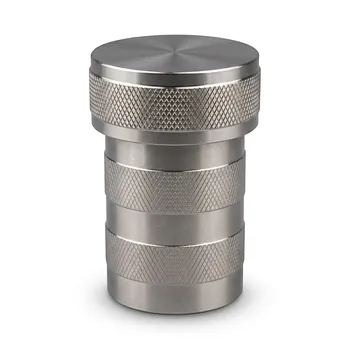
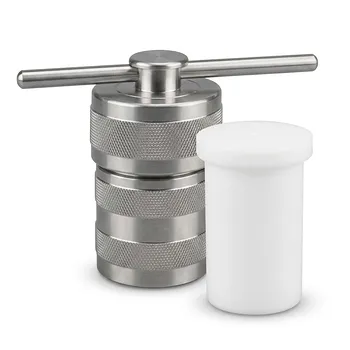
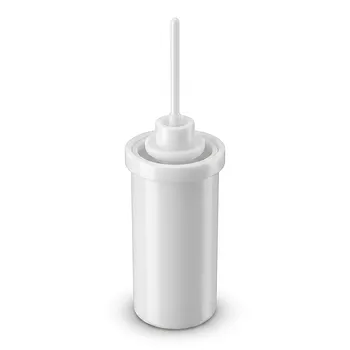
High-pressure digestion tanks serve as the essential thermodynamic engine for perovskite synthesis. In this process, these sealed autoclaves allow reaction solvents to reach temperatures far exceeding their normal boiling points while remaining in a liquid state. This high-pressure, high-temperature environment is critical for facilitating the formation of stabilizing polymer networks and ensuring the resulting phase change materials possess high crystallinity and superior latent heat capacity.
The autoclave creates a supercritical or subcritical environment that forces chemical precursors to react and crystallize in ways impossible at atmospheric pressure. This process is fundamental to achieving the structural stability and thermal efficiency required for high-performance phase change materials.
Overcoming Thermodynamic Barriers
Exceeding Normal Boiling Points
Hydrothermal synthesis requires the solvent to remain liquid at extreme temperatures to dissolve precursors effectively. The sealed environment of the digestion tank prevents evaporation, allowing the internal pressure to rise as the temperature increases.
Facilitating Precursor Dissolution
High-pressure conditions accelerate the dissolution of precursor gels and minerals. This ensures that the chemical components are fully mobilized in the solution, allowing them to interact and assemble into the desired perovskite phase.
Engineering the Perovskite Structure
Stabilizing Polymer Networks
The intense pressure and heat within the autoclave facilitate the development of internal polymer networks. These networks act as a framework that stabilizes the perovskite crystals, preventing structural collapse during thermal cycling.
Enhancing Thermal Stability
By operating under controlled high-pressure conditions, the synthesis process produces materials with improved thermal stability. This is vital for phase change materials (PCMs), which must endure repeated heating and cooling cycles without degrading.
Precision Control of Material Properties
Optimizing Latent Heat Capacity
The autoclave allows for the precise regulation of temperature and pressure, which directly influences the latent heat capacity of the powder. High-quality synthesis ensures the material can store and release maximum energy during phase transitions.
Ensuring Uniformity and Purity
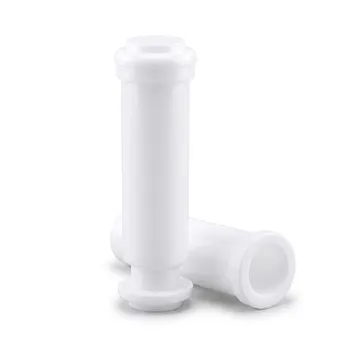
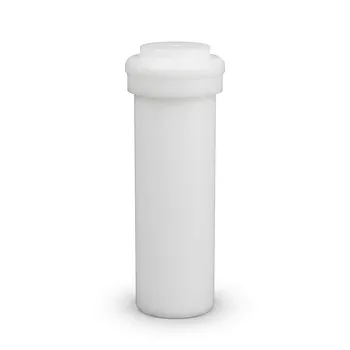
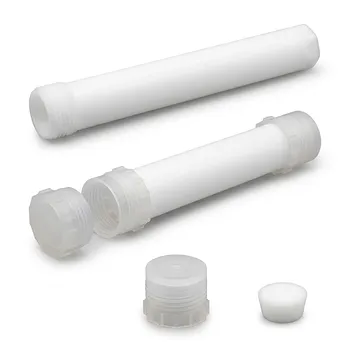
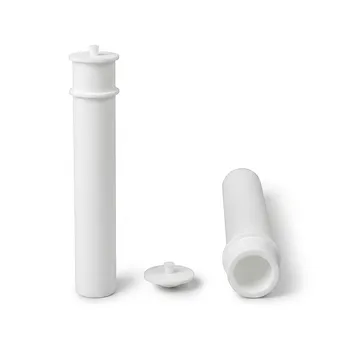
The use of PTFE (Teflon) liners inside the stainless steel tanks is a common technical requirement. This liner provides a chemically inert surface that prevents metal ion contamination, ensuring the high purity and stoichiometric accuracy of the perovskite.
Understanding the Trade-offs and Risks
Safety and Pressure Management
The primary risk in hydrothermal synthesis is the immense internal pressure generated by heating sealed liquids. Failure to monitor temperature limits or using a damaged autoclave can lead to vessel failure, making precise pressure regulation a non-negotiable safety requirement.
Temperature Limits of Equipment
While higher temperatures generally improve crystallinity, the PTFE liners have a physical limit, typically around 180°C to 240°C depending on the grade. Exceeding these limits can cause the liner to deform or release contaminants into the reaction mixture.
Complexity of Scalability
Hydrothermal synthesis is highly effective for laboratory-scale purity but can be difficult to scale for mass production. The need for large-scale, high-pressure vessels significantly increases capital costs and operational complexity compared to ambient-pressure methods.
How to Apply This to Your Project
When selecting or operating high-pressure digestion tanks for perovskite synthesis, consider your specific material requirements:
- If your primary focus is Maximum Latent Heat: Prioritize precise temperature control and longer reaction times to ensure full crystallization and the formation of robust polymer networks.
- If your primary focus is Chemical Purity: Ensure the use of high-purity PTFE liners and check for any signs of degradation or "pitting" before each synthesis run to avoid metal contamination.
- If your primary focus is Morphology Control: Focus on the "programmatic control" of pressure and cooling rates, as these variables dictate whether the perovskite forms as uniform powders or specific nanostructures.
The mastery of the autoclave environment is the difference between a low-efficiency precursor and a high-performance perovskite phase change material.
Summary Table:
| Key Feature | Functional Role | Impact on Perovskite Material |
|---|---|---|
| Sealed Environment | Prevents evaporation above boiling points | Ensures complete precursor dissolution |
| Thermodynamic Pressure | Accelerates chemical crystallization | Higher crystallinity & energy storage capacity |
| PTFE/PFA Liners | Provides chemically inert barrier | Maintains high purity & stoichiometric accuracy |
| Precision Regulation | Controls reaction and cooling rates | Uniform morphology and stable polymer networks |
Elevate Your Synthesis with KINTEK’s Precision Fluoropolymer Solutions
To achieve high-performance results in perovskite synthesis, the quality of your reaction environment is paramount. KINTEK specializes in manufacturing virtually all laboratory supplies crafted from high-performance PTFE and PFA, ensuring your research meets the highest standards of purity and durability.
From essential labware like beakers, crucibles, and reagent bottles to advanced hydrothermal synthesis liners, microwave digestion vessels, and custom electrochemical cells, we provide the tools needed to overcome thermodynamic barriers. Our expertise extends to comprehensive fluid transfer components (tubing, valves, fittings) and specialized sample prep tools, all backed by end-to-end custom CNC fabrication for complex, non-standard machined parts.
Whether you need high-volume consumables or bespoke laboratory setups, KINTEK is your partner for excellence in fluoropolymer technology. Contact us today to discuss your project and optimize your synthesis workflow!
References
- Nur Fauziyah, Wahyu Kartini. Potential applications of the hydrothermal process for the development of perovskite-based PCM materials. DOI: 10.1088/1755-1315/1454/1/012008
This article is also based on technical information from Kintek Knowledge Base .
Related Products
- PTFE Lined High Pressure Digestion Vessel 50ml High Temperature Hydrothermal Synthesis Tank
- High Temperature Corrosion Resistant Hydrothermal Synthesis Reactor with TFM Inner Liner and Straight Cylinder Design
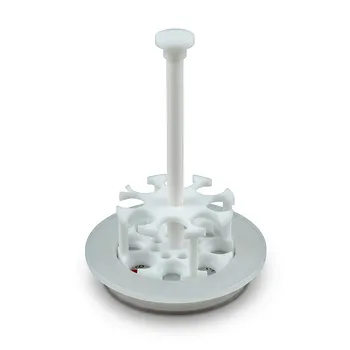
- High Performance TFM Microwave Digestion Vessel Rack 15 Position Customizable Sample Preparation Support
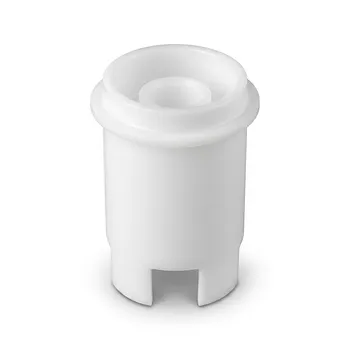
- High Pressure PTFE Digestion Vessel Inner Cup Holder Custom Corrosion Resistant Low Background Teflon
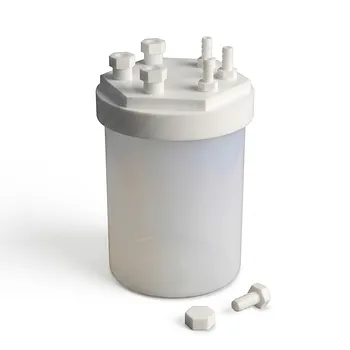
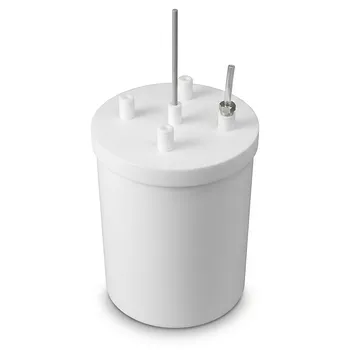
- PFA Chemical Reaction Tank with Customizable Fittings for Corrosive Solvent Synthesis and High Purity Lab Applications
People Also Ask
- What are the benefits of using a PTFE-lined vessel for carbon-sulfur cathode treatment? Maximize Purity & Performance
- Why are PTFE-lined pressure digestion vessels required for the preparation of Ag/CeO2 catalysts? Purity & Performance
- What safety features are typically incorporated into high-pressure PTFE digestion vessel designs? Ensure Lab Safety
- What is the function of PTFE lined high-pressure vessels in g-C3N4 synthesis? Achieve High-Purity Material Growth
- Why must the hydrothermal synthesis of zeolites be performed in PTFE lined reaction vessels? Ensure Purity and Safety