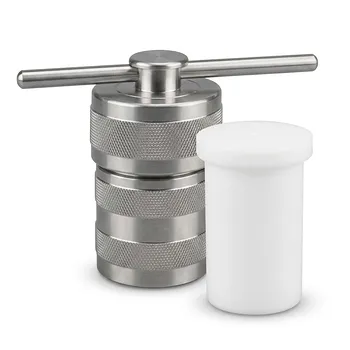
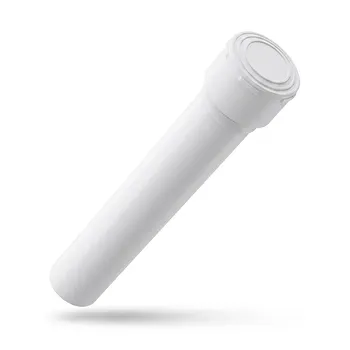
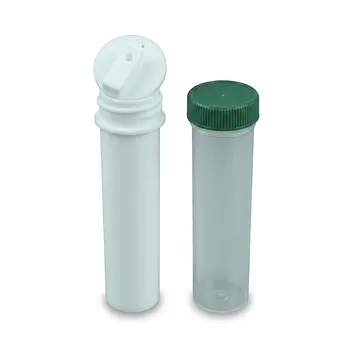
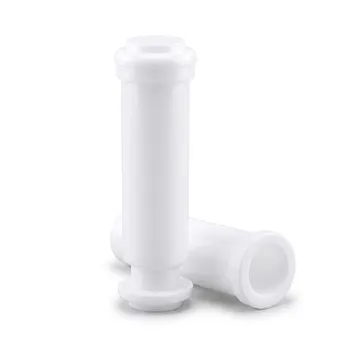
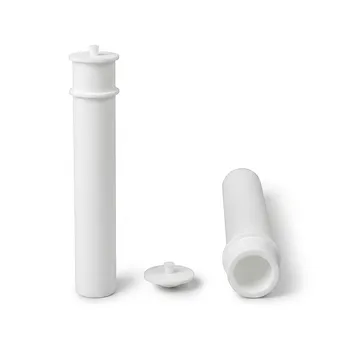
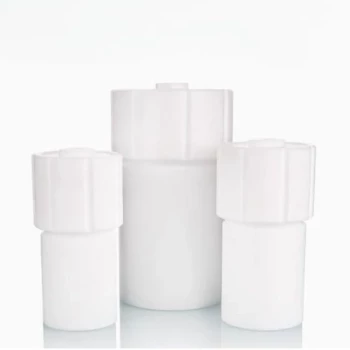
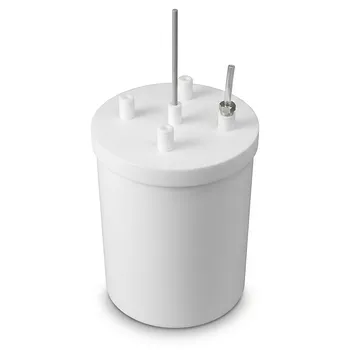
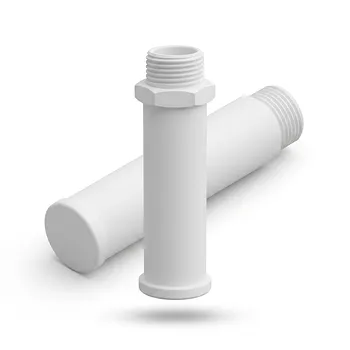
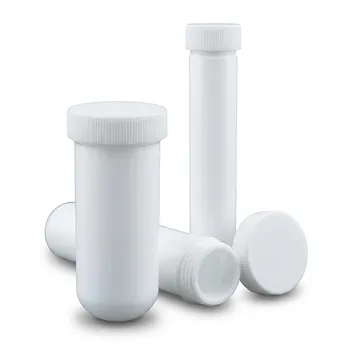
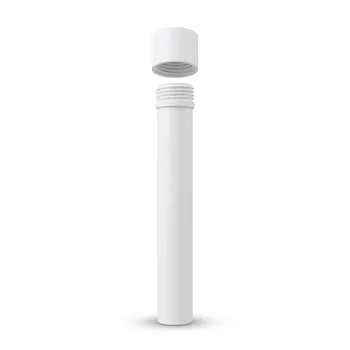
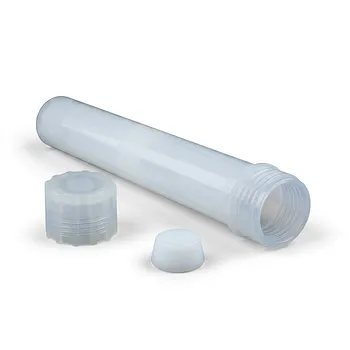
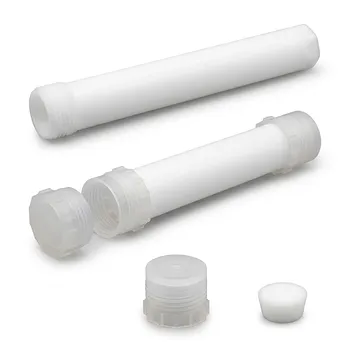
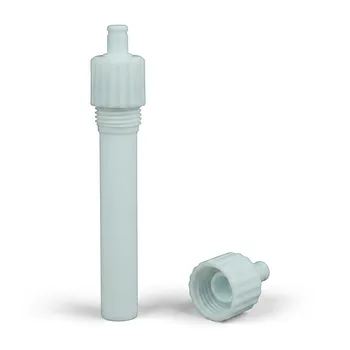
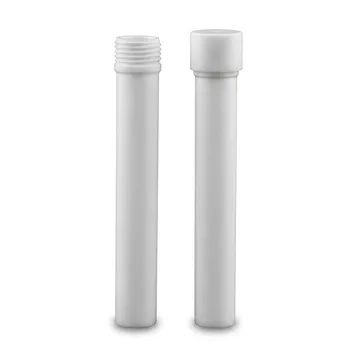
High-pressure digestion vessels, commonly known as Teflon Bombs, are the critical bridge between solid reference materials and liquid-phase analysis. They provide the high-temperature, high-pressure environment required to completely dissolve complex matrices—such as ceramics, minerals, or organic tissues—into a homogenous acid solution. This total dissolution is necessary to eliminate matrix interference and ensure that Inductively Coupled Plasma Mass Spectrometry (ICP-MS) can accurately verify the concentration of trace elements against established standards.
Teflon Bombs facilitate "total digestion," transforming solid samples into clear, inorganic solutions within a sealed, high-pressure system. This process is essential for eliminating physical and chemical interferences, preventing the loss of volatile analytes, and ensuring the high precision required for certifying reference materials.
Achieving Total Matrix Dissolution
Overcoming Chemical Resistance
Many reference materials, such as calcite ceramics, possess robust matrices that resist standard atmospheric digestion. Within the sealed environment of a Teflon Bomb, a mixture of hydrofluoric and nitric acids can be heated well beyond their boiling points. This intense energy ensures that both the ceramic matrix and all dopant elements are completely forced into the liquid phase.
Converting to Ionic States
For the ICP-MS to provide accurate data, elements must be in a consistent ionic state. The high-pressure environment breaks down complex metal-organic networks and mineral structures. This transition from a solid lattice to a clear solution ensures that every atom of the analyte is available for detection.
The Role of the Closed-System Environment
Preventing Volatile Element Loss
Traditional open-vessel digestion often results in the loss of volatile elements like arsenic or boron as they evaporate under heat. The sealed nature of the Teflon Bomb retains these gases, forcing them back into the acid solution as the vessel cools. This preservation is vital for establishing the "true" concentration values of a reference material.
Eliminating Environmental Contamination
Trace element analysis is highly sensitive to impurities from the laboratory environment. High-purity fluoropolymers like PTFE or PFA used in these vessels are chemically inert and prevent leaching. Because the system is closed, it acts as a barrier against airborne contaminants, ensuring the integrity of the trace analysis.
Mitigating Analytical Interference
Eliminating Matrix Effects
Solid-phase analysis often suffers from matrix effects, where the physical structure of the sample interferes with the signal. By converting the sample into a liquid, Teflon Bombs allow for the use of solution ICP-MS, which provides a more reliable and repeatable reference. This liquid-based approach is the gold standard for establishing the recommended concentration values of new materials.
Protecting the Instrument
Undissolved particles or suspended solids can clog the nebulizers and injection needles of an ICP-MS system. Total digestion, often followed by centrifugation to remove any micro-residues, ensures a high-purity supernatant. This protects the hardware and significantly improves the signal-to-noise ratio of the detector.
Understanding the Trade-offs
Handling Hazardous Reagents
Total digestion of ceramics frequently requires hydrofluoric acid (HF), which is exceptionally hazardous and requires specialized safety protocols. While Teflon Bombs are resistant to HF, the subsequent handling and neutralization of the solution add complexity to the workflow.
Residual Solids and Post-Processing
Even with high-pressure digestion, some samples may leave behind trace amounts of undissolved mineral residues. If these are not removed via centrifugation or filtration, they can cause non-spectral interference. Failure to achieve a perfectly clear solution can lead to inaccurate quantification and damage to the mass spectrometer.
How to Apply This to Your Project
Selecting the Right Approach for Your Goal
- If your primary focus is certifying ceramic or mineral standards: Use high-pressure Teflon Bombs with a nitric/hydrofluoric acid mix over an extended period to ensure the complete breakdown of the crystalline lattice.
- If your primary focus is analyzing volatile trace elements (e.g., As, B, Hg): Ensure the use of a strictly closed-system digestion vessel to prevent the escape of analyte gases during the heating cycle.
- If your primary focus is high-throughput organic sample analysis: Consider a microwave-assisted digestion system, which uses the same fluoropolymer vessel principles but accelerates the process through rapid electromagnetic heating.
- If your primary focus is maximizing instrument uptime: Always include a clarification step, such as high-speed centrifugation, after digestion to ensure no micro-particles enter the ICP-MS nebulizer.
By mastering the transition from solid sample to clear solution, you ensure that your ICP-MS data reflects the true elemental composition of your material.
Summary Table:
| Feature | Function in Digestion | Benefit for ICP-MS Analysis |
|---|---|---|
| High-Pressure Design | Enables heating acids well above boiling points | Completely dissolves resistant matrices like ceramics/minerals |
| Sealed System | Creates a closed-loop environment | Prevents loss of volatile elements (e.g., As, B, Hg) |
| Fluoropolymer (PTFE/PFA) | Chemically inert and ultra-high purity | Eliminates sample contamination and reagent leaching |
| Total Dissolution | Converts solid lattice to ionic liquid phase | Removes matrix interference and protects instrument hardware |
Elevate Your Trace Analysis with KINTEK’s Precision Fluoropolymer Solutions
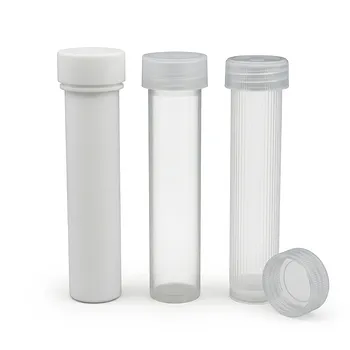
At KINTEK, we specialize in the absolute focus of high-performance PTFE and PFA materials to ensure your laboratory results are never compromised by contamination or incomplete digestion. Whether you are performing critical reference material verification or routine trace analysis, our comprehensive range of products—from everyday basic labware (beakers, crucibles, reagent bottles, and digestion tubes) to comprehensive fluid transfer components and advanced reaction apparatus like microwave digestion vessels and hydrothermal liners—is designed for maximum chemical resistance and purity.
Leveraging our end-to-end custom CNC fabrication, we deliver everything from complex non-standard machined parts to high-volume orders tailored to your specific research needs. Don’t let matrix interference or volatile loss undermine your data accuracy.
Ready to upgrade your lab setup? Contact us today to discuss your custom requirements and discover how KINTEK’s expert engineering can support your quest for analytical excellence.
References
- Sen Lin. A High-temperature and High-pressure Sintered Calcite Ceramic Reference Material CAL-D for in Situ Trace Element Microanalysis of Calcite by LA-ICP-MS. DOI: 10.46770/as.2025.093
This article is also based on technical information from Kintek Knowledge Base .
Related Products
- PTFE Lined High Pressure Digestion Vessel 50ml High Temperature Hydrothermal Synthesis Tank
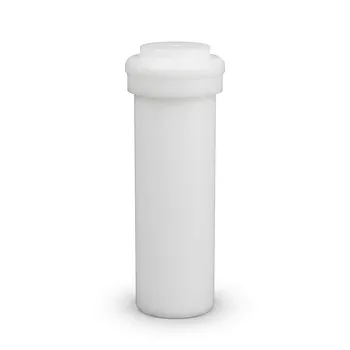
- 5ml High Pressure PTFE Digestion Vessel for Geological Mineral Analysis Corrosion Resistant Polytetrafluoroethylene TFM Digestion Inner Liner
- High Pressure PTFE Digestion Vessel Inner Cup Holder Custom Corrosion Resistant Low Background Teflon
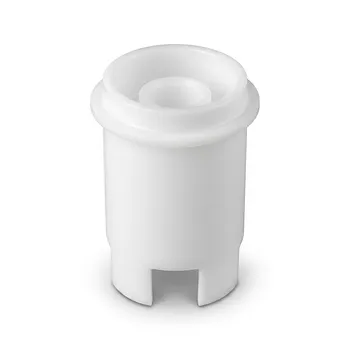
- High Purity TFM Microwave Digestion Vessels for Trace Analysis and Custom Sample Preparation Systems
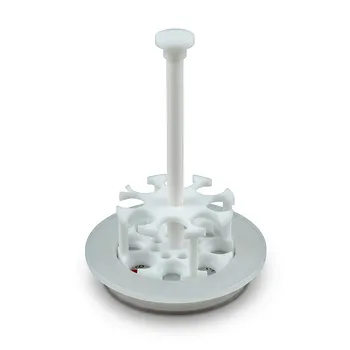
- High Performance TFM Microwave Digestion Vessel Rack 15 Position Customizable Sample Preparation Support
People Also Ask
- What are the benefits of using a PTFE-lined vessel for carbon-sulfur cathode treatment? Maximize Purity & Performance
- Why are PTFE-lined pressure digestion vessels required for the preparation of Ag/CeO2 catalysts? Purity & Performance
- What safety features are typically incorporated into high-pressure PTFE digestion vessel designs? Ensure Lab Safety
- What is the function of PTFE lined high-pressure vessels in g-C3N4 synthesis? Achieve High-Purity Material Growth
- Role of High-Pressure Digestion Tanks in Perovskite Synthesis: Achieve Superior Stability and Latent Heat