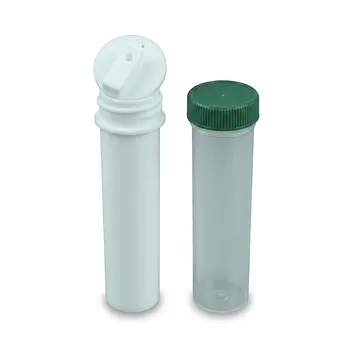
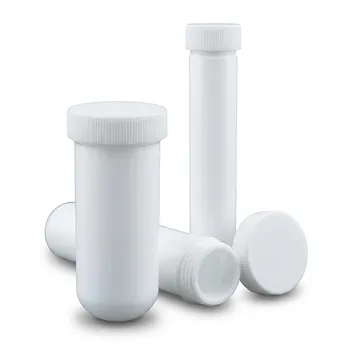
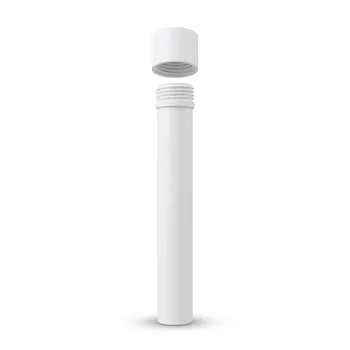
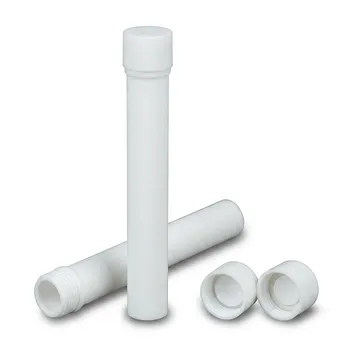
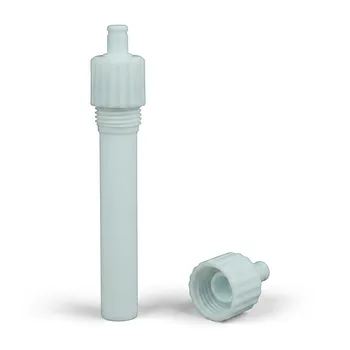
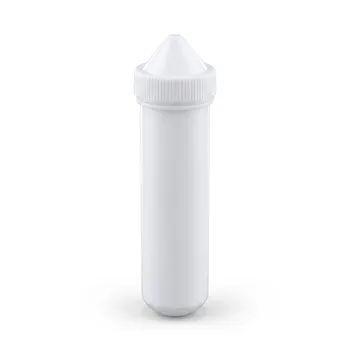
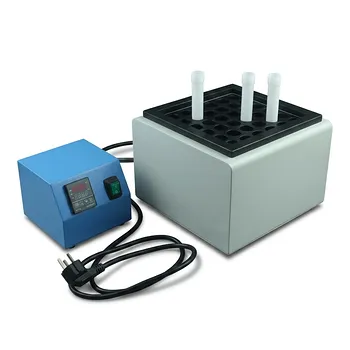
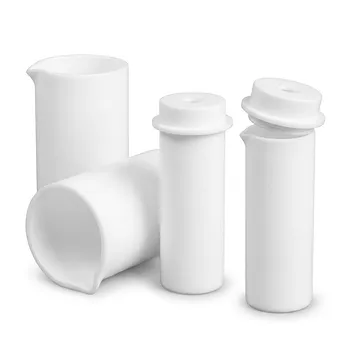
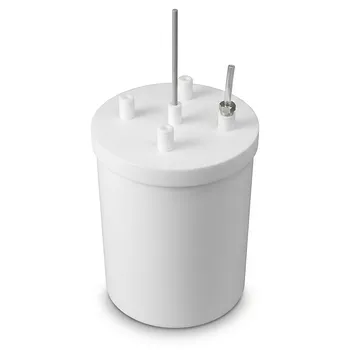
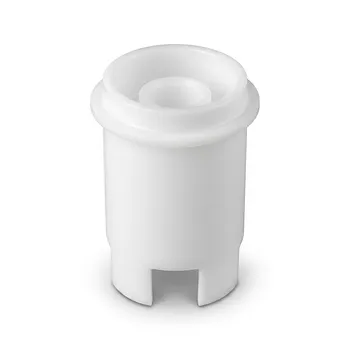
PTFE digestion vessels are engineered to withstand extreme thermal environments, supporting a continuous operating range from -200 °C to +260 °C. This broad window allows laboratory professionals to perform acid digestions at temperatures significantly higher than the atmospheric boiling points of common reagents, with short-term resistance extending toward its melting point of 327 °C.
PTFE (Polytetrafluoroethylene) provides a unique combination of cryogenic flexibility and high-heat stability, making it the industry standard for pressurized chemical decompositions. Its ability to maintain structural integrity while being chemically inert at high temperatures is its primary value in analytical chemistry.
Operating Temperature Thresholds
The Continuous Service Limit
For standard laboratory applications, PTFE is rated for continuous use at temperatures up to 260 °C (500 °F). Within this range, the material retains its shape, functionality, and exceptional chemical resistance without significant degradation.
Short-Term Thermal Tolerance
The material can briefly withstand temperatures approaching its melting point of approximately 327 °C. This buffer is critical for digestion procedures that require intense heat to break down complex matrices, though such temperatures should not be maintained for extended periods.
Cryogenic Performance
On the opposite end of the spectrum, PTFE remains functional in conditions as cold as -200 °C (-328 °F), with some variants rated down to -268 °C (-450 °F). Unlike many plastics that become brittle and shatter, PTFE retains a degree of flexibility even at these cryogenic extremes.
High-Temperature Stability and Safety
Resistance to Flammability
PTFE is inherently nonflammable and carries a UL 94 V-0 flame rating. This is a vital safety feature in laboratories where vessels are exposed to heating elements or open reaction environments.
Stability Under Chemical Stress
The thermal stability of PTFE allows it to remain chemically inert even when heated in the presence of aggressive mineral acids. This prevents the vessel material from leaching contaminants into the sample or reacting with the digestion media.
Molecular Integrity at Heat
Because of its strong carbon-fluorine bonds, the material does not lose its fundamental properties when cycled through high temperatures. It maintains a low coefficient of friction and high surface tension, ensuring easy cleaning after high-heat cycles.
Understanding the Trade-offs
Mechanical Strength and "Creep"
While PTFE can withstand 260 °C, its mechanical strength decreases as temperature rises. At higher temperatures, the material is more susceptible to deforming or "creeping" under pressure, which can affect the seal of the digestion vessel.
Impact of Fillers and Additives
The presence of fillers or energizers used to reinforce certain vessels can actually reduce the maximum operating temperature. It is essential to verify if your specific vessel is "virgin PTFE" or a reinforced composite, as the latter may have different thermal limits.
Pressure-Temperature Correlation
In closed-vessel digestion, the internal pressure generated by acids increases exponentially with temperature. Users must be aware that reaching the thermal limit of 260 °C often coincides with reaching the safety pressure limit of the vessel housing.
How to Apply This to Your Laboratory Workflow
Effective use of PTFE vessels requires balancing chemical necessity with material longevity.
- If your primary focus is routine acid digestion: Maintain operating temperatures between 180 °C and 220 °C to maximize the lifespan of the vessels and prevent deformation.
- If your primary focus is high-pressure decomposition: Use reinforced vessel jackets and monitor temperatures closely to ensure they do not exceed the 260 °C threshold where PTFE begins to soften.
- If your primary focus is cryogenic storage or processing: Utilize PTFE for its resistance to embrittlement, ensuring the material remains flexible enough to maintain a seal at sub-zero temperatures.
By respecting the thermal boundaries of PTFE, you ensure both the accuracy of your analytical results and the safety of your laboratory environment.
Summary Table:
| Property | Temperature / Limit | Laboratory Benefit |
|---|---|---|
| Continuous Service Range | -200 °C to +260 °C | Wide operating window for diverse chemical reactions. |
| Melting Point | Approx. 327 °C | Provides a safety buffer during extreme thermal events. |
| Cryogenic Performance | Down to -268 °C | Maintains flexibility without embrittlement in deep-freeze states. |
| Flammability Rating | UL 94 V-0 | Inherently nonflammable; critical for high-heat safety. |
| Chemical Stability | Stable at high heat | Remains inert and prevents sample leaching under acid stress. |
Maximize Your Lab’s Performance with KINTEK’s Fluoropolymer Expertise
Elevate your laboratory’s analytical precision with KINTEK’s specialized fluoropolymer solutions. As a dedicated manufacturer focusing exclusively on high-performance materials like PTFE and PFA, we provide the durability and chemical inertness your research demands.
From everyday basic labware like beakers, crucibles, and digestion tubes to high-purity trace analysis instruments and cleaning tanks, we cover your entire workflow. Our extensive catalog includes fluid transfer components (tubing, valves), sample prep tools (separatory funnels, pipettes), and general consumables (O-rings, seal tapes). For specialized research, we offer advanced apparatus such as custom electrochemical cells, battery testing fixtures, and microwave digestion vessels.
Why choose KINTEK?
- End-to-End Customization: Our advanced CNC fabrication delivers bespoke laboratory setups and complex non-standard parts tailored to your specific thermal requirements.
- High-Volume Reliability: Whether you need a single custom component or high-volume orders, we maintain strict quality standards.
- Material Focus: Absolute focus on high-performance fluoropolymers ensures maximum safety and longevity.
Ready to upgrade your laboratory setup? Contact us today to discuss your custom requirements or request a quote for our high-performance supplies!
Related Products
- 5ml High Pressure PTFE Digestion Vessel for Geological Mineral Analysis Corrosion Resistant Polytetrafluoroethylene TFM Digestion Inner Liner
- PTFE Lined High Pressure Digestion Vessel 50ml High Temperature Hydrothermal Synthesis Tank
- Custom 100ml PTFE Digestion Tube for Heavy Metal Trace Analysis and High Temperature Acid Digestion
- Corrosion Resistant PTFE Digestion Bottle Solid Liquid Reaction Vessel High Purity Trace Analysis Mineral Labware
- Custom High Purity PTFE Microwave Digestion Vessels and Graphite Block Compatible Acid Evaporation Tanks for Trace Metal Analysis
People Also Ask
- What safety features are typically incorporated into high-pressure PTFE digestion vessel designs? Ensure Lab Safety
- What is the function of high-pressure PTFE digestion vessels in mineral analysis? Optimize Sample Mineralization
- Why is a PTFE liner utilized in V2O5 synthesis? Ensure Chemical Purity and Corrosion Resistance
- What is the primary function of a PTFE liner? Key Benefits for Purity and Safety in Hydrothermal Synthesis
- What is the role of a PTFE liner in Bi2O3–TiO2 synthesis? Ensure High Purity and Controlled Crystal Growth