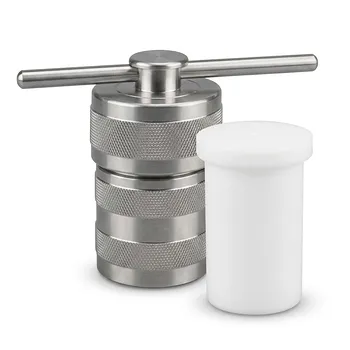
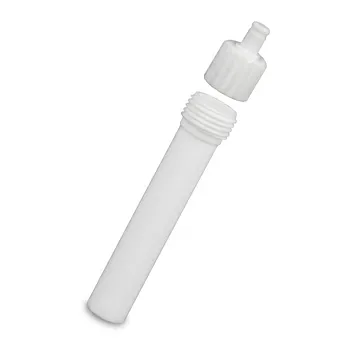
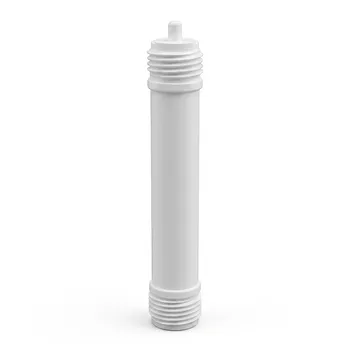
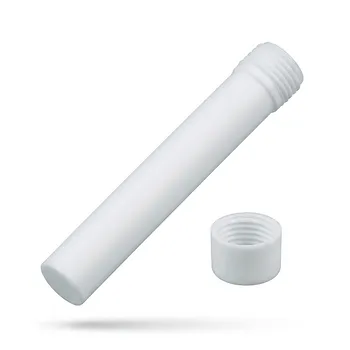
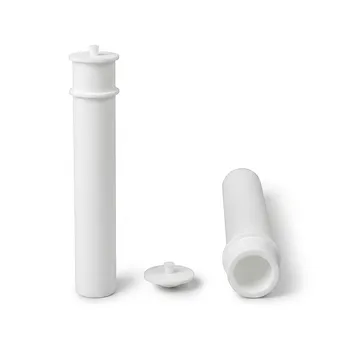
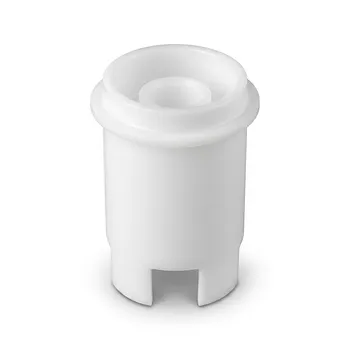
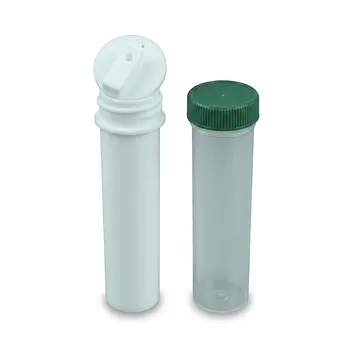
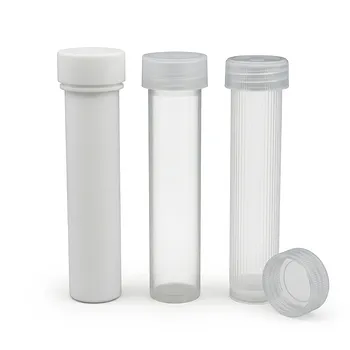
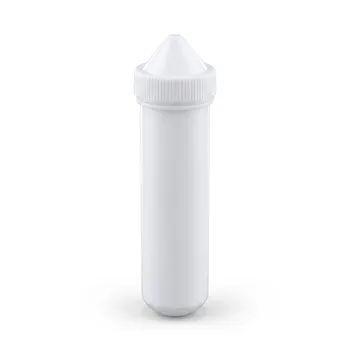
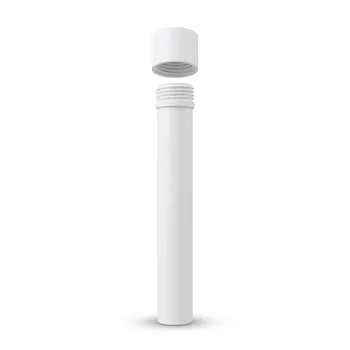
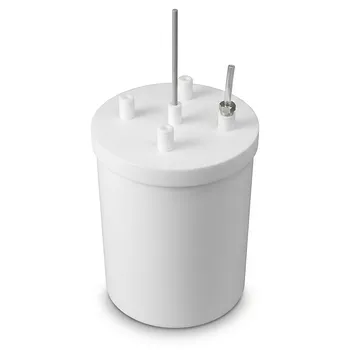
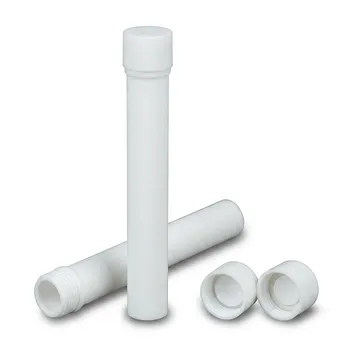
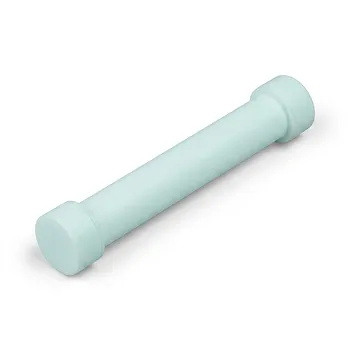
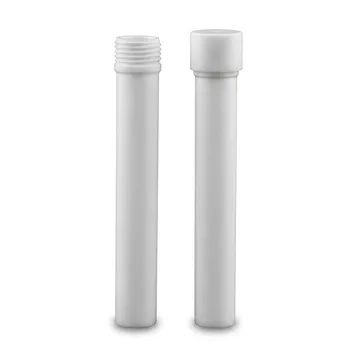
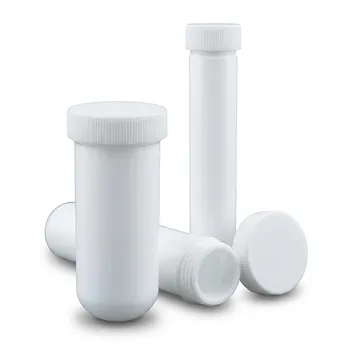
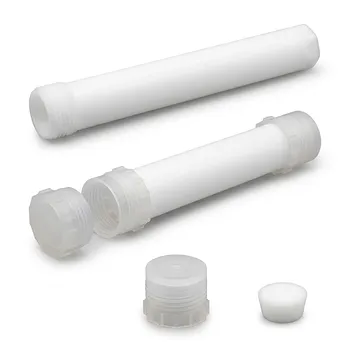
The PTFE liner serves as the fundamental containment barrier and chemical shield during hydrothermal synthesis. It acts as an inert reaction vessel that provides a stable, closed environment resistant to strong acids, strong bases, and high temperatures. By isolating the reaction media, it simultaneously protects the outer stainless steel jacket from corrosion and prevents metal impurities from contaminating the synthesized materials.
The primary function of a PTFE liner is to provide a chemically inert and non-stick reaction space that protects the structural integrity of the high-pressure vessel while ensuring the high purity of synthesized nanomaterials.
Protecting Structural Integrity and Safety
Chemical Corrosion Resistance
PTFE (Polytetrafluoroethylene) is virtually impervious to the aggressive reagents typically used in digestion, such as concentrated nitric or hydrochloric acid. This barrier prevents these chemicals from reaching and eroding the stainless steel outer reactor shell.
Prevention of Structural Erosion
Without the liner, the high-pressure environment would accelerate metal corrosion, leading to pitting and weakening of the autoclave. The liner acts as a critical safeguard, maintaining the safety and longevity of the pressure vessel.
Pressure Containment Support
While the steel jacket provides the mechanical strength to hold pressure, the PTFE liner ensures that the internal pressure is generated within a controlled, sealed volume. This allows for the successful dissolution and recrystallization of precursors.
Ensuring Material Purity and Recovery
Preventing Metal Ion Interference
In nanomaterial synthesis, even trace amounts of iron or chromium from the vessel walls can alter crystal growth. The liner isolates the reaction medium from the metal walls, ensuring the final product remains free from metal impurity interference.
Non-Stick Surface Properties
PTFE’s naturally low surface energy prevents synthesized micro- and nano-powders from adhering to the container walls. This facilitates the efficient recovery of the sample and simplifies the post-experimental cleaning process.
Chemical Inertness
Because PTFE is chemically inactive, it does not participate in the reaction or catalyze unwanted side reactions. This creates a clean reaction environment essential for the preparation of high-purity crystals with uniform morphology.
Understanding the Trade-offs and Limitations
Temperature Ceilings
Standard PTFE liners are typically limited to an operational range of 200°C to 220°C. Exceeding these temperatures can cause the liner to soften, deform, or release toxic vapors.
Thermal Expansion and "Creep"
PTFE expands significantly more than the stainless steel jacket when heated. If the reactor is heated or cooled too rapidly, the liner may undergo permanent deformation (creep), which can lead to sealing failures in future experiments.
Pressure Sensitivity
While the liner is supported by the steel shell, it is susceptible to mechanical stress. Overfilling the liner can lead to internal pressure spikes that might rupture the PTFE, causing the corrosive media to attack the metal jacket directly.
How to Apply This to Your Research
Depending on your experimental parameters, your approach to using a PTFE liner should vary to ensure both safety and data integrity.
- If your primary focus is synthesizing high-purity nanomaterials: Ensure you use a high-purity, virgin PTFE liner and implement a rigorous cleaning protocol (acid washing) between uses to prevent cross-contamination.
- If your primary focus is working at temperatures above 220°C: Avoid standard PTFE and utilize PPL (Polyphenylene polymer) liners or specialized metallic alloys to prevent liner failure and safety hazards.
- If your primary focus is maximizing equipment lifespan: Always adhere to a slow heating and cooling ramp (typically 5°C/min) to allow the PTFE liner and the stainless steel jacket to expand and contract harmoniously.
Choosing the right liner material and respecting its physical limits is the most effective way to ensure consistent, high-quality hydrothermal synthesis results.
Summary Table:
| Feature | Primary Function | Research Benefit |
|---|---|---|
| Chemical Resistance | Protects steel jacket from corrosive acids/bases | Extends vessel life and ensures operator safety |
| Material Purity | Prevents metal ion leaching from vessel walls | Ensures high-purity crystals and nanomaterials |
| Non-Stick Surface | Minimizes sample adhesion to walls | Improves sample recovery and simplifies cleaning |
| Thermal Stability | Operates safely up to 200°C–220°C | Enables consistent hydrothermal reaction environments |
| Custom Fabrication | Precision fit for digestion vessels | Prevents pressure leaks and liner deformation (creep) |
Upgrade Your Lab with High-Performance Fluoropolymer Solutions
Maximize the precision and safety of your hydrothermal synthesis with KINTEK’s premium fluoropolymer expertise. Whether you need everyday basic labware like beakers, crucibles, and reagent bottles, or specialized high-purity trace analysis instruments, we deliver unmatched quality in PTFE and PFA materials.
From comprehensive fluid transfer components (tubing, valves) and sample prep tools (filters, pipettes) to advanced reaction apparatus like custom electrochemical cells and microwave digestion vessels, KINTEK manufactures virtually every laboratory supply you can imagine.
Why partner with KINTEK?
- End-to-End Customization: Our advanced CNC fabrication handles everything from complex non-standard machined parts to high-volume bespoke setups.
- Material Focus: We maintain an exclusive focus on high-performance fluoropolymers to ensure chemical inertness and durability.
- Precision Engineering: Get products designed to withstand the most demanding lab environments.
Ready to enhance your research efficiency? Contact us today to discuss your standard or custom laboratory needs!
References
- Elhoucine Elmaataouy, Mouad Dahbi. Effect of Fluorine Doping on the Electrochemistry and Structural Stability of Single‐Particle LiNiO<sub>2</sub>. DOI: 10.1002/cssc.202500300
This article is also based on technical information from Kintek Knowledge Base .
Related Products
- 5ml High Pressure PTFE Digestion Vessel for Geological Mineral Analysis Corrosion Resistant Polytetrafluoroethylene TFM Digestion Inner Liner
- PTFE Lined High Pressure Digestion Vessel 50ml High Temperature Hydrothermal Synthesis Tank
- High Purity PTFE Microwave Digestion Vessel Replacement Liner for Acid Sample Preparation and Trace Analysis
- High Purity PTFE Microwave Digestion Vessel for Soil and Food Analysis Acid Resistant Fluoropolymer Sample Preparation Liners
- High Purity TFM Microwave Digestion Vessels PTFE Acid Evaporation Liners Domestic GT-400 Equivalent Laboratory Reaction Containers
People Also Ask
- What safety features are typically incorporated into high-pressure PTFE digestion vessel designs? Ensure Lab Safety
- Why is a PTFE liner utilized in V2O5 synthesis? Ensure Chemical Purity and Corrosion Resistance
- What is the role of a PTFE liner in Bi2O3–TiO2 synthesis? Ensure High Purity and Controlled Crystal Growth
- What are the benefits of using a PTFE-lined vessel for carbon-sulfur cathode treatment? Maximize Purity & Performance
- What fundamental chemical property makes PTFE uniquely suited for high-purity trace analysis labware and digestion vessels? The key is its strong carbon-fluorine bonds