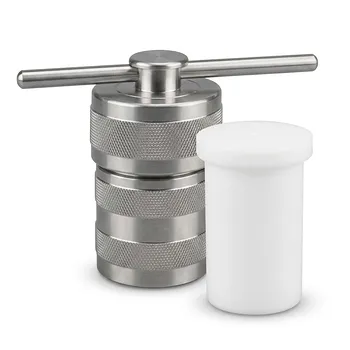
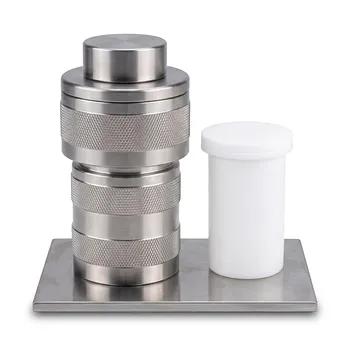
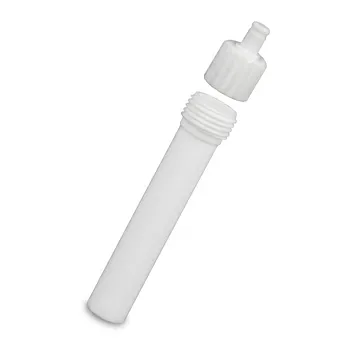
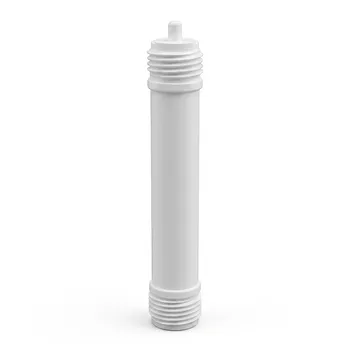
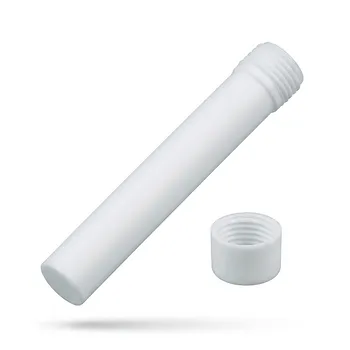
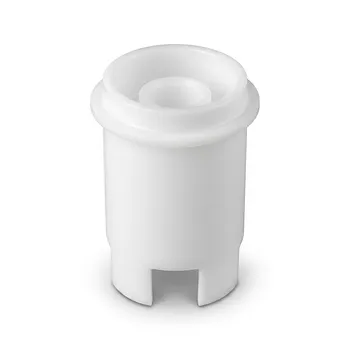
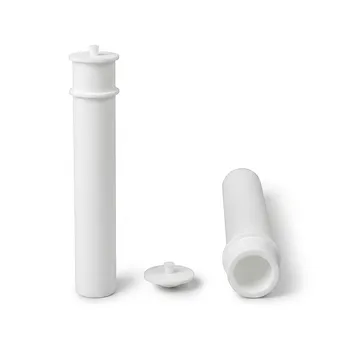
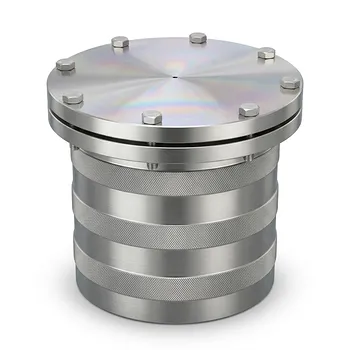
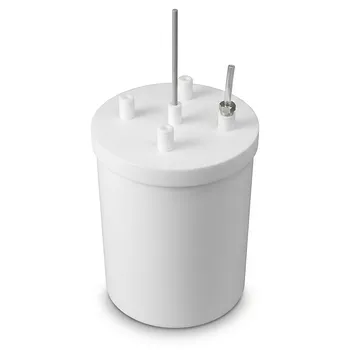
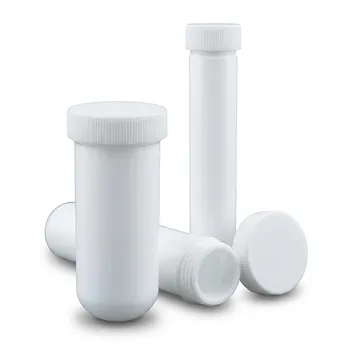
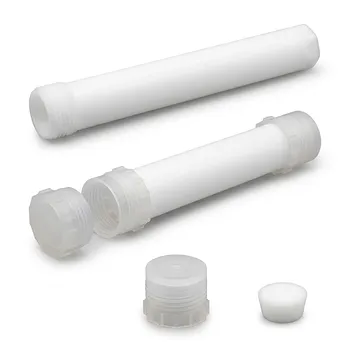
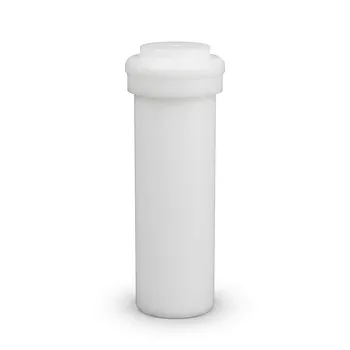
The PTFE high-pressure digestion vessel liner is the fundamental barrier that ensures the chemical purity and structural integrity of Bi2O3–TiO2 nanocomposites during synthesis. It provides a chemically inert, sealed environment that withstands temperatures up to 180°C and the resulting autogenous pressure. This isolation prevents the corrosive precursor solution from reacting with the metal vessel, ensuring that the final nanocomposite is free from metallic impurities and possesses a uniform crystalline structure.
Core Takeaway: In hydrothermal synthesis, the PTFE liner transforms a standard pressure vessel into a specialized reactor by providing a non-reactive, high-temperature-stable environment. This ensures that the chemical energy is focused entirely on the nucleation and growth of high-purity nanoparticles rather than corroding the equipment.
Isolation and Chemical Inertness
Preventing Metallic Contamination
The primary role of the PTFE liner is to isolate the Bi2O3–TiO2 precursor solution from the stainless steel walls of the autoclave. Without this barrier, metallic ions from the reactor shell could leach into the solution, acting as dopants that fundamentally alter the optoelectronic properties of the nanocomposite.
Resistance to Corrosive Precursors
Hydrothermal synthesis often involves strong acids or bases to maintain the necessary pH for Bi2O3 and TiO2 precipitation. Polytetrafluoroethylene (PTFE) is virtually immune to chemical attack from these reagents, providing a stable reaction space where the chemistry remains controlled and predictable.
Facilitating the Controlled Reaction Environment
Managing High-Pressure Autogenous Conditions
As the reaction temperature rises toward 180°C, the aqueous solution generates significant internal (autogenous) pressure. The PTFE liner, housed within a high-strength outer jacket, ensures a closed system where the precursor undergoes a complete solvothermal reaction without loss of solvent or reagents.
Promoting Uniform Crystal Growth
By providing a smooth, inert surface, the liner minimizes heterogeneous nucleation on the vessel walls. This encourages the uniform nucleation and crystal growth of the Bi2O3–TiO2 nanoparticles within the bulk solution, leading to a more consistent morphology and size distribution in the final material.
Operational Efficiency and Equipment Longevity
Protecting the Stainless Steel Shell
The outer jacket of a digestion vessel provides the mechanical strength to resist pressure but is vulnerable to chemical erosion. The PTFE liner acts as a sacrificial yet durable shield, preventing the "pitting" or structural weakening of the expensive stainless steel components.
Non-Stick Surface for Product Recovery
Bi2O3–TiO2 nanoparticles can be difficult to collect if they adhere to the reactor walls. The non-stick properties of PTFE facilitate nearly 100% product recovery and simplify the cleaning process, preventing cross-contamination between experimental batches.
Understanding the Trade-offs and Limitations
Temperature Constraints
While PTFE is exceptionally stable, it has a functional ceiling (typically 180°C to 220°C depending on the grade). Exceeding these temperatures can lead to the "creep" or deformation of the liner, which may cause the seal to fail or the liner to become permanently wedged inside the metal jacket.
Pressure Sensitivity and "Memory"
PTFE is a semi-crystalline polymer that can experience mechanical deformation under extreme pressure. Over time, liners may exhibit "memory" effects where they lose their original shape, necessitating regular inspection of the sealing rim to ensure the autoclave remains leak-proof during synthesis.
How to Apply This to Your Synthesis
When utilizing PTFE liners for the production of Bi2O3–TiO2 or similar nanocomposites, your approach should be dictated by your specific experimental requirements:
- If your primary focus is material purity: Always use high-purity, virgin PTFE liners and implement a rigorous "acid washing" protocol between runs to remove trace bismuth or titanium residues.
- If your primary focus is morphological control: Strictly adhere to the 180°C limit to ensure the liner maintains a perfect seal, as even minor pressure leaks can disrupt the growth kinetics of the nanoparticles.
- If your primary focus is equipment longevity: Never use the liner without its supporting stainless steel jacket, and ensure the liner is completely dry on the outside to prevent "steam pockets" from collapsing the PTFE wall during heating.
By maintaining the integrity of the PTFE environment, you ensure that the resulting Bi2O3–TiO2 nanocomposites meet the rigorous standards required for advanced technical applications.
Summary Table:
| Feature | Role in Synthesis | Key Benefit |
|---|---|---|
| Chemical Inertness | Prevents leaching from metal vessel | Eliminates metallic contamination |
| Non-Stick Surface | Minimizes heterogeneous nucleation | Ensures uniform nanoparticle growth |
| Pressure Resistance | Maintains a sealed autogenous system | Predictable solvothermal reactions |
| Thermal Stability | Operates safely up to 180°C-220°C | Enables high-energy crystalline formation |
Achieve Unmatched Purity in Your Research with KINTEK
Elevate your material synthesis with KINTEK’s specialized fluoropolymer solutions. From high-purity PTFE hydrothermal synthesis liners and microwave digestion vessels to a full range of PFA labware (beakers, reagent bottles, and digestion tubes), we provide the chemically inert environment your experiments demand.
Our expertise extends from everyday consumables like stirring bars and seal tapes to advanced custom-machined CNC parts, electrochemical cells, and fluid transfer components. Whether you require standard labware or bespoke setups for complex reactions, KINTEK delivers high-performance materials tailored to your specific needs. Contact our experts today to discover how our absolute focus on high-performance fluoropolymers can enhance your lab's precision and efficiency.
References
- Víctor Ruiz Santoyo, Ma. Concepción Arenas‐Arrocena. Photocatalytic removal of synthetic dyes using Bi2O3–TiO2 nanocomposites obtained by simple hydrothermal route. DOI: 10.1007/s11051-024-06207-9
This article is also based on technical information from Kintek Knowledge Base .
Related Products
- 5ml High Pressure PTFE Digestion Vessel for Geological Mineral Analysis Corrosion Resistant Polytetrafluoroethylene TFM Digestion Inner Liner
- PTFE Lined High Pressure Digestion Vessel 50ml High Temperature Hydrothermal Synthesis Tank
- High Purity PTFE Microwave Digestion Vessel Replacement Liner for Acid Sample Preparation and Trace Analysis
- High Purity PTFE Microwave Digestion Vessel for Soil and Food Analysis Acid Resistant Fluoropolymer Sample Preparation Liners
- High Purity TFM Microwave Digestion Vessels PTFE Acid Evaporation Liners Domestic GT-400 Equivalent Laboratory Reaction Containers
People Also Ask
- What safety features are typically incorporated into high-pressure PTFE digestion vessel designs? Ensure Lab Safety
- Why is a PTFE liner utilized in V2O5 synthesis? Ensure Chemical Purity and Corrosion Resistance
- What is the primary function of a PTFE liner? Key Benefits for Purity and Safety in Hydrothermal Synthesis
- What are the benefits of using a PTFE-lined vessel for carbon-sulfur cathode treatment? Maximize Purity & Performance
- What fundamental chemical property makes PTFE uniquely suited for high-purity trace analysis labware and digestion vessels? The key is its strong carbon-fluorine bonds