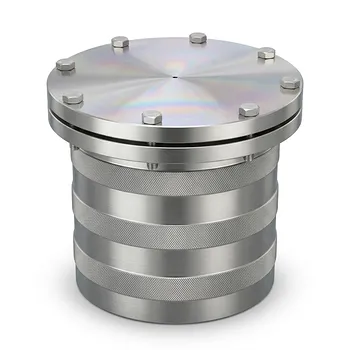
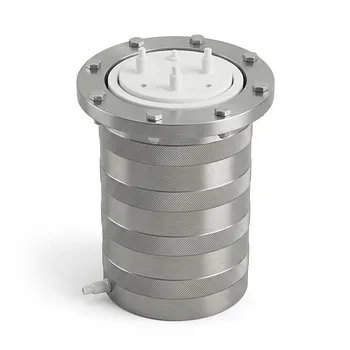
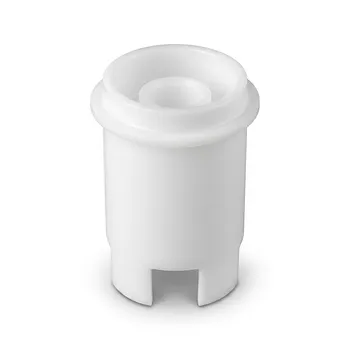
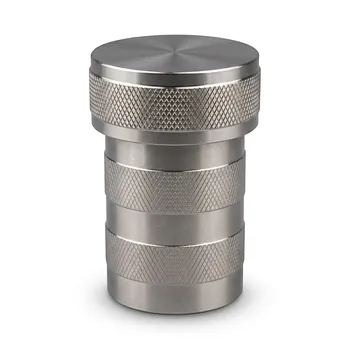
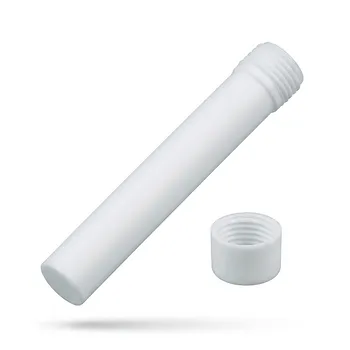
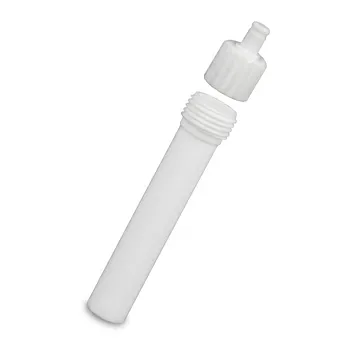
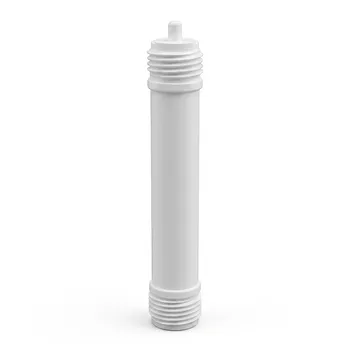
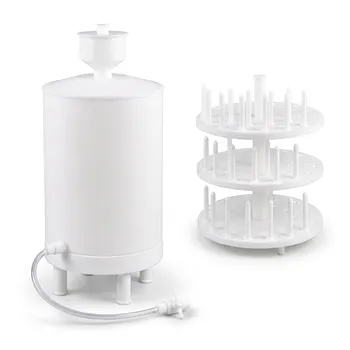
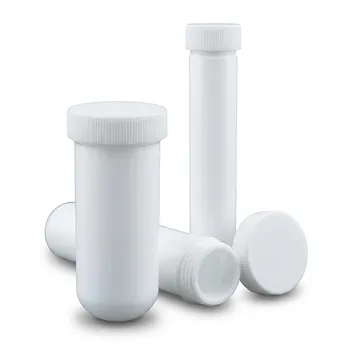
PTFE-lined high-pressure autoclaves are essential because they create the extreme thermochemical conditions required for metal oxide crystallization while protecting the integrity of the nanocomposite. Specifically, they provide the sealed environment necessary for autogenous pressure to drive the nucleation of binary metal oxides (BMO) onto the reduced graphene oxide (rGO) surface, all while maintaining absolute chemical purity.
The core necessity of this setup lies in its ability to facilitate "soft chemistry" routes under high-pressure conditions. By isolating corrosive precursors from the stainless steel reactor, the PTFE liner ensures that BMO-rGO nanocomposites achieve high crystallinity and precise heterojunctions without metallic contamination.
The Role of High Pressure in Nanocomposite Synthesis
Driving Nucleation and Recrystallization
The high-pressure environment inside an autoclave allows for the dissolution and subsequent nucleation of metal oxide precursors that would otherwise remain insoluble. This pressure is critical for the recrystallization of metal oxides directly onto the graphene sheets, ensuring a robust physical bond.
Facilitating Conformal Deposition
Internal pressure promotes the conformal deposition of nanosheets and particles onto the carbon framework. This ensures that the binary metal oxides are securely anchored to the rGO surfaces, which is vital for the stability and performance of the resulting nanocomposite.
Enhancing Crystalline Development
The sealed hydrothermal environment generates autogenous pressure as temperatures rise, often between 120°C and 220°C. This pressure lowers the energy barrier for crystal growth, leading to a more highly crystalline catalytic phase compared to open-air methods.
The Protective Necessity of the PTFE Liner
Resistance to Corrosive Precursors
Synthesis of BMO-rGO often involves strong acids, bases, or oxidizing agents that would rapidly corrode a standard stainless steel reactor. The PTFE liner acts as an exceptional chemical barrier, resisting attack from reagents like 1 M NaOH or hydrogen sulfide generated during the reaction.
Preventing Metallic Contamination
If the reaction media were to touch the autoclave’s steel shell, metal ions (like Fe, Ni, or Cr) would leach into the sample. The PTFE liner ensures material purity by preventing these impurities from interfering with the specific catalytic or electronic properties of the BMO-rGO composite.
Optimizing Morphology and Recovery
The non-stick properties of PTFE prevent nanomaterials from adhering to the vessel walls during the growth process. This facilitates the complete recovery of the product and ensures that the intended morphology and heterojunction structures remain intact.
Understanding the Technical Trade-offs
Temperature Limitations
While PTFE is chemically robust, it has a clear thermal ceiling, typically around 250°C. Exceeding these temperatures can lead to the deformation of the liner (creep) or the release of toxic fluorinated vapors, which risks both the experiment and the equipment.
Thermal Expansion Disparity
PTFE has a higher coefficient of thermal expansion than the stainless steel shell surrounding it. If the autoclave is heated or cooled too rapidly, the liner can warp or crack, potentially allowing corrosive fluids to reach the outer metal body.
Pressure Safety Margins
Because the pressure is autogenous (generated by the heating of the solvent), the filling ratio of the liner is critical. Overfilling the PTFE liner can lead to extreme pressure spikes that exceed the safety rating of the autoclave's burst disk or threaded cap.
Applying This to Your Synthesis Goals
Strategic Recommendations for Implementation
- If your primary focus is high purity: Always use a fresh or rigorously acid-washed PTFE liner to ensure no cross-contamination from previous synthesis runs affects the BMO-rGO electronic structure.
- If your primary focus is crystalline morphology: Optimize the filling ratio (typically 60-80%) to ensure sufficient autogenous pressure is generated to drive the growth of specific BMO crystal facets on the rGO.
- If your primary focus is large-scale yield: Ensure the autoclave heating rate is gradual to account for the slow thermal conductivity of the PTFE liner, ensuring uniform temperature distribution throughout the reaction volume.
The PTFE-lined autoclave remains the gold standard for BMO-rGO synthesis because it masterfully balances the violent physical forces of high-pressure chemistry with the delicate requirement for chemical inertness.
Summary Table:
| Key Feature | Function in BMO-rGO Synthesis | Benefit to Nanocomposite |
|---|---|---|
| PTFE Liner | Chemical isolation from steel shell | Prevents metallic contamination and leaching |
| Sealed Design | Generates autogenous pressure | Drives nucleation and promotes crystallinity |
| Corrosion Resistance | Withstands strong acids/bases | Enables "soft chemistry" under harsh conditions |
| Non-stick Surface | Easy material detachment | Ensures full product recovery and intact morphology |
Precision Fluoropolymer Solutions for Your Lab
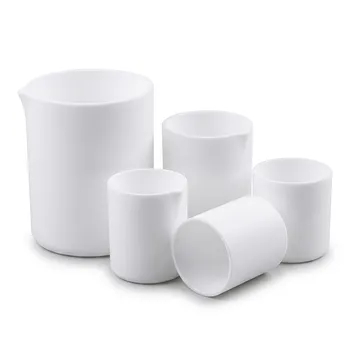
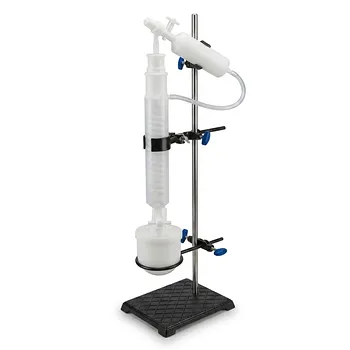
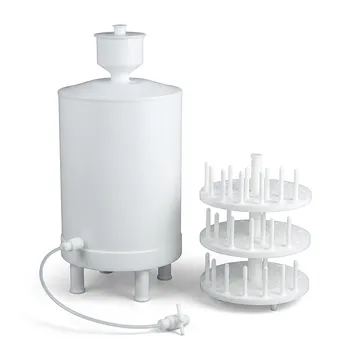
Maximize the success of your BMO-rGO synthesis with KINTEK’s industry-leading PTFE and PFA laboratory supplies. From everyday basic labware (beakers, measuring cylinders, crucibles, dishes, reagent/wash bottles, centrifuge and digestion tubes) and high-purity trace analysis instruments to comprehensive fluid transfer components (tubing, fittings, valves) and sample prep tools (filters, pipettes, tweezers, spatulas), we provide the chemically inert environment your experiments demand.
Our expertise extends to advanced reaction apparatus, including hydrothermal synthesis liners, microwave digestion vessels, microchannel reactors, and custom electrochemical cells. Backed by end-to-end custom CNC fabrication, KINTEK is equipped to deliver everything from complex non-standard machined parts to high-volume orders, maintaining an absolute focus on high-performance fluoropolymer materials.
Ready to elevate your lab’s performance? Contact KINTEK today for custom solutions!
References
- Kenya Kandwal, Jasmina Lozanović Šajić. Critical review on the derivative of graphene with binary metal oxide-based nanocomposites for high-performance supercapacitor electrodes. DOI: 10.1515/mgmc-2023-0027
This article is also based on technical information from Kintek Knowledge Base .
Related Products
- PTFE Lined High Pressure Digestion Vessel 50ml High Temperature Hydrothermal Synthesis Tank
- Custom TFM Reaction Vessel with Stainless Steel Jacket and PTFE Inner Cup for High Corrosion Resistance
- High Pressure Custom TFM Reactor Stainless Steel Outer Vessel PTFE Inner Cup for Corrosive Synthesis
- High Pressure PTFE Digestion Vessel Inner Cup Holder Custom Corrosion Resistant Low Background Teflon
- High Temperature Corrosion Resistant Hydrothermal Synthesis Reactor with TFM Inner Liner and Straight Cylinder Design
People Also Ask
- What are the benefits of using a PTFE-lined vessel for carbon-sulfur cathode treatment? Maximize Purity & Performance
- Why are PTFE-lined pressure digestion vessels required for the preparation of Ag/CeO2 catalysts? Purity & Performance
- What is the function of high-pressure PTFE digestion vessels in mineral analysis? Optimize Sample Mineralization
- What safety features are typically incorporated into high-pressure PTFE digestion vessel designs? Ensure Lab Safety
- What is the function of PTFE lined high-pressure vessels in g-C3N4 synthesis? Achieve High-Purity Material Growth