Microwave-assisted hydrothermal synthesis represents a paradigm shift in material science, offering a method to produce hydroxyapatite with superior crystallinity and tailored morphology in a fraction of the time required by traditional methods. By utilizing volumetric heating, this technology overcomes the thermal gradients inherent in conventional conduction-based systems, leading to faster nucleation and significantly lower energy consumption.
The core advantage of microwave-assisted synthesis lies in its ability to deliver instantaneous, uniform energy directly to the reaction medium. This facilitates precise control over the physical properties of hydroxyapatite, such as porosity and particle size, while reducing reaction times from days to mere minutes or hours.
Superior Thermal Efficiency and Kinetics
The Power of Volumetric Heating
Unlike traditional hydrothermal methods that rely on heat conduction from the vessel walls to the precursor, microwave systems utilize direct molecular coupling. This results in volumetric heating, where the entire volume of the reaction medium reaches the target temperature simultaneously.
Rapid Nucleation and Growth
The high heating rates achieved through dipole polarization and conduction loss significantly accelerate the kinetics of hydroxyapatite formation. By providing energy directly to the reactant molecules, the system triggers rapid nucleation, ensuring that crystal growth begins uniformly throughout the solution.
Drastic Reduction in Synthesis Time
While conventional hydrothermal synthesis can take several hours or even days to complete, microwave-assisted systems can achieve the same results in minutes. This efficiency is driven by the rapid temperature increases that quickly reach the optimal range for hydroxyapatite, typically between 150 °C and 210 °C.
Precision Control of Material Properties
Regulation of Crystallinity and Porosity
The ability to accurately control reaction temperatures under relatively mild conditions allows researchers to fine-tune the crystallinity and porosity of the final product. This level of precision is difficult to achieve with traditional heating, where thermal lags often lead to inconsistent material qualities.
Prevention of Particle Agglomeration
Because the heating is uniform and the reaction time is short, the system effectively prevents the overgrowth and agglomeration of nanoparticles. This results in hydroxyapatite with a narrow size distribution and a higher specific surface area, which is critical for biomedical applications.
Morphology and Purity
Microwave radiation facilitates the production of high-quality nanocrystals with controlled morphology. Additionally, the rapid reaction kinetics often suppress the formation of unwanted side products, ensuring a higher level of chemical purity in the synthesized hydroxyapatite.
Understanding the Trade-offs and Limitations
Equipment Complexity and Cost
While the performance benefits are clear, microwave-assisted reactors are generally more technically complex and expensive than standard autoclaves. The need for specialized pressure vessels that are transparent to microwave radiation adds to the initial capital investment.
Penetration Depth and Scaling
One of the primary challenges in scaling this technology is the limited penetration depth of microwaves in highly polar or concentrated solutions. As the volume of the reaction increases, ensuring uniform energy distribution throughout a large-scale reactor becomes more difficult compared to lab-scale experiments.
Material Interaction Sensitivity
The efficiency of the process is highly dependent on the dielectric properties of the precursors and solvents. Changes in the chemical composition of the reaction mixture can significantly alter how energy is absorbed, requiring constant recalibration of power settings to maintain consistency.
How to Apply This to Your Synthesis Goals
Choosing the right synthesis method depends on your specific requirements for throughput, precision, and material characteristics.
- If your primary focus is rapid prototyping or high-throughput screening: Use microwave-assisted synthesis to reduce reaction cycles to minutes, allowing for the rapid iteration of experimental parameters.
- If your primary focus is precise morphological control for biomedical use: Leverage the uniform heating of microwave systems to produce non-agglomerated nanoparticles with high specific surface areas.
- If your primary focus is industrial-scale, bulk production with low capital cost: Traditional hydrothermal methods may still be more viable until the challenges of microwave penetration depth in large volumes are fully addressed.
By moving beyond simple conduction and embracing molecular-level energy transfer, microwave-assisted systems provide an unparalleled level of control over the synthesis of advanced bioceramics.
Summary Table:
| Feature | Microwave-Assisted Hydrothermal | Traditional Hydrothermal |
|---|---|---|
| Heating Mechanism | Volumetric (Direct Molecular Coupling) | Conduction (Vessel to Precursor) |
| Reaction Time | Minutes to Hours | Hours to Days |
| Nucleation Rate | Rapid and Uniform | Slower and Gradient-Dependent |
| Particle Control | High Precision (Narrow Distribution) | Moderate (Higher Agglomeration Risk) |
| Energy Efficiency | High (Direct Energy Transfer) | Lower (Heat Loss via Walls) |
| Purity Level | Superior (Minimal Side Products) | Standard |
Elevate Your Synthesis Precision with KINTEK
Unlock the full potential of your material research with high-performance laboratory solutions from KINTEK. Whether you are performing microwave-assisted synthesis or complex hydrothermal reactions, we provide the specialized tools required for success.
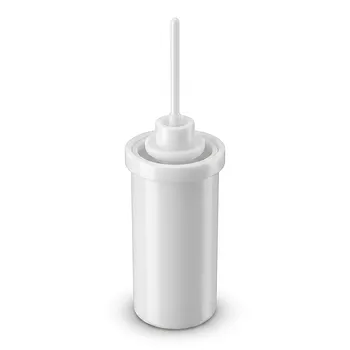
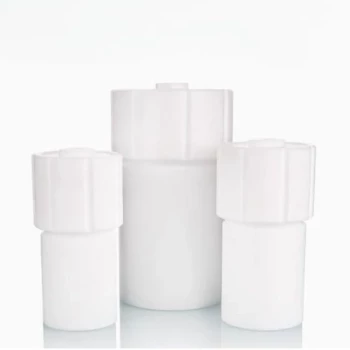
From essential PTFE and PFA labware (beakers, crucibles, and reagent bottles) to advanced hydrothermal synthesis liners, microwave digestion vessels, and custom-machined reactors, KINTEK is your absolute partner in fluoropolymer excellence. Our end-to-end custom CNC fabrication ensures we can deliver everything from high-volume consumables like O-rings and stirring bars to complex, non-standard bespoke setups tailored to your specific research needs.
Ready to optimize your lab's performance? Contact us today to discuss your requirements and discover how our expertise in high-performance fluoropolymers can bring value to your projects.
References
- Wipada Chaiyachet, Ekkachai Kanchanatip. Microwave-assisted hydrothermal synthesis of hydroxyapatite from fermented fish by-product for removal of lead from contaminated water. DOI: 10.1186/s43088-025-00704-z
This article is also based on technical information from Kintek Knowledge Base .
Related Products
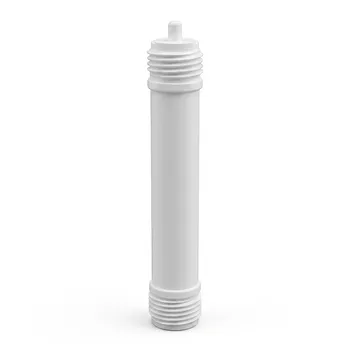
- High Temperature Corrosion Resistant Hydrothermal Synthesis Reactor with TFM Inner Liner and Straight Cylinder Design
- Custom TFM Microwave Digestion Vessels for ICP-OES Analysis High Purity Fluoropolymer Sample Preparation Labware
- High Purity TFM Microwave Digestion Vessels PTFE Acid Evaporation Liners Domestic GT-400 Equivalent Laboratory Reaction Containers
- PTFE Lined High Pressure Digestion Vessel 50ml High Temperature Hydrothermal Synthesis Tank
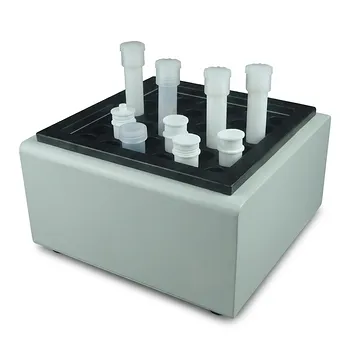
- High Performance TFM Microwave Digestion Vessel Rack 15 Position Customizable Sample Preparation Support
People Also Ask
- What is the role of a corrosion-resistant reactor in the synthesis of lignin-based carbon dots? Ensure Maximum Purity
- What are the technical advantages of using hydrothermal synthesis reactors for advanced electronic & optical nanomaterials?
- How does a hydrothermal synthesis reactor facilitate the production of crystalline materials with tailored morphologies? Precision Crystal Growth
- Why is the sealing reliability of a hydrothermal synthesis reactor critical for 24-hour cycles? Ensure Nano-Precision
- What role do hydrothermal synthesis reactors play in CQD preparation? Achieve High-Purity Nanomaterial Synthesis