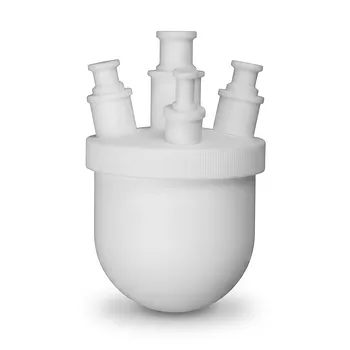
Hydrothermal synthesis reactors facilitate tailored morphology by manipulating the solubility and crystallization kinetics of precursors within a sealed, high-pressure environment. This "pressure cooker" effect allows for the dissolution of substances that are insoluble at ambient conditions, followed by controlled precipitation. By precisely tuning variables like temperature gradients and chemical additives, the reactor guides crystal growth into specific shapes such as nanowires, nanosheets, or hollow spheres.
The hydrothermal reactor acts as a precision-controlled environment that leverages the unique properties of high-temperature aqueous solutions to engineer materials. Its ability to maintain stable thermal and chemical conditions allows for the synthesis of crystals with superior purity and highly specific geometries that are impossible to achieve via traditional methods.
The Mechanism of Controlled Crystal Growth
Exploiting Superheated Water Properties
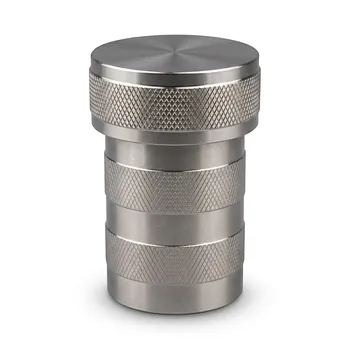
A hydrothermal reactor, often called a digestion bomb, operates at temperatures above 100 °C and pressures exceeding 1 atmosphere. Under these conditions, the solvent properties of water change significantly, increasing its ability to dissolve precursors.
This creates a high-concentration medium where the solubility of nutrients can be precisely managed. As the system reaches equilibrium, it enables the formation of crystalline phases that would otherwise be unstable or decompose at their melting points.
The Role of Temperature Gradients
In advanced crystal growth, the reactor maintains a temperature gradient along its axis. The nutrient material is placed in the hotter lower zone where it dissolves into the solution.
Density differences then drive convective currents, transporting the saturated solution to the cooler upper zone. Here, the solubility decreases, leading to supersaturation and the controlled deposition of material onto a seed crystal or substrate.
Precision Through Kinetic Control
Morphology—the physical shape of the crystal—is dictated by the speed and direction of growth. By adjusting reaction time and temperature, researchers can favor growth along specific crystallographic axes.
This kinetic control allows the reactor to produce uniform nanoparticles, nanorods, or nanowires. The high-pressure environment ensures that these structures grow with high purity and low defect density.
Chemical Influences on Morphology
The Use of Mineralizers
Mineralizers like NaOH or KOH are often added to the reaction mixture to further enhance solubility. These agents act as catalysts that help break down complex precursors into reactive species.
By adjusting the pH levels using these mineralizers, the reactor can shift the surface energy of the growing crystals. This shift is what ultimately determines whether a material forms a flat nanosheet or a 3D hollow sphere.
Protecting the Reaction Environment
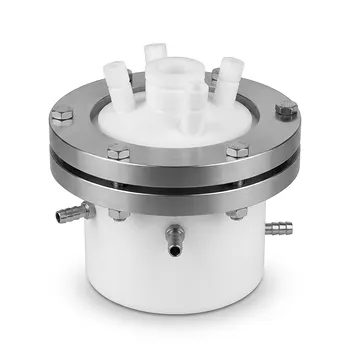
To maintain high purity, the reactor uses an internal lining made of PTFE or PPL. This liner acts as an inert barrier between the corrosive reaction medium and the stainless-steel vessel.
This isolation prevents oxidation or contamination from the metal shell. Without this barrier, the high-temperature fluids would cause stress-corrosion cracking and introduce impurities into the crystalline lattice.
Understanding the Trade-offs and Limitations
Thermal and Pressure Limits
While hydrothermal synthesis is powerful, it is limited by the physical properties of the reactor linings. PTFE linings are common but have specific temperature ceilings; exceeding these can lead to liner deformation or toxic off-gassing.
Safety and Monitoring Challenges
Because the reactor is a sealed batch pressure vessel, real-time monitoring of the reaction is difficult. The high internal pressures also present significant safety risks if the equipment is not maintained or if the reaction produces unexpected gas volume.
Complexity of Parameter Optimization
Tailoring morphology requires finding a "Goldilocks zone" of parameters. Small deviations in pH or cooling rates can result in completely different crystal shapes, making the process highly sensitive and sometimes difficult to replicate without strict protocol adherence.
How to Apply This to Your Project
Selecting the Right Approach
To achieve specific material goals, you must align your reactor parameters with your desired morphology.
- If your primary focus is high-quality single crystals: Maintain a strict temperature gradient to utilize convective transport and seed crystal deposition.
- If your primary focus is specialized nanomaterials (nanowires/sheets): Prioritize the use of specific mineralizers and pH adjustments to control surface energy and growth direction.
- If your primary focus is working with corrosive precursors: Ensure you select a PPL or PTFE liner that is chemically compatible and rated for your target temperature.
By mastering the interplay between pressure, temperature, and chemical modifiers, the hydrothermal reactor becomes a definitive tool for engineering advanced materials with near-atomic precision.
Summary Table:
| Parameter | Influence on Morphology | Key Benefit |
|---|---|---|
| Temperature Gradient | Drives convection and deposition | Growth of high-quality single crystals |
| Mineralizers (pH) | Shifts surface energy | Controls shape (e.g., nanosheets vs. spheres) |
| High Pressure | Increases precursor solubility | Enables synthesis of otherwise unstable phases |
| PTFE/PPL Liners | Prevents metal contamination | Ensures high purity and chemical resistance |
Elevate your material science research with KINTEK’s high-performance fluoropolymer solutions. From specialized hydrothermal synthesis liners and microwave digestion vessels to custom CNC-fabricated PTFE and PFA components, we provide the precision tools required for tailored crystal growth. Our expertise extends from everyday labware like beakers, crucibles, and reagent bottles to complex fluid transfer systems and advanced reaction apparatus. Whether you need bespoke laboratory setups or high-volume consumables, KINTEK delivers end-to-end fabrication focused on absolute material performance. Contact KINTEK today to discover how our high-performance fluoropolymer manufacturing can optimize your laboratory processes.
Related Products
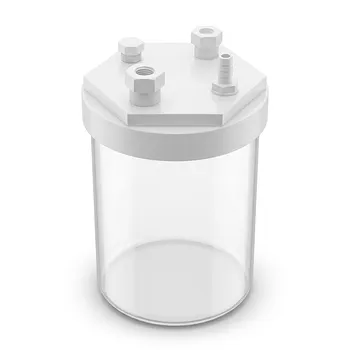
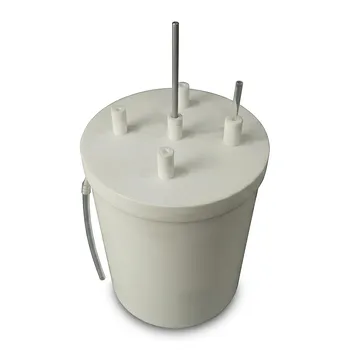
- High Temperature Corrosion Resistant Hydrothermal Synthesis Reactor with TFM Inner Liner and Straight Cylinder Design
- PTFE Lined High Pressure Digestion Vessel 50ml High Temperature Hydrothermal Synthesis Tank
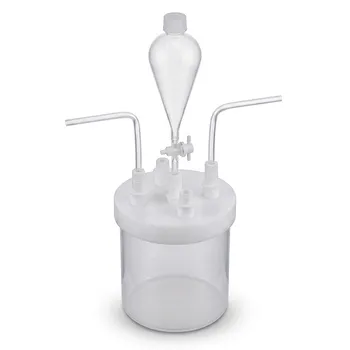
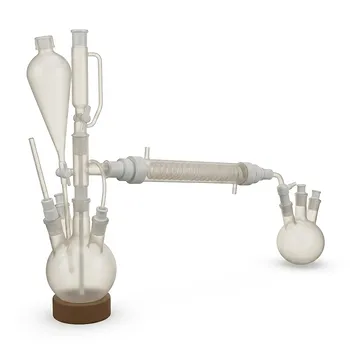
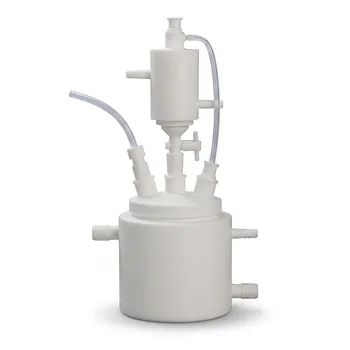
- Custom PTFE Reaction System with Hose Barb Fittings Corrosion Resistant High Sealing 2L 4L Lab Reactor with Separatory Funnel
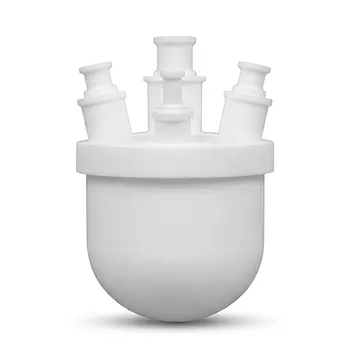
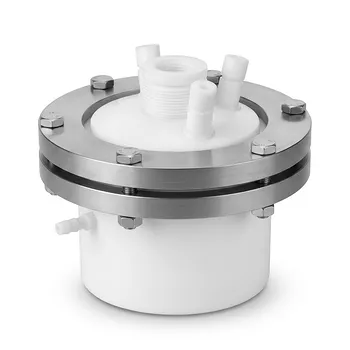
- High Pressure Custom TFM Reactor Stainless Steel Outer Vessel PTFE Inner Cup for Corrosive Synthesis
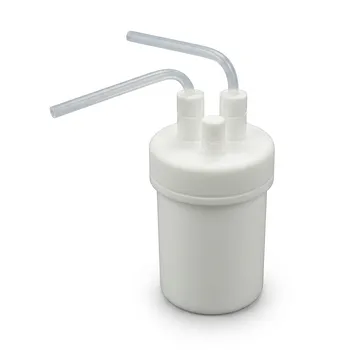
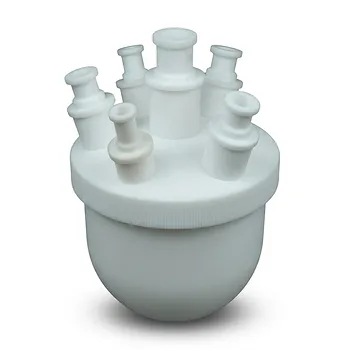
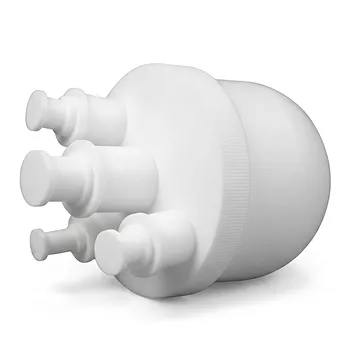
- High Purity PFA Reaction Vessel for Biopharmaceutical Synthesis and Corrosive Chemical Fluid Handling with Customizable Tube Fittings
People Also Ask
- What is the role of a corrosion-resistant reactor in the synthesis of lignin-based carbon dots? Ensure Maximum Purity
- What are the technical advantages of using hydrothermal synthesis reactors for advanced electronic & optical nanomaterials?
- Why is the sealing reliability of a hydrothermal synthesis reactor critical for 24-hour cycles? Ensure Nano-Precision
- What role do hydrothermal synthesis reactors play in CQD preparation? Achieve High-Purity Nanomaterial Synthesis
- What is a hydrothermal synthesis reactor and what are its primary functions in material research? Master Nano-Synthesis