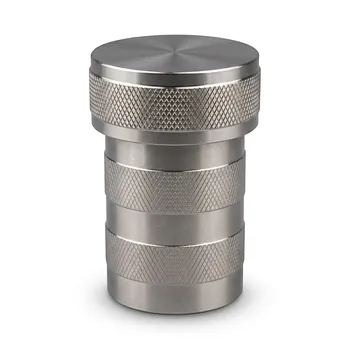
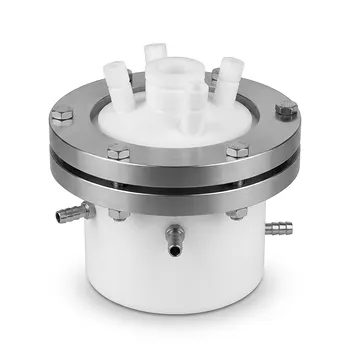
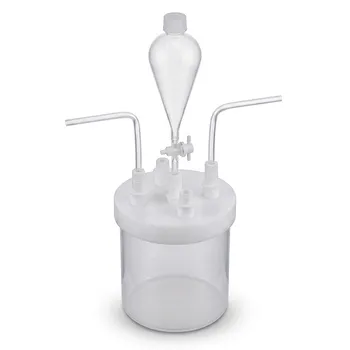
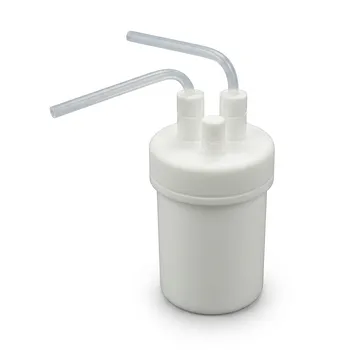
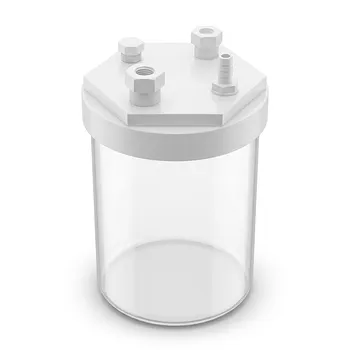
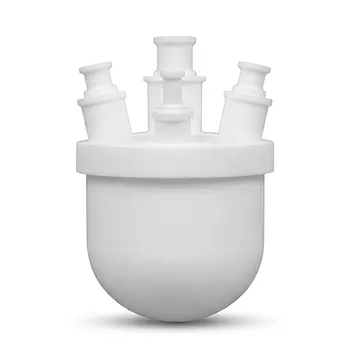
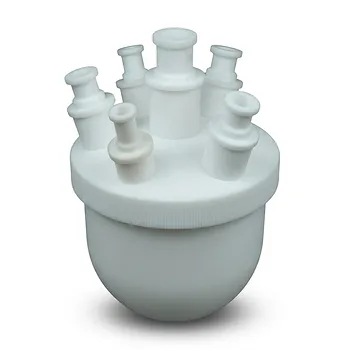
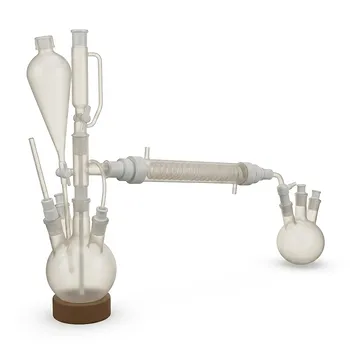
The hydrothermal synthesis reactor is a specialized, sealed pressure vessel designed to facilitate chemical reactions in aqueous solutions at temperatures and pressures far exceeding ambient conditions. Specifically, it enables the synthesis of materials by exploiting the unique solvent properties of water above 100°C and 1 atmosphere, making it indispensable for creating single crystals, nanomaterials, and complex structures like metal-organic frameworks (MOFs).
Core Takeaway: By creating a controlled, high-pressure environment, these reactors allow researchers to dissolve and recombine precursors that are otherwise insoluble, providing precise control over the morphology, crystallinity, and phase of the resulting materials.
The Architecture of a Hydrothermal Reactor
The Dual-Layer Construction
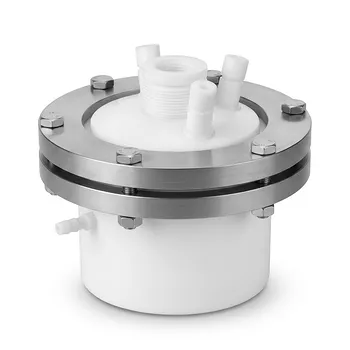
A standard reactor, often called a digestion bomb or autoclave, consists of two primary components. The outer shell is made of high-strength stainless steel to withstand extreme autogenous pressures, while the inner chamber is a removable liner.
The Role of Inert Linings
The inner liner is typically made from Polytetrafluoroethylene (PTFE) or Polyphenylene Polymer (PPL). These materials act as a chemical barrier, preventing corrosive reaction media from attacking the steel shell and ensuring the final product remains free from metallic contamination.
Temperature and Pressure Thresholds
While the stainless steel provides structural integrity, the liner dictates the operating limit. PTFE liners are generally rated up to 200°C, while PPL liners can handle temperatures closer to 280°C or 300°C, facilitating a wider range of chemical transformations.
Primary Functions in Material Research
Synthesis of Nanomaterials and Metal Oxides
Reactors are used to produce metal oxides (like Cobalt Oxide) and hydroxides with specific flower-like or cubic morphologies. The high-pressure environment guides the growth direction of nanocrystals, which is critical for increasing surface area in catalytic applications.
Growth of Single Crystals and MOFs
Hydrothermal conditions significantly enhance the solubility of precursors, such as iron sources and organic ligands. This allows for the slow, controlled self-assembly of complex structures like Metal-Organic Frameworks (MIL-100) and large single crystals that cannot be grown at atmospheric pressure.
Hydrothermal Carbonization (HTC)
Researchers use these vessels to process biomass or plastic waste into nano-scale carbon precursors. The subcritical water environment facilitates dehydration and decarboxylation at relatively low temperatures, resulting in uniform carbon spheres with specific functional groups.
Understanding the Trade-offs and Limitations
Thermal Degradation of Liners
One of the most common pitfalls is exceeding the thermal limit of the liner material. If a PTFE liner is heated beyond its stable range, it can soften or release vapors, potentially compromising the seal and contaminating the experiment.
Pressure Safety and Filling Ratios
Because the pressure inside the vessel is autogenous (generated by the expansion of the liquid), the "filling ratio" is critical. Overfilling a reactor can lead to a dangerous spike in pressure that exceeds the safety limits of the stainless steel bolts or the rupture disk.
Batch Processing Constraints
Hydrothermal synthesis is inherently a batch process, which can lead to variations between runs. Scaling up from a small lab-scale "bomb" to industrial production requires significant engineering to maintain uniform temperature gradients throughout the larger volume.
How to Apply This to Your Research
Selecting the right reactor configuration depends entirely on your target material and the chemical environment of your precursors.
- If your primary focus is basic nanomaterial synthesis (<200°C): Utilize a standard stainless steel autoclave with a PTFE liner for its excellent chemical resistance and cost-effectiveness.
- If your primary focus is high-temperature crystal growth (>250°C): Invest in PPL-lined reactors or specialized alloy vessels designed to maintain structural integrity at higher thermal thresholds.
- If your primary focus is synthesizing delicate MOFs: Ensure your reactor has a high-quality seal to maintain steady autogenous pressure, which is vital for achieving the high degree of crystallinity required.
By mastering the high-pressure environment of the hydrothermal reactor, researchers can unlock material phases and morphologies that are physically impossible to reach through traditional benchtop chemistry.
Summary Table:
| Feature/Component | Material & Limits | Primary Function in Research |
|---|---|---|
| Outer Shell | High-strength Stainless Steel | Provides structural integrity & contains autogenous pressure. |
| Inner Liner (PTFE) | Polytetrafluoroethylene (<200°C) | Chemical resistance for basic nanomaterial & oxide synthesis. |
| Inner Liner (PPL) | Polyphenylene Polymer (<300°C) | High-temperature stability for crystal growth & complex MOFs. |
| Key Applications | Nanomaterials, MOFs, HTC | Controls morphology, crystallinity, and phase of materials. |
| Safety Critical | Filling Ratio & Seal Quality | Prevents dangerous pressure spikes and metallic contamination. |
Elevate Your High-Pressure Research with KINTEK Precision
To achieve flawless results in hydrothermal synthesis, your equipment must withstand the most demanding chemical and thermal environments. KINTEK specializes in high-performance fluoropolymer solutions, offering an exhaustive range of laboratory supplies designed for superior chemical inertness and durability.
Whether you require standard PTFE or PPL liners, high-purity microwave digestion vessels, or custom-engineered reaction apparatus, we provide the critical components that power advanced material research. From everyday labware like beakers and reagent bottles to complex custom CNC-fabricated parts and fluid transfer components, KINTEK ensures your lab is equipped for excellence.
Why choose KINTEK?
- Expertise in Fluoropolymers: Absolute focus on PTFE, PFA, and high-performance materials.
- End-to-End Customization: Bespoke laboratory setups and precision-machined non-standard parts.
- Quality & Reliability: Designed to prevent contamination and maintain seal integrity under extreme conditions.
Ready to optimize your hydrothermal setups or source high-volume lab consumables?
Contact KINTEK Today to Discuss Your Project
Related Products
- High Temperature Corrosion Resistant Hydrothermal Synthesis Reactor with TFM Inner Liner and Straight Cylinder Design
- PTFE Lined High Pressure Digestion Vessel 50ml High Temperature Hydrothermal Synthesis Tank
- Custom PTFE Reaction System with Hose Barb Fittings Corrosion Resistant High Sealing 2L 4L Lab Reactor with Separatory Funnel
- High Pressure Custom TFM Reactor Stainless Steel Outer Vessel PTFE Inner Cup for Corrosive Synthesis
- High Purity PFA Reaction Vessel for Biopharmaceutical Synthesis and Corrosive Chemical Fluid Handling with Customizable Tube Fittings
People Also Ask
- What is the role of a corrosion-resistant reactor in the synthesis of lignin-based carbon dots? Ensure Maximum Purity
- What are the technical advantages of using hydrothermal synthesis reactors for advanced electronic & optical nanomaterials?
- How does a hydrothermal synthesis reactor facilitate the production of crystalline materials with tailored morphologies? Precision Crystal Growth
- Why is the sealing reliability of a hydrothermal synthesis reactor critical for 24-hour cycles? Ensure Nano-Precision
- What role do hydrothermal synthesis reactors play in CQD preparation? Achieve High-Purity Nanomaterial Synthesis