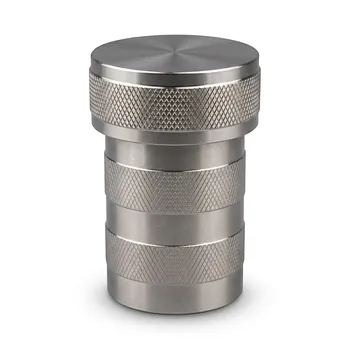
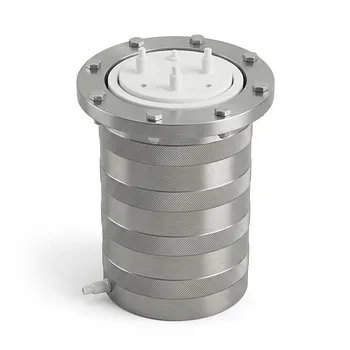
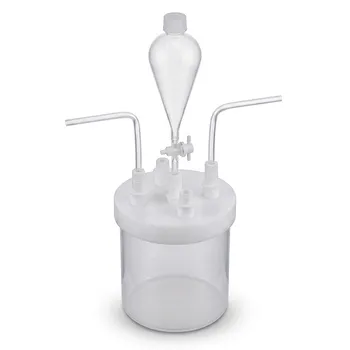
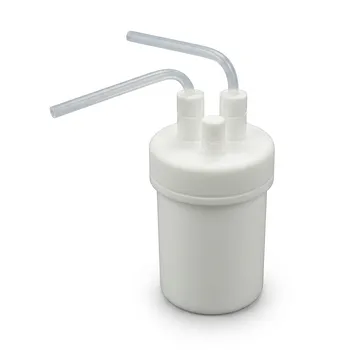
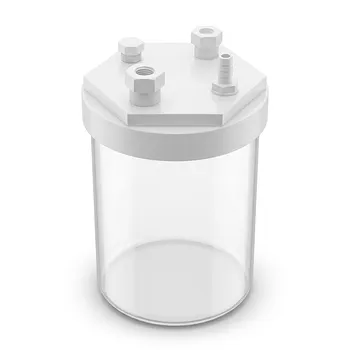
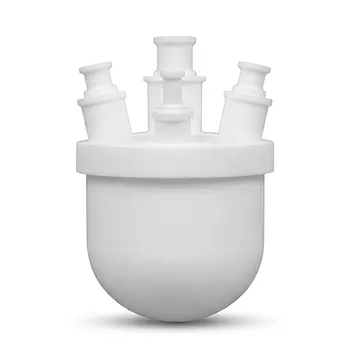
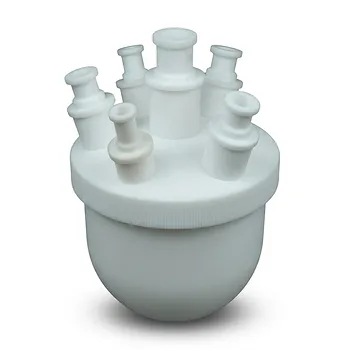
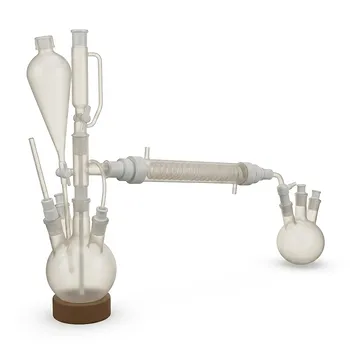
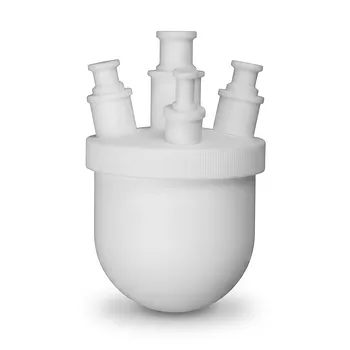
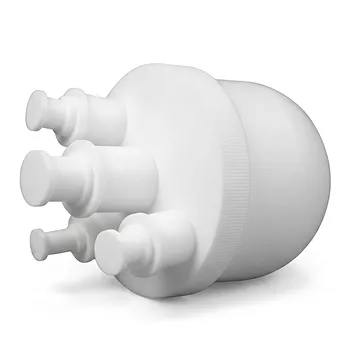
Hydrothermal synthesis reactors are the essential "pressure cookers" of the nanomaterials world, providing the sealed, high-temperature environment required to transform organic precursors into Carbon Quantum Dots (CQDs). By maintaining temperatures typically between 120°C and 200°C and generating internal pressure, these reactors facilitate the dehydration, polymerization, and carbonization of carbon sources like biomass or small organic molecules. This process results in the formation of nanoscale carbon structures characterized by a graphitized core and unique surface functional groups that enable fluorescence.
The hydrothermal reactor acts as a controlled chemical micro-environment that forces precursors through a specific path of pyrolysis and nucleation. Its primary role is to enable high-pressure reactions that ensure the structural integrity, high purity, and consistent fluorescence of the resulting carbon nanoparticles.
Orchestrating the "Bottom-Up" Synthesis
The preparation of CQDs is largely a "bottom-up" process where small molecules are built into larger, structured nanoparticles. The hydrothermal reactor provides the physical constraints necessary for these chemical transitions to occur simultaneously.
Facilitating High-Pressure Carbonization
Within the sealed reactor, precursors such as glucose, cellulose, or citric acid undergo pyrolysis and dehydration. The high-pressure atmosphere lowers the energy barrier for these reactions, allowing the carbon source to form a stable, graphitized core that would be difficult to achieve at atmospheric pressure.
Promoting Nucleation and Growth
The reactor environment enhances the solubility and reactivity of the solvent, which is critical for nucleation. As the precursors decompose, they reach a supersaturation point, triggering the birth of carbon nuclei that eventually grow into quantum-sized dots (typically under 10nm).
Enabling In-Situ Functionalization
Because the system is closed, volatile elements and gases are retained within the reaction liquid. This allows for surface passivation and functionalization, where groups like hydroxyl (-OH) or amino (-NH2) groups attach to the carbon core, giving the CQDs their specific solubility and sensing properties.
Protecting Chemical Purity and Integrity
Beyond providing heat and pressure, the design of the hydrothermal reactor—specifically the use of internal liners—is vital for the quality of the final nanomaterial.
The Critical Role of PTFE and PFA Liners
Most hydrothermal synthesis is performed within PTFE (polytetrafluoroethylene) or PFA liners inserted into a stainless steel autoclave. These fluoropolymers are chosen for their extreme chemical inertness, which allows them to withstand the strong acidic or alkaline catalysts often used in CQD preparation.
Preventing Metal Ion Contamination
If the reaction solution were to contact the steel walls of the reactor, it could cause corrosion and leach metal ions into the sample. The liner ensures a contaminant-free environment, which is essential for maintaining the high fluorescent purity and sensitivity of CQDs used in biological imaging or chemical sensing.
Enhancing Structural Crystallinity
The stable, uniform heating provided by the reactor body, combined with the pressurized environment, promotes high crystallinity. This structural integrity is what allows CQDs to exhibit "quantum size effects," where their optical properties are directly tied to their physical dimensions.
Understanding the Trade-offs
While hydrothermal reactors are the gold standard for CQD synthesis, they come with specific operational constraints that must be managed to ensure success and safety.
Batch Processing and Scalability
Hydrothermal synthesis is fundamentally a batch process, meaning production is limited by the volume of the reactor. This can lead to slight variations in particle size or surface chemistry between different synthesis runs, making large-scale industrial standardization a challenge.
Safety Risks of Over-Pressurization
Operating at high temperatures within a sealed vessel creates significant internal pressure. Users must strictly adhere to fill-level limits (usually 60-80% of the liner volume) to prevent explosive decompression or reactor failure due to excessive gas expansion.
Reaction Time vs. Particle Size
Finding the "sweet spot" in reaction time is difficult; shorter times may result in incomplete carbonization, while excessively long times can lead to particle aggregation. This requires precise control over the cooling phase to "quench" the reaction at the ideal moment of growth.
How to Apply This to Your Synthesis Goals
When selecting and using a hydrothermal reactor for CQD preparation, your approach should be dictated by your specific material requirements.
- If your primary focus is High Fluorescent Purity: Ensure the use of a high-purity PTFE liner to prevent any metal ion leaching that could quench fluorescence.
- If your primary focus is Nitrogen Doping: Use a sealed reactor with precursors like urea to ensure nitrogen atoms are effectively integrated into the carbon lattice under high pressure.
- If your primary focus is Biomass Conversion: Optimize the reactor temperature to at least 180°C-200°C to ensure the robust breakdown of complex structures like lignin or cellulose.
By mastering the high-pressure environment of the hydrothermal reactor, you can precisely tune the optical and chemical properties of Carbon Quantum Dots for advanced technological applications.
Summary Table:
| Process Phase | Reactor's Primary Function | Key Outcome for CQDs |
|---|---|---|
| Carbonization | Provides high-pressure/temp environment | Formation of a stable, graphitized core |
| Nucleation | Enhances solvent solubility/reactivity | Controlled growth of particles under 10nm |
| Functionalization | Maintains a closed, pressurized system | In-situ attachment of surface groups (-OH, -NH2) |
| Purity Control | Isolates sample with PTFE/PFA liners | Prevention of metal ion leaching & quenching |
| Crystallinity | Ensures uniform, stable heat distribution | Enhanced optical properties & quantum effects |
Elevate Your Nanomaterial Research with KINTEK
Precision in Carbon Quantum Dot synthesis demands a contaminant-free environment and reliable thermal performance. KINTEK specializes in high-performance fluoropolymer solutions designed to meet the rigorous standards of modern laboratories.
Whether you need everyday basic labware like PTFE beakers, crucibles, and reagent bottles, or specialized components for complex setups, we have you covered. Our expertise spans from high-purity trace analysis instruments and filtration tools to advanced hydrothermal synthesis liners, microwave digestion vessels, and custom-machined electrochemical cells.
Why choose KINTEK?
- Absolute Material Purity: We focus exclusively on high-performance PTFE and PFA to eliminate metal ion contamination.
- End-to-End Customization: Benefit from our custom CNC fabrication for non-standard machined parts and bespoke laboratory setups.
- Comprehensive Range: From O-rings and tubing to complex microchannel reactors, we provide every fluoropolymer component your lab requires.
Ready to optimize your synthesis workflow? Contact our experts today to discuss your custom requirements or high-volume orders!
References
- Manoj K. Mishra, Preeti Chahal. Green, Hybrid Synthesis and Characterization of Improved CQD with Antioxidant Properties for Biomedical Applications. DOI: 10.59670/ml.v20is13.6281
This article is also based on technical information from Kintek Knowledge Base .
Related Products
- High Temperature Corrosion Resistant Hydrothermal Synthesis Reactor with TFM Inner Liner and Straight Cylinder Design
- PTFE Lined High Pressure Digestion Vessel 50ml High Temperature Hydrothermal Synthesis Tank
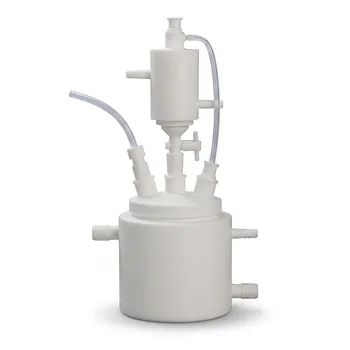
- Custom PTFE Reaction System with Hose Barb Fittings Corrosion Resistant High Sealing 2L 4L Lab Reactor with Separatory Funnel
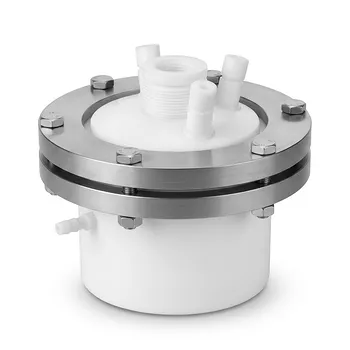
- High Pressure Custom TFM Reactor Stainless Steel Outer Vessel PTFE Inner Cup for Corrosive Synthesis
- High Purity PFA Reaction Vessel for Biopharmaceutical Synthesis and Corrosive Chemical Fluid Handling with Customizable Tube Fittings
People Also Ask
- What is the role of a corrosion-resistant reactor in the synthesis of lignin-based carbon dots? Ensure Maximum Purity
- What are the technical advantages of using hydrothermal synthesis reactors for advanced electronic & optical nanomaterials?
- How does a hydrothermal synthesis reactor facilitate the production of crystalline materials with tailored morphologies? Precision Crystal Growth
- Why is the sealing reliability of a hydrothermal synthesis reactor critical for 24-hour cycles? Ensure Nano-Precision
- What is a hydrothermal synthesis reactor and what are its primary functions in material research? Master Nano-Synthesis