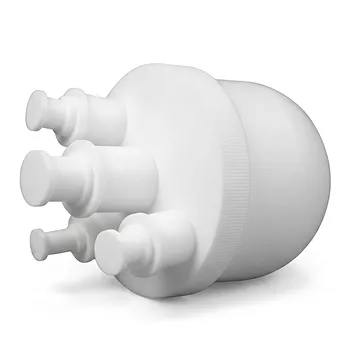
Hydrothermal synthesis reactors provide a critical alternative to melt-growth methods by utilizing high-pressure aqueous solutions to grow crystals below their melting points. This technique enables the production of high-quality crystals—such as quartz and emeralds—that are either unstable at high temperatures or decompose before they can melt. By operating at moderate temperatures with precise compositional control, these reactors achieve superior optical clarity and structural integrity compared to conventional methods like the Czochralski process.
Core Takeaway: Hydrothermal synthesis transcends the limitations of melt-growth by enabling the synthesis of temperature-sensitive materials with exceptional purity and low defect density. Its ability to maintain a controlled, closed-system environment makes it the definitive choice for producing high-performance synthetic gemstones and electronic-grade crystals.
Overcoming Thermal Limitations
Growing Phases Unstable at Melting Points
Many essential materials, including high-quality quartz for electronics and various synthetic gemstones, decompose or undergo unwanted phase transitions at their melting points. Hydrothermal reactors bypass this by growing crystals from a solution at temperatures significantly below the material's melting point.
Managing Materials with High Vapor Pressure
Conventional melt-growth often fails when a material has a high vapor pressure near its melting point, leading to the evaporation of critical components. The sealed, high-pressure environment of a hydrothermal reactor prevents this loss, ensuring the chemical stoichiometry of the crystal remains intact.
Reduction of Thermal Stress
Because the process operates at more moderate temperatures, the resulting crystals experience significantly less thermal stress during the cooling phase. This reduction in stress leads to a lower defect density and prevents the cracking or internal straining often seen in high-temperature melt processes.
Superior Crystal Quality and Precision
Enhanced Compositional Control
The use of a sealed environment allows for superior compositional control and high product purity. By minimizing external contamination and utilizing specific mineralizers like NaOH or KOH, technicians can precisely tune the growth environment to produce crystals with specific habits and properties.
Superior Optical and Physical Properties
Hydrothermal growth produces crystals with high optical quality and uniform particle size distribution. This is particularly vital for gemstones like synthetic emeralds, where clarity and color consistency are the primary metrics of value.
Precise Morphological Engineering
Beyond bulk crystals, these reactors allow for the growth of anisotropic structures and nanomaterials with specific exposed crystal facets. By adjusting parameters such as pH, temperature, and reaction time, researchers can produce specialized forms like nanowires, nanosheets, or hollow spheres.
The Mechanics of Hydrothermal Growth
The Temperature Gradient Method
Crystal growth within the reactor relies on a temperature gradient maintained along its axis. Nutrient material is placed in the hotter lower zone to dissolve, while convective currents transport the saturated solution to the cooler upper zone.
Supersaturation and Epitaxial Deposition
In the cooler region, the solubility of the nutrient decreases, leading to supersaturation. The material then undergoes epitaxial deposition onto a seed crystal, allowing for highly controlled growth over extended periods.
The Role of Autogenous Pressure
The reactor utilizes autogenous pressure—pressure generated by heating the sealed liquid—to facilitate the dissolution of precursors that are otherwise insoluble. This high-pressure environment is what allows water to act as a powerful solvent for refractory materials.
Understanding the Trade-offs
Complexity and Safety Requirements
The primary drawback of hydrothermal synthesis is the requirement for specialized pressure vessels (autoclaves) capable of withstanding extreme internal forces. Operating these systems requires rigorous safety protocols and expensive, corrosion-resistant equipment.
Observation and Growth Rates
Unlike melt-growth, where the crystal can often be observed as it is pulled from the melt, hydrothermal growth is a "black box" process occurring inside a sealed steel vessel. Furthermore, the growth rates are often slower than melt-growth, requiring days or weeks of continuous operation to produce large crystals.
Scaling and Batch Consistency
While batch processing is standard, it can lead to batch-to-batch variability. Advanced solutions like Continuous Flow Hydrothermal Synthesis (CFHS) are emerging to solve this, but they add significant technical complexity to the production line.
Making the Right Choice for Your Goal
How to Apply This to Your Project
Depending on your specific application, the advantages of hydrothermal synthesis may far outweigh the operational complexities.
- If your primary focus is electronic-grade quartz or piezoelectrics: Use hydrothermal synthesis to ensure the low defect density and phase purity required for stable frequency control.
- If your primary focus is high-value gemstone synthesis (e.g., emeralds): Prioritize this method to achieve the natural-looking growth patterns and superior optical clarity that melt-growth cannot replicate.
- If your primary focus is rapid prototyping of nanomaterials: Consider microwave-assisted hydrothermal reactors to achieve volumetric heating and significantly shorten reaction times.
- If your primary focus is industrial sustainability: Leverage the closed-system nature of hydrothermal reactors to minimize reagent loss and eliminate volatile organic emissions.
By matching the specific capabilities of hydrothermal reactors to the thermal requirements of your material, you can produce crystalline structures of unmatched quality and precision.
Summary Table:
| Feature | Hydrothermal Synthesis | Conventional Melt-Growth |
|---|---|---|
| Growth Temperature | Below melting point (Moderate) | At or above melting point (High) |
| Material Stability | Ideal for temperature-sensitive phases | Risk of decomposition/phase change |
| Thermal Stress | Low; minimal cracking or defects | High; significant internal strain |
| Vapor Pressure | Controlled in sealed environment | Component loss through evaporation |
| Purity & Clarity | Superior optical quality/homogeneity | Variable; higher risk of contamination |
| Growth Environment | Closed "Black Box" system | Often visible/open monitoring |
Optimize Your Advanced Material Synthesis with KINTEK
Precise crystal growth and gemstone synthesis demand materials that can withstand rigorous chemical environments without compromising purity. KINTEK specializes in high-performance fluoropolymer solutions designed to support your most sensitive laboratory workflows.
From everyday basic labware (beakers, crucibles, and reagent bottles) to high-purity trace analysis instruments and comprehensive fluid transfer components (tubing, valves, and fittings), we provide the infrastructure for success. Our expertise extends to advanced reaction apparatus, including PTFE and PFA liners for hydrothermal synthesis, microwave digestion vessels, and bespoke electrochemical cells.
Why choose KINTEK?
- End-to-End Customization: Our custom CNC fabrication delivers non-standard machined parts tailored to your specific reactor designs.
- Material Excellence: Absolute focus on high-performance PTFE and PFA for maximum chemical resistance.
- Scale & Reliability: We handle everything from bespoke laboratory setups to high-volume industrial orders.
Ready to enhance your lab’s efficiency and product quality? Contact KINTEK today to discuss your custom fluoropolymer needs!
Related Products
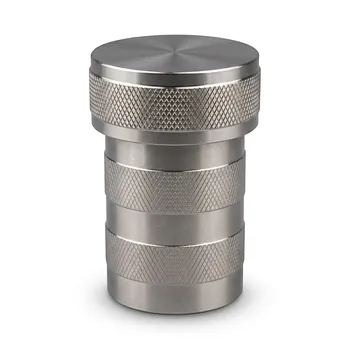
- High Temperature Corrosion Resistant Hydrothermal Synthesis Reactor with TFM Inner Liner and Straight Cylinder Design
- PTFE Lined High Pressure Digestion Vessel 50ml High Temperature Hydrothermal Synthesis Tank
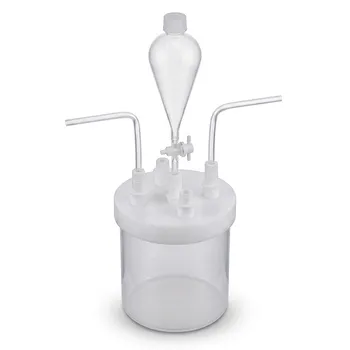
- Custom PTFE Reaction System with Hose Barb Fittings Corrosion Resistant High Sealing 2L 4L Lab Reactor with Separatory Funnel
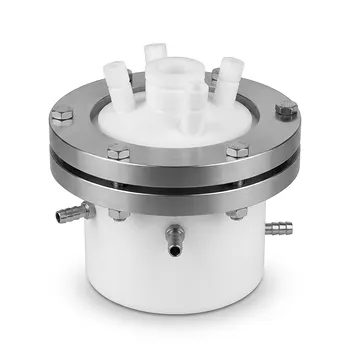
- High Pressure Custom TFM Reactor Stainless Steel Outer Vessel PTFE Inner Cup for Corrosive Synthesis
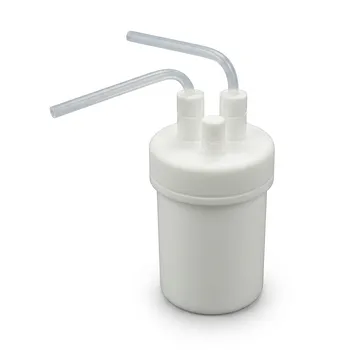
- High Purity PFA Reaction Vessel for Biopharmaceutical Synthesis and Corrosive Chemical Fluid Handling with Customizable Tube Fittings
People Also Ask
- What is the role of a corrosion-resistant reactor in the synthesis of lignin-based carbon dots? Ensure Maximum Purity
- What are the technical advantages of using hydrothermal synthesis reactors for advanced electronic & optical nanomaterials?
- How does a hydrothermal synthesis reactor facilitate the production of crystalline materials with tailored morphologies? Precision Crystal Growth
- Why is the sealing reliability of a hydrothermal synthesis reactor critical for 24-hour cycles? Ensure Nano-Precision
- What role do hydrothermal synthesis reactors play in CQD preparation? Achieve High-Purity Nanomaterial Synthesis