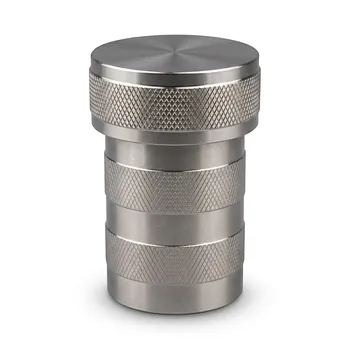
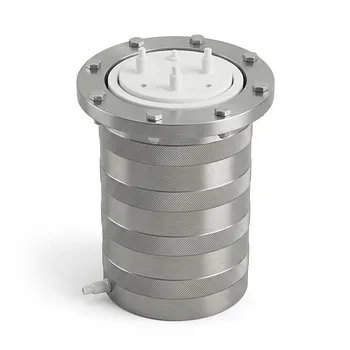
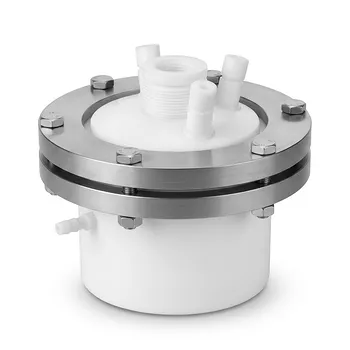
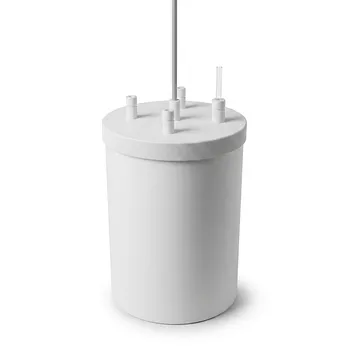
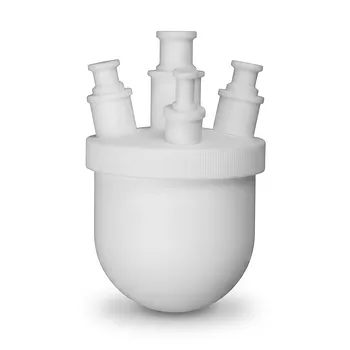
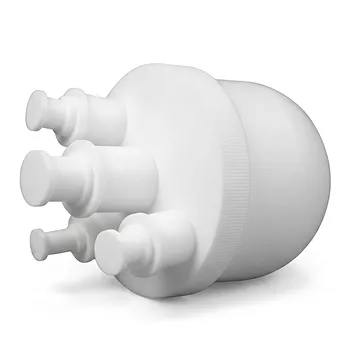
The standard hydrothermal synthesis reactor is built upon a dual-layer architecture designed to handle extreme pressure and chemical reactivity. It consists of a high-strength outer body, or pressure vessel, and an inner liner that serves as the reaction chamber. This "vessel-within-a-vessel" design ensures that the device can safely facilitate reactions in aqueous solutions at temperatures and pressures far exceeding the standard boiling point.
A standard hydrothermal reactor functions by isolating chemical precursors within an inert polymer liner, which is then encased in a heavy-duty stainless steel shell to withstand high autogenous pressures. This configuration protects the equipment from corrosion while ensuring the structural integrity of the high-pressure environment.
The Outer Pressure Vessel (The Structural Shell)
Material Composition and Strength
The outer body, often referred to as the jacket or shell, is fabricated from high-strength alloys such as stainless steel 304 or 316. These materials are chosen for their mechanical integrity and ability to resist deformation under intense stress.
Pressure Containment
This component provides the necessary structural support to withstand internal autogenous pressures that can range from 3 to 30 MPa (several hundred bars). The shell is designed as a sealed batch vessel, often called a "digestion bomb," to prevent any hazardous release of gas or liquid during the heating phase.
Sealing Mechanisms
The outer shell includes a robust lid and sealing system that must be tightened securely to maintain the high-pressure environment. This ensures that as the internal aqueous solution is heated, the resulting pressure facilitates unique solvent properties for nanomaterial synthesis and crystal growth.
The Inner Liner (The Chemical Barrier)
Material Selection: PTFE vs. PPL
The inner liner, or insert, is a removable vessel typically made of Polytetrafluoroethylene (PTFE) or Polyphenylene Polymer (PPL). PTFE is standard for many applications, while PPL is often utilized for higher temperature thresholds within the reactor's operating range.
Maintaining Chemical Purity
The primary function of the liner is to act as an inert reaction chamber. It prevents the reaction mixture from coming into contact with the metal outer shell, which eliminates the risk of metal contamination in the final synthesized product.
Corrosion Protection
By isolating corrosive chemicals within the polymer barrier, the liner protects the stainless steel outer body from degradation. This separation is critical for the longevity of the reactor, as many hydrothermal precursors can be highly aggressive toward metallic surfaces.
Understanding the Trade-offs and Limitations
Temperature and Pressure Constraints
While these reactors are durable, they operate within strict thermal limits, generally between 100°C and 300°C. Exceeding the rated temperature of the liner material (especially PTFE) can lead to material softening, deformation, or hazardous failure.
Thermal Shock and Pressure Release
The materials used in these reactors are sensitive to rapid temperature changes. Heating and cooling must be performed gradually (typically ≤5 °C/min) to avoid thermal shock and to ensure the internal pressure dissipates safely before the vessel is opened.
Fill Volume Risks
The reactor must never be filled to its maximum capacity to allow for the thermal expansion of the liquid. Overfilling the liner can lead to an exponential increase in pressure, potentially exceeding the safety ratings of the stainless steel outer shell.
How to Apply This to Your Project
When selecting or operating a hydrothermal synthesis reactor, your choice of structural materials should align with your specific chemical and thermal requirements.
- If your primary focus is standard synthesis below 200°C: Utilize a standard PTFE liner, as it offers excellent chemical inertness and is cost-effective for most routine laboratory applications.
- If your primary focus is high-temperature reactions (up to 300°C): Opt for a PPL liner, which maintains structural integrity at higher thermal thresholds where PTFE might fail.
- If your primary focus is structural longevity and safety: Ensure the outer shell is 316 stainless steel for superior corrosion resistance and strictly adhere to slow heating and cooling protocols to prevent metal fatigue.
Proper maintenance of both the stainless steel shell and the polymer liner is the only way to ensure consistent, safe, and uncontaminated material synthesis.
Summary Table:
| Component | Material | Primary Function | Temperature Limit |
|---|---|---|---|
| Outer Shell | Stainless Steel 304/316 | Structural support & pressure containment | ~300°C+ (Shell Rating) |
| Inner Liner | PTFE | Chemical inertness & corrosion protection | Up to 200°C |
| Inner Liner | PPL | High-temperature chemical barrier | Up to 300°C |
| Sealing Lid | Stainless Steel | Maintains autogenous pressure (3-30 MPa) | Matches Shell Rating |
Elevate Your High-Pressure Research with KINTEK
Achieve precision and safety in your chemical synthesis with KINTEK’s world-class laboratory solutions. We specialize in high-performance fluoropolymer materials, offering everything from standard hydrothermal synthesis liners and microwave digestion vessels to everyday essentials like beakers, crucibles, and digestion tubes.
Whether you need high-purity trace analysis instruments or custom-engineered fluid transfer components—including tubing, fittings, and valves—our end-to-end custom CNC fabrication is designed to meet your exact specifications. From high-volume consumables like stirring bars and gaskets to complex, non-standard reaction apparatus such as electrochemical cells and battery testing fixtures, KINTEK delivers unmatched durability and chemical resistance.
Ensure the integrity of your results with the industry's finest PTFE and PFA labware. Contact us today for a bespoke quote or to discuss your custom laboratory setup!
Related Products
- High Temperature Corrosion Resistant Hydrothermal Synthesis Reactor with TFM Inner Liner and Straight Cylinder Design
- PTFE Lined High Pressure Digestion Vessel 50ml High Temperature Hydrothermal Synthesis Tank
- Custom PTFE Reaction System with Hose Barb Fittings Corrosion Resistant High Sealing 2L 4L Lab Reactor with Separatory Funnel
- High Pressure Custom TFM Reactor Stainless Steel Outer Vessel PTFE Inner Cup for Corrosive Synthesis
- High Purity PFA Reaction Vessel for Biopharmaceutical Synthesis and Corrosive Chemical Fluid Handling with Customizable Tube Fittings
People Also Ask
- What is the role of a corrosion-resistant reactor in the synthesis of lignin-based carbon dots? Ensure Maximum Purity
- What are the technical advantages of using hydrothermal synthesis reactors for advanced electronic & optical nanomaterials?
- How does a hydrothermal synthesis reactor facilitate the production of crystalline materials with tailored morphologies? Precision Crystal Growth
- Why is the sealing reliability of a hydrothermal synthesis reactor critical for 24-hour cycles? Ensure Nano-Precision
- What role do hydrothermal synthesis reactors play in CQD preparation? Achieve High-Purity Nanomaterial Synthesis