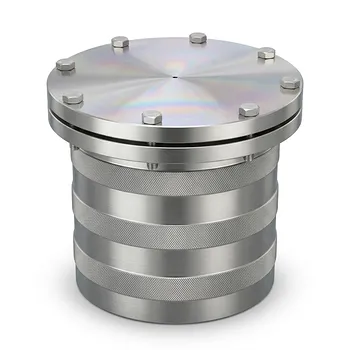
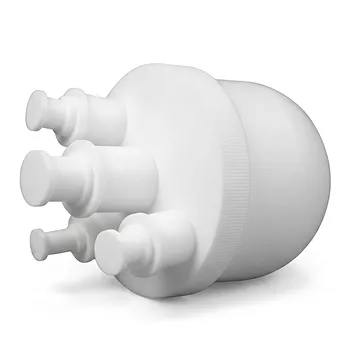
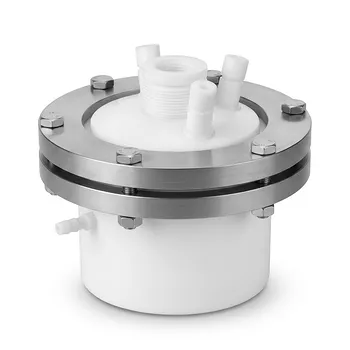
Hydrothermal synthesis reactors are the preferred tool for creating high-purity, defect-minimized nanomaterials with precise control over crystallinity and electronic properties. By utilizing elevated pressures and temperatures within a sealed environment, these reactors enable the growth of advanced structures like semiconductor quantum dots and piezoelectric nanowires at significantly lower energy costs than conventional vapor deposition or sintering methods.
Core Takeaway: Hydrothermal synthesis provides a unique high-pressure, low-temperature environment that allows for the engineering of phase-pure nanomaterials with tunable optical and electronic characteristics that are often unattainable through traditional solid-state or atmospheric routes.
Achieving Superior Material Quality
Minimizing Structural Defects
Hydrothermal reactors facilitate the growth of defect-minimized crystals by allowing atoms to arrange themselves slowly and precisely in a liquid medium. This structural integrity is critical for electronic applications, as it reduces charge carrier recombination and improves the overall efficiency of devices like solar cells and LEDs.
Ensuring Phase Purity
The closed, high-pressure environment allows researchers to access metastable phases and maintain high product uniformity that atmospheric processes cannot reach. This results in phase-pure nanomaterials, ensuring that every batch has consistent electrical conductivity and optical refractive indices.
Enhanced Solubility and Reactivity
At temperatures above 100°C and pressures exceeding 1 atm, water and organic solvents reach states near their critical points, drastically increasing the solubility of precursors. This environment promotes higher molecular interaction and compatibility between different phases, which is essential for synthesizing complex composite electronics.
Precise Control Over Morphology and Properties
Tuning Band Gaps and Optical Response
By adjusting parameters such as pH levels or specific additives, the hydrothermal process can fine-tune the band gaps of semiconductor nanomaterials. This allows for the custom design of optical properties, making the technology ideal for creating sensors and light-harvesting components with specific spectral sensitivities.
Engineering Anisotropic Structures
The reactor's environment is highly effective for growing anisotropic structures, such as nanotubes, nanosheets, and nanowires. These shapes are vital for enhancing charge transport pathways in thin-film electronics, as they provide direct routes for electrons to travel compared to spherical nanoparticles.
Crystal Habit and Growth Direction
The use of chemically inert liners, such as PTFE (Polytetrafluoroethylene) or PPL (Para-polyphenylene), allows for extreme conditions that dictate specific crystal growth directions. Controlling the crystal habit ensures that the resulting nanomaterials possess the exact piezoelectric or semiconducting orientations required for advanced device integration.
Operational and Environmental Efficiency
Reduced Thermal and Energy Budgets
Hydrothermal synthesis operates at much lower processing temperatures than vapor deposition or solid-state sintering. This reduction in energy input makes the process more sustainable and allows for the synthesis of materials that would otherwise decompose at the high temperatures required by traditional methods.
Maintaining High Purity in a Closed System
The use of a sealed batch pressure vessel prevents the loss of reagents and minimizes contamination from the external environment. This "digestion bomb" approach ensures that volatile organic emissions are contained, fulfilling both purity requirements for electronics and modern sustainability standards.
Scalability and Reproducibility
The uniform heat distribution within a hydrothermal autoclave leads to high reproducibility across different batches. This consistency is a technical necessity for the mass integration of nanomaterials into commercial thin-film transistors or composite electronic devices.
Understanding the Trade-offs
Kinetic vs. Thermodynamic Control
While hydrothermal synthesis offers excellent control, the reactions often occur over longer durations compared to rapid thermal processes. Balancing the time required for perfect crystal growth against the throughput needs of a project is a constant technical challenge.
Pressure Limitations and Safety
Operating at high pressures requires specialized equipment and rigorous safety protocols to prevent vessel failure. Furthermore, the chemical compatibility of the inner liners must be carefully matched to the precursors to prevent liner degradation at temperatures exceeding 250°C.
Visibility of the Reaction
Because the synthesis occurs inside a sealed metallic vessel, it is impossible to observe the reaction in real-time without specialized (and expensive) in-situ monitoring tools. This "black box" nature requires extensive pre-experimental planning and post-synthesis characterization to verify results.
Selecting the Right Approach for Your Application
How to Apply This to Your Project
To maximize the benefits of hydrothermal synthesis, you must align your reactor parameters with your specific material performance goals.
- If your primary focus is Electronic Charge Transport: Optimize the synthesis for anisotropic structures like nanowires to create direct, low-resistance electrical pathways.
- If your primary focus is Optical Precision: Focus on pH and temperature control to precisely tune band gaps for specific light-harvesting or emission wavelengths.
- If your primary focus is Material Purity: Utilize high-purity PTFE liners and deionized water as the primary solvent to eliminate metallic contamination and surface defects.
By mastering the pressure-temperature-solvent relationship within these reactors, you can engineer the next generation of high-performance optical and electronic nanomaterials with unparalleled precision.
Summary Table:
| Feature | Advantage for Electronics/Optics | Key Mechanism |
|---|---|---|
| Defect Minimization | Higher efficiency in LEDs and solar cells | Slow, precise crystal growth in liquid medium |
| Phase Purity | Consistent conductivity & refractive indices | High-pressure access to metastable phases |
| Morphology Control | Enhanced charge transport (nanowires/sheets) | Engineering of anisotropic structures |
| Thermal Efficiency | Synthesis of heat-sensitive materials | Lower temperatures than vapor deposition |
| Purity Control | Minimized metallic contamination | Sealed system with inert PTFE/PPL liners |
Elevate Your Nanomaterial Synthesis with KINTEK
Achieve unparalleled precision in your research with KINTEK, your premier partner for high-performance fluoropolymer laboratory solutions. We manufacture a comprehensive range of supplies crafted from PTFE and PFA, including everyday basic labware like beakers and reagent bottles, high-purity trace analysis instruments, and essential hydrothermal synthesis liners.
Our expertise extends to advanced derivative apparatus such as microwave digestion vessels, custom electrochemical cells, and complex fluid transfer components. Backed by end-to-end custom CNC fabrication, KINTEK is equipped to deliver everything from high-volume orders to bespoke, non-standard machined parts tailored to your specific electronic and optical material requirements.
Ready to optimize your laboratory setup? Contact us today to discover how our high-performance materials can drive your next innovation.
Related Products
- High Temperature Corrosion Resistant Hydrothermal Synthesis Reactor with TFM Inner Liner and Straight Cylinder Design
- PTFE Lined High Pressure Digestion Vessel 50ml High Temperature Hydrothermal Synthesis Tank
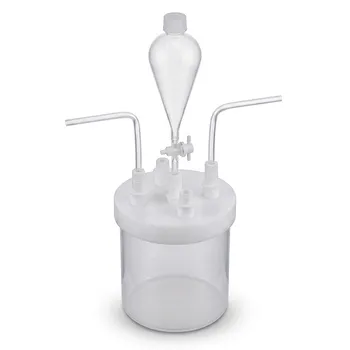
- Custom PTFE Reaction System with Hose Barb Fittings Corrosion Resistant High Sealing 2L 4L Lab Reactor with Separatory Funnel
- High Pressure Custom TFM Reactor Stainless Steel Outer Vessel PTFE Inner Cup for Corrosive Synthesis
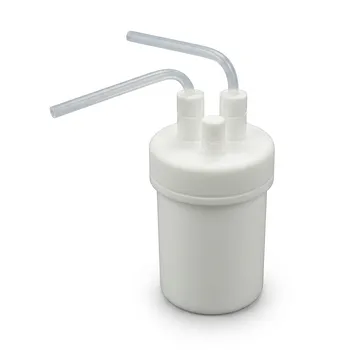
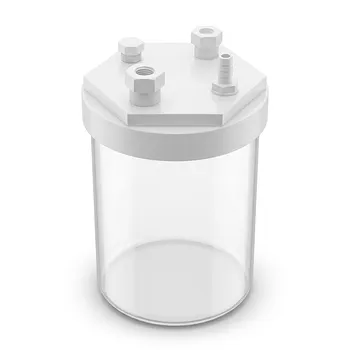
- High Purity PFA Reaction Vessel for Biopharmaceutical Synthesis and Corrosive Chemical Fluid Handling with Customizable Tube Fittings
People Also Ask
- What is the role of a corrosion-resistant reactor in the synthesis of lignin-based carbon dots? Ensure Maximum Purity
- How does a hydrothermal synthesis reactor facilitate the production of crystalline materials with tailored morphologies? Precision Crystal Growth
- Why is the sealing reliability of a hydrothermal synthesis reactor critical for 24-hour cycles? Ensure Nano-Precision
- What role do hydrothermal synthesis reactors play in CQD preparation? Achieve High-Purity Nanomaterial Synthesis
- What is a hydrothermal synthesis reactor and what are its primary functions in material research? Master Nano-Synthesis