Hydrothermal synthesis reactors are the cornerstone of catalyst production in the petrochemical industry. They provide the high-pressure, high-temperature aqueous environment necessary to crystallize microporous frameworks, such as zeolites and transition-metal oxides. By precisely controlling the reaction environment, these reactors allow manufacturers to tailor the pore structure and surface chemistry of catalysts, which are essential for high-activity refining and chemical conversion.
Core Takeaway: Hydrothermal synthesis reactors enable the production of high-purity, crystalline catalysts by creating a closed-system environment that facilitates the dissolution and recrystallization of precursors. This precision allows for the engineering of specific molecular sieve frameworks required for efficient petrochemical processing.
Engineering High-Performance Catalyst Frameworks
Controlling Crystallization and Nucleation
Hydrothermal reactors facilitate the crystallization of precursor gels into well-defined frameworks. By maintaining constant temperature and uniform pressure gradients, the reactor ensures that crystal nucleation and growth occur consistently throughout the batch.
This process is vital for creating molecular sieves with ordered pore structures. In petrochemical applications, these structures are used to filter molecules by size, significantly enhancing the selectivity of catalytic reactions.
Synthesizing MFI and Hierarchical Zeolites
Refineries rely on specific zeolite types, such as HZSM-5 and S-1 (MFI-type), for processes like fluid catalytic cracking (FCC). The reactor maintains autogenous pressure at temperatures typically between 170°C and 180°C to induce these complex structures.
By utilizing structure-directing agents (SDA) within the reactor, engineers can create hierarchical frameworks. These materials feature a combination of micro- and mesoporous structures, improving mass transfer and reducing the deactivation of catalysts during heavy oil processing.
Exploiting Unique Solvent Properties
Inside the reactor, water behaves differently than it does at ambient pressure. At temperatures above 100°C and pressures exceeding 1 atm, water acts as a powerful solvent that can dissolve otherwise insoluble precursors, such as silicon and aluminum sources.
This enables dissolution-precipitation reactions that allow for the growth of high-purity crystalline powders. The result is a catalyst with tailored surface chemistry and high crystallinity that would be impossible to achieve under standard atmospheric conditions.
The Role of the Reactor Environment
Managing Aggressive Chemical Mineralizers
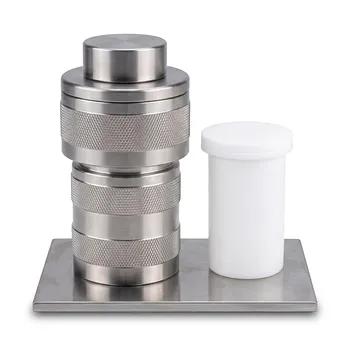
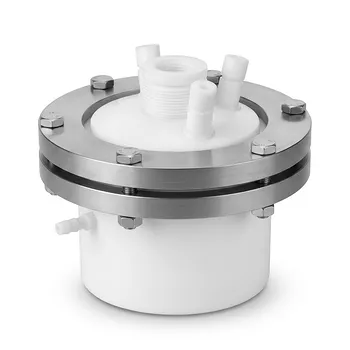
The synthesis of zeolites often requires the use of strong alkaline mineralizers like NaOH or KOH. To withstand these corrosive agents, hydrothermal reactors are equipped with PTFE (polytetrafluoroethylene) liners.
These liners prevent the chemical agents from attacking the steel pressure vessel. This corrosion-resistant design ensures the purity of the catalyst and the longevity of the equipment in a high-demand industrial setting.
Scaling for Refinery Integration
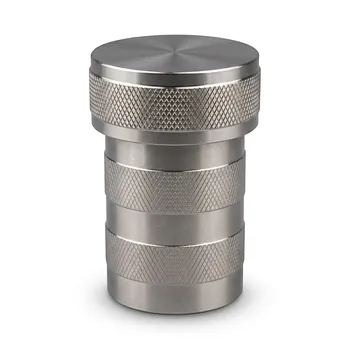
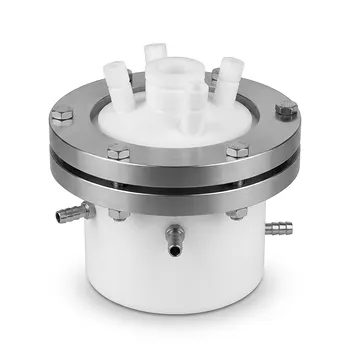
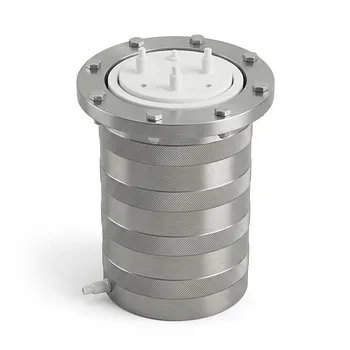
Hydrothermal synthesis is a batch process that can be scaled to meet the volumes required for refinery integration. The reactors, often called digestion bombs or autoclaves, are designed to handle the rigorous duty cycles of catalyst manufacturing.
Precision tuning of parameters—such as pH, reaction time, and temperature—allows for the production of varied morphologies. This includes nanoparticles, nanorods, and hollow spheres, each offering different performance benefits in a petrochemical reactor.
Understanding the Trade-offs
Time and Throughput Constraints
One of the primary limitations of hydrothermal synthesis is the long reaction time. Processes for high-crystallinity zeolites can take anywhere from 24 to 48 hours, which can limit production throughput compared to continuous manufacturing methods.
Maintenance and Material Limits
While PTFE liners provide excellent corrosion resistance, they have strict temperature limits, typically around 220°C to 250°C. Exceeding these limits can lead to liner deformation or the release of toxic fumes, requiring careful monitoring of the thermal cycle.
Complexity of Batch Scaling
Scaling up from a laboratory-scale "digestion bomb" to an industrial-scale reactor introduces challenges in thermal uniformity. If the temperature gradient is not perfectly managed across a large vessel, the resulting catalyst may have inconsistent pore sizes or lower purity.
Making the Right Choice for Your Goal
How to Apply This to Your Project
- If your primary focus is maximizing catalytic selectivity: Prioritize reactors that offer precise temperature control to ensure a highly uniform microporous framework.
- If your primary focus is processing heavy feedstocks: Focus on hydrothermal methods that utilize structure-directing agents to create hierarchical, micro-mesoporous zeolites.
- If your primary focus is equipment longevity in alkaline environments: Ensure your reactors are equipped with high-quality, replaceable PTFE liners to prevent vessel corrosion.
- If your primary focus is rapid prototyping of new catalysts: Utilize small-scale batch autoclaves to quickly iterate on pH and mineralizer concentrations before scaling.
By mastering the hydrothermal environment, you can engineer the sophisticated molecular frameworks necessary to drive the next generation of petrochemical efficiency.
Summary Table:
| Application Feature | Benefit for Catalysts | Industrial Impact |
|---|---|---|
| Controlled Crystallization | Uniform frameworks & ordered pore structures | Enhanced selectivity in catalytic reactions |
| High-Pressure Environment | Dissolution of insoluble precursors (Si/Al) | High-purity crystalline powders & high activity |
| PTFE-Lined Reactors | Resistance to aggressive alkaline mineralizers | Equipment longevity and high catalyst purity |
| SDA Integration | Creation of hierarchical micro-mesoporous frameworks | Improved mass transfer for heavy oil processing |
Elevate your petrochemical research and catalyst production with KINTEK’s specialized laboratory solutions. From everyday basic labware like beakers, crucibles, and reagent bottles to advanced reaction apparatus such as hydrothermal synthesis liners and bespoke electrochemical cells, we manufacture virtually all imaginable supplies crafted from high-performance PTFE and PFA.
Backed by end-to-end custom CNC fabrication, we are equipped to deliver everything from complex non-standard machined parts to high-volume orders—maintaining an absolute focus on fluoropolymer durability. Contact us today to discover how KINTEK can provide the precision tools and custom components necessary to drive your next generation of material efficiency.
Related Products
- High Temperature Corrosion Resistant Hydrothermal Synthesis Reactor with TFM Inner Liner and Straight Cylinder Design
- PTFE Lined High Pressure Digestion Vessel 50ml High Temperature Hydrothermal Synthesis Tank
- Custom PTFE Reaction System with Hose Barb Fittings Corrosion Resistant High Sealing 2L 4L Lab Reactor with Separatory Funnel
- High Pressure Custom TFM Reactor Stainless Steel Outer Vessel PTFE Inner Cup for Corrosive Synthesis
- High Purity PFA Reaction Vessel for Biopharmaceutical Synthesis and Corrosive Chemical Fluid Handling with Customizable Tube Fittings
People Also Ask
- What is the role of a corrosion-resistant reactor in the synthesis of lignin-based carbon dots? Ensure Maximum Purity
- What are the technical advantages of using hydrothermal synthesis reactors for advanced electronic & optical nanomaterials?
- How does a hydrothermal synthesis reactor facilitate the production of crystalline materials with tailored morphologies? Precision Crystal Growth
- Why is the sealing reliability of a hydrothermal synthesis reactor critical for 24-hour cycles? Ensure Nano-Precision
- What role do hydrothermal synthesis reactors play in CQD preparation? Achieve High-Purity Nanomaterial Synthesis