Maintaining a safe "fill factor" is the most critical safety protocol in hydrothermal synthesis. Filling a reactor liner to only 50–70% of its capacity provides the essential headspace required for the thermal expansion of the solvent. Without this void, the internal pressure can rise exponentially as the liquid expands, posing a severe risk of vessel deformation or catastrophic rupture.
Core Takeaway: Restricting the fill volume ensures that as temperature rises, the resulting liquid expansion and vapor generation have room to exist without exceeding the mechanical limits of the reactor. This "safety buffer" transforms a potential pressure vessel into a controlled, stable environment for high-quality material synthesis.
The Physics of Thermal Expansion
Solvent Volume Changes at High Temperatures
Liquids expand significantly when heated within the sealed environment of an autoclave. In hydrothermal synthesis, the solvent (typically water) requires physical space to occupy as its density decreases and its volume increases.
The Relationship Between Headspace and Pressure
Headspace acts as a "cushion" for both liquid expansion and the accumulation of vapor pressure. If this space is absent or insufficient, the expanding liquid exerts direct mechanical force on the liner walls, leading to an exponential pressure spike that far exceeds the vapor pressure alone.
Controlling the Phase Equilibrium
The 50–70% fill ratio allows for a stable equilibrium between the liquid and vapor phases. This balance is necessary to maintain the kinetic conditions required for the precise growth of nanostructures, such as alpha-[Fe2O3-FeOOH] nanorods.
Impact on Structural Integrity
Preventing Liner Deformation
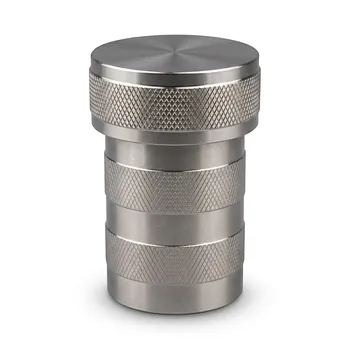
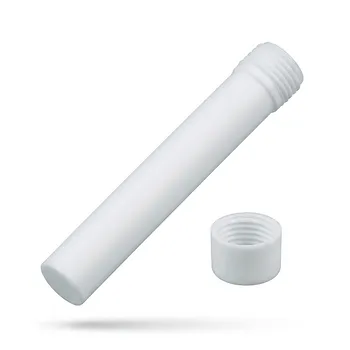
The inner liner, often made of PTFE (Teflon), is susceptible to deformation under extreme stress. Overfilling forces the liner to expand against the stainless steel shell, which can lead to permanent warping or seal failure.
Protecting the Outer Pressure Vessel
While the liner holds the chemicals, the stainless steel outer shell provides the ultimate structural strength. Excessive internal pressure caused by overfilling can cause the shell to leak or, in extreme cases, suffer a catastrophic structural failure.
Ensuring Reproducibility
Maintaining a consistent fill volume ensures that the pressure conditions are identical across different batches. This consistency is vital for researchers who need to replicate specific morphology and crystalline structures in their materials.
Common Pitfalls to Avoid
The "Maximum Yield" Fallacy
A common mistake is assuming that filling the liner to 90% or 100% will result in a higher yield of product. In reality, this significantly increases the risk of an explosion or "venting" event that destroys the sample and the equipment.
Ignoring Solvent-Specific Expansion
Different solvents have different coefficients of expansion; what is safe for water at 150°C may be dangerous for an organic solvent at the same temperature. Always consult the expansion tables for your specific solvent before determining the fill level.
The Danger of Temperature Overshoot
If a furnace or oven overshoots its target temperature, the liquid inside the reactor will expand even further. A 50–70% fill volume provides a critical safety margin that can prevent a disaster during a temporary equipment malfunction.
Strategic Filling for Optimal Synthesis
To achieve the best results while maintaining a safe laboratory environment, tailor your fill volume to your specific experimental goals.
- If your primary focus is maximum safety and vessel longevity: Adhere to a conservative 50–60% fill ratio to ensure maximum headspace for thermal expansion and lower overall stress on the seals.
- If your primary focus is precise crystal growth kinetics: Target a 70% fill ratio to maintain the specific internal pressure and concentration levels needed for stable nanostructure development.
- If your primary focus is working with volatile organic solvents: Reduce the fill volume to 50% or less to account for the higher expansion rates and vapor pressures associated with non-aqueous synthesis.
Mastering the balance of fill volume empowers you to conduct high-pressure experiments with both technical precision and absolute peace of mind.
Summary Table:
| Fill Ratio | Recommended Use Case | Safety Buffer | Risk Level |
|---|---|---|---|
| 50–60% | Volatile organic solvents or maximum safety | Maximum | Very Low |
| 70% | Standard aqueous synthesis & crystal kinetics | Optimal | Low |
| >80% | Not recommended for hydrothermal processes | Minimal | Moderate |
| 90–100% | High-yield fallacy (Dangerous) | None | Critical (Rupture) |
Optimize Your Synthesis with High-Performance Labware
At KINTEK, we understand that safety and precision are the cornerstones of successful hydrothermal synthesis. We specialize in high-performance fluoropolymer materials, manufacturing a comprehensive range of laboratory supplies from PTFE and PFA to meet your most demanding research needs.
From everyday essentials like beakers, crucibles, and reagent bottles to specialized high-purity trace analysis instruments and hydrothermal synthesis liners, our products are designed for durability and chemical resistance. We also provide advanced solutions including microwave digestion vessels, electrochemical cells, and custom CNC-fabricated components tailored to your specific experimental setups.
Whether you require high-volume consumables or bespoke laboratory apparatus, KINTEK delivers end-to-end solutions with an absolute focus on material performance. Ensure the safety and reproducibility of your experiments—contact our experts today to discuss your custom requirements!
Related Products
- High Temperature Corrosion Resistant Hydrothermal Synthesis Reactor with TFM Inner Liner and Straight Cylinder Design
- PTFE Lined High Pressure Digestion Vessel 50ml High Temperature Hydrothermal Synthesis Tank
- Custom TFM Reaction Vessel with Stainless Steel Jacket and PTFE Inner Cup for High Corrosion Resistance
- High Pressure Custom TFM Reactor Stainless Steel Outer Vessel PTFE Inner Cup for Corrosive Synthesis
- High Purity TFM Microwave Digestion Vessels PTFE Acid Evaporation Liners Domestic GT-400 Equivalent Laboratory Reaction Containers
People Also Ask
- What is the role of a corrosion-resistant reactor in the synthesis of lignin-based carbon dots? Ensure Maximum Purity
- What are the technical advantages of using hydrothermal synthesis reactors for advanced electronic & optical nanomaterials?
- How does a hydrothermal synthesis reactor facilitate the production of crystalline materials with tailored morphologies? Precision Crystal Growth
- Why is the sealing reliability of a hydrothermal synthesis reactor critical for 24-hour cycles? Ensure Nano-Precision
- What role do hydrothermal synthesis reactors play in CQD preparation? Achieve High-Purity Nanomaterial Synthesis