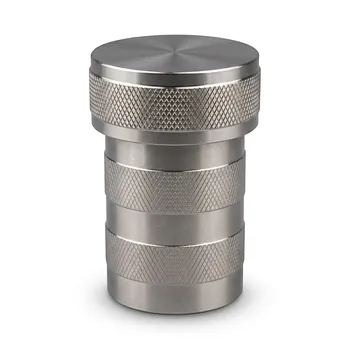
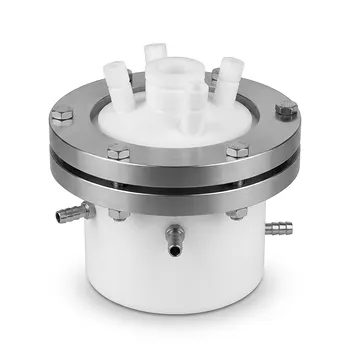
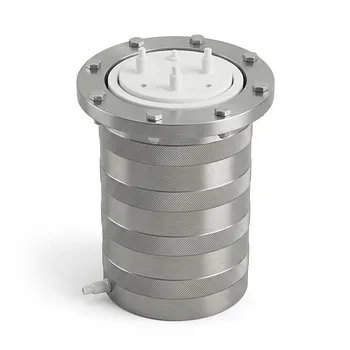
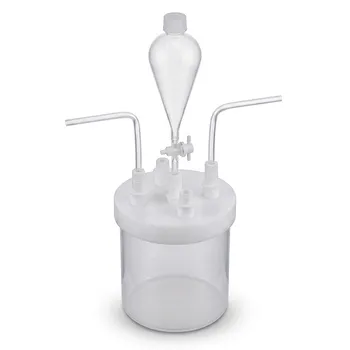
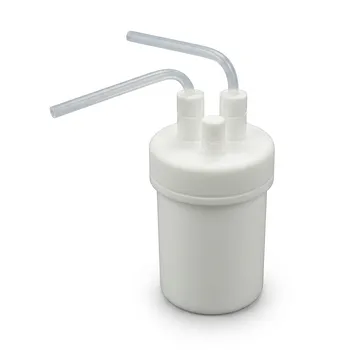
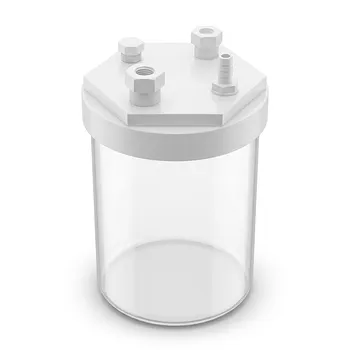
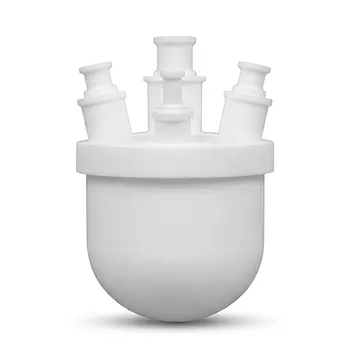
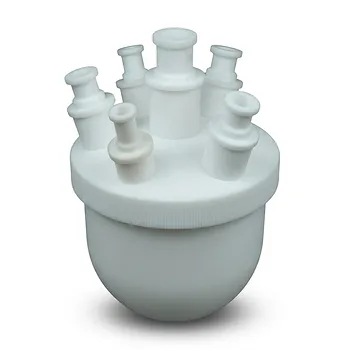
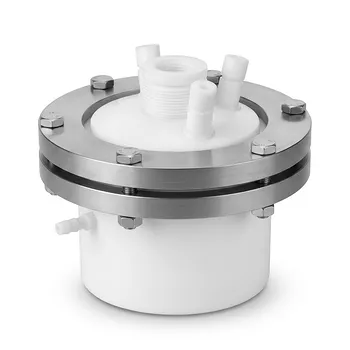
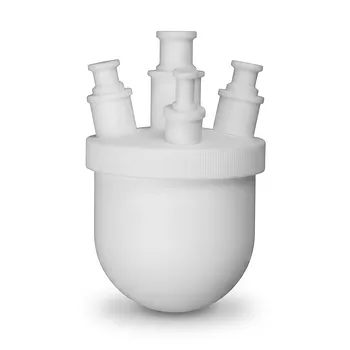
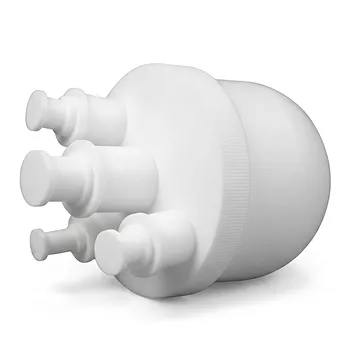
A hydrothermal synthesis reactor is essential for Zeolite-A crystallization because it creates a closed, high-pressure, and constant-temperature environment that enables the transformation of insoluble precursors into ordered crystal structures. Specifically, at temperatures like 80 °C, the reactor facilitates the reaction between metakaolin and sodium hydroxide, providing the uniform pressure and temperature gradients necessary for precise crystal nucleation and growth.
Core Takeaway: The hydrothermal reactor acts as a pressurized "pressure cooker" that dissolves aluminosilicate precursors and allows them to recrystallize into a highly ordered framework that would be impossible to achieve under ambient conditions.
The Necessity of a Pressurized Thermal Environment
Overcoming the Solubility Barrier
Zeolite-A synthesis requires the dissolution of metakaolin in a sodium hydroxide solution. At room temperature and standard pressure, these precursors are largely insoluble and cannot form the necessary gel.
The reactor maintains autogenous pressure, which allows the solution to reach temperatures that facilitate the dissolution-recrystallization of aluminosilicate gels. This process is the fundamental mechanism by which the amorphous starting material reorganizes into a crystalline structure.
Ensuring Uniform Nucleation
Crystal growth is highly sensitive to fluctuations in the surrounding environment. The hydrothermal reactor provides a stable, closed-system environment that eliminates external variables.
By maintaining uniform pressure and temperature gradients, the reactor ensures that nucleation occurs consistently throughout the mixture. This uniformity is what produces crystalline powders with the ordered pore structures required for molecular sieve applications.
Protecting Chemical Integrity and Purity
Resistance to Strong Alkaline Corrosion
The synthesis of Zeolite-A often involves highly corrosive, 4M high-concentration sodium hydroxide solutions. Standard metallic containers would corrode, contaminating the product and potentially failing under pressure.
PTFE-lined (Polytetrafluoroethylene) autoclaves are used within the reactor to provide superior chemical resistance. This lining ensures the reaction remains contained and the structural integrity of the reactor body is preserved.
Preventing Metal Ion Contamination
Maintaining a specific silicon-to-aluminum ratio is critical for the "Type A" framework. If the reaction solution were to interact with a stainless steel reactor wall, metal ions could leach into the gel.
The PTFE liner acts as a barrier, preventing metal ion contamination. This purity is essential for ensuring the zeolite's framework remains stable and its catalytic or adsorbent properties are not compromised.
Optimizing Physical Characteristics
Controlling Particle Size Distribution
In dynamic hydrothermal reactors, continuous physical movement (stirring or rotating) is used to keep the chemical concentration gradients uniform. This prevents the sedimentation of reactants during the long crystallization hours.
Consistent movement results in a more uniform particle size distribution. This is vital for industrial applications where the flow rate and surface area of the zeolite must be predictable.
Facilitating Phase Purity
Without the precise control of a hydrothermal reactor, the reaction might produce competing phases or amorphous impurities. The reactor allows for the "tuning" of reaction parameters like pH, temperature, and time.
By holding these variables constant, the reactor ensures that the energy barriers for Zeolite-A are met while avoiding the transition into other, less desirable zeolite types.
Understanding the Trade-offs
Time and Energy Intensive
Hydrothermal synthesis is not an instantaneous process; it typically requires several hours to days of constant heating. This leads to high energy consumption and limits the speed of production cycles compared to ambient chemical reactions.
Safety and Equipment Complexity
Working with high-pressure, high-temperature vessels carries inherent risks of mechanical failure or "blowouts" if not monitored correctly. The equipment requires regular maintenance, particularly the PTFE seals and pressure relief valves, to ensure safe operation.
Scalability Limits
While effective at the laboratory and pilot scale, maintaining perfectly uniform temperature gradients in massive industrial reactors is a significant engineering challenge. As the volume increases, the risk of "cold spots" or uneven heating rises, which can lead to inconsistent product quality.
How to Apply This to Your Project
Selecting the Right Approach
- If your primary focus is high crystal purity: Ensure you use a PTFE-lined reactor to eliminate any risk of metal leaching from the reactor walls.
- If your primary focus is uniform particle size: Opt for a stirring or rotating hydrothermal reactor to prevent reactant sedimentation and maintain uniform concentration gradients.
- If your primary focus is rapid synthesis: Carefully calibrate your temperature settings to the upper limit of the Zeolite-A stability range (typically near 80-90 °C) to accelerate the dissolution-recrystallization process.
The hydrothermal reactor is not merely a container, but a precise tool that dictates the structural success and chemical purity of the resulting Zeolite-A crystal.
Summary Table:
| Feature | Function in Zeolite-A Synthesis | Primary Benefit |
|---|---|---|
| Autogenous Pressure | Overcomes solubility barriers of metakaolin | Enables dissolution-recrystallization |
| PTFE Liner | Resists 4M high-concentration NaOH | Prevents metal ion contamination |
| Thermal Stability | Maintains uniform temperature gradients | Ensures consistent crystal nucleation |
| Closed System | Eliminates external variables and evaporation | Guarantees phase purity and integrity |
| Stirring/Rotation | Prevents sedimentation of reactants | Achieves uniform particle size distribution |
Elevate Your Research with KINTEK’s High-Performance Fluoropolymer Solutions
Achieving the perfect Zeolite-A framework requires hardware that can withstand extreme alkaline environments without compromising purity. KINTEK manufactures virtually all imaginable laboratory supplies crafted from PTFE and PFA, specifically designed for high-purity trace analysis and corrosive chemical synthesis.
Whether you need standard labware—like beakers, crucibles, and reagent bottles—or advanced reaction apparatus including PTFE-lined hydrothermal synthesis liners, microwave digestion vessels, and custom microchannel reactors, we have you covered. Backed by end-to-end custom CNC fabrication, KINTEK delivers everything from high-volume consumables (stirring bars, O-rings, and gaskets) to bespoke, non-standard machined parts tailored to your specific project needs.
Ready to optimize your crystallization process? Contact KINTEK today for expert guidance and custom solutions!
References
- M. Musah, Yakubu Azeh. Synthesis, Characterization and Application of ZnO/GO/Zeolite-A Nanocomposite in the Sorption of Selected Heavy Metals from Pharmaceutical Effluent. DOI: 10.36348/sijcms.2025.v08i05.003
This article is also based on technical information from Kintek Knowledge Base .
Related Products
- High Temperature Corrosion Resistant Hydrothermal Synthesis Reactor with TFM Inner Liner and Straight Cylinder Design
- PTFE Lined High Pressure Digestion Vessel 50ml High Temperature Hydrothermal Synthesis Tank
- Custom PTFE Reaction System with Hose Barb Fittings Corrosion Resistant High Sealing 2L 4L Lab Reactor with Separatory Funnel
- High Pressure Custom TFM Reactor Stainless Steel Outer Vessel PTFE Inner Cup for Corrosive Synthesis
- High Purity PFA Reaction Vessel for Biopharmaceutical Synthesis and Corrosive Chemical Fluid Handling with Customizable Tube Fittings
People Also Ask
- What is the role of a corrosion-resistant reactor in the synthesis of lignin-based carbon dots? Ensure Maximum Purity
- What are the technical advantages of using hydrothermal synthesis reactors for advanced electronic & optical nanomaterials?
- How does a hydrothermal synthesis reactor facilitate the production of crystalline materials with tailored morphologies? Precision Crystal Growth
- Why is the sealing reliability of a hydrothermal synthesis reactor critical for 24-hour cycles? Ensure Nano-Precision
- What role do hydrothermal synthesis reactors play in CQD preparation? Achieve High-Purity Nanomaterial Synthesis