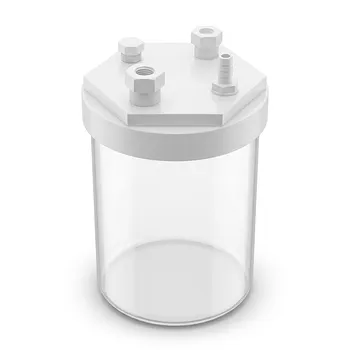
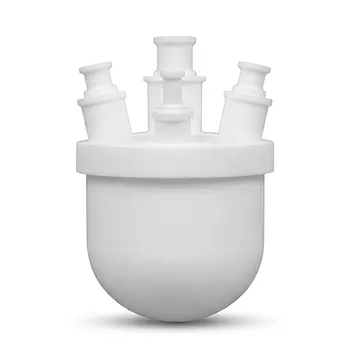
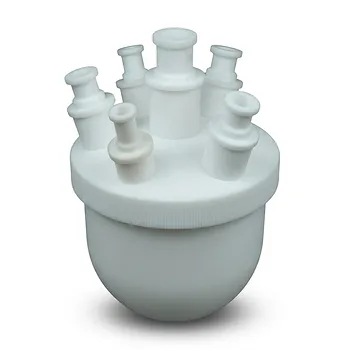
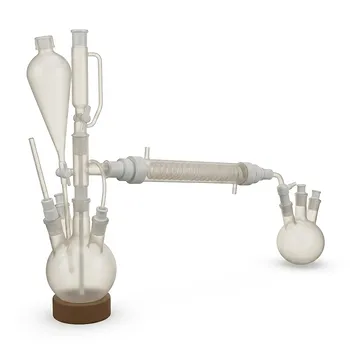
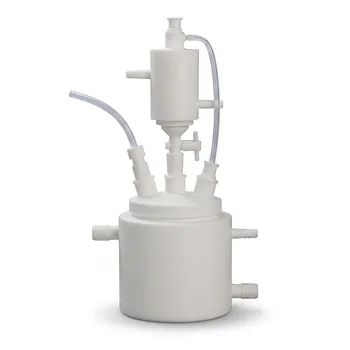
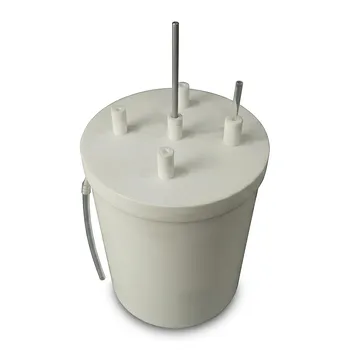
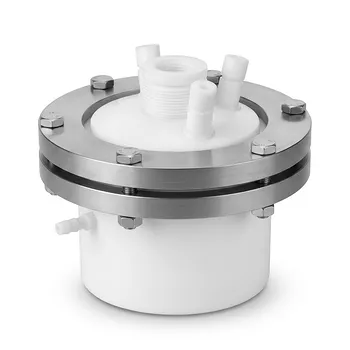
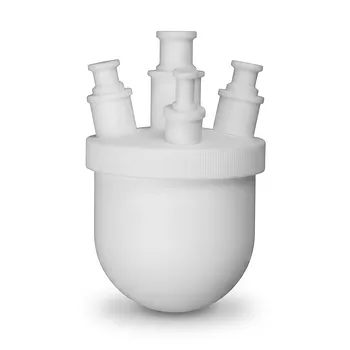
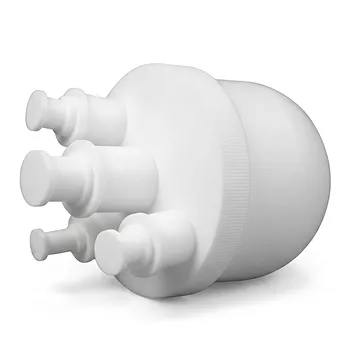
The hydrothermal synthesis reactor acts as a pressurized chemical furnace that creates the extreme conditions necessary for specialized crystal growth. By maintaining a sealed environment where temperatures and pressures exceed the atmospheric boiling point of water, the reactor enables the synthesis of Cobalt Oxide ($Co_3O_4$) powders with precise crystal phases and complex morphologies. This process is essential for producing high-purity nanomaterials that exhibit the superior surface area and catalytic activity required for industrial applications.
The hydrothermal synthesis reactor is the primary tool for controlling the nucleation and growth kinetics of Cobalt Oxide. By manipulating the subcritical properties of water, it produces $Co_3O_4$ with optimized pore structures and specific crystal orientations that are impossible to achieve under ambient conditions.
Creating the Subcritical Reaction Environment
Exceeding Atmospheric Boiling Points
In the production of $Co_3O_4$, the reactor maintains an internal environment where aqueous solutions are heated well above $100^\circ C$ while remaining in a liquid state. This high-pressure state alters the solvent properties of water, increasing its ability to dissolve precursors and facilitate rapid chemical reactions.
Facilitating Dissolution and Recrystallization
The high-pressure environment promotes the full dissolution of cobalt precursors, followed by a controlled dissolution-precipitation reaction. This allows the solutes to recombine and recrystallize into Cobalt Oxide with a high degree of uniformity and structural integrity.
Enhancing Ion Penetration
For composite materials, the reactor’s pressure helps metal ions overcome capillary resistance within porous substrates, such as mesoporous carbon. This ensures that the cobalt ions are uniformly dispersed at the nanoscale before the final calcination stage.
Engineering Crystal Morphology and Phase
Guiding Directional Nanocrystal Growth
The controlled physical conditions inside the reactor guide the growth direction of nanocrystals. This level of control is what allows technicians to produce $Co_3O_4$ in specific cubic phases or unique shapes, such as flower-like structures.
Maximizing Catalytic Surface Area
Morphology control is not merely aesthetic; it directly impacts the material's performance. By creating complex, high-surface-area structures, the hydrothermal process increases the number of active catalytic sites available on the Cobalt Oxide particles.
Optimizing Oxygen Vacancies
Compared to conventional co-precipitation, hydrothermal synthesis can result in higher oxygen vacancy concentrations. These vacancies are critical for improving conversion efficiency in chemical reactions, such as ozone decomposition.
Maintaining Process Purity and Stability
The Function of Inert Liners
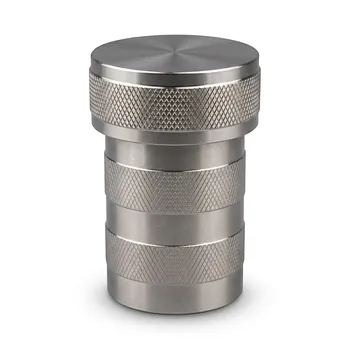
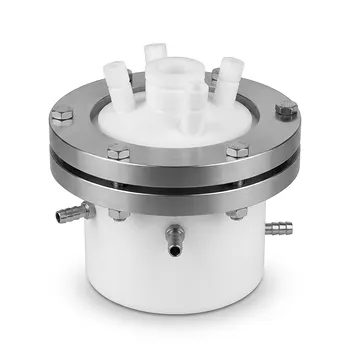
To prevent contamination, reactors utilize internal liners made from Polytetrafluoroethylene (PTFE) or Polyphenylene Sulfide (PPL). These liners act as a chemical barrier, protecting the stainless-steel vessel from the corrosive effects of high-temperature hydrothermal fluids.
Preventing Stress-Corrosion Cracking
The liner ensures that the structural integrity of the outer pressure vessel is maintained by isolating it from the reactive medium. This prevents oxidation and dissolution of the metal shell, which could otherwise introduce impurities into the Cobalt Oxide product.
Ensuring Stable Nucleation
By providing a stable, isolated environment, the reactor ensures that the nucleation and growth of $Co_3O_4$ are not influenced by external atmospheric fluctuations or metallic impurities. This stability is the foundation for achieving consistent batch-to-batch quality.
Technical Trade-offs and Constraints
Batch Processing Limitations
Hydrothermal synthesis is primarily a batch process, which can limit throughput compared to continuous manufacturing methods. Each cycle requires time for heating, the reaction itself, and a cooling-down period before the product can be retrieved.
Safety and Pressure Risks
Operating at high pressures and temperatures inherently involves safety risks that require specialized training and equipment maintenance. Failure to properly seal the reactor or monitor the pressure-temperature curve can lead to vessel failure or inconsistent crystal growth.
Scalability and Cost
While the reactor provides superior control over nanomaterial properties, the equipment and energy requirements make it more expensive than atmospheric methods. Producers must weigh the performance benefits of hydrothermally synthesized $Co_3O_4$ against the higher cost of production.
Applying Hydrothermal Synthesis to Your Production Goals
Depending on the intended application of your Cobalt Oxide, the way you utilize the hydrothermal reactor will vary.
- If your primary focus is High Catalytic Activity: Prioritize reactor settings that favor the growth of flower-like morphologies to maximize the available surface area.
- If your primary focus is Material Purity: Ensure the use of high-purity PTFE liners and strictly controlled temperature ramps to prevent leaching or incomplete precursor conversion.
- If your primary focus is Structural Uniformity: Utilize the reactor to maintain long-term subcritical conditions, which allows for slower, more uniform crystal nucleation and growth.
The hydrothermal synthesis reactor remains the definitive choice for engineers seeking to push the boundaries of Cobalt Oxide performance through precise structural and chemical control.
Summary Table:
| Feature | Function in Co3O4 Production | Industrial Benefit |
|---|---|---|
| Subcritical Environment | Overcomes boiling points to facilitate dissolution | Precise control over nucleation & growth kinetics |
| Morphology Control | Guides growth into specific phases (e.g., flower-like) | Maximizes surface area & active catalytic sites |
| Internal Lining (PTFE/PPL) | Acts as a chemical barrier against corrosive fluids | Ensures high material purity & prevents contamination |
| High-Pressure State | Helps metal ions overcome capillary resistance | Uniform ion dispersion within porous substrates |
Elevate Your Nanomaterial Synthesis with KINTEK
Precision in Cobalt Oxide ($Co_3O_4$) production requires equipment that can withstand extreme subcritical conditions without compromising purity. KINTEK specializes in high-performance fluoropolymer solutions tailored for advanced laboratory environments.
Whether you are conducting routine experiments or developing complex nanomaterials, we provide an exhaustive range of supplies. From everyday basic labware like beakers, measuring cylinders, crucibles, and reagent bottles to specialized hydrothermal synthesis liners, microwave digestion vessels, and microchannel reactors, KINTEK manufactures virtually all imaginable laboratory supplies crafted from PTFE and PFA.
Our expertise extends to comprehensive fluid transfer components (tubing, fittings, valves), sample prep tools (filters, pipettes, tweezers), and advanced reaction apparatus such as custom electrochemical cells and battery testing fixtures. Backed by end-to-end custom CNC fabrication, we deliver everything from high-volume orders to bespoke, non-standard machined parts with an absolute focus on high-performance materials.
Unlock superior material performance with the right tools.
Contact KINTEK today for a custom quote!
References
- Nuenghathai Chaiya, Tanin Tangkuaram. Fabrication of uric acid chemical sensor based on tricobalt tetroxide crosslinked chitosan with gold nanoparticle modified glassy carbon electrode. DOI: 10.60101/jarst.2024.260199
This article is also based on technical information from Kintek Knowledge Base .
Related Products
- High Temperature Corrosion Resistant Hydrothermal Synthesis Reactor with TFM Inner Liner and Straight Cylinder Design
- PTFE Lined High Pressure Digestion Vessel 50ml High Temperature Hydrothermal Synthesis Tank
- Custom PTFE Reaction System with Hose Barb Fittings Corrosion Resistant High Sealing 2L 4L Lab Reactor with Separatory Funnel
- High Pressure Custom TFM Reactor Stainless Steel Outer Vessel PTFE Inner Cup for Corrosive Synthesis
- High Purity PFA Reaction Vessel for Biopharmaceutical Synthesis and Corrosive Chemical Fluid Handling with Customizable Tube Fittings
People Also Ask
- What is the role of a corrosion-resistant reactor in the synthesis of lignin-based carbon dots? Ensure Maximum Purity
- What are the technical advantages of using hydrothermal synthesis reactors for advanced electronic & optical nanomaterials?
- How does a hydrothermal synthesis reactor facilitate the production of crystalline materials with tailored morphologies? Precision Crystal Growth
- Why is the sealing reliability of a hydrothermal synthesis reactor critical for 24-hour cycles? Ensure Nano-Precision
- What role do hydrothermal synthesis reactors play in CQD preparation? Achieve High-Purity Nanomaterial Synthesis