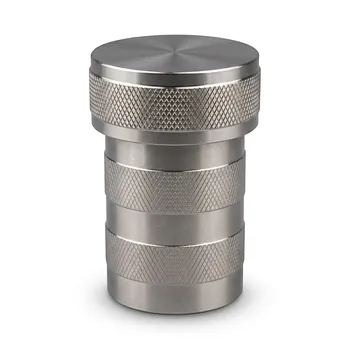
Hydrothermal autoclaves and fluoroplastic liners serve as the foundational hardware for the one-step synthesis of Carbon Dots (CDs). The autoclave provides a sealed, high-pressure vessel that allows chemical reactions to occur at temperatures far exceeding the normal boiling point of solvents, while the fluoroplastic liner ensures the reaction remains chemically pure and free from metallic contamination. This combination is essential for converting organic precursors into nanoscale, fluorescent carbon structures through a controlled process of dehydration and carbonization.
The hydrothermal autoclave creates the extreme physical conditions—high temperature and pressure—required for precursor carbonization, while the fluoroplastic liner provides a chemically inert sanctuary. Together, they ensure the resulting Carbon Dots achieve high purity and superior fluorescence quantum yields.
The Role of the Hydrothermal Autoclave
Creating a High-Pressure Reaction Environment
The primary function of the autoclave is to provide a sealed, high-pressure environment that keeps water and other solvents in a liquid state well above their boiling points. This "sub-critical" or hydrothermal state significantly increases the solubility and reactivity of precursors, such as biomass, lignin, or synthetic molecules like EGTA.
Driving the Multistage Chemical Transformation
The autoclave’s controlled heating facilitates a complex sequence of reactions including pyrolysis, dehydration, and polymerization. As the temperature rises within the sealed vessel, these processes drive the nucleation of carbon seeds, eventually leading to the formation of nanoscale carbon structures with specific surface functional groups.
Enabling In-Situ Doping and Passivation
By maintaining a closed system, the autoclave allows for the effective in-situ doping of elements like nitrogen and sulfur into the carbon framework. This environment also promotes surface passivation, which is critical for giving Carbon Dots their unique "quantum size effects" and bright fluorescence.
The Role of the Fluoroplastic Liner
Providing Absolute Chemical Inertness
Liners made of fluoroplastics like PTFE (Polytetrafluoroethylene) or PFA are used because they are almost entirely non-reactive. This chemical inertness prevents the reaction solution—which may contain strong acids, bases, or aggressive catalysts—from corroding the stainless steel body of the autoclave.
Preventing Metal Ion Contamination
The liner acts as a physical barrier that prevents metal ions from leaching out of the steel shell and into the reaction mixture. Avoiding this contamination is vital, as even trace amounts of metal can quench fluorescence or alter the optical performance and purity of the resulting Carbon Dots.
Facilitating Consistent Nucleation
Because the liner surface is non-stick and uniform, it provides a contaminant-free environment where carbon nuclei can grow predictably. This consistency is essential for producing CDs with stable, reproducible fluorescence quantum yields across different batches.
Understanding the Trade-offs and Technical Constraints
Temperature and Pressure Limitations
While fluoroplastic liners are highly resistant to chemicals, they have thermal limits, typically around 200°C to 250°C. Exceeding these temperatures can cause the PTFE to soften or deform, potentially compromising the seal and damaging the autoclave.
Heat Transfer Inefficiency
Fluoroplastics are thermal insulators, meaning they do not conduct heat as efficiently as the metal shell of the autoclave. This creates a thermal lag between the oven temperature and the actual internal reaction temperature, which researchers must account for to ensure complete carbonization.
Maintenance and Cleaning Challenges
Despite their non-stick properties, repeated use can lead to the build-up of carbonaceous residues or microscopic "pitting" in the liner. If not cleaned rigorously, these residues can act as unintended seeds in subsequent experiments, leading to polydisperse particle sizes and inconsistent results.
How to Apply This to Your Project
Choosing the Right Components
The success of your CD synthesis depends on matching your hardware to your chemical precursors and desired optical properties.
- If your primary focus is Maximum Fluorescence Brightness: Prioritize high-purity PTFE or PFA liners to eliminate metal ion quenching and ensure a high quantum yield.
- If your primary focus is High-Temperature Carbonization (>220°C): Consider specialized liners or alternative reactor designs, as standard PTFE may deform and leak at these extremes.
- If your primary focus is Scaling Production: Focus on the autoclave's pressure ratings and internal volume to ensure consistent heat distribution across larger precursor loads.
By mastering the balance between the autoclave's physical power and the liner's chemical protection, you can reliably synthesize high-performance Carbon Dots for sensing, imaging, or catalytic applications.
Summary Table:
| Component | Primary Function | Key Benefit for CD Synthesis |
|---|---|---|
| Hydrothermal Autoclave | Provides high-pressure, high-temp sealing | Drives pyrolysis, dehydration, and carbonization processes |
| Fluoroplastic Liner (PTFE/PFA) | Ensures chemical inertness and a non-stick surface | Prevents metal ion contamination and ensures high quantum yields |
| High-Pressure Environment | Keeps solvents in a sub-critical liquid state | Increases solubility and reactivity of organic precursors |
Elevate Your Nanomaterial Synthesis with KINTEK
Precision in Carbon Dot synthesis requires hardware that can withstand extreme conditions without compromising purity. KINTEK specializes in high-performance fluoropolymer materials, offering an unparalleled range of products tailored for high-stakes research and industrial applications.
From everyday essentials like beakers, reagent bottles, and centrifuge tubes to specialized hydrothermal synthesis liners, microwave digestion vessels, and custom electrochemical cells, we manufacture virtually all laboratory supplies crafted from PTFE and PFA.
Why choose KINTEK?
- End-to-End Customization: Our advanced CNC fabrication delivers everything from complex non-standard machined parts to bespoke laboratory setups.
- Absolute Material Focus: We maintain an exclusive focus on high-performance fluoropolymers to prevent trace contamination.
- Comprehensive Catalog: We provide fluid transfer components (tubing, valves), sample prep tools (filters, pipettes), and general consumables (O-rings, gaskets).
Ensure your resulting Carbon Dots achieve superior fluorescence and consistency. Contact our experts today to source high-volume orders or custom-engineered solutions for your laboratory.
References
- Kanwal Iqbal, Guolong Xing. Fluorescent EGTA-derived carbon dots for turn on–off–on detection of Fe3+ and ascorbic acid via hydrothermal synthesis and cellular imaging. DOI: 10.1038/s41598-025-03845-4
This article is also based on technical information from Kintek Knowledge Base .
Related Products
- High Temperature Corrosion Resistant Hydrothermal Synthesis Reactor with TFM Inner Liner and Straight Cylinder Design
- PTFE Lined High Pressure Digestion Vessel 50ml High Temperature Hydrothermal Synthesis Tank
People Also Ask
- What is the role of a corrosion-resistant reactor in the synthesis of lignin-based carbon dots? Ensure Maximum Purity
- What are the technical advantages of using hydrothermal synthesis reactors for advanced electronic & optical nanomaterials?
- How does a hydrothermal synthesis reactor facilitate the production of crystalline materials with tailored morphologies? Precision Crystal Growth
- Why is the sealing reliability of a hydrothermal synthesis reactor critical for 24-hour cycles? Ensure Nano-Precision
- What role do hydrothermal synthesis reactors play in CQD preparation? Achieve High-Purity Nanomaterial Synthesis