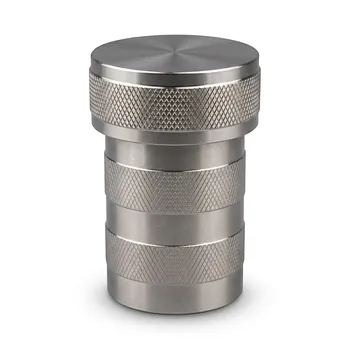
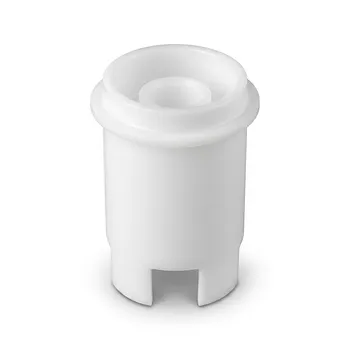
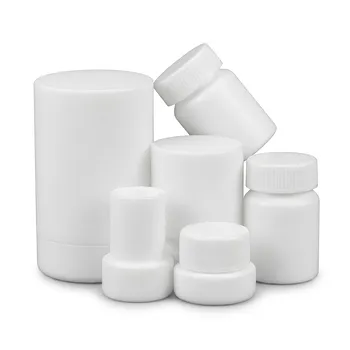
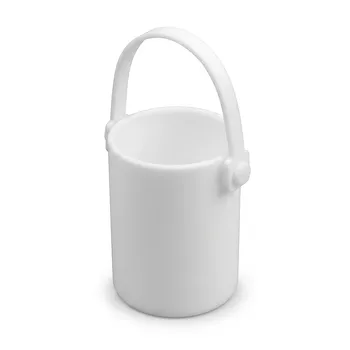
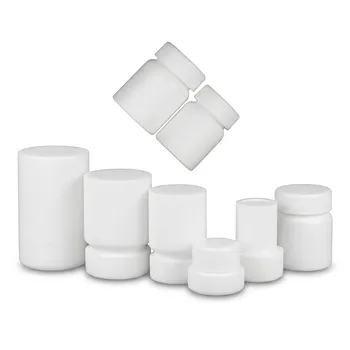
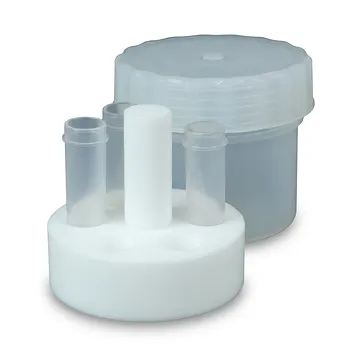
The Teflon-lined stainless steel autoclave acts as a high-pressure chemical reactor. In the synthesis of cobalt-doped zinc ferrite microspheres, it provides a stable environment of 160 °C and high autogenous pressure. The Teflon liner ensures chemical purity by preventing precursor corrosion, while the physical properties of the liner help shape the specific flower-like morphology of the microspheres.
The autoclave provides a dual-function environment where the stainless steel shell maintains mechanical integrity under high pressure while the Teflon liner ensures chemical inertness. This combination is essential for achieving the high-purity, uniform, and porous structures required for cobalt-doped zinc ferrite.
The Dual-Component Engineering System
Mechanical Strength of the Stainless Steel Shell
The external stainless steel casing is designed to provide the mechanical strength necessary to withstand internal autogenous pressures. During hydrothermal synthesis at 160 °C, the water inside the sealed vessel creates a high-pressure steam environment. This pressure is vital for driving the crystallization and growth of the ferrite microspheres.
Chemical Inertness of the Teflon Liner
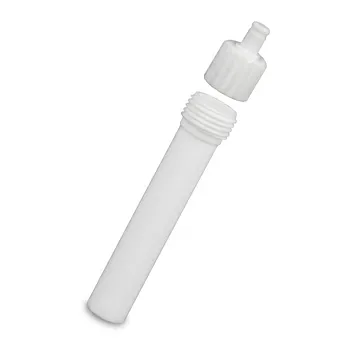
The internal Teflon (PTFE) liner is prized for its exceptional chemical resistance. It prevents acidic or alkaline precursors from reacting with the metal walls of the autoclave. Without this barrier, the reaction liquid would erode the steel, introducing metal impurities that would compromise the magnetic and structural properties of the zinc ferrite.
Influencing Material Morphology and Purity
Maintaining Material Purity
By providing a non-reactive barrier, the Teflon liner ensures that the final cobalt-doped zinc ferrite microspheres remain chemically pure. This is critical because even trace amounts of iron or chromium from the stainless steel shell could significantly alter the performance of the synthesized nanomaterial.
Facilitating Flower-like Morphologies
The smooth internal surface of the Teflon liner plays a structural role in the formation of the particles. It facilitates the growth of uniform, porous, flower-like microspheres. The lack of surface irregularities on the Teflon helps the precursors aggregate and crystallize into the desired complex geometries without sticking to the walls.
Understanding the Trade-offs and Limitations
Temperature Constraints
While Teflon is highly inert, it has a thermal limit, typically around 240 °C to 250 °C. Exceeding these temperatures can lead to the deformation of the liner or the release of toxic vapors. For syntheses requiring higher temperatures, alternative liners like PPL (Polyphenylene polymers) must be considered.
Sealing and Safety Risks
The effectiveness of the autoclave depends entirely on a perfect seal. If the vessel is overfilled or the bolts are not tightened evenly, the internal pressure can lead to leakage or explosive decompression. Furthermore, rapid cooling after the reaction can cause the Teflon liner to shrink at a different rate than the steel shell, potentially causing damage over time.
How to Apply This to Your Synthesis Goals
Ensuring Success in Your Project
When selecting or operating an autoclave for ferrite synthesis, your approach should depend on your specific output requirements.
- If your primary focus is high purity: Ensure the Teflon liner is free of scratches or previous residues to prevent cross-contamination.
- If your primary focus is morphology control: Maintain a constant temperature of 160 °C throughout the duration of the reaction to ensure the flower-like structures develop uniformly.
- If your primary focus is equipment longevity: Never exceed the 80% fill capacity of the liner to allow for safe expansion of the liquid and gas phases at high temperatures.
The Teflon-lined autoclave is the indispensable foundation for transforming precursor solutions into high-performance, structured microspheres.
Summary Table:
| Component | Primary Function | Key Benefit in Synthesis |
|---|---|---|
| Stainless Steel Shell | Structural Integrity | Withstands high autogenous pressure at 160°C+ |
| Teflon (PTFE) Liner | Chemical Inertness | Prevents precursor corrosion and metal contamination |
| Internal Surface | Growth Template | Facilitates porous, flower-like microsphere formation |
| Sealing System | Pressure Containment | Drives crystallization and uniform particle growth |
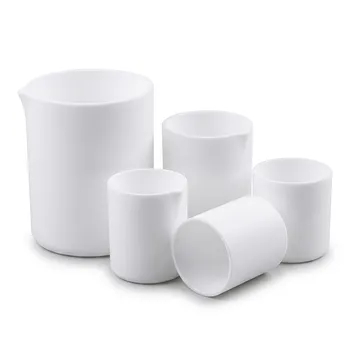
Elevate your material synthesis with KINTEK’s precision-engineered fluoropolymer solutions. From everyday PTFE and PFA labware—like beakers, crucibles, and digestion tubes—to specialized hydrothermal synthesis liners and custom-machined reactors, we provide the high-purity environment your research demands. Whether you require standard consumables, advanced electrochemical cells, or bespoke non-standard parts, KINTEK delivers end-to-end custom CNC fabrication with an absolute focus on high-performance materials. Contact our experts today to optimize your laboratory setup and ensure the success of your high-purity projects!
References
- Abdulrahman Sumayli, Naifa Alenazi. Efficient photocatalytic degradation of acetaminophen using cobalt-doped ZnFe2O4 spinel as a promising solution for pharmaceutical wastewater treatment. DOI: 10.1007/s44442-025-00018-w
This article is also based on technical information from Kintek Knowledge Base .
Related Products
- Custom TFM Reaction Vessel with Stainless Steel Jacket and PTFE Inner Cup for High Corrosion Resistance
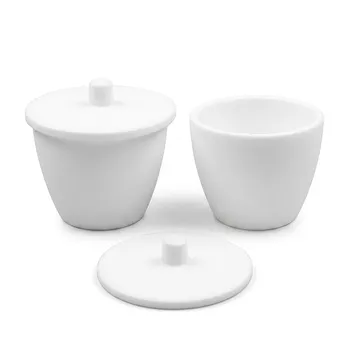
- High Purity Corrosion Resistant Teflon Crucible Low Background Laboratory PTFE Vessel for Trace Analysis and Acid Digestion
- High Temperature Corrosion Resistant Hydrothermal Synthesis Reactor with TFM Inner Liner and Straight Cylinder Design
- PTFE Lined High Pressure Digestion Vessel 50ml High Temperature Hydrothermal Synthesis Tank
- High Purity PTFE Microwave Digestion Vessel Replacement Liner for Acid Sample Preparation and Trace Analysis
People Also Ask
- Why are high-performance pressure-resistant reaction vessels required for oxygen-assisted hydrothermal conversion at 150 °C?
- Why are PTFE-lined reaction vessels necessary for forced degradation studies? Ensure high-purity results and accuracy.
- Why are high-quality fluoropolymer-lined reaction vessels required for alk-Ti3C2Tx MXene? Ensure Purity & HF Resistance
- How do magnetic stirring and reaction vessels impact MOF-derived carbon quality? Optimize Your Composite Performance
- Why is a high-purity PTFE lined reaction vessel required for the acidic etching of MXenes? Ensure Material Purity.