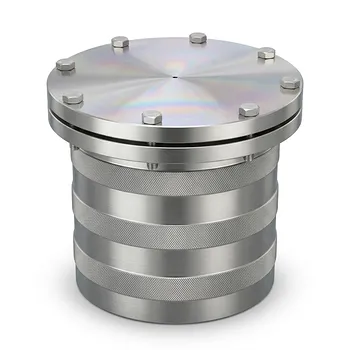
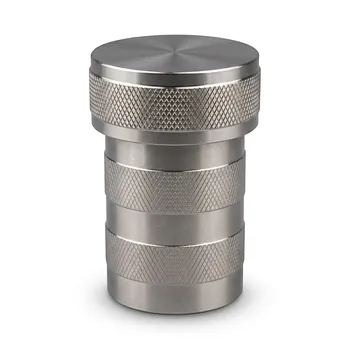
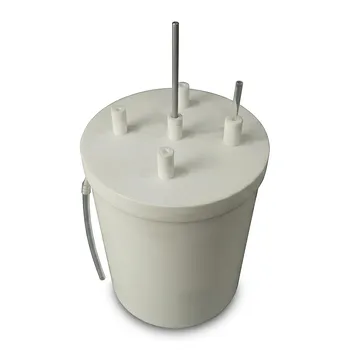
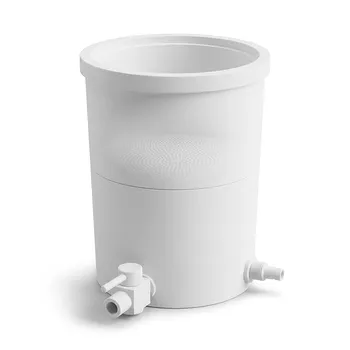
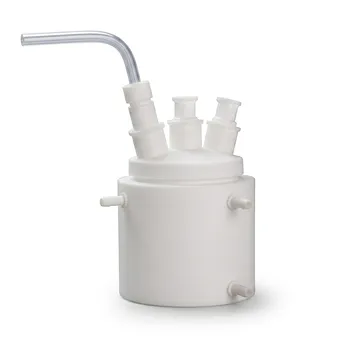
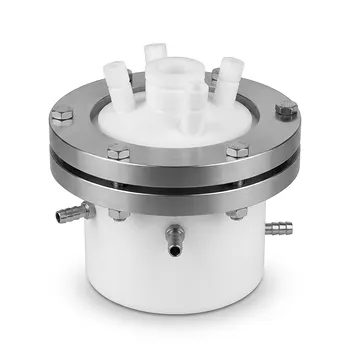
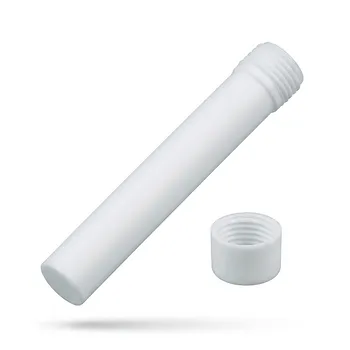
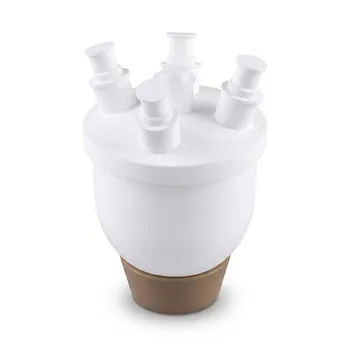
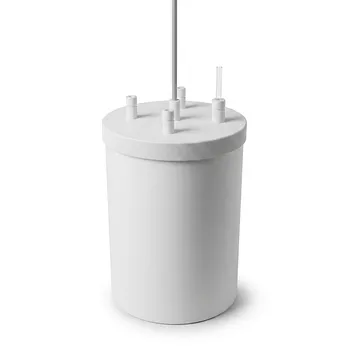
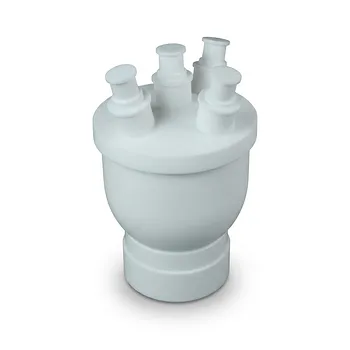
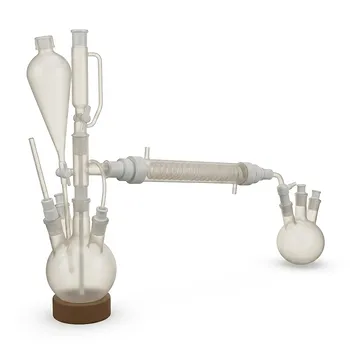
Hydrothermal synthesis of $TiO_2$ relies on a synergistic relationship between thermodynamic control and chemical containment. High-pressure reactors create a sealed environment that allows solvents to reach subcritical or supercritical states, significantly increasing precursor solubility and reactivity. The liners, typically made of fluoropolymers like PTFE, protect the reactor vessel from corrosive precursors while preventing metal ion contamination. Together, these components enable the precise control of $TiO_2$ phase transitions and the formation of complex morphologies such as nanowires, nanotubes, and nanosheets.
The core role of high-pressure reactors is to provide the extreme thermal and baric energy necessary for $TiO_2$ nucleation and crystal growth, while chemically inert liners ensure the purity of the resulting nanomaterials by isolating the reaction from the metallic reactor walls.
Achieving Subcritical and Supercritical Environments
Enhancing Precursor Solubility
In a sealed reactor, solvents can be heated well beyond their atmospheric boiling points, reaching subcritical or supercritical states. These conditions drastically increase the solubility of precursor powders, such as micron-sized $TiO_2$ particles or titanium salts. This increased solubility is the primary driver for the redistribution of material during the growth of nanostructures.
Accelerating Reaction Kinetics
The high-pressure environment facilitates critical chemical pathways, including chelation, dehydration, and decomposition of precursor complexes. These reactions often occur much faster and more uniformly than they would under ambient pressure. This acceleration allows for the production of uniform nanocrystals in significantly shorter durations.
The Critical Role of Chemical-Resistant Liners
Preventing Metal Ion Contamination
Liners made of PTFE (polytetrafluoroethylene), PFA (perfluoroalkoxy), or PPL (para-polyphenylene) act as a physical barrier between the reaction fluid and the steel reactor walls. Without this barrier, metal ions from the reactor vessel could leach into the solution. This is vital for maintaining the high purity required for the epitaxial growth of $TiO_2$ nanorods and other single-crystal structures.
Resistance to Corrosive Solvents
Many $TiO_2$ synthesis protocols require aggressive environments, such as high-concentration sodium hydroxide (NaOH) or hydrochloric acid (HCl). Chemical-resistant liners are chosen specifically for their ability to withstand these corrosive agents at high temperatures. This protection prevents the structural failure of the metallic outer jacket of the autoclave.
Driving Phase Transitions and Morphology
Controlling Crystal Phase and Growth
The controlled pressure environment is essential for the transition from amorphous $TiO_2$ to the anatase or rutile phases. By adjusting the temperature and pressure within the reactor, researchers can dictate the direction of crystal growth. This level of control is what allows the synthesis of vertically aligned nanowire arrays or highly ordered structures.
Facilitating Self-Assembly
High-pressure conditions drive the self-assembly of titanium dioxide from intermediate nanosheets into complex nanotubular structures. The energy provided by the pressurized system overcomes the barriers required for the $TiO_2$ framework to curve and seal into tubes. This process is highly dependent on the stability of the environment provided by the reactor-liner assembly.
Understanding the Trade-offs
Temperature and Pressure Limitations
While fluoropolymer liners like PTFE are highly resistant to chemicals, they have strict thermal limits, usually around 220°C to 250°C. Exceeding these temperatures can lead to liner deformation (creeping) or the release of toxic gases. Users must balance the need for high reaction energy with the physical limitations of the liner material.
Heat Transfer Inefficiencies
Liners act as thermal insulators, which can create a temperature lag between the reactor's external heating element and the internal reaction fluid. This can lead to inconsistencies in nucleation if the heating rate is not carefully monitored. Precise internal temperature sensing is often required for highly sensitive $TiO_2$ synthesis.
How to Apply This to Your Project
Choosing the Right Configuration
- If your primary focus is high-purity nanorods: Utilize a high-performance PTFE liner to eliminate metal ion leaching and ensure clean epitaxial growth.
- If your primary focus is rapid synthesis (Microwave-assisted): Ensure your liner is made of PFA or PTFE to allow for microwave transparency while maintaining a high-pressure seal.
- If your primary focus is complex morphologies (Nanotubes): Use a reactor capable of reaching subcritical states to ensure maximum precursor solubility and self-assembly energy.
- If your primary focus is extreme temperatures (>250°C): Consider specialized PPL liners or gold-lined reactors, as standard PTFE will begin to fail structurally.
By mastering the balance between pressure-driven reactivity and liner-provided purity, you can achieve unprecedented control over the structural and chemical properties of $TiO_2$ nanomaterials.
Summary Table:
| Component | Primary Function | Synthesis Impact |
|---|---|---|
| High-Pressure Reactor | Creates subcritical/supercritical states | Accelerates kinetics & enables crystal growth |
| Fluoropolymer Liner | Provides a chemically inert barrier | Prevents metal ion leaching & ensures purity |
| Pressure Control | Increases precursor solubility | Facilitates self-assembly of complex structures |
| Thermodynamic Energy | Drives chemical pathways | Dictates TiO2 phase transitions (Anatase/Rutile) |
Elevate Your TiO2 Research with KINTEK Fluoropolymer Expertise
Precision in nanomaterial synthesis demands equipment that can withstand extreme environments without compromising purity. KINTEK specializes in high-performance fluoropolymer solutions designed specifically for the rigorous requirements of hydrothermal synthesis.
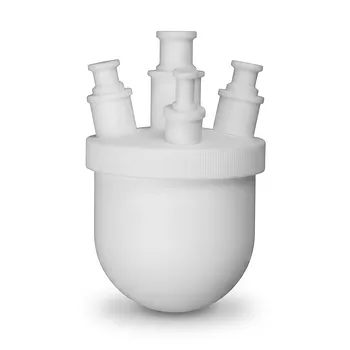
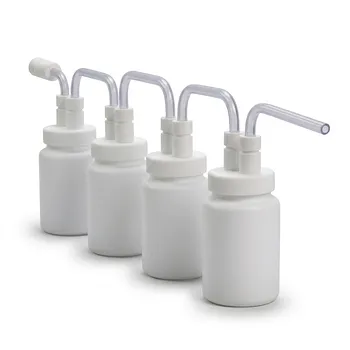
From everyday basic labware (beakers, measuring cylinders, and reagent bottles) to critical components like high-purity hydrothermal synthesis liners, microwave digestion vessels, and custom reaction apparatus, we provide everything you need to maintain a contamination-free environment. Whether you require standard PFA/PTFE tubes and fittings or bespoke CNC-machined parts for complex laboratory setups, our end-to-end fabrication ensures absolute focus on quality.
Ready to optimize your lab’s efficiency and material purity? Contact KINTEK today to discuss how our fluoropolymer laboratory supplies can support your next breakthrough.
References
- Rukhsar Bi Neamat Momin, Prof. R. B. Kale. Hydrothermal Synthesis of Low-Cost TiO2: Annealing-Driven Mixed Phase for Enhanced DSSC Performance. DOI: 10.64643/ijirtv12i3-184136-457
This article is also based on technical information from Kintek Knowledge Base .
Related Products
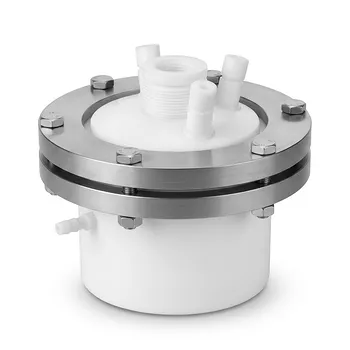
- High Pressure Custom TFM Reactor Stainless Steel Outer Vessel PTFE Inner Cup for Corrosive Synthesis
- Custom TFM Reaction Vessel with Stainless Steel Jacket and PTFE Inner Cup for High Corrosion Resistance
- PTFE Lined High Pressure Digestion Vessel 50ml High Temperature Hydrothermal Synthesis Tank
- High Temperature Corrosion Resistant Hydrothermal Synthesis Reactor with TFM Inner Liner and Straight Cylinder Design
- PTFE 10L Reaction Vessel with Stirring Paddle Customizable Corrosion Resistant High Temperature Reactor for Biopharmaceutical and Chemical Processing
People Also Ask
- Why is a PTFE-lined reactor required for Mn2O3 synthesis? Achieve High Purity & Corrosion Resistance
- What is the technical value of 180 bar pressure for MgO nanostructures? Unlock Superior Crystallinity and Morphology
- What are the technical advantages of using high-pressure PTFE reaction vessels during metal digestion? Expert Insights.
- How does the regulation of initial pressure within a high-pressure reaction system affect the production of MIL-100(Fe)?
- Why is a high-pressure reactor necessary for the esterification reaction between oleic acid and methanol at 150°C? Guide