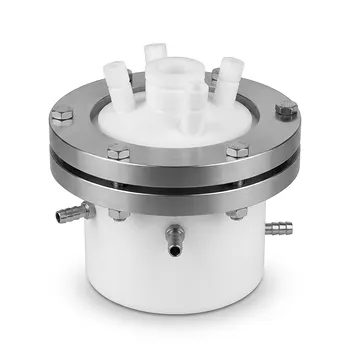
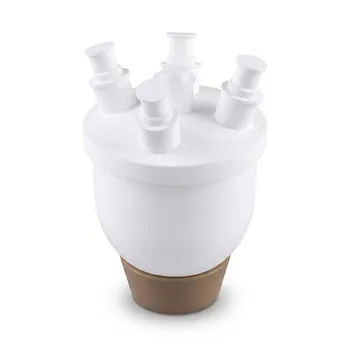
Regulating the initial pressure within a high-pressure reaction system is a fundamental lever for controlling the synthesis outcomes of MIL-100(Fe). By precisely adjusting this parameter, you directly manipulate the gas-liquid equilibrium and reaction kinetics throughout the process. This control allows for the optimization of crystal nucleation and growth, resulting in a metal-organic framework (MOF) with a fine-tuned specific surface area and an enhanced capacity for CO2 adsorption.
Core Takeaway: Initial pressure regulation serves as the primary mechanism for controlling the physical architecture of MIL-100(Fe). Precise management of this variable optimizes the material's BET surface area and pore structure, which are critical for maximizing its performance in gas capture applications.
The Influence on Reaction Dynamics
Altering Gas-Liquid Equilibrium
The initial pressure determines the solubility and distribution of reactants within the high-pressure system. This shift in gas-liquid equilibrium ensures that the precursors are available in the correct concentrations to facilitate a stable reaction environment.
Controlling Reaction Kinetics
Pressure acts as a catalyst for the speed at which chemical bonds form during synthesis. By regulating the starting pressure, you can accelerate or decelerate the reaction kinetics, ensuring that the formation of the MOF proceeds at a manageable and predictable rate.
Impact on Material Characteristics
Optimization of Nucleation and Growth
The transition from a liquid precursor to a solid framework depends on the nucleation and growth processes. Initial pressure control allows you to manage the "seeding" of crystals, preventing irregular formations and promoting a more uniform structural development.
Fine-Tuning Pore Structure and Surface Area
The physical utility of MIL-100(Fe) is defined by its pore structure. Adjusting the pressure allows researchers to reach an optimal BET specific surface area, creating more "internal room" within the framework for molecular interaction.
Functional Outcomes for CO2 Capture
Maximizing Adsorption Capacity
The ultimate goal of pressure regulation in this context is often the enhancement of CO2 adsorption capacity. A higher surface area, achieved through pressure optimization, provides more active sites for carbon dioxide molecules to bind to the material.
Improving Material Efficiency
By achieving the ideal surface-area-to-volume ratio, the material becomes more efficient for industrial applications. This level of control ensures that the MIL-100(Fe) produced is not just structurally sound, but functionally superior for gas separation tasks.
Understanding the Trade-offs
Balancing Pressure and Structural Integrity
While increasing pressure can enhance surface area, excessive initial pressure may lead to structural instability or collapse. It is vital to find the "sweet spot" where porosity is maximized without compromising the framework's overall durability.
Equipment and Safety Considerations
Operating at high initial pressures requires specialized, high-integrity reaction vessels. The trade-off for higher performance is often increased operational complexity and the need for rigorous safety protocols to manage the energy stored within the system.
How to Apply This to Your Project
Achieving the desired characteristics in MIL-100(Fe) requires a strategic approach to pressure management based on your specific application needs.
- If your primary focus is maximizing CO2 capture: Use precise initial pressure regulation to target the highest possible BET specific surface area, as this directly correlates with adsorption sites.
- If your primary focus is structural uniformity: Prioritize the stabilization of nucleation rates by maintaining a consistent initial pressure that prevents rapid, uncontrolled crystal growth.
- If your primary focus is process scalability: Evaluate the trade-offs between high-pressure benefits and the mechanical limitations of your reaction vessels to ensure a safe and repeatable synthesis.
Mastering the regulation of initial pressure transforms MIL-100(Fe) synthesis from a basic chemical reaction into a high-precision engineering process for advanced material design.
Summary Table:
| Factor Influenced | Impact on Synthesis | Functional Benefit for MIL-100(Fe) |
|---|---|---|
| Gas-Liquid Equilibrium | Regulates reactant solubility and distribution | Ensures a stable and consistent reaction environment |
| Reaction Kinetics | Controls the speed of chemical bond formation | Facilitates predictable and manageable MOF growth |
| Nucleation & Growth | Manages the "seeding" of framework crystals | Promotes structural uniformity and prevents defects |
| Pore Structure | Optimizes BET specific surface area | Maximizes internal room for molecular interaction |
| Adsorption Capacity | Increases available active binding sites | Enhances efficiency for CO2 capture and separation |
Elevate Your MOF Synthesis with KINTEK Precision
Precise control in high-pressure reaction systems demands high-integrity equipment. KINTEK manufactures an exhaustive range of laboratory supplies crafted exclusively from high-performance fluoropolymers like PTFE and PFA to ensure your synthesis of MIL-100(Fe) is consistent and safe.
Our Comprehensive Solutions Include:
- Essential Labware: High-purity beakers, measuring cylinders, crucibles, reagent bottles, and digestion tubes.
- Fluid Management: Precise tubing, fittings, valves, and fluid transfer components for seamless integration.
- Sample Prep & Reaction: Separatory funnels, filters, pipettes, and advanced hydrothermal synthesis liners or microwave digestion vessels.
- Custom Engineering: End-to-end custom CNC fabrication for complex non-standard machined parts, bespoke laboratory setups, and specialized electrochemical cells or battery testing fixtures.
Whether you need high-volume consumables like O-rings and stirring bars or high-precision advanced derivative apparatus, KINTEK provides the material expertise to maximize your lab's performance.
Contact KINTEK today to discuss your custom project!
References
- Soňa Lisníková, Petr Novák. Systematic Study on MIL-100(Fe) Synthesis Conditions to Enhance Its Properties as a Green Material for CO<sub>2</sub> Capture. DOI: 10.1021/acsomega.5c03761
This article is also based on technical information from Kintek Knowledge Base .
Related Products
- High Pressure Custom TFM Reactor Stainless Steel Outer Vessel PTFE Inner Cup for Corrosive Synthesis
- High Temperature Corrosion Resistant Hydrothermal Synthesis Reactor with TFM Inner Liner and Straight Cylinder Design
- High Purity PFA Constant Pressure Condensation Reaction System Acid Resistant High Temperature Customizable Teflon Labware
- Custom TFM Reaction Vessel with Stainless Steel Jacket and PTFE Inner Cup for High Corrosion Resistance
- PTFE Lined High Pressure Digestion Vessel 50ml High Temperature Hydrothermal Synthesis Tank
People Also Ask
- Why is a PTFE-lined reactor required for Mn2O3 synthesis? Achieve High Purity & Corrosion Resistance
- What is the technical value of 180 bar pressure for MgO nanostructures? Unlock Superior Crystallinity and Morphology
- What are the technical advantages of using high-pressure PTFE reaction vessels during metal digestion? Expert Insights.
- Why is a high-pressure reactor necessary for the esterification reaction between oleic acid and methanol at 150°C? Guide
- What is the function of a high-pressure reactor in ZnWO4/BiOBr synthesis? Optimize Morphology and Heterojunctions