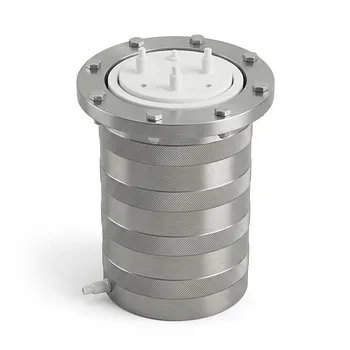
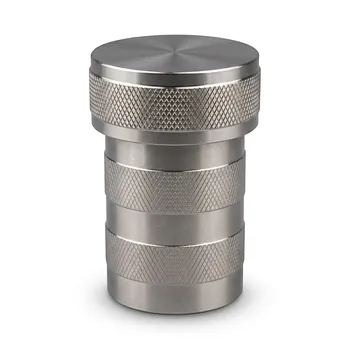
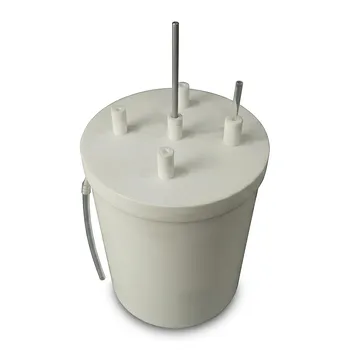
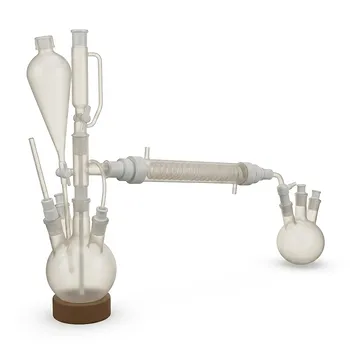
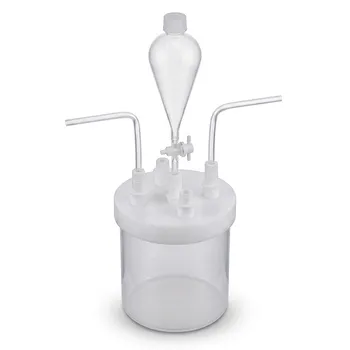
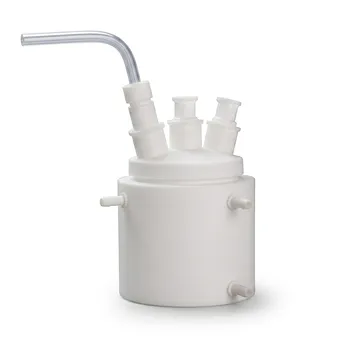
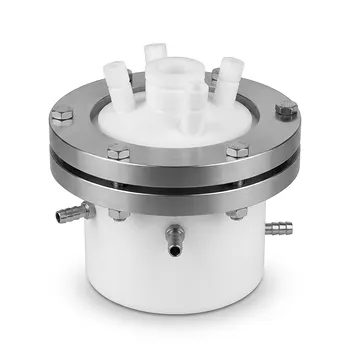
In the hydrothermal synthesis of ZnWO4/BiOBr nanocomposites, the high-pressure reactor acts as a controlled thermobaric chamber. By providing a sealed environment, it allows aqueous solutions to reach temperatures between 100°C and 200°C while remaining in a liquid state. This specific environment is essential for increasing the solubility of precursors, facilitating recrystallization, and ensuring the efficient coupling of nanoparticles at the heterojunction interface.
The high-pressure reactor serves as the fundamental catalyst for nucleation and growth, providing the autogenous pressure and kinetic energy required to engineer specific crystal facets and morphologies that are unattainable under standard atmospheric conditions.
The Role of Controlled Thermobaric Environments
Enhancing Precursor Solubility and Hydrolysis
The primary function of the reactor is to increase the solubility of chemical precursors that would otherwise remain insoluble at room temperature. High pressure and temperature facilitate the complete hydrolysis of these precursors, providing the necessary concentration of ions in the solvent for the reaction to proceed.
Facilitating Recrystallization and Growth
Once precursors are dissolved, the reactor provides the energy required for controlled recrystallization. This allows for the precise transformation of raw chemical inputs into high-crystallinity nanopowders with stable, regular structures.
Inducing Specific Crystal Facets
By precisely controlling the temperature and reaction time within the sealed vessel, researchers can induce the growth of specific crystal facets. In the case of ZnWO4/BiOBr, this morphological control is critical for creating the active surfaces needed for high-performance applications like photocatalysis.
Facilitating the Heterojunction Interface
Ensuring Efficient Nanoparticle Coupling
A critical deep need in nanocomposite synthesis is the efficient coupling of different materials. The high-energy environment within the reactor ensures that ZnWO4 and BiOBr particles bond effectively at their interface, creating a functional heterojunction.
Accelerating Ion Diffusion
The high-pressure environment significantly accelerates ion diffusion rates within the solution. This rapid movement is essential for the uniform distribution of elements and the formation of complex hydroxide or oxide structures across the composite material.
Maintaining Structural Stability
The reactor enables the reorganization of molecules into more stable, mesoporous structures. This improves the microstructural quality and thermal stability of the resulting ZnWO4/BiOBr nanocomposite, ensuring it can withstand further processing or use.
Understanding the Trade-offs
Material Limitations and Safety
High-pressure reactors, often utilizing stainless steel autoclaves with PTFE liners, have strict temperature and pressure limits. Exceeding these limits can lead to liner deformation or mechanical failure of the vessel, making precise monitoring essential.
Scalability vs. Precision
While these reactors provide excellent control over morphology at the laboratory scale, scaling to industrial volumes can be challenging. Maintaining uniform temperature and pressure gradients throughout a large vessel is more complex than in small-scale experimental setups.
How to Apply This to Your Project
When utilizing a high-pressure reactor for hydrothermal synthesis, your approach should vary based on your specific material goals.
- If your primary focus is Morphology Control: Prioritize precise temperature regulation between 100°C and 200°C to induce the growth of specific crystal facets.
- If your primary focus is High Crystallinity: Extend the reaction time within the reactor to allow for more complete recrystallization and ion diffusion.
- If your primary focus is Heterojunction Efficiency: Ensure the precursors are fully dissolved before the heating cycle begins to promote uniform coupling at the nanoparticle interface.
By mastering the pressure and temperature variables of the hydrothermal process, you can transform simple chemical precursors into sophisticated, high-performance nanocomposites.
Summary Table:
| Key Reactor Function | Impact on Synthesis Process | Benefit for ZnWO4/BiOBr |
|---|---|---|
| Thermobaric Control | Maintains liquid state at 100°C–200°C | Increases precursor solubility and hydrolysis |
| Energy Regulation | Facilitates controlled recrystallization | Produces high-crystallinity nanopowders |
| Morphology Tuning | Induces growth of specific crystal facets | Creates active surfaces for photocatalysis |
| High-Energy Coupling | Accelerates ion diffusion at interfaces | Ensures efficient heterojunction formation |
| Structural Stability | Reorganizes molecules into mesopores | Enhances thermal and microstructural quality |
Elevate Your Synthesis Precision with KINTEK’s Fluoropolymer Solutions
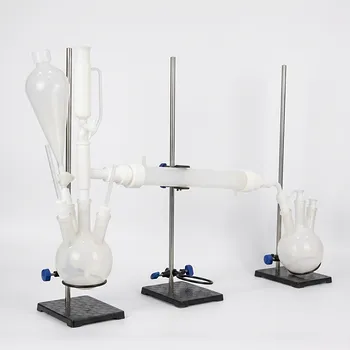
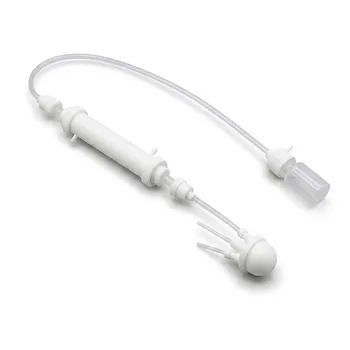
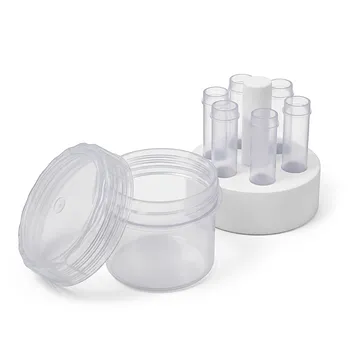
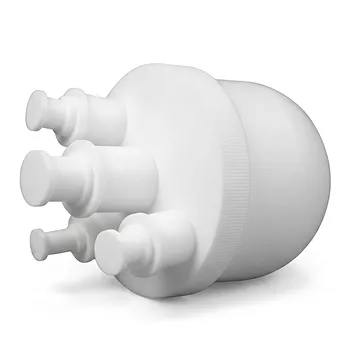
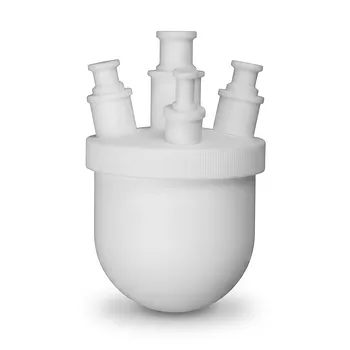
Achieving the perfect heterojunction in ZnWO4/BiOBr nanocomposites requires high-performance materials that can withstand rigorous hydrothermal conditions. KINTEK specializes in manufacturing virtually all laboratory supplies crafted from PTFE and PFA, ensuring your high-pressure reactors and synthesis setups remain uncontaminated and durable.
From everyday basic labware (beakers, crucibles, and digestion tubes) to advanced reaction apparatus like hydrothermal synthesis liners, microwave digestion vessels, and custom electrochemical cells, we provide the tools necessary for elite material science. Our capabilities include:
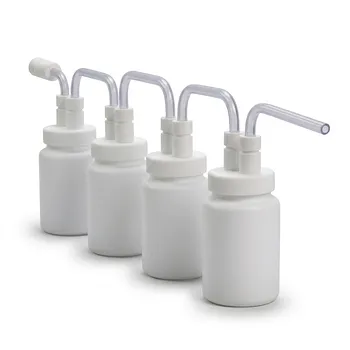
- High-Purity Labware: PFA reagent bottles, PTFE filters, and trace analysis instruments.
- Fluid Transfer & Sample Prep: Precise tubing, fittings, valves, and filtration tools.
- Custom Engineering: End-to-end custom CNC fabrication for bespoke laboratory setups and complex non-standard machined parts.
Whether you need high-volume consumables like stirring bars and O-rings or a fully custom-engineered reaction vessel, KINTEK is your partner in high-performance fluoropolymers.
Contact our experts today to optimize your laboratory setup!
References
- Mohammad Farhan, Gandharve Kumar. Hydrothermal Synthesis of Z-Scheme ZnWO4/BiOBr Nanocomposite for Photocatalytic Degradation of Rhodamine B Dye. DOI: 10.14233/ajchem.2025.34552
This article is also based on technical information from Kintek Knowledge Base .
Related Products
- High Pressure Custom TFM Reactor Stainless Steel Outer Vessel PTFE Inner Cup for Corrosive Synthesis
- High Temperature Corrosion Resistant Hydrothermal Synthesis Reactor with TFM Inner Liner and Straight Cylinder Design
- High Purity PFA Constant Pressure Condensation Reaction System Acid Resistant High Temperature Customizable Teflon Labware
- Custom TFM Reaction Vessel with Stainless Steel Jacket and PTFE Inner Cup for High Corrosion Resistance
- High Temperature Teflon Continuous Reaction System and HF Resistant Three Neck Flask for Petrochemical Processing
People Also Ask
- Why is a PTFE-lined reactor required for Mn2O3 synthesis? Achieve High Purity & Corrosion Resistance
- What is the technical value of 180 bar pressure for MgO nanostructures? Unlock Superior Crystallinity and Morphology
- What are the technical advantages of using high-pressure PTFE reaction vessels during metal digestion? Expert Insights.
- How does the regulation of initial pressure within a high-pressure reaction system affect the production of MIL-100(Fe)?
- Why is a high-pressure reactor necessary for the esterification reaction between oleic acid and methanol at 150°C? Guide