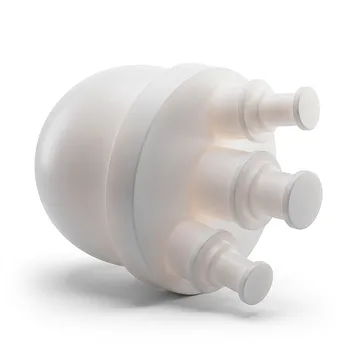
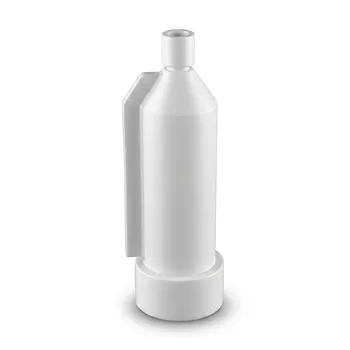
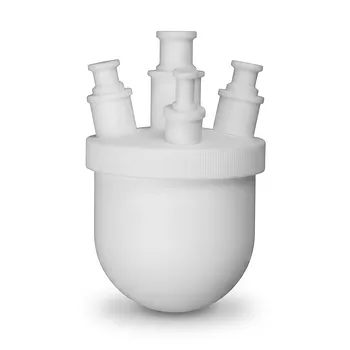
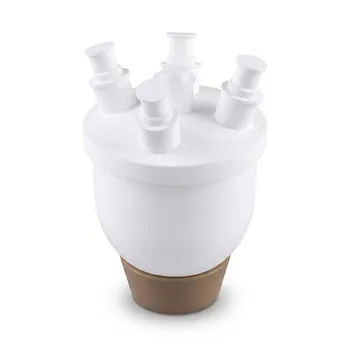
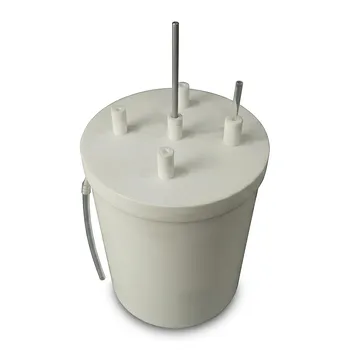
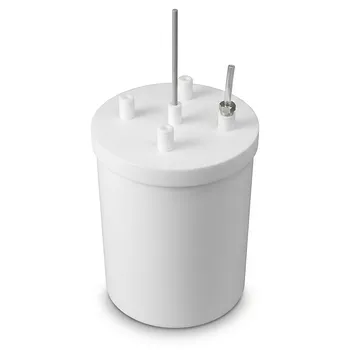
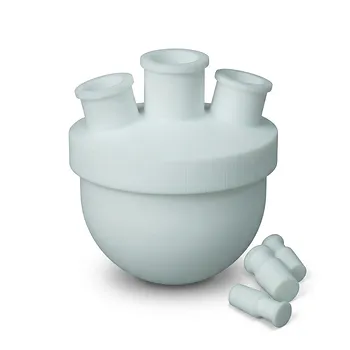
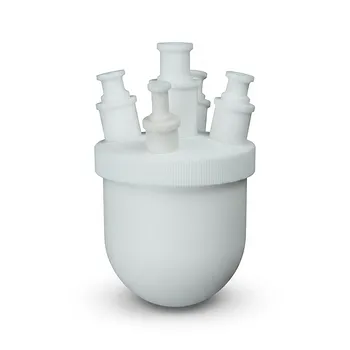
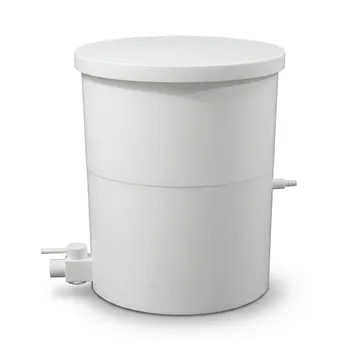
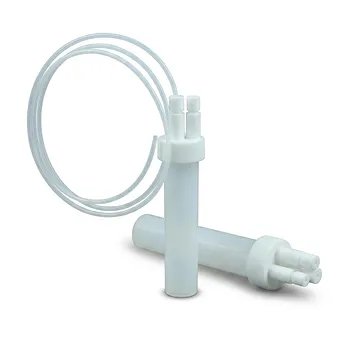
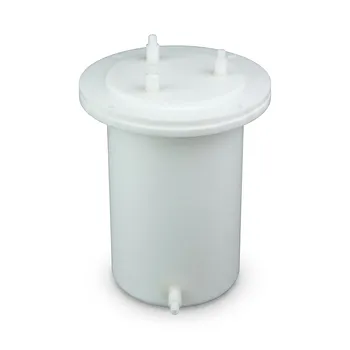
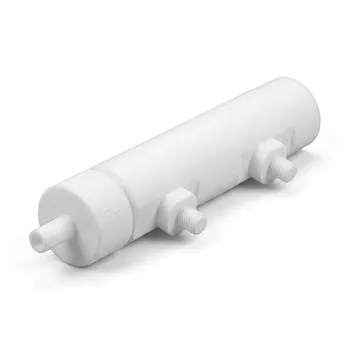
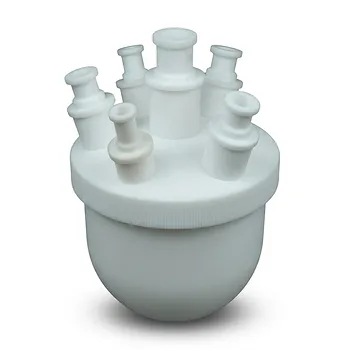
High-pressure Polytetrafluoroethylene (PTFE) vessels are the industry standard for metal digestion because they provide a chemically "invisible" environment under extreme physical conditions. These vessels allow for the total dissolution of complex matrices using aggressive reagents like hydrofluoric acid (HF) while preventing sample contamination and the loss of volatile elements. Their unique combination of chemical inertness and thermal stability ensures that the analytical integrity of trace and ultra-trace metal analysis remains uncompromised.
The central advantage of high-pressure PTFE vessels lies in their ability to facilitate complete sample decomposition through elevated temperatures and pressures without introducing impurities or losing analytes. This makes them indispensable for precise trace element determination in geological, biological, and environmental chemistry.
Achieving Total Sample Dissolution
Resilience Against Aggressive Reagents
PTFE is virtually inert to almost all chemical reagents, including strong oxidizing acids like concentrated nitric acid (HNO3) and perchloric acid. Unlike glass or quartz, PTFE is specifically resistant to hydrofluoric acid (HF), which is the only reagent capable of breaking down silicate structures in soil and mineral samples.
High Temperature and Pressure Tolerance
High-pressure digestion systems utilize the autogenous pressure generated by heating reagents in a sealed environment to reach temperatures far above their atmospheric boiling points. Standard PTFE vessels can safely operate at temperatures up to 150°C, while modified versions like TFM-PTFE can withstand up to 300°C and 100 atm in microwave-assisted systems.
Accelerated Decomposition of Complex Matrices
The combination of high heat and pressure significantly increases the kinetic energy of the digestion reaction. This ensures that complex organic matrices—such as fats, proteins, and resistant mineral particles—are completely decomposed into a clear solution suitable for ICP-MS or AAS analysis.
Maintaining Analytical Integrity
Minimal Trace Element Leaching
High-performance PTFE features an exceptionally low trace element background, meaning it does not leach heavy metals into the sample during the digestion process. This is critical for "pathological metallomics" and ultra-trace analysis, where even parts-per-trillion (ppt) levels of external contamination can invalidate experimental results.
Prevention of Analyte Adsorption
The low surface energy and non-stick properties of PTFE prevent trace metal ions from "sticking" to the vessel walls. This ensures that the entire sample remains in the liquid phase, facilitating high recovery rates and preventing the loss of low-concentration analytes during the transfer process.
Sealing and Volatile Retention
High-pressure vessels are designed with superior sealing capabilities to contain the internal pressure generated during heating. This seal is essential for preventing the escape of volatile elements, such as mercury (Hg), lead (Pb), and cadmium (Cd), which would otherwise evaporate and result in low recovery data.
Understanding the Trade-offs
Memory Effects and Cleaning
Despite its non-stick surface, PTFE is slightly porous at the microscopic level, which can lead to "memory effects" where ions from a previous digestion are retained. To mitigate this, vessels require rigorous cleaning protocols, often involving "blank" acid digestions between sample runs to ensure the background remains low.
Thermal Deformation and Aging
PTFE has a "cold flow" characteristic, meaning it can slowly deform under high pressure over time, especially if safety temperature limits are exceeded. Users must monitor the physical integrity of the liners, as over-pressurization can lead to permanent warping or "venting" incidents that compromise the seal.
Selecting the Right Vessel for Your Workflow
How to Apply This to Your Project
Selecting the appropriate vessel depends on the complexity of your matrix and the sensitivity required for your analysis.
- If your primary focus is ultra-trace analysis (ppt levels): Prioritize high-purity TFM-PTFE liners with a proven low-leaching background to minimize the experimental signal-to-noise ratio.
- If your primary focus is geological or soil samples: Ensure your vessels are rated for high-pressure HF digestion to effectively dissolve silicate structures.
- If your primary focus is high-throughput organic digestion: Utilize microwave-compatible PTFE vessels that can withstand rapid heating and high autogenous pressures to ensure complete oxidation of fats and proteins.
By leveraging the chemical and physical properties of PTFE, laboratories can ensure the highest levels of accuracy and repeatability in elemental analysis.
Summary Table:
| Feature | Technical Advantage | Analytical Impact |
|---|---|---|
| Chemical Inertness | Resistance to HF and strong oxidizing acids | Allows total dissolution of silicates and complex matrices |
| Thermal Stability | Operates up to 300°C (TFM-PTFE) under pressure | Accelerates decomposition of resistant organic/mineral samples |
| Low Surface Energy | Non-stick surface with minimal trace leaching | Prevents analyte adsorption and ensures ppt-level accuracy |
| Sealing Capability | Superior retention of autogenous pressure | Prevents loss of volatile elements like Hg, Pb, and Cd |
| Material Purity | Exceptionally low trace element background | Minimizes contamination for ultra-trace metal analysis |
Elevate Your Analytical Precision with KINTEK
Maximize the integrity of your trace analysis with high-performance fluoropolymer solutions from KINTEK. Whether your workflow requires everyday basic labware—such as beakers, crucibles, and reagent bottles—or advanced reaction apparatus like high-pressure microwave digestion vessels and custom electrochemical cells, we provide the chemically 'invisible' environment your samples demand.
Our expertise extends across a comprehensive range of PTFE and PFA products, including:
- Sample Prep & Filtration: Separatory funnels, filters, pipettes, and spatulas.
- Fluid Transfer: Precision-engineered tubing, fittings, and valves.
- Specialized Components: Stirring bars, O-rings, seals, and high-purity cleaning tanks.
Backed by end-to-end custom CNC fabrication, KINTEK is uniquely equipped to deliver everything from complex, non-standard machined parts to high-volume orders with an absolute focus on performance and purity.
Ready to optimize your digestion process? Contact our experts today to discuss your custom laboratory needs!
References
- Riccardo Leinardi, François Huaux. Uncovering exposome-related diseases through the pathologic metallome: a novel approach for clinical populations. DOI: 10.3389/ftox.2025.1625874
This article is also based on technical information from Kintek Knowledge Base .
Related Products
- PTFE Lined High Pressure Digestion Vessel 50ml High Temperature Hydrothermal Synthesis Tank
- High Purity Custom PTFE Large Volume 15L Flask Corrosion Resistant Low Trace Background Fluoropolymer Reaction Vessel
- Custom TFM Reaction Vessel with Stainless Steel Jacket and PTFE Inner Cup for High Corrosion Resistance
- High Pressure Custom TFM Reactor Stainless Steel Outer Vessel PTFE Inner Cup for Corrosive Synthesis
- High Purity PTFE Corrosion Resistant Reaction Vessel with Luer Fittings and Caps for Trace Analysis
People Also Ask
- What are the benefits of using a PTFE-lined vessel for carbon-sulfur cathode treatment? Maximize Purity & Performance
- Why are PTFE-lined pressure digestion vessels required for the preparation of Ag/CeO2 catalysts? Purity & Performance
- What safety features are typically incorporated into high-pressure PTFE digestion vessel designs? Ensure Lab Safety
- What is the function of PTFE lined high-pressure vessels in g-C3N4 synthesis? Achieve High-Purity Material Growth
- Role of High-Pressure Digestion Tanks in Perovskite Synthesis: Achieve Superior Stability and Latent Heat