Maintaining 180 bar pressure is a critical lever in hydrothermal synthesis. It fundamentally alters the solvent's properties to increase precursor solubility and provides a unique kinetic environment for high crystallinity. This specific pressure level allows for the formation of magnesium oxide nanostructures at temperatures significantly lower than their conventional melting points while offering precise control over particle morphology.
High-pressure environments (180 bar) act as a catalyst for both chemical solubility and structural precision. By manipulating the kinetic state of the reaction, researchers can engineer magnesium oxide nanostructures with specific crystalline, spherical, and porous characteristics that are unattainable at atmospheric pressure.
Enhancing Chemical Reactivity and Solubility
Overcoming Solubility Barriers
At 180 bar, the high-pressure reactor significantly increases the solubility of precursors within the aqueous solution. This ensures a more homogeneous distribution of reactants, which is a prerequisite for uniform nanostructure growth.
Facilitating Precursor Dissolution
Higher pressure forces the solvent into the internal structures of the precursor materials. This accelerates the dissolution process, allowing for a higher concentration of reactive species to be available for the nucleation phase.
Thermal Dynamics and Crystallinity
Synthesis Below Conventional Melting Points
The enclosed high-pressure system creates a environment where highly crystalline magnesium oxide can form at temperatures far below standard requirements. This reduces the energy intensity of the process while maintaining superior structural integrity.
Kinetic Environment Optimization
The 180 bar setting provides a unique kinetic environment that dictates how atoms arrange themselves during solidification. This pressure-induced kinetics promotes the development of well-defined crystal lattices that define the material's performance.
Morphological Engineering of Nanostructures
Regulating Sphericity and Geometry
Precise control of pressure parameters allows for the effective regulation of sphericity in the resulting nanoparticles. By maintaining 180 bar, the surface tension and growth rates are balanced to favor the formation of uniform, rounded structures.
Controlling Porous Architectures
The internal pressure directly influences the porosity of the magnesium oxide nanostructures. This capability is essential for applications where surface area and molecular transport are critical, such as in catalysis or sensor development.
Understanding the Trade-offs
Equipment Requirements and Safety
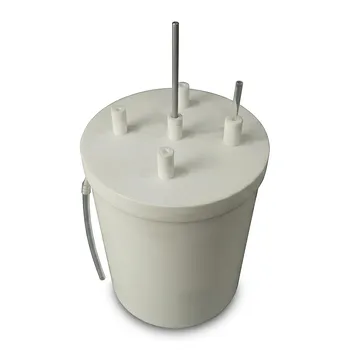
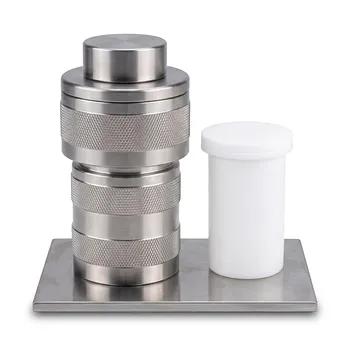
Operating at 180 bar requires specialized, high-strength reactors and rigorous safety protocols. The complexity of the hardware increases the initial capital investment and requires skilled oversight to prevent mechanical failure.
Sensitivity to Fluctuations
Minor deviations from the target pressure can lead to inconsistent morphology or reduced crystallinity. Maintaining a stable 180 bar environment demands high-precision pressure transducers and reliable sealing mechanisms.
Optimizing Your Synthesis Parameters
Selecting the appropriate pressure environment is vital for achieving the desired material characteristics in magnesium oxide production.
- If your primary focus is high crystallinity: Maintaining 180 bar ensures superior crystal lattice formation at lower thermal thresholds.
- If your primary focus is morphological precision: This pressure level is the primary mechanism for tuning the sphericity and porous density of the nanoparticles.
- If your primary focus is high-yield solubility: Use the 180 bar environment to maximize the concentration of dissolved precursors for a more efficient reaction.
By mastering the pressure dynamics of the high-pressure reactor, you can achieve unprecedented control over the physical and chemical identity of magnesium oxide nanostructures.
Summary Table:
| Key Parameter | Impact at 180 Bar Pressure | Technical Benefit for MgO |
|---|---|---|
| Solubility | Increases precursor dissolution in aqueous solution | Ensures uniform growth & homogeneous distribution |
| Crystallinity | Promotes lattice formation at lower temperatures | Superior structural integrity with less energy |
| Morphology | Balances surface tension and growth rates | Precise control over sphericity and particle geometry |
| Porosity | Regulates internal kinetic environment | Optimized surface area for catalysis and sensors |
| Reaction Rate | Facilitates faster precursor dissolution | Accelerated nucleation and synthesis efficiency |
Elevate Your High-Pressure Synthesis with KINTEK Precision
Achieving 180 bar precision in magnesium oxide synthesis requires more than just a reactor—it requires reliable, high-performance components that withstand extreme conditions. KINTEK specializes in manufacturing virtually all imaginable laboratory supplies crafted from premium PTFE and PFA, ensuring your research remains uncontaminated and your equipment remains durable.
From everyday basic labware (beakers, measuring cylinders, crucibles, reagent bottles, and digestion tubes) to advanced reaction apparatus like high-pressure liners, microwave digestion vessels, and custom microchannel reactors, we provide the tools necessary for high-performance chemical engineering. Our capabilities include:
- Fluid Transfer: High-purity tubing, fittings, and valves.
- Sample Prep: Separatory funnels, filters, and high-precision pipettes.
- Custom Fabrication: End-to-end custom CNC machining for non-standard parts and bespoke laboratory setups.
- Advanced Tools: Electrochemical cells, battery testing fixtures, and condensation/reflux devices.
Whether you are placing high-volume orders for consumables like O-rings and gaskets or need a complex, custom-machined solution for your high-pressure reactor, KINTEK’s absolute focus on fluoropolymer excellence ensures your lab's success.
Contact KINTEK today to optimize your laboratory setup!
References
- Sabreen Ghanem Al-Fatlawi, Kahtan A. Mohammed. Antibacterial Activity of MgO Nanoparticles Prepared by Hydrothermal Method Against Clinical Isolated of Gram Negative Bacteria. DOI: 10.18280/rcma.350313
This article is also based on technical information from Kintek Knowledge Base .
Related Products
- High Pressure Custom TFM Reactor Stainless Steel Outer Vessel PTFE Inner Cup for Corrosive Synthesis
- High Temperature Corrosion Resistant Hydrothermal Synthesis Reactor with TFM Inner Liner and Straight Cylinder Design
- High Purity PFA Constant Pressure Condensation Reaction System Acid Resistant High Temperature Customizable Teflon Labware
- Custom TFM Reaction Vessel with Stainless Steel Jacket and PTFE Inner Cup for High Corrosion Resistance
- PTFE 10L Reaction Vessel with Stirring Paddle Customizable Corrosion Resistant High Temperature Reactor for Biopharmaceutical and Chemical Processing
People Also Ask
- Why is a PTFE-lined reactor required for Mn2O3 synthesis? Achieve High Purity & Corrosion Resistance
- What are the technical advantages of using high-pressure PTFE reaction vessels during metal digestion? Expert Insights.
- How does the regulation of initial pressure within a high-pressure reaction system affect the production of MIL-100(Fe)?
- Why is a high-pressure reactor necessary for the esterification reaction between oleic acid and methanol at 150°C? Guide
- What is the function of a high-pressure reactor in ZnWO4/BiOBr synthesis? Optimize Morphology and Heterojunctions