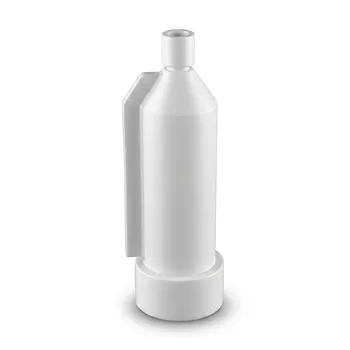
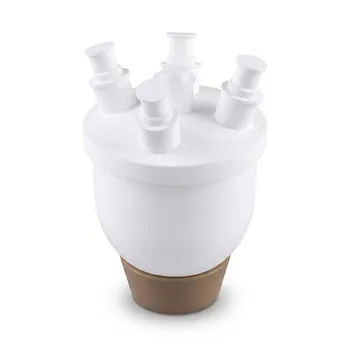
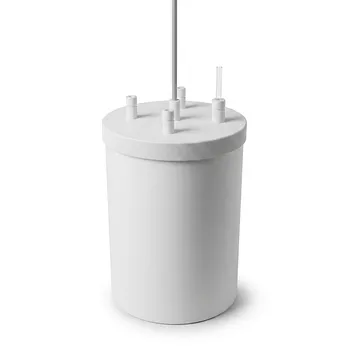
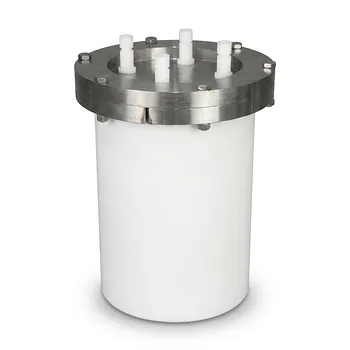
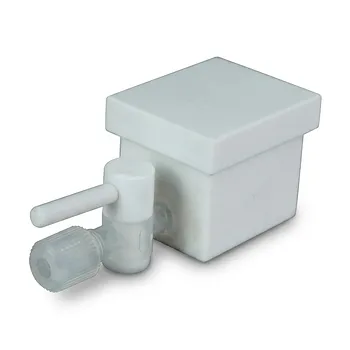
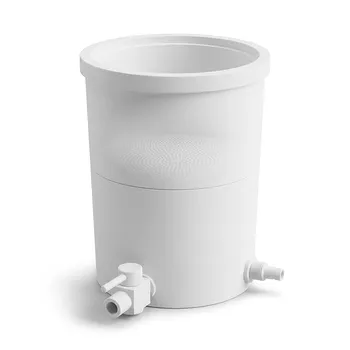
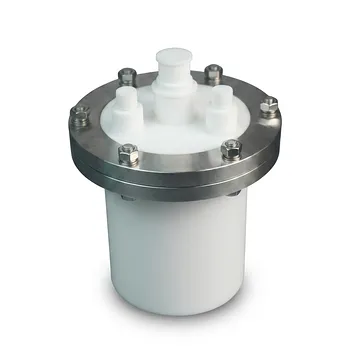
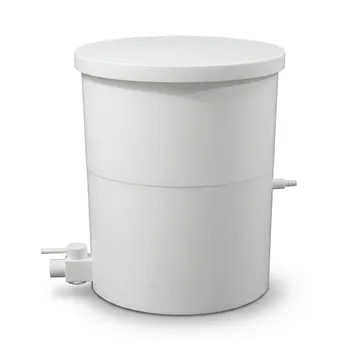
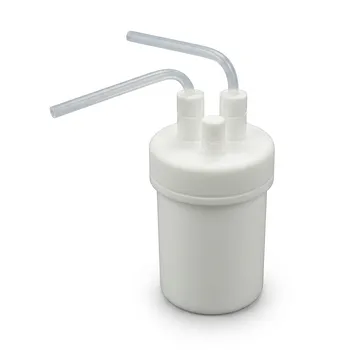
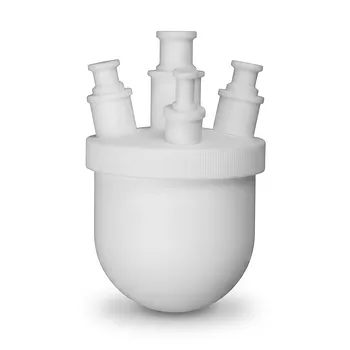
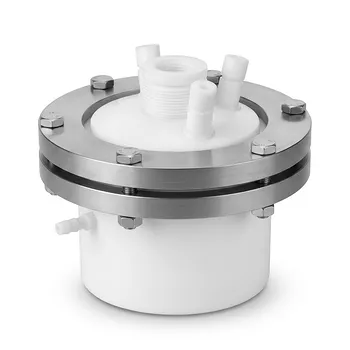
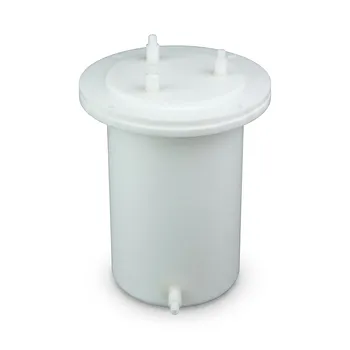
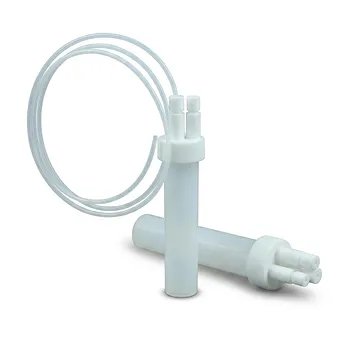
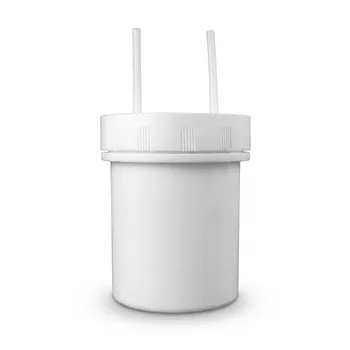
The necessity of PTFE-lined vessels in alkali stability testing is driven by the extreme corrosiveness of high-concentration bases and the need for rigorous environmental control. At elevated temperatures—typically around 80°C—strong alkalis like 8 M KOH rapidly degrade standard glassware and introduce experimental artifacts. Sealed PTFE containers isolate the reaction from atmospheric interference and container degradation, ensuring that the material lifespan data collected is both objective and reproducible.
PTFE containers are indispensable for alkali stability tests because they provide a chemically inert, non-leaching environment that prevents electrolyte carbonation and evaporation. This ensures a constant hydroxide concentration, protecting the integrity of the data from experimental artifacts caused by container degradation or atmospheric $CO_2$.
Protecting the Purity of the Alkaline Environment
Superior Resistance to Chemical Attack
Strong alkaline electrolytes, such as potassium hydroxide (KOH), are highly corrosive, especially at concentrations of 1 M to 8 M. Standard laboratory glassware is susceptible to silicon leaching when exposed to these solutions, which can lead to container failure and electrolyte contamination. Polytetrafluoroethylene (PTFE) and Perfluoroalkoxy (PFA) are selected for their exceptional chemical inertness, remaining stable even during month-long exposures at high temperatures.
Eliminating Impurity Leaching
The high chemical purity of PTFE ensures that no impurity ions or trace metals leach into the solution from the vessel walls. This is critical for anion exchange membrane (AEM) testing, where secondary contamination can interfere with catalyst activity or lead to inaccurate Faraday efficiency results. Maintaining a "clean" environment ensures that the degradation observed is strictly due to the alkali-ionomer interaction, not external contaminants.
Maintaining Thermodynamic and Chemical Stability
Prevention of Electrolyte Carbonation
One of the most significant risks in alkali testing is the absorption of atmospheric carbon dioxide ($CO_2$). When $CO_2$ enters an open or poorly sealed vessel, it reacts with hydroxide ions to form carbonates, effectively lowering the pH and the hydroxide concentration. Using a sealed PTFE container blocks $CO_2$ entry, maintaining a constant hydroxide concentration required for accurate accelerated aging data.
Mitigating Fluid Loss through Evaporation
Long-term stability tests, which can last for hundreds of hours, are highly sensitive to changes in concentration caused by evaporation. A sealed vessel prevents the loss of solvent, ensuring the electrolyte concentration remains stable throughout the experiment. Without this seal, the solution would become increasingly concentrated over time, leading to inconsistent degradation rates and unreliable material lifespan projections.
Understanding the Trade-offs
Thermal and Pressure Limitations
While PTFE is thermally stable, it is subject to "cold flow" or creep under high pressure and temperature combinations. If a reaction generates internal pressure, standard PTFE bottles may deform, potentially compromising the seal. In high-pressure scenarios, engineers must use stainless steel autoclaves with thick PTFE liners to provide the necessary mechanical support.
Gas Permeability
PTFE is slightly permeable to certain gases over very long durations at high temperatures. While it effectively blocks $CO_2$ for standard stability tests, it may not be a perfect barrier for extremely sensitive, long-term kinetic studies. For the vast majority of ionomer stability tests, however, the permeability of PTFE is negligible compared to the risks of open-air testing.
How to Apply This to Your Project
When setting up alkali stability protocols, the choice of vessel should align with your specific analytical goals and the severity of the testing conditions.
- If your primary focus is accurate material lifespan data: Always use sealed PTFE or PFA containers to prevent carbonation and evaporation, ensuring the hydroxide concentration remains constant.
- If your primary focus is catalyst performance or trace analysis: Prioritize high-purity fluoropolymers (PTFE/PFA) to eliminate metal ion or silicon leaching that could poison the catalyst or skew colorimetric results.
- If your primary focus is cost-effective screening at room temperature: You may use high-density polyethylene (HDPE) for short durations, but be aware that it lacks the thermal stability required for standard 80°C accelerated aging tests.
By utilizing sealed PTFE vessels, you ensure that the degradation observed in your ionomers is a result of the chemical environment you intended to study, rather than a byproduct of container failure or atmospheric interference.
Summary Table:
| Feature | Benefit for Alkali Stability Testing | Risk of Using Standard Glassware |
|---|---|---|
| Chemical Inertness | Prevents corrosion and silicon leaching from strong bases (KOH). | Silicon leaching contaminates electrolyte and weakens the vessel. |
| Airtight Sealing | Blocks atmospheric $CO_2$ to prevent carbonation and pH drops. | Hydroxide concentration decreases, skewing degradation data. |
| Thermal Stability | Maintains structural integrity at standard test temperatures (80°C). | Material degradation or failure during long-term accelerated aging. |
| High Purity | Eliminates trace metal leaching that could poison catalysts. | Impurities interfere with catalyst activity and Faraday efficiency. |
| Fluid Retention | Mitigates electrolyte loss via evaporation during long tests. | Solution becomes over-concentrated, leading to inconsistent results. |
Elevate Your Research Precision with KINTEK High-Performance Fluoropolymers
In ionomer research and alkali stability testing, the integrity of your container is the integrity of your data. KINTEK specializes in manufacturing a comprehensive range of laboratory supplies crafted exclusively from high-performance PTFE and PFA to ensure a chemically inert, non-leaching environment for your most critical experiments.
Whether you need everyday essentials like beakers, crucibles, reagent bottles, and centrifuge tubes, or specialized tools like separatory funnels, filters, and high-purity fluid transfer components (tubing, valves, fittings), we have you covered. For complex research, our expertise extends to advanced standard or custom electrochemical cells, battery testing fixtures, microwave digestion vessels, and microchannel reactors.
Why partner with KINTEK?
- End-to-End Customization: Benefit from our custom CNC fabrication for bespoke laboratory setups and non-standard machined parts.
- Unmatched Purity: Eliminate contamination risks with our absolute focus on premium fluoropolymer materials.
- Scalable Solutions: We deliver everything from single custom prototypes to high-volume orders with consistent precision.
Protect your alkaline environment and ensure reproducible results. Contact KINTEK today to discuss your custom labware requirements!
References
- Fanghua Liu, Katsuyoshi Kakinuma. High‐Performance Anion Exchange Membrane Water Electrolyzers Enabled by Highly Gas Permeable and Dimensionally Stable Anion Exchange Ionomers. DOI: 10.1002/advs.202402969
This article is also based on technical information from Kintek Knowledge Base .
Related Products
- Custom TFM Reaction Vessel with Stainless Steel Jacket and PTFE Inner Cup for High Corrosion Resistance
- PTFE Lined High Pressure Digestion Vessel 50ml High Temperature Hydrothermal Synthesis Tank
- High Purity PTFE Corrosion Resistant Reaction Vessel with Luer Fittings and Caps for Trace Analysis
- High Performance Customizable PTFE Reaction Vessel and Corrosion Resistant Polytetrafluoroethylene Flask for Chemical Laboratory Use
- High Purity PTFE Reaction Vessel Polyfluortetraethylene Cylindrical Tank Petrochemical Reaction Container
People Also Ask
- Why are high-performance pressure-resistant reaction vessels required for oxygen-assisted hydrothermal conversion at 150 °C?
- How do magnetic stirring and reaction vessels impact MOF-derived carbon quality? Optimize Your Composite Performance
- Why are high-quality fluoropolymer-lined reaction vessels required for alk-Ti3C2Tx MXene? Ensure Purity & HF Resistance
- Why are PTFE-lined reaction vessels necessary for forced degradation studies? Ensure high-purity results and accuracy.
- Why is a high-purity PTFE lined reaction vessel required for the acidic etching of MXenes? Ensure Material Purity.