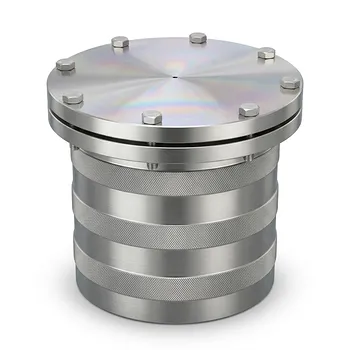
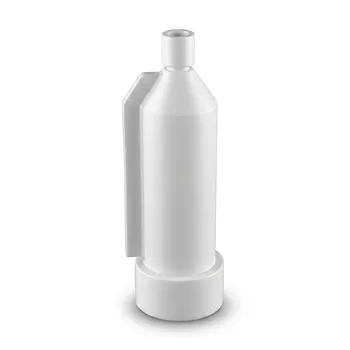
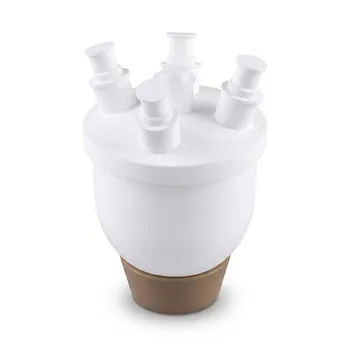
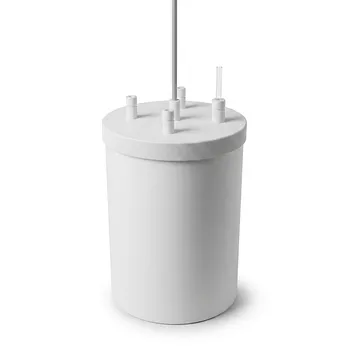
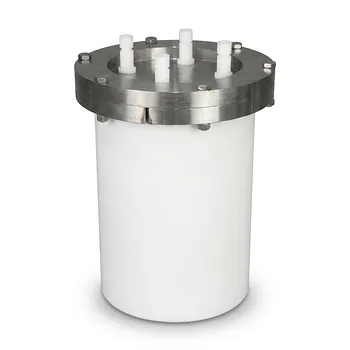
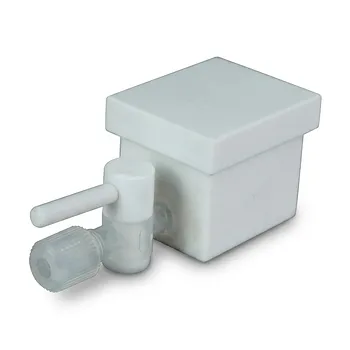
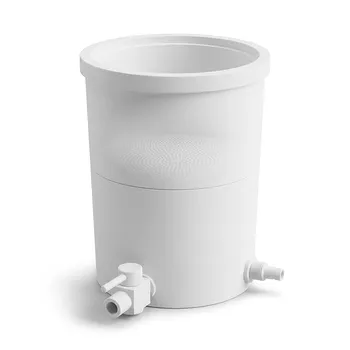
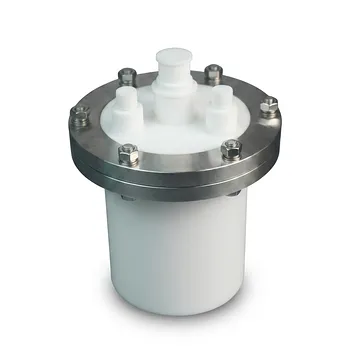
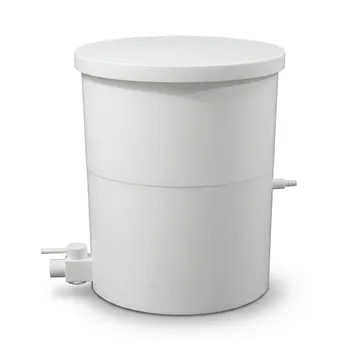
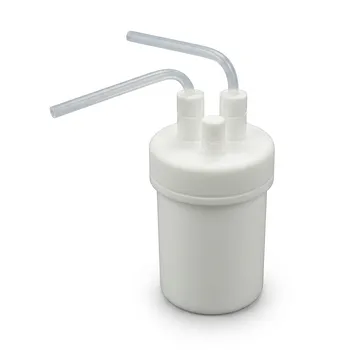
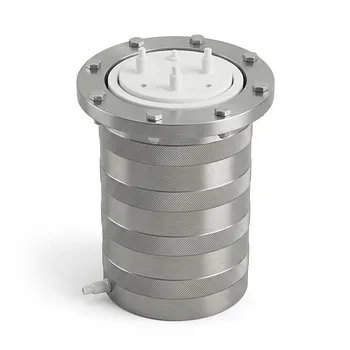
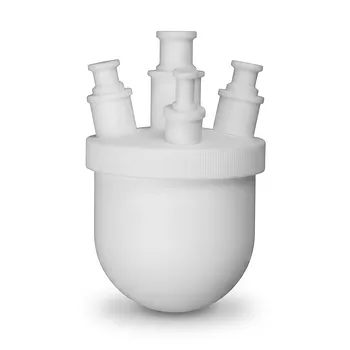
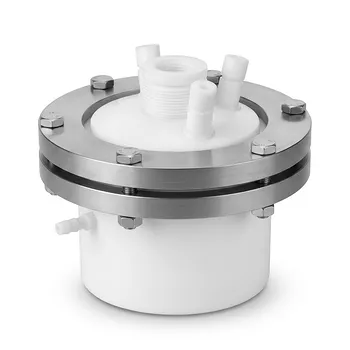
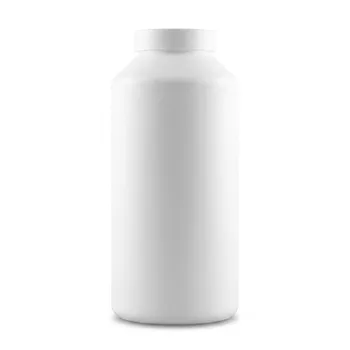
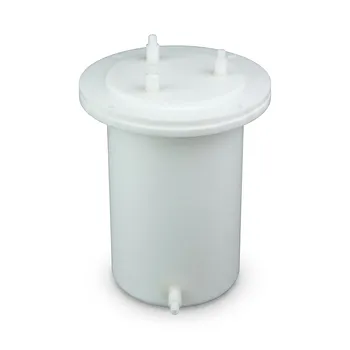
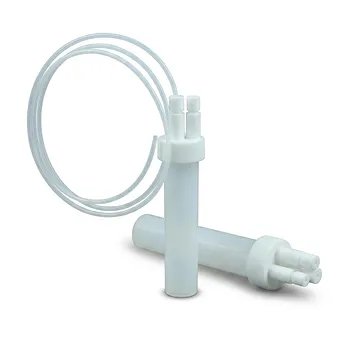
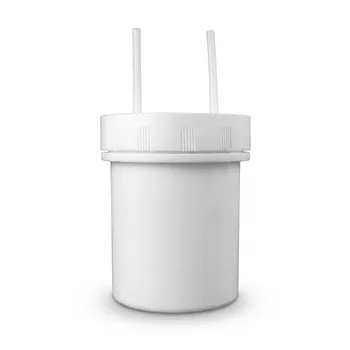
The corrosive etching process for alk-Ti3C2Tx MXene demands the use of high-quality fluoropolymer-lined vessels because they provide the absolute chemical inertness required to survive the "in situ" generation of hydrofluoric acid (HF). These specialized vessels, typically lined with polytetrafluoroethylene (PTFE), prevent the reaction mixture from dissolving the container walls, which would otherwise introduce metallic impurities and destroy the material’s structural and electrical integrity.
The synthesis of MXenes involves extremely aggressive acidic environments that would degrade most standard laboratory materials. Utilizing fluoropolymer liners like PTFE is the only way to ensure the etching reaction remains stable, safe, and free from the metallic contamination that compromises the resulting nanosheets' conductivity and purity.
The Aggressive Chemical Environment of MXene Synthesis
In Situ Generation of Hydrofluoric Acid
The etching of alk-Ti3C2Tx requires a mixture of lithium fluoride (LiF) and hydrochloric acid (HCl). When these chemicals combine, they react to form hydrofluoric acid (HF) directly in the vessel to selectively remove the aluminum layers from the Ti3AlC2 MAX phase.
Resilience Against Strong Acidic Mixtures
High-concentration HCl (often up to 9 M) combined with fluoride ions creates a highly corrosive environment. PTFE and similar fluoropolymers possess a unique carbon-fluorine bond that is nearly impossible for these acids to break, ensuring the vessel does not degrade during the process.
Managing High-Temperature Reactions
The etching process often requires elevated temperatures to facilitate the removal of the aluminum atomic layers. High-quality fluoropolymers maintain their structural stability and chemical resistance even under these thermal stresses, whereas other plastics might soften or leach.
Protecting Material Purity and Performance
Elimination of Metallic Ion Leaching
If a reaction vessel is not sufficiently inert, the acid will etch the container itself, leaching impurity metal ions into the solution. These ions contaminate the MXene precursor, fundamentally altering the chemical signature of the final product.
Preservation of Electrical Conductivity
For MXenes, purity is directly linked to performance. The introduction of foreign ions from a corroded vessel can disrupt the electronic structure of the Ti3C2Tx nanosheets, significantly reducing their electrical conductivity and catalytic efficiency.
Maintaining Structural Integrity
The goal of etching is the precise removal of specific atomic layers from the MAX phase. Any secondary reactions caused by vessel degradation can lead to uncontrolled etching or the formation of secondary phases, ruining the structural uniformity of the MXene.
Understanding the Trade-offs
Thermal Conductivity Constraints
While fluoropolymers like PTFE are chemically superior, they are poor thermal conductors. This can lead to uneven heating or slower reaction times compared to metal reactors, requiring careful monitoring of the internal temperature.
Risk of Mechanical Wear
PTFE is a relatively soft material. Over time, mechanical stirring can cause surface scratching or "flaking," which may introduce small polymer particulates into the sample if the vessel is of low quality or excessively aged.
Cost and Maintenance
High-quality fluoropolymer-lined vessels are significantly more expensive than standard glass or plastic labware. Furthermore, they require specific cleaning protocols to ensure that fluoride residues from previous batches do not interfere with subsequent experiments.
How to Apply This to Your Project
Making the Right Choice for Your Goal
- If your primary focus is high electrical conductivity: Use only high-purity PTFE or PFA liners to prevent any metallic ion leaching that could degrade electronic performance.
- If your primary focus is operational safety: Ensure the fluoropolymer lining is thick and inspected regularly for cracks, as HF can rapidly penetrate damaged liners and compromise the outer pressure vessel.
- If your primary focus is scalability and cost-efficiency: Invest in high-quality, reusable PTFE inserts for stainless steel autoclaves to balance durability with the need for aggressive chemical resistance.
The success of MXene preparation depends entirely on maintaining a controlled, uncontaminated environment through the use of high-quality fluoropolymer-lined reaction vessels.
Summary Table:
| Key Requirement | Fluoropolymer (PTFE/PFA) Advantage | Impact on MXene Quality |
|---|---|---|
| Acid Resistance | Immune to in situ HF and 9M HCl | Prevents vessel corrosion and leaks |
| Chemical Purity | Zero metallic ion leaching | Maintains high electrical conductivity |
| Thermal Stability | High resistance to thermal stress | Ensures consistent atomic layer removal |
| Inertness | Absolute chemical non-reactivity | Preserves structural and phase integrity |
Secure Your Synthesis Success with KINTEK’s Fluoropolymer Expertise
Don’t let metallic contamination or vessel failure compromise your MXene research. KINTEK specializes in high-performance fluoropolymer solutions tailored for the most aggressive laboratory environments.
From everyday basic labware—including beakers, crucibles, reagent bottles, and centrifuge tubes—to specialized hydrothermal synthesis liners, microwave digestion vessels, and custom electrochemical cells, we provide the absolute chemical inertness your work demands.
Our capabilities extend to comprehensive fluid transfer components, sample prep tools, and advanced reaction apparatus. Backed by end-to-end custom CNC fabrication, KINTEK can deliver everything from high-volume standard consumables to complex, bespoke machined parts designed to your exact specifications.
Ready to enhance your lab’s precision? Contact us today to discuss your project requirements and discover the KINTEK difference in high-performance PTFE and PFA laboratory supplies.
References
- Yanan Xiao, Geyu Lu. Wearable Self‐Powered Pressure Sensors Based on alk‐Ti<sub>3</sub>C<sub>2</sub>T<sub>x</sub> Regulating Contact Barrier Difference for Noncontact Motion Object Recognition. DOI: 10.1002/advs.202416504
This article is also based on technical information from Kintek Knowledge Base .
Related Products
- Custom TFM Reaction Vessel with Stainless Steel Jacket and PTFE Inner Cup for High Corrosion Resistance
- PTFE Lined High Pressure Digestion Vessel 50ml High Temperature Hydrothermal Synthesis Tank
- High Purity PTFE Corrosion Resistant Reaction Vessel with Luer Fittings and Caps for Trace Analysis
- High Performance Customizable PTFE Reaction Vessel and Corrosion Resistant Polytetrafluoroethylene Flask for Chemical Laboratory Use
- High Purity PTFE Reaction Vessel Polyfluortetraethylene Cylindrical Tank Petrochemical Reaction Container
People Also Ask
- Why are high-performance pressure-resistant reaction vessels required for oxygen-assisted hydrothermal conversion at 150 °C?
- How do magnetic stirring and reaction vessels impact MOF-derived carbon quality? Optimize Your Composite Performance
- Why are PTFE-lined reaction vessels necessary for forced degradation studies? Ensure high-purity results and accuracy.
- Why is a high-purity PTFE lined reaction vessel required for the acidic etching of MXenes? Ensure Material Purity.
- Why are PTFE-lined reaction vessels necessary for alkali stability tests? Ensure accurate ionomer degradation data.