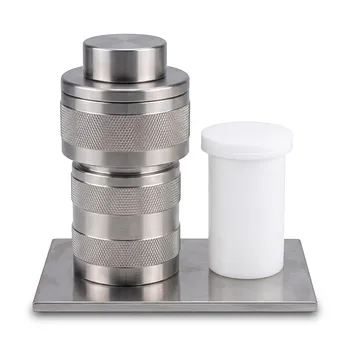
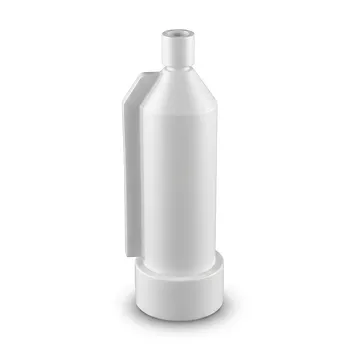
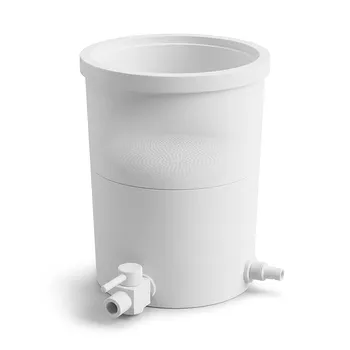
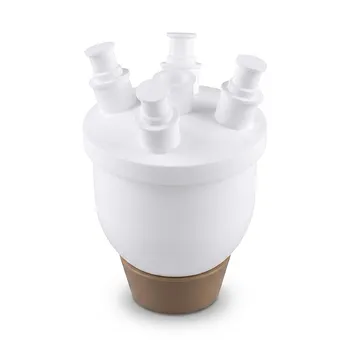
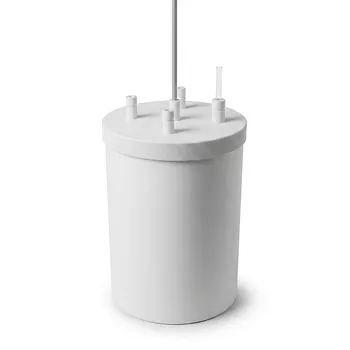
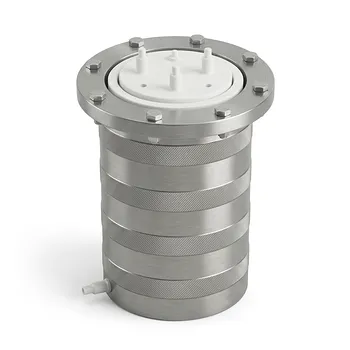
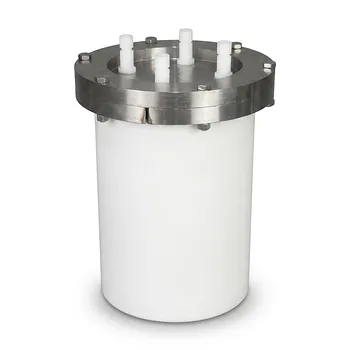
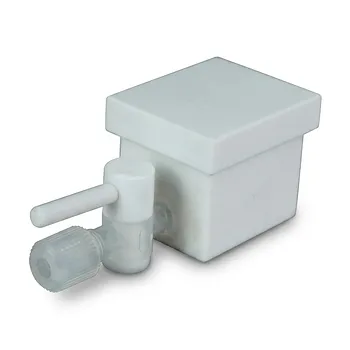
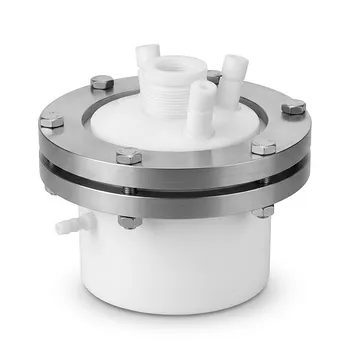
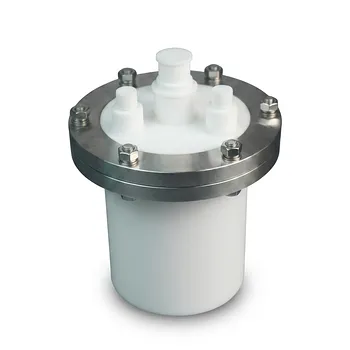
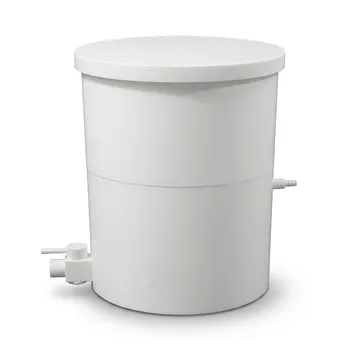
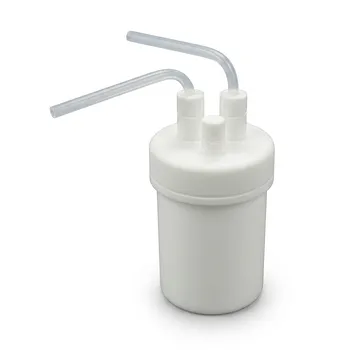
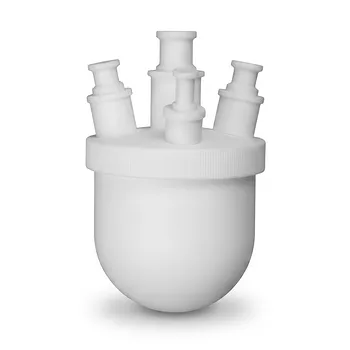
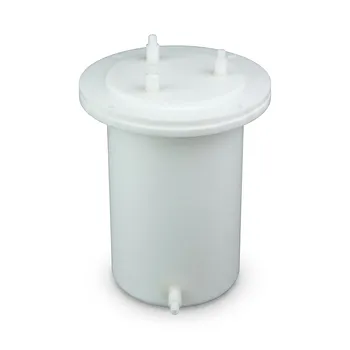
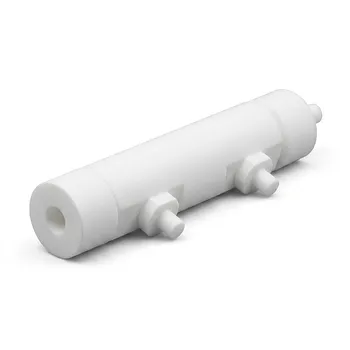
PTFE-lined reaction vessels are the industry standard for synthesizing PtNPs/FeSAC tandem catalysts because they ensure chemical purity and precise metal loading. These vessels provide an ultra-inert environment that resists aggressive solvents and reducing agents while preventing precious platinum precursors from adhering to the container walls. By eliminating leaching and adsorption, researchers can achieve the exact stoichiometric ratios required for high-performance tandem catalysis.
Core Takeaway: The use of PTFE liners is critical for maintaining the structural integrity and active site density of PtNPs/FeSAC catalysts by preventing metal impurity contamination and ensuring the total recovery of platinum precursors.
Maintaining Stoichiometric Precision
Prevention of Noble Metal Adsorption
The synthesis of Platinum Nanoparticles (PtNPs) requires exact control over the concentration of platinum precursors. PTFE possesses an extremely low surface energy, which creates a "non-stick" effect that prevents platinum ions or nanoparticles from adhering to the vessel walls.
Ensuring Precise Loading Ratios
Because the platinum does not stick to the liner, the loading ratio of the active metal onto the Iron Single-Atom Catalyst (FeSAC) substrate remains highly accurate. This precision is vital for tandem catalysts, where the spatial arrangement and ratio of two different active sites determine overall catalytic efficiency.
Ensuring High Purity and Structural Integrity
Elimination of Metal Leaching
Traditional metallic reaction vessels can leach trace impurities, such as chromium or nickel, when exposed to the organic solvents used in catalyst preparation. PTFE’s exceptional chemical inertness ensures that no exogenous metal ions enter the reaction environment, protecting the purity of the FeSAC active sites.
Resistance to Aggressive Reducing Agents
The process of loading nanoparticles onto a substrate often involves strong reducing agents and organic solvents. PTFE liners resist chemical attack from these substances, ensuring that the vessel does not degrade or introduce structural impurities into the catalyst's crystal lattice.
Stability Under Diverse Synthesis Conditions
Resilience in Hydrothermal and Acidic Environments
Many Fe-N-C based catalysts require acid washing with concentrated HCl or H2SO4 to remove unstable metal species. PTFE liners are immune to strong acid corrosion, making them ideal for both the initial synthesis and the subsequent purification steps.
Performance Under Thermal and Ultrasonic Stress
PTFE can withstand temperatures up to 175°C and pressures typical of hydrothermal synthesis. Additionally, its acoustic impedance matching properties make it highly effective for sonochemical dispersion, ensuring that ultrasonic energy is transferred uniformly to the catalyst particles without fracturing the liner.
Understanding the Trade-offs
Temperature and Pressure Limitations
While PTFE is highly resistant, it has a lower thermal ceiling compared to metallic or quartz vessels, typically limited to 250°C for continuous use. Exceeding these temperatures can lead to mechanical deformation or the release of fluorinated vapors.
Physical Wear and Softness
PTFE is a relatively soft polymer and can be prone to mechanical scratching if abrasive stir bars or cleaning tools are used. Over time, surface scratches can trap microscopic amounts of catalyst, slightly reducing the recovery rate and potentially leading to cross-contamination between batches.
How to Optimize Your Catalyst Synthesis
Applying Material Choice to Your Project
To achieve the best results when preparing complex tandem catalysts, consider your specific environmental stressors:
- If your primary focus is Maximum Purity: Utilize high-purity PTFE or PFA liners to eliminate the possibility of metal ion leaching from the vessel walls.
- If your primary focus is Precious Metal Recovery: Leverage the low surface energy of PTFE to ensure that 100% of your platinum precursors remain in the solution and deposit onto the intended substrate.
- If your primary focus is High-Temperature Synthesis: Ensure your reaction remains below 200°C to maintain the structural integrity of the PTFE liner and prevent vessel failure.
Selecting the right vessel material is not merely a logistical choice but a fundamental requirement for the reproducible synthesis of high-performance tandem catalysts.
Summary Table:
| Feature | Benefit for PtNPs/FeSAC Synthesis | Consideration |
|---|---|---|
| Low Surface Energy | Prevents Pt adsorption; ensures precise loading ratios | Susceptible to mechanical scratches |
| Chemical Inertness | Eliminates metal leaching (Cr, Ni); protects active sites | Limited to <250°C continuous use |
| Acid Resistance | Withstands HCl/H2SO4 washing during purification | Avoid abrasive cleaning tools |
| Acoustic Matching | Ensures uniform ultrasonic dispersion of particles | High pressure requires secondary housing |
Elevate Your Catalyst Synthesis with KINTEK Fluoropolymer Expertise
Precision in tandem catalysis starts with the purity of your environment. KINTEK provides an exhaustive range of high-performance PTFE and PFA laboratory solutions designed specifically for sensitive applications like PtNPs/FeSAC preparation.
Whether you need everyday essentials—such as beakers, reagent bottles, and stirring bars—or advanced apparatus like hydrothermal synthesis liners, microwave digestion vessels, and custom electrochemical cells, we ensure your precursors remain uncontaminated and fully recovered.
Why choose KINTEK?
- Comprehensive Range: From basic tubing and fittings to complex filtration tools and sample prep instruments.
- Bespoke Fabrication: Backed by end-to-end custom CNC machining, we deliver everything from standard consumables to complex, non-standard machined parts tailored to your unique research setup.
- Material Focus: An absolute commitment to high-performance fluoropolymers ensures maximum chemical resistance and zero metal leaching.
Ready to optimize your lab’s efficiency and reproducibility? Contact our technical team today to discuss your custom requirements!
References
- Xiaoxi Guo, Min Liu. Electrosynthesis of NH3 from low-concentration NO on cascade dual-site catalysts in neutral media. DOI: 10.1038/s41467-025-63365-7
This article is also based on technical information from Kintek Knowledge Base .
Related Products
- Custom TFM Reaction Vessel with Stainless Steel Jacket and PTFE Inner Cup for High Corrosion Resistance
- PTFE Lined High Pressure Digestion Vessel 50ml High Temperature Hydrothermal Synthesis Tank
- High Purity PTFE Corrosion Resistant Reaction Vessel with Luer Fittings and Caps for Trace Analysis
- Large Scale PTFE Double Layer Reaction Tank with Integrated Filter Plate for Chemical Processing
- High Performance Customizable PTFE Reaction Vessel and Corrosion Resistant Polytetrafluoroethylene Flask for Chemical Laboratory Use
People Also Ask
- Why are high-performance pressure-resistant reaction vessels required for oxygen-assisted hydrothermal conversion at 150 °C?
- Why are PTFE-lined reaction vessels necessary for forced degradation studies? Ensure high-purity results and accuracy.
- How do magnetic stirring and reaction vessels impact MOF-derived carbon quality? Optimize Your Composite Performance
- Why are high-quality fluoropolymer-lined reaction vessels required for alk-Ti3C2Tx MXene? Ensure Purity & HF Resistance
- Why is a high-purity PTFE lined reaction vessel required for the acidic etching of MXenes? Ensure Material Purity.