Magnetic stirring systems and precision reaction vessels are the foundational architects of Metal-Organic Framework (MOF) derived carbon quality. They provide the constant shear force and kinetic energy necessary to ensure that metal ions and organic ligands maintain thorough contact. By eliminating localized concentration gradients and regulating nucleation rates, these systems produce precursors with uniform particle sizes that pyrolyze into highly conductive, high-performance metal oxide/carbon composite electrodes.
Precision mechanical control during synthesis is the primary determinant of chemical homogeneity and structural regularity. By optimizing mass transfer and thermal stability, these systems ensure that the final carbon composite achieves its maximum theoretical conductivity and performance.
Optimizing Mass Transfer for Uniform Polymerization
Ensuring Stoichiometric Accuracy
Magnetic stirring systems provide continuous and uniform kinetic energy to the solution. This energy facilitates frequent collisions between organic ligands (such as BTA) and metal ions, ensuring that the coordination polymerization proceeds according to the intended chemical ratio.
Eliminating Concentration Gradients
Without constant agitation, reactants tend to deplete in localized areas, leading to "dead zones" within the vessel. Precision stirring provides the shear force required to maintain a homogenous mixture, preventing the formation of irregular chemical clusters.
Facilitating Efficient Mass Transfer
In complex mixtures involving waste-derived carbon and metal sources, efficient mass transfer is fundamental. Proper stirring ensures that all components are equally accessible for reaction, which is critical for the integrity of the MOF precursor.
Regulating Morphology and Crystal Growth
Controlling Nucleation and Growth Rates
The combination of precision reaction vessels and stable stirring allows for tight control over the rate of crystal formation. This management is essential for producing precursors with regular, predictable structures rather than haphazard aggregates.
Achieving Uniform Particle Size Distribution
Uniform agitation prevents larger crystals from growing disproportionately at the expense of smaller ones. This results in a precursor with a consistent particle size, which is a prerequisite for creating high-quality, uniform carbon composites during the pyrolysis stage.
Enhancing Composite Conductivity
The structural regularity established by precision vessels directly impacts the final product's physical properties. A well-ordered MOF precursor pyrolyzes into a more conductive metal oxide/carbon composite, which is essential for high-efficiency electrode applications.
Protecting Material Purity and Thermal Stability
The Role of PTFE Coatings
In corrosive synthesis environments, PTFE-coated magnetic bars are essential for maintaining material integrity. The robust chemical stability of the PTFE polymer prevents the internal magnetic core from eroding and introducing metallic contaminants into the reaction.
Maintaining Consistent Heat Transfer
Precision reaction vessels are designed to distribute heat evenly across the entire solution volume. This consistent heat transfer prevents "hot spots" that could cause localized over-reaction or degrade the organic ligands before coordination occurs.
Preventing Environmental Interference
High-quality vessels protect the reaction from external fluctuations and contaminants. This isolation ensures that the delicate balance of deionized water, ammonia, and other reagents remains stable throughout the synthesis period.
Understanding the Trade-offs and Pitfalls
Mechanical Wear and Contamination Risks
While PTFE is highly stable, it is not indestructible; abrasive particles in the solution can eventually wear down the coating. If the magnetic core is exposed, it can leach heavy metals into the MOF, fundamentally altering the electrochemical properties of the final carbon composite.
Limitations of Magnetic Coupling
Magnetic stirring can lose efficiency in high-viscosity solutions or at extremely high speeds (decoupling). If the "spin" is lost, the shear force drops to zero, leading to immediate concentration gradients and poor crystal uniformity.
Scale-up Challenges
The fluid dynamics within a small precision vessel often do not translate perfectly to larger scales. As volume increases, maintaining the same level of uniform kinetic energy becomes significantly more difficult, often requiring more complex vessel geometries or mechanical overhead stirring.
How to Apply This to Your Project
Recommendations for Synthesis Optimization
- If your primary focus is electrochemical conductivity: Prioritize high-precision stirring systems that offer constant shear force to ensure a highly regular precursor morphology.
- If your primary focus is material purity: Utilize high-grade PTFE-coated stirring bars and inspect them regularly for signs of mechanical wear or thinning.
- If your primary focus is stoichiometric precision: Ensure the vessel geometry allows for total volume agitation to prevent the formation of localized concentration gradients.
- If your primary focus is corrosive chemical synthesis: Employ precision vessels made of chemically inert materials to prevent reaction with ligands or metal ions.
The bridge between chemical theory and high-performance carbon composites is built upon the mechanical precision of your stirring and containment systems.
Summary Table:
| Factor | Role in MOF Synthesis | Final Outcome |
|---|---|---|
| Stirring Energy | Optimizes mass transfer & stoichiometry | Uniform particle size distribution |
| Vessel Geometry | Ensures uniform heat distribution | Enhanced structural regularity |
| PTFE Coating | Prevents metallic contamination | High material purity & conductivity |
| Shear Force | Eliminates concentration gradients | Predictable crystal growth rates |
Precision Labware for High-Performance MOF Synthesis
Maximize the potential of your carbon composites with KINTEK’s premium fluoropolymer solutions. We specialize in high-performance PTFE and PFA laboratory supplies, ranging from everyday basics like beakers, crucibles, and magnetic stirring bars to advanced reaction apparatus such as hydrothermal synthesis liners and custom electrochemical cells.
Whether you need standard consumables—like reagent bottles, tubing, and filters—or complex, custom CNC-fabricated non-standard parts, KINTEK provides the chemical inertness and thermal stability required for precision research. From trace analysis to high-volume fluid transfer components, we deliver everything from basic labware to bespoke laboratory setups with an absolute focus on high-performance materials.
Ready to optimize your synthesis workflow? Contact KINTEK today to request a quote or discuss your custom laboratory requirements!
References
- Perseverance Dzikunu, Pedro Vilaça. Waste-to-carbon-based supercapacitors for renewable energy storage: progress and future perspectives. DOI: 10.1007/s40243-024-00285-4
This article is also based on technical information from Kintek Knowledge Base .
Related Products
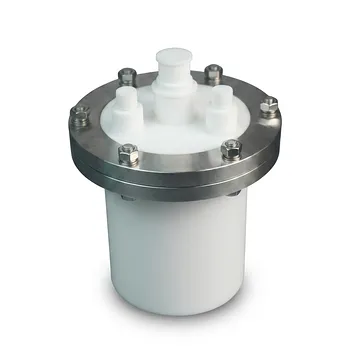
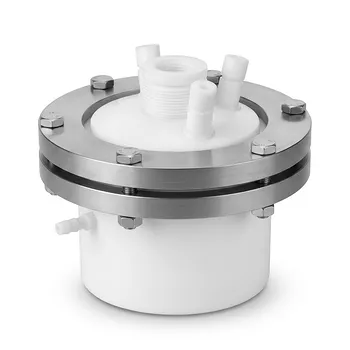
- Custom TFM Reaction Vessel with Stainless Steel Jacket and PTFE Inner Cup for High Corrosion Resistance
- PTFE Lined High Pressure Digestion Vessel 50ml High Temperature Hydrothermal Synthesis Tank
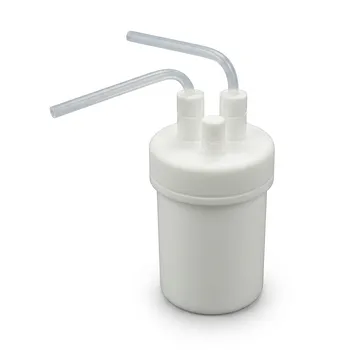
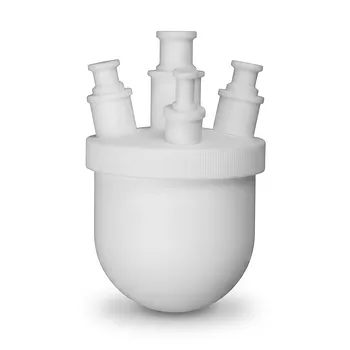
- High Purity PTFE Corrosion Resistant Reaction Vessel with Luer Fittings and Caps for Trace Analysis
- High Performance Customizable PTFE Reaction Vessel and Corrosion Resistant Polytetrafluoroethylene Flask for Chemical Laboratory Use
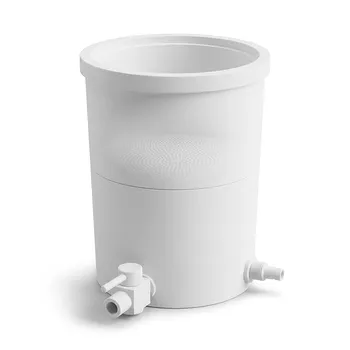
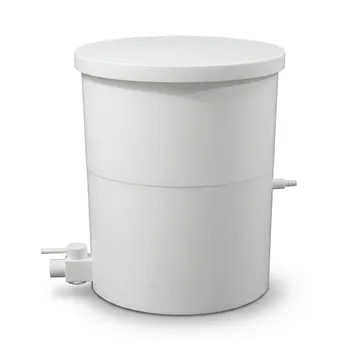
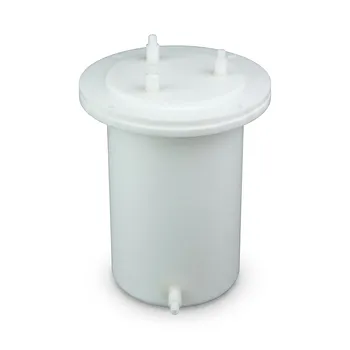
- High Purity PTFE Reaction Vessel Polyfluortetraethylene Cylindrical Tank Petrochemical Reaction Container
People Also Ask
- Why are high-performance pressure-resistant reaction vessels required for oxygen-assisted hydrothermal conversion at 150 °C?
- Why are high-quality fluoropolymer-lined reaction vessels required for alk-Ti3C2Tx MXene? Ensure Purity & HF Resistance
- Why are PTFE-lined reaction vessels necessary for forced degradation studies? Ensure high-purity results and accuracy.
- Why is a high-purity PTFE lined reaction vessel required for the acidic etching of MXenes? Ensure Material Purity.
- Why are PTFE-lined reaction vessels necessary for alkali stability tests? Ensure accurate ionomer degradation data.